
LaVada Weir, Barbara Douglass, and Laura Torbet were three female authors from the 1970s who contributed welcoming and inclusive books about skateboarding. With my own book Girl Gangs, Zines, and Powerslides: A History of Badass Women Skateboarders just a month away from being published, I’ve been thinking about this canon of authors who were so drawn to skateboarding that, even though it’s such a niche topic, they were motivated enough to write a book, probably not make any money, and in LaVada Weir’s case, face censorship for her efforts!
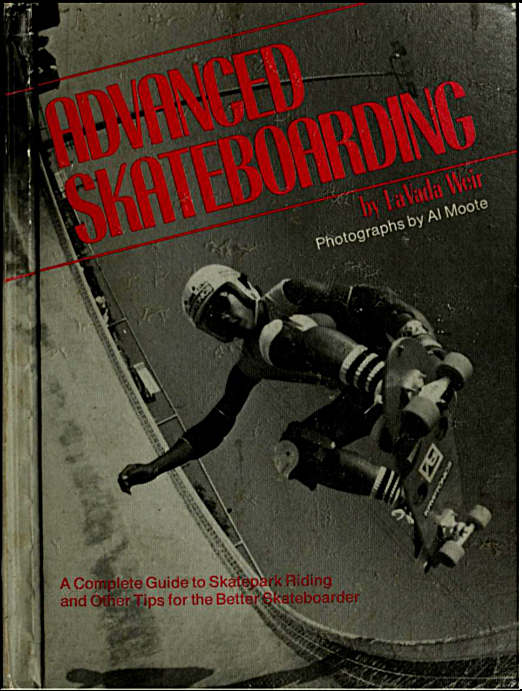


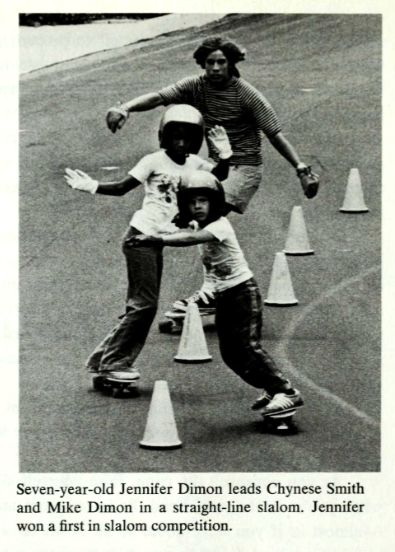
Above: Covers of LaVada Weir’s skateboarding books, with child prodigy skater Jennifer Dimon in the blue helmet.
Censorship of books and authors is nothing new especially when political powers have a warped view of intellectual freedom, and their sense of entitlement is both arrogant and insecure, desperate to control how and what people think and limit their access to diverse stories. Evidently, there’s no topic outside the scope to censors especially when it comes to children.
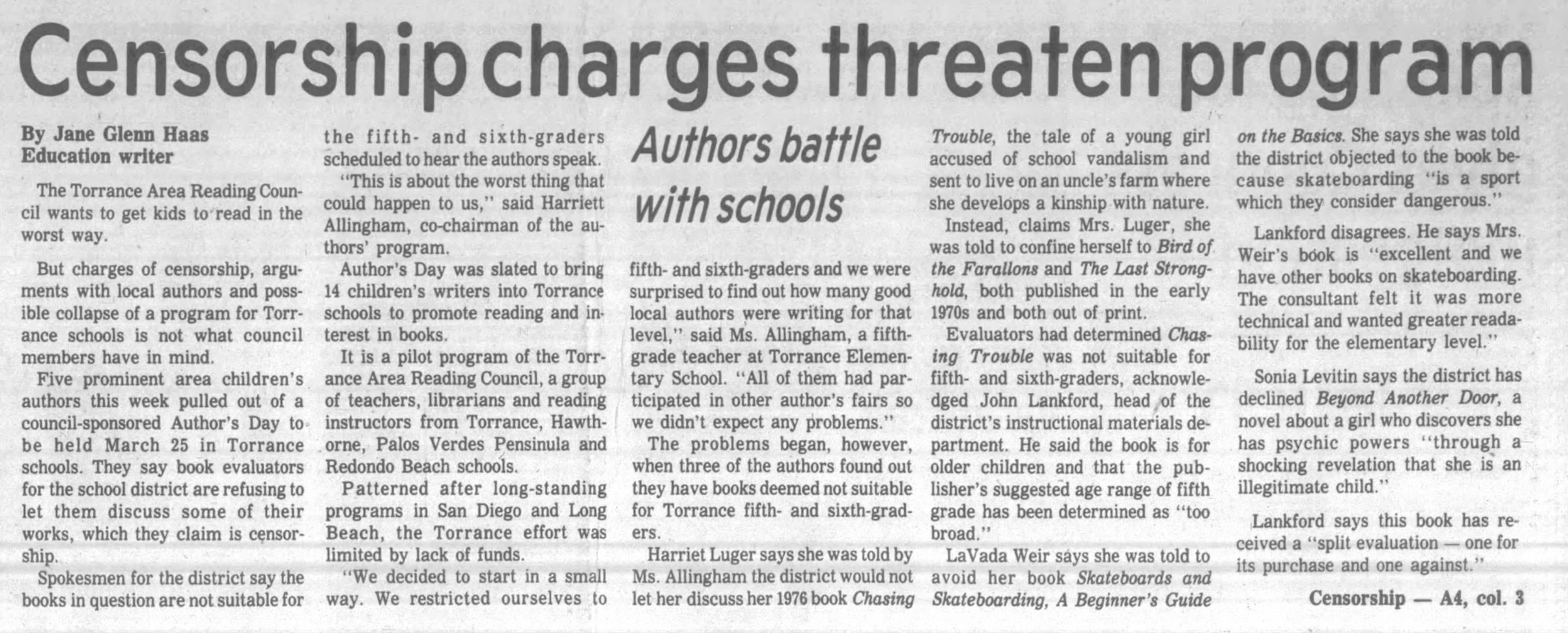
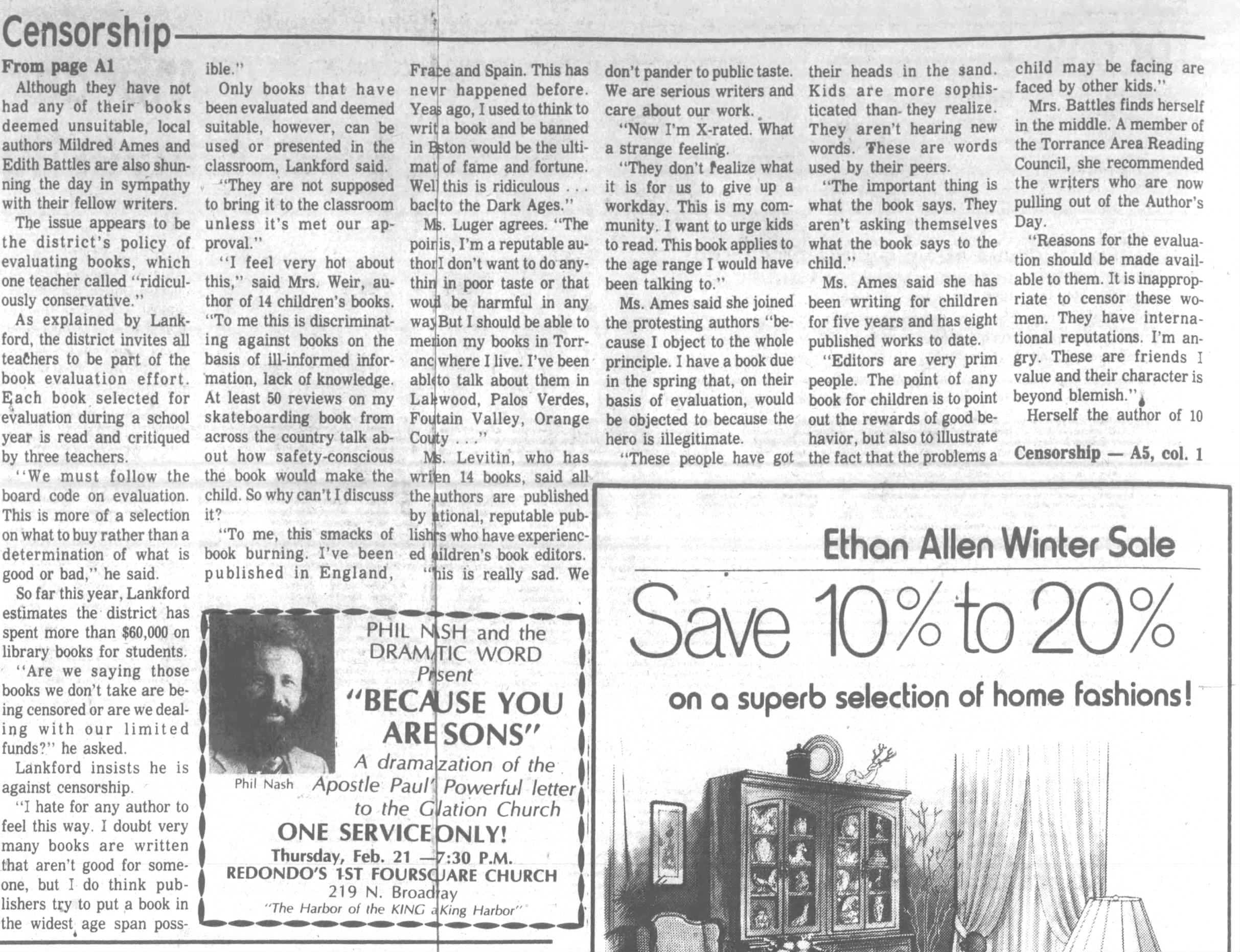
When I read an article in the Daily Breeze newspaper on February 21, 1980, called “Censorship charges threaten program: Authors battle with schools,” I was surprised that LaVada Weir was included in a list of authors banned by the Torrance School District. It seemed comical. LaVada wrote two manuals on skateboarding – Skateboards and Skateboarding: the complete beginner’s guide (1977) and Advanced Skateboarding (1979).
LaVada’s beginner book was originally promoted by the Torrance Area Reading Council which included teachers, librarians, and literacy instructors, but the School District wasn’t having it. Her book was likely rejected because they decided skateboarding was too dangerous and they knew what was best for children. Other books included Chasing Trouble by Harriet Luger about a girl accused of school vandalism, and Beyond Another Door by Sonia Levitin about a girl with psychic powers who discovers she is an illegitimate child, and that topic was considered X-rated.
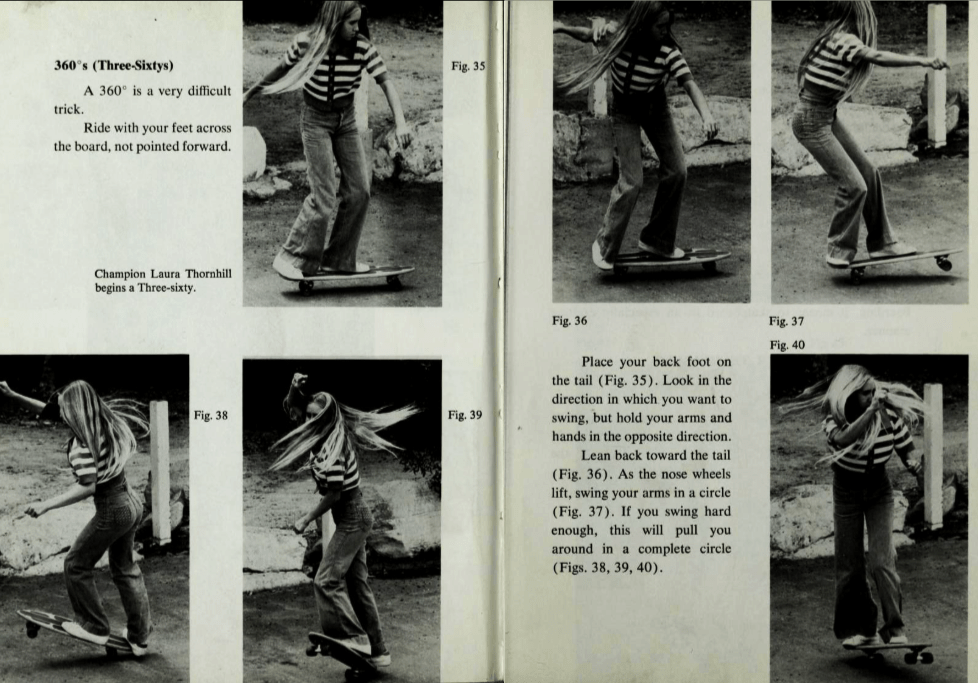
Above: Laura Thornhill demonstrates a 360 in LaVada’s book for beginners
LaVada stated, “To me this is discriminating against books on the basis of ill-informed information, lack of knowledge. At least 50 reviews on my skateboarding book from across the country talk about how safety-conscious the book would make the child. So why can’t I discuss it?” LaVada considered the lack of dialogue reminiscent of the Dark Ages. The book evaluator insisted he was against censorship but was only following the school board’s code on evaluation, “which one teacher called ‘ridiculously conservative.’”
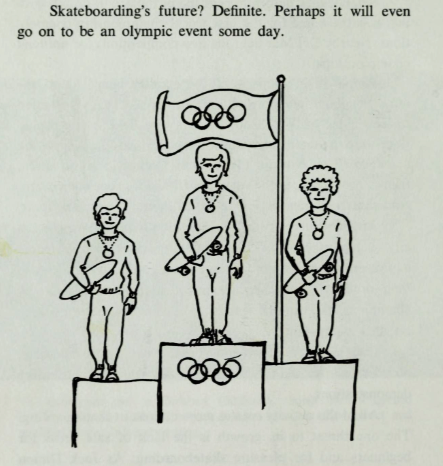
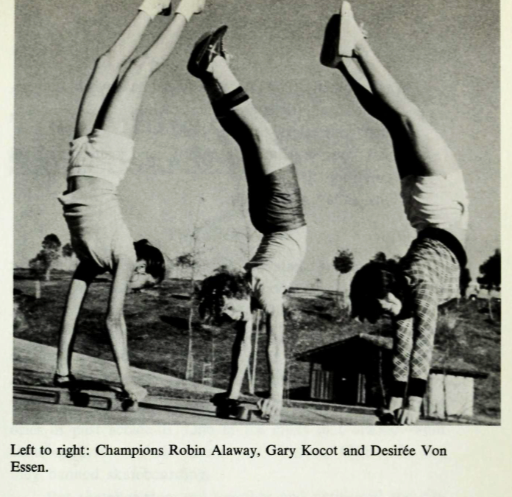
I’ll always be grateful for LaVada’s books because they contain photos by Al Moote of leading professional skaters like Laura Thornhill, Desiree Von Essen and Robin Alaway, and lesser-known individuals like Kathy Bomeisler, Jennifer Dimon (Coppa) and Yvonne Cucci demonstrating various skateboarding techniques, which helped me build their bios and create a backstory. Al Moote was also the photographer behind one of my mystery skater’s named “Patti” sponsored by Kanoa Surf.
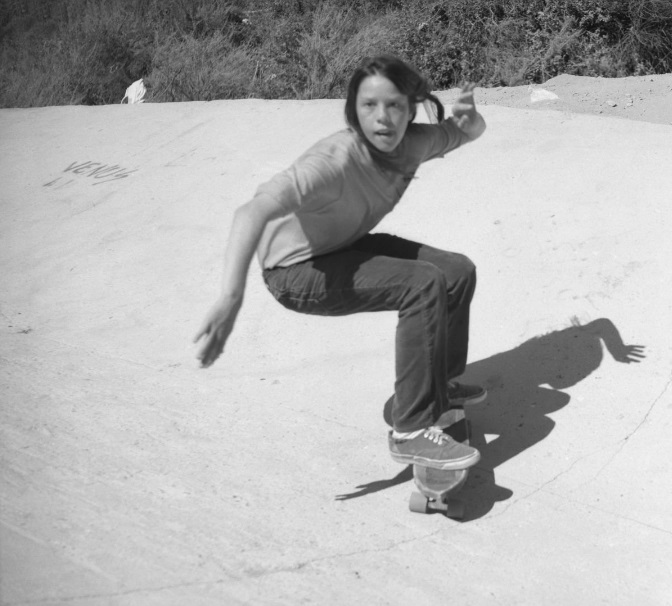
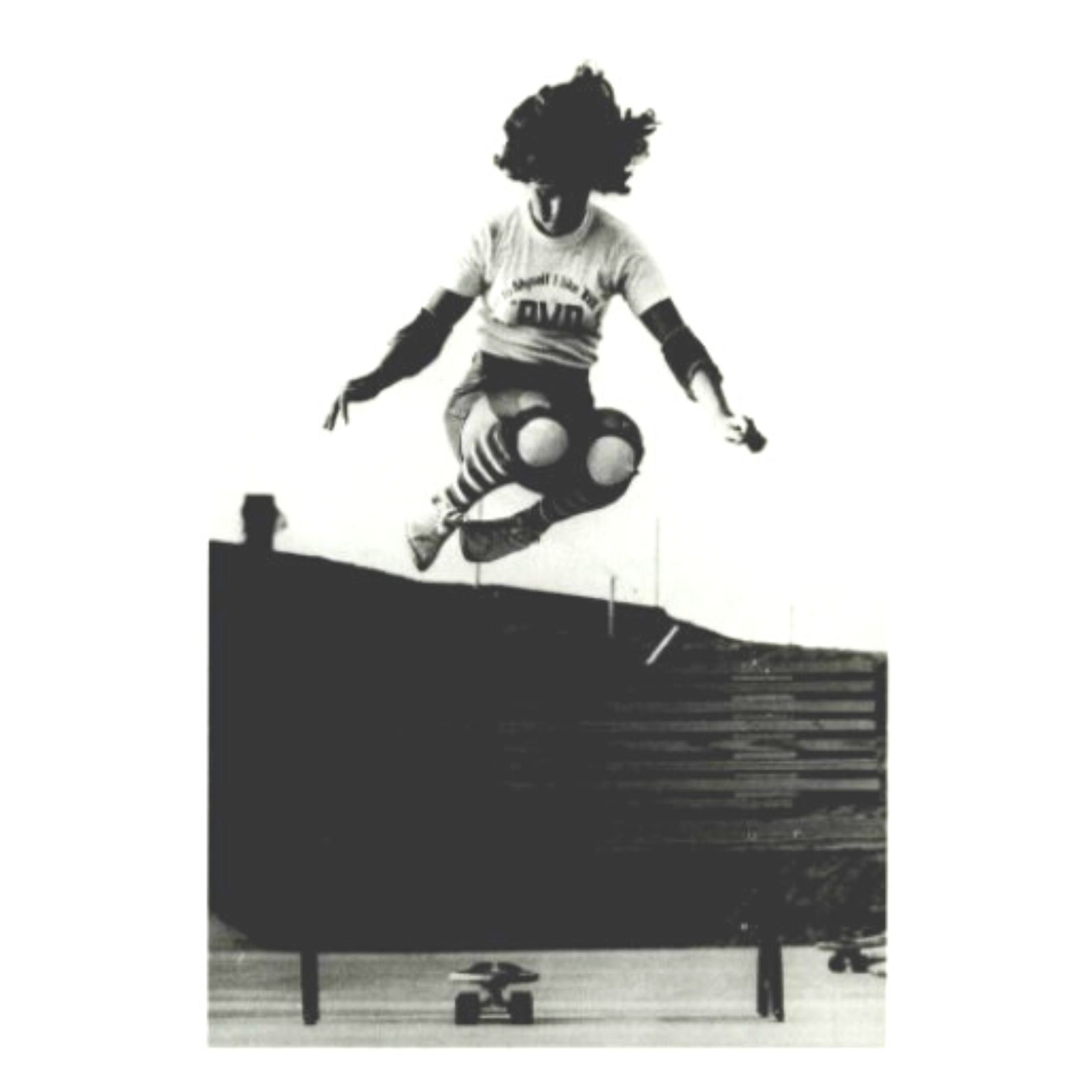
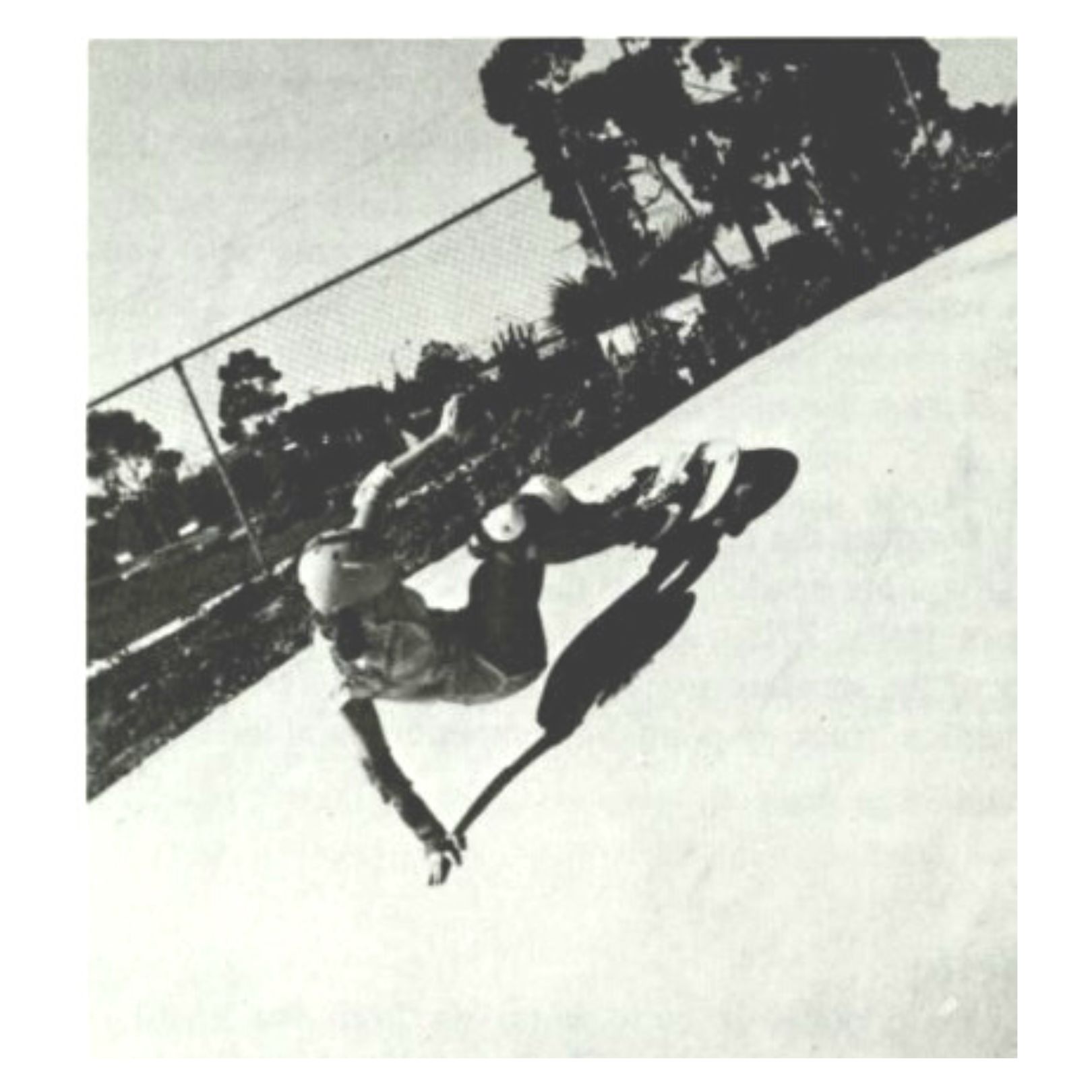
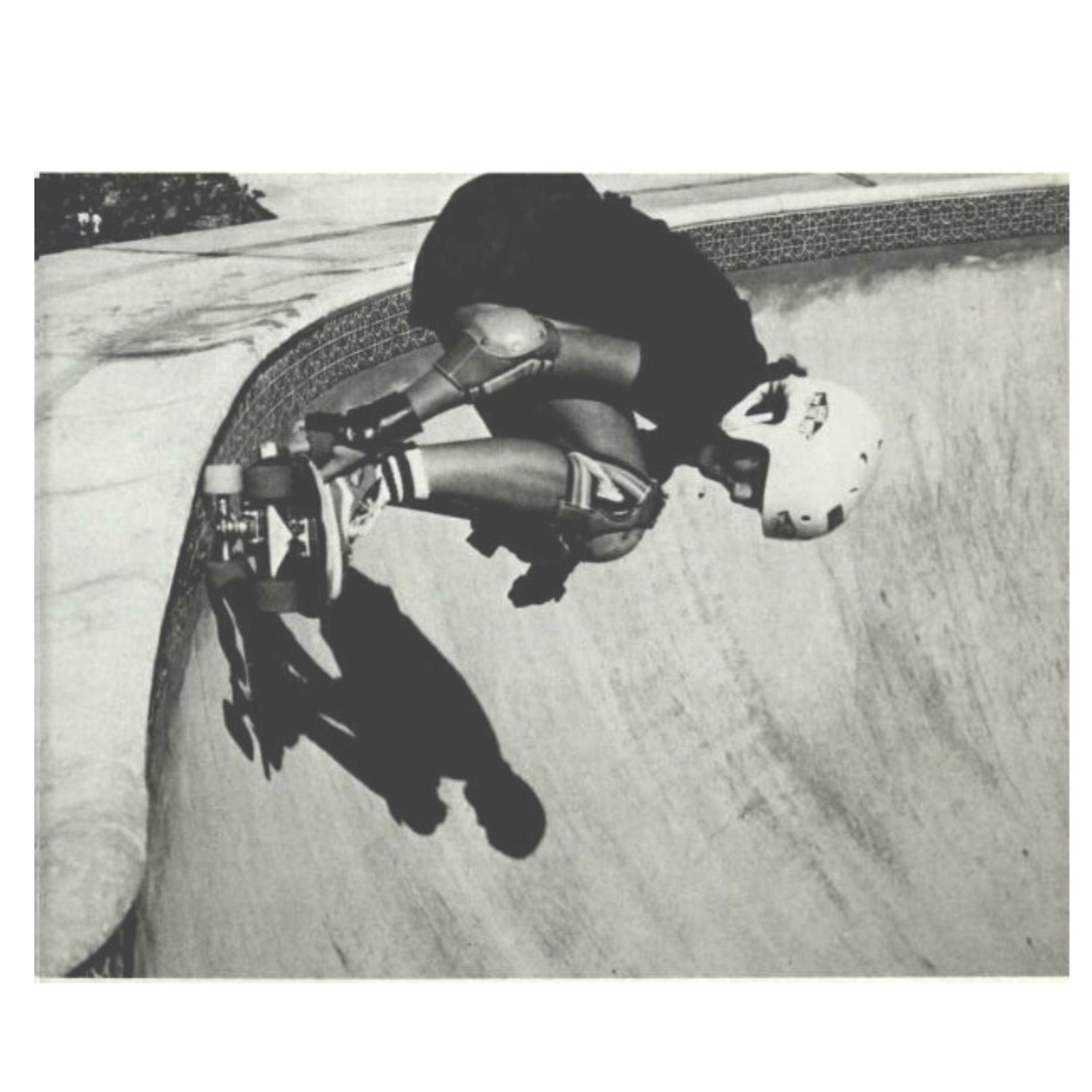
Photos by Al Moote
Author Barbara Douglass was also featured in the news, in an article for the Sacramento Bee from January 27, 1983, called “Writer’s insights delight young readers,” but with a more positive spin. I first heard about Barbara thanks to Colin Bane, an adventure journalist for ESPN and X Games who gave me the heads up that a CBS skateboarding special on TV called “A Different Kind of Winning” (1980) was based on her book called Skateboard Scramble (1979).
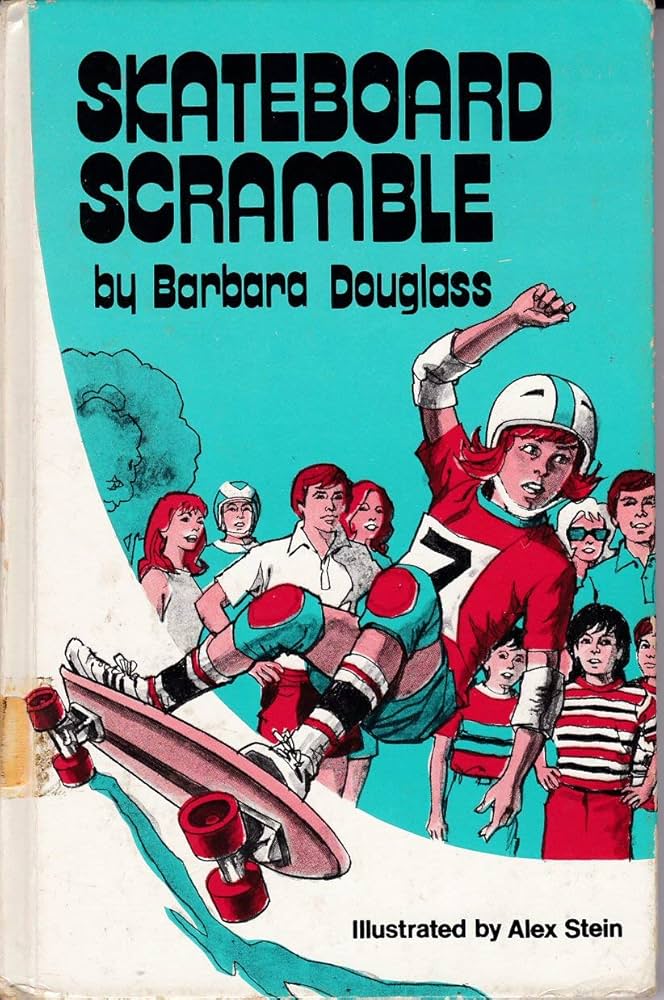
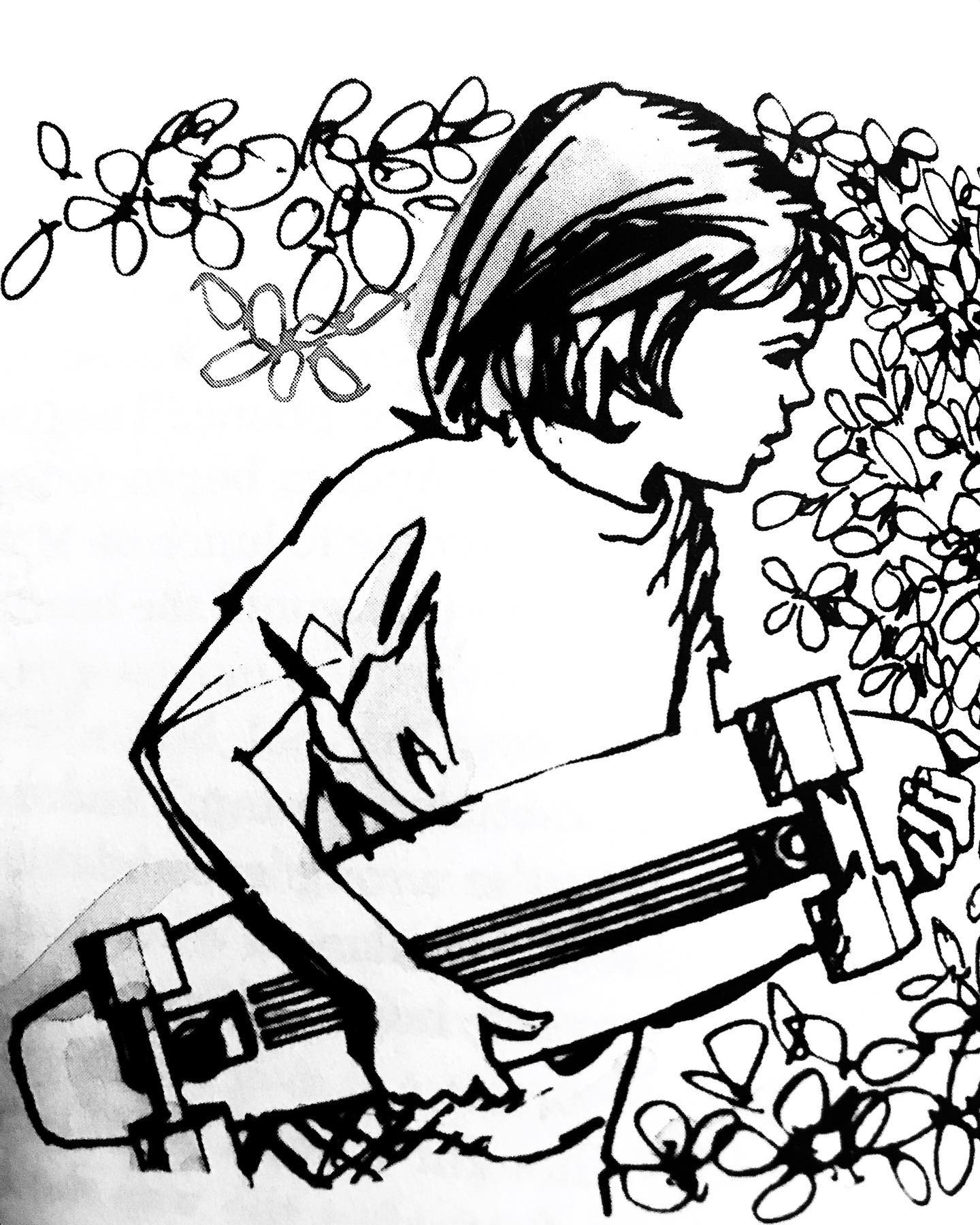
I was a big fan of the TV show because it featured a pre-teen Cara-beth Burnside as the protagonist “Jody Flynn” who had moved to California from Ohio. The story follows Jody and her friend, “Carmen Mandella,” performed by Edie Robertson. You’ll likely have heard of Cara-beth, but Edie was also a competitive skater, sponsored by Sims, and known as the first female to perform a flatland “gorilla grip” (an ollie substitute that relied on your toes gripping the board!) back in 1975.
I adored the story’s premise because it centred on the friendship of these two girls, which was under threat because Jody’s dad was so insistent that his daughter regard Carmen solely as a competitor. Jody and Carmen were the best skaters at the park regardless of gender, and while there was one mention that Jody was “good for a girl,” it was generally just an accepted fact that they were the best.
The story ends with friendship overruling dad’s competitive nature, when Jody gives up her board so that Carmen can compete in the bowl contest.
During her guest talk at the Rancho Cordova library, which the Sacramento Bee was reporting on, Douglass even shared the 30-minute TV show to her audience but said, “Reading books helps with everything you do your whole life. You understand more about the whole world from reading. There is nothing I could recommend higher.” She then encouraged the children to keep a diary to share their thoughts and feelings.
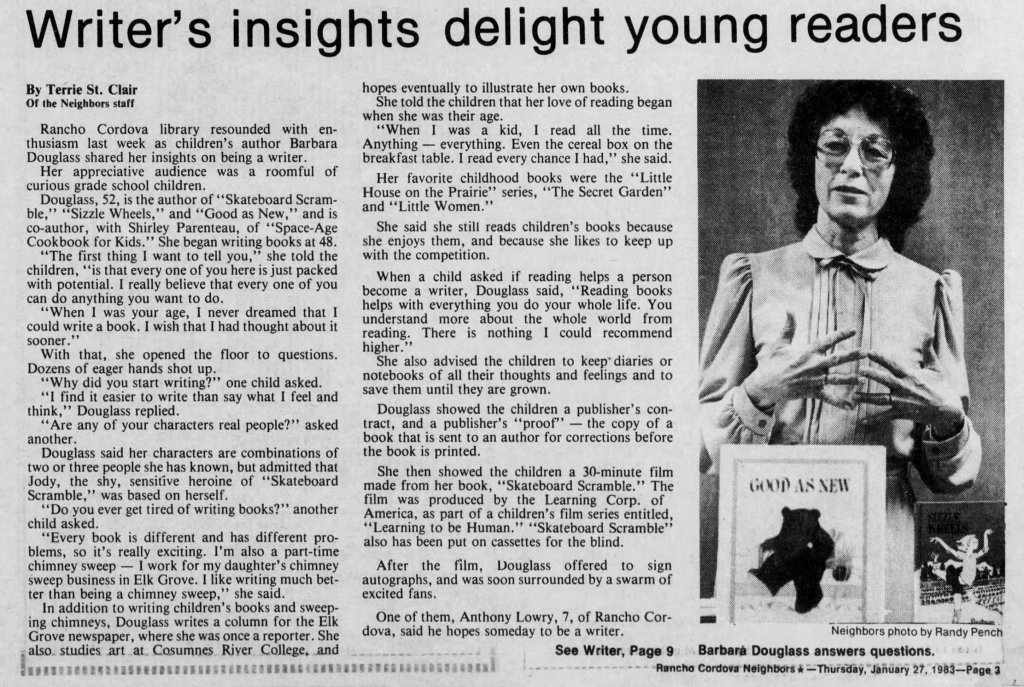
In the Q&A, Douglass admitted that the skateboarding character “Jody” was based on herself (although didn’t clarify if she was a skater back-in-the-day), and what excited me was the fact that she was age 52 at the time and only started writing at age 48! How fantastic! She balanced her time as a writer and columnist for the Elk Grove newspaper by studying art at a local college, and being a chimney sweep with her daughter’s company.
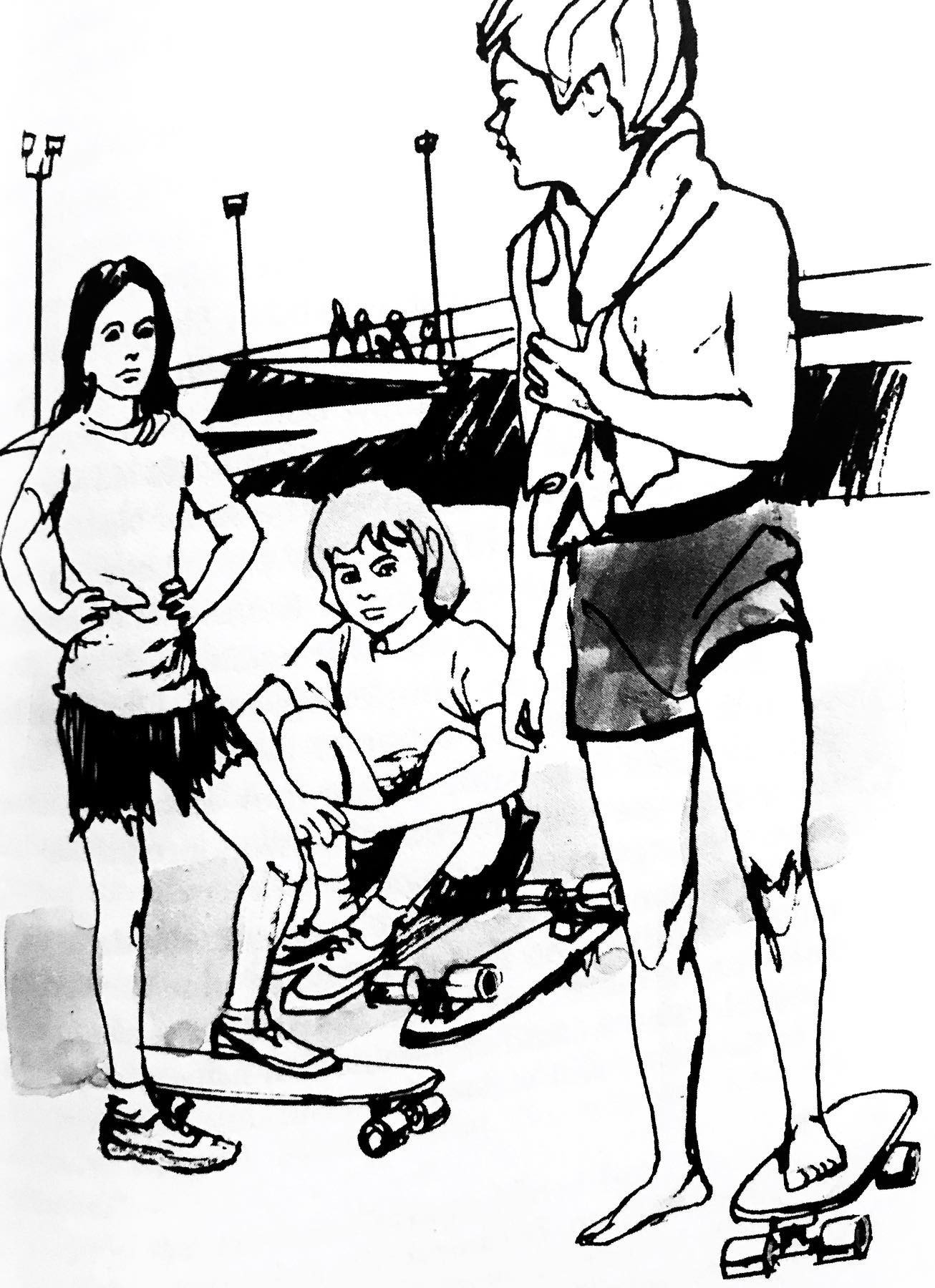
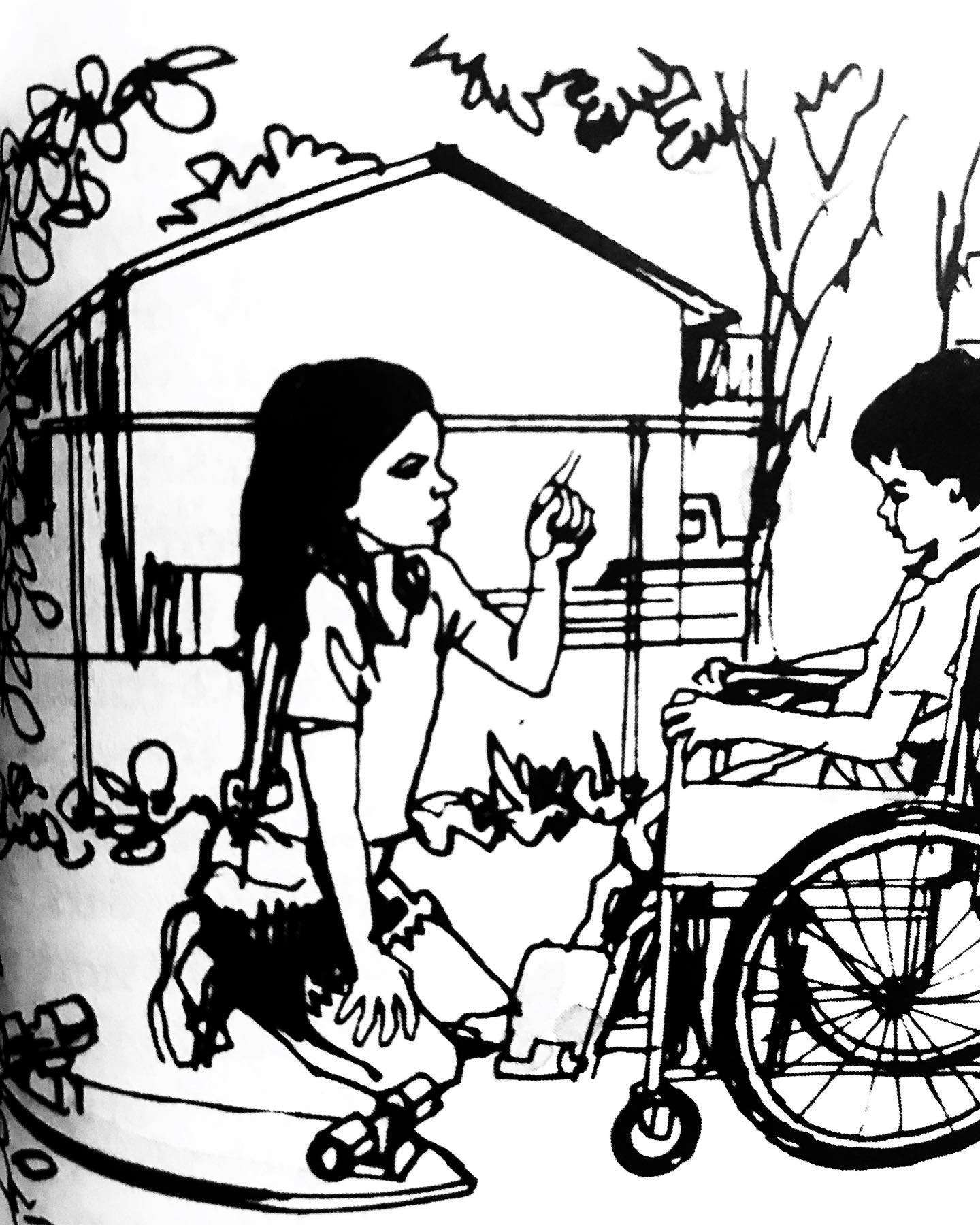
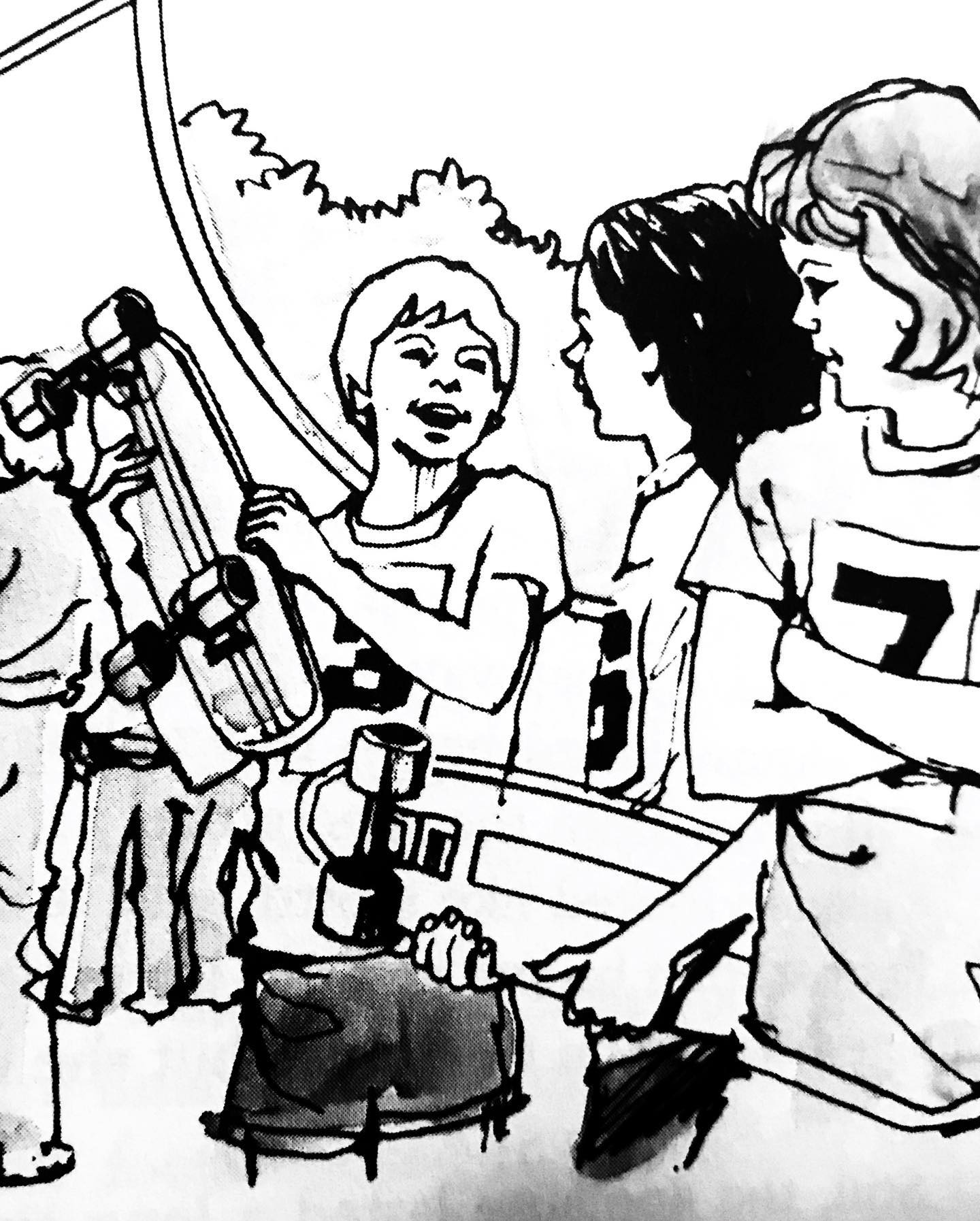
Even though Skateboard Scramble is rooted in the Seventies, the plot still resonates today, especially as we see an increase in parents imposing competitive aspirations on their skateboarding children, undoubtedly destined for sponsorship and the Olympics, or so they like to hope. On occasion, the book has popped up on Ebay and Etsy, and it’s worth considering. The animated ink designs by illustrator, Alex Stein, are tattoo-worthy according to Colin Bane!
In the meantime, watch the TV show and bask in the long legacy of Cara-beth, especially the final showdown scene when she’s busting out hand-plants and airs in the bowl at age 11!
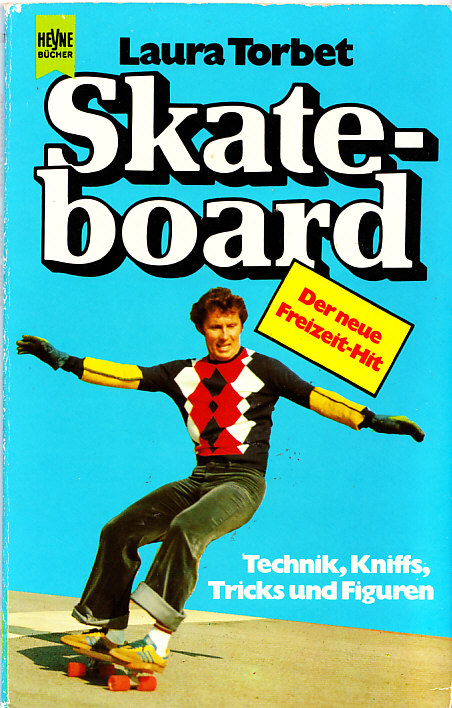
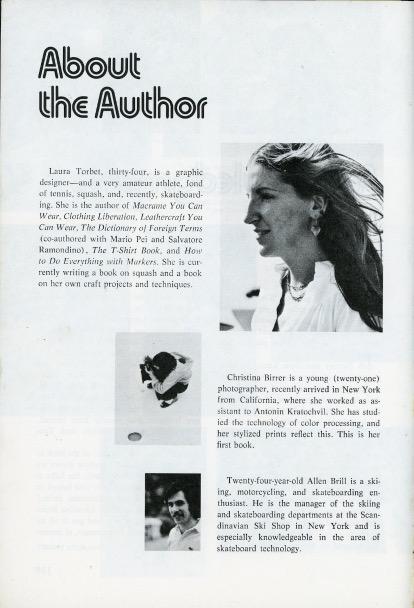
Finally, I want to mention Laura Torbet (nee Robbins), who was a 34-year-old graphic designer and amateur athlete who took up skateboarding while writing the book The Complete Book of Skateboarding in 1976, which was then translated into German the following year. Torbet’s range of books was quite vast and random, covering topics like macrame, leathercraft, a dictionary of foreign terms, playing squash, making t-shirts, using color markers, etc.
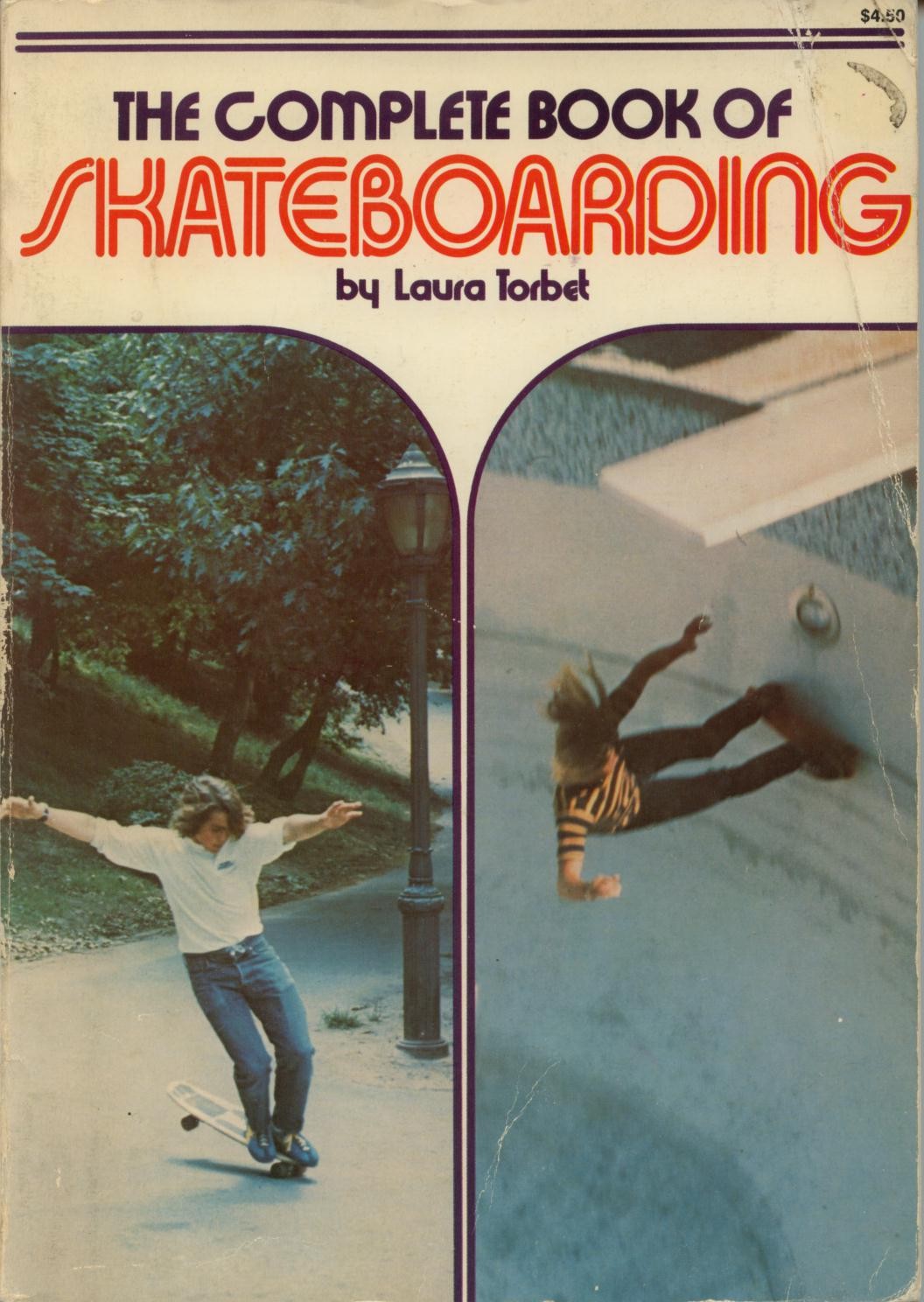
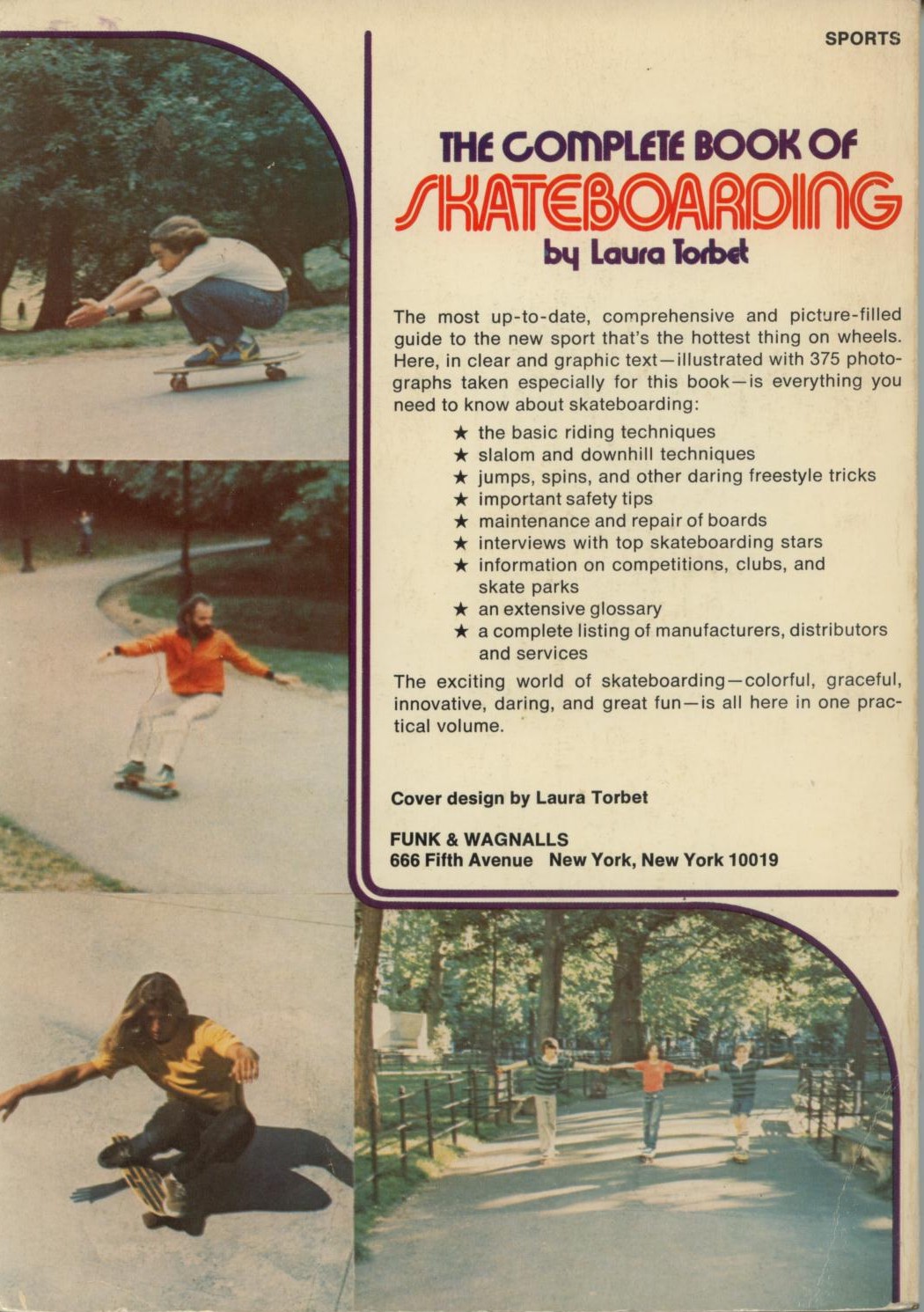
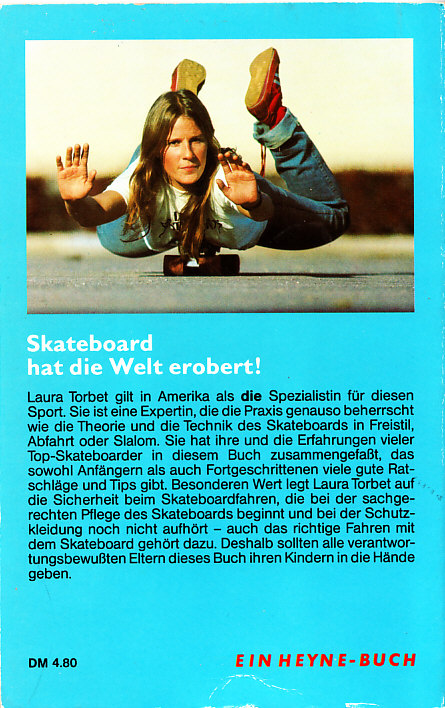
For her skateboarding debut, Torbet collaborated with Allen Brill, who was the manager of the skiing and skateboarding departments at the Scandinavian Ski Shop in New York and resident skateboard technology “expert,” and a young female photographer named Christina Birrer who had moved to California from New York in her early twenties. I wonder if Christina was the mystery female photographer who documented Kim Adrian skating pool and bowl in the late 70s.
Torbet’s book has been quoted as a reference for several legendary male and female skaters including Laura Thornhill in her Skateboard Hall of Fame bio from 2013, followed by Desiree Von Essen’s Skateboard Hall of Fame bio from 2019 with a shout out to her interest in promoting “women’s role in the sport with equal recognition and reward” (102), and Tina Trefethen’s Skateboard Hall of Fame bio from 2021.
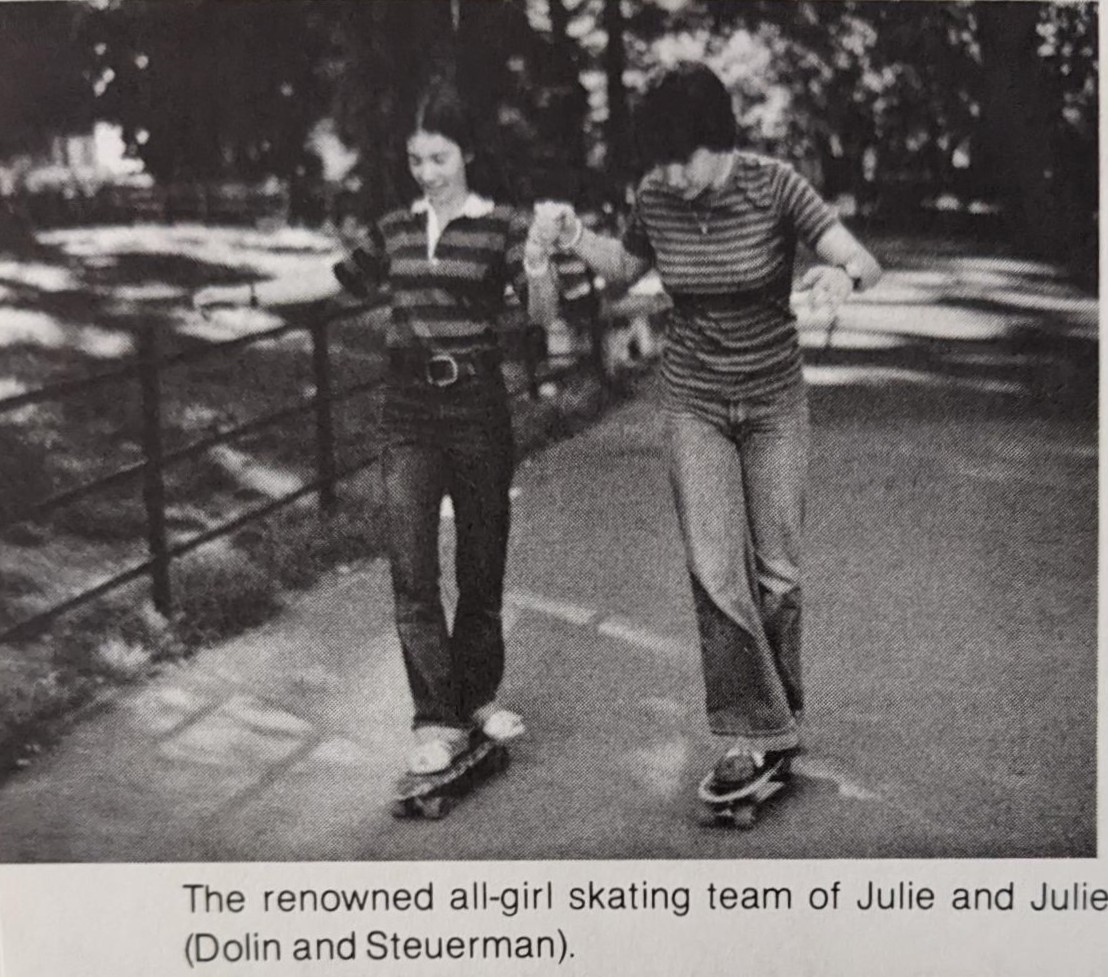
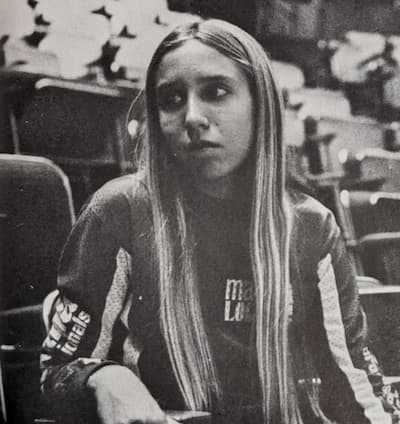
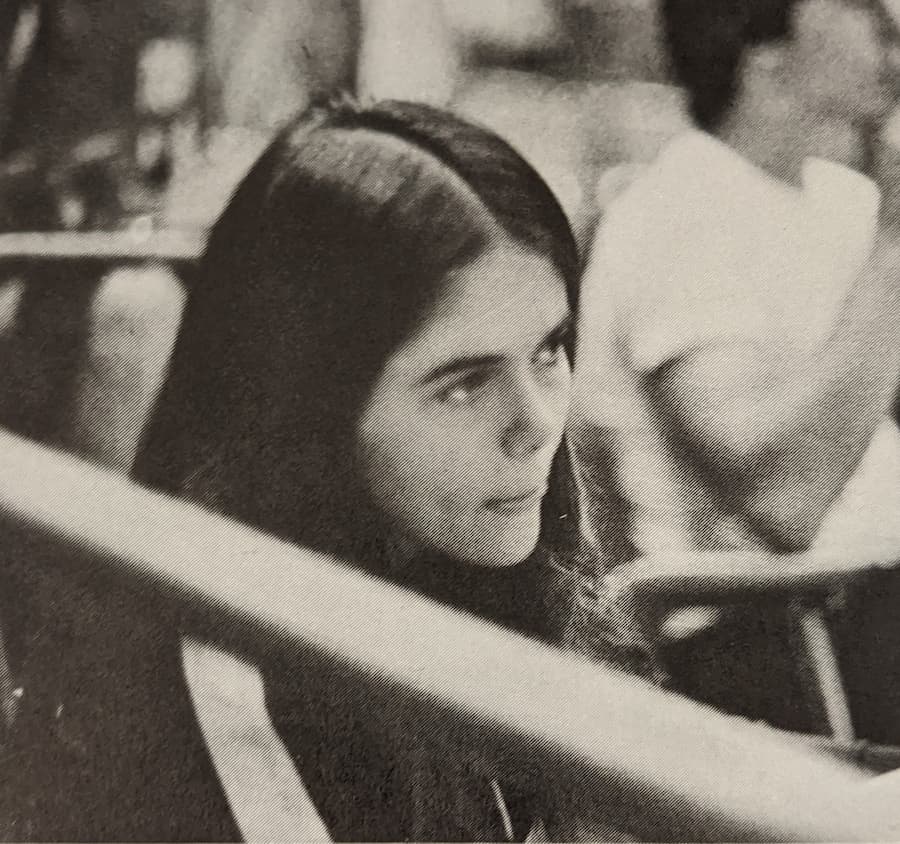

Sadly, Torbet passed away in 2016 at age 73 of breast cancer and was described in her obituary as a “photographer, painter, craftsperson, graphic designer, writer, ghostwriter, wit, formidable board game and ping pong player, adored friend and sister… She authored, co-authored, or ghost-wrote more than 30 books on crafts, psychology, culture, memoir, and biography.”
In summary, I’m grateful that there’s a history in skateboarding of female writers contributing to the genre, whether fiction or non-fiction, including books for young readers. Children (all children) need to see themselves represented in books, where they can also learn about empathy and acceptance of difference, experience the magic of reading, and even imagine themselves living courageous lives, like learning to skateboard!
The scenario of LaVada Weir’s censorship challenge seems tame compared to today. In my role as a librarian, I regularly hear about the shaming, firing, and death threats delivered to librarians and LGBTQ2S+ authors by organized, vigilante “concerned parent” groups who manipulate the public into thinking stories of diversity for children are somehow pornographic. But when book censors and school districts justify their actions by hiding behind statements that they are only “following the rules” that’s a sign of authoritarianism which leads to nothing good. Support your local library today and if you’re a parent, be that voice of reason at your child’s school because their freedom depends on it.

Note: portions of these book reviews have appeared in the monthly Skate Book Club newsletter hosted by Tails of… skateboarding zine.
References:
- Haas, Jane Glenn. “Censorship charges threaten program: authors battle with schools.” Daily Breeze – Torrance (February 21, 1980) A1, A4-A5.
- St. Clair, Terrie. “Writer’s insights delight young readers.” Sacramento Bee (January 27, 1983) p.3, p.9.
 Womxn Skateboard History