
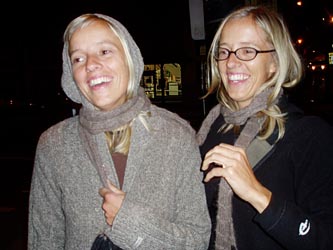
In 1996, skateboarding twins Tiffany Morgan (Campbell) and Nicole Morgan (Young) decided not to use a college fund that their parents had set aside for education, but rather to use the money to start a female-focused skateboard and apparel company. Lisa Whitaker of Meow Skateboards recalled that the sisters tried to pitch their idea to local skateshops but were told that “there are no girls who skate around here,” and that there was no market for their products (Lima). In response, their new tactic was to make female skaters more visible and encourage their participation one friend at a time.

Photo: Tiffany and Nicole by Sam Jones (1999)
Nicole credited witnessing Jaime Reyes on a video that was being played in her local skate shop (Awesome Sports Skates) to opening her eyes of what the future of skateboarding might entail. In an article for Skateboarder (February 2005), she said, “I had literally seen hundreds of videos with guys skating. But for some reason they never quite affected me this way.” Tiffany shared that, “We wanted to inspire more girls to skateboard by example. We set out to find girls who were already absorbed in it and also the ones who had never been introduced to our friend, the skateboard.”
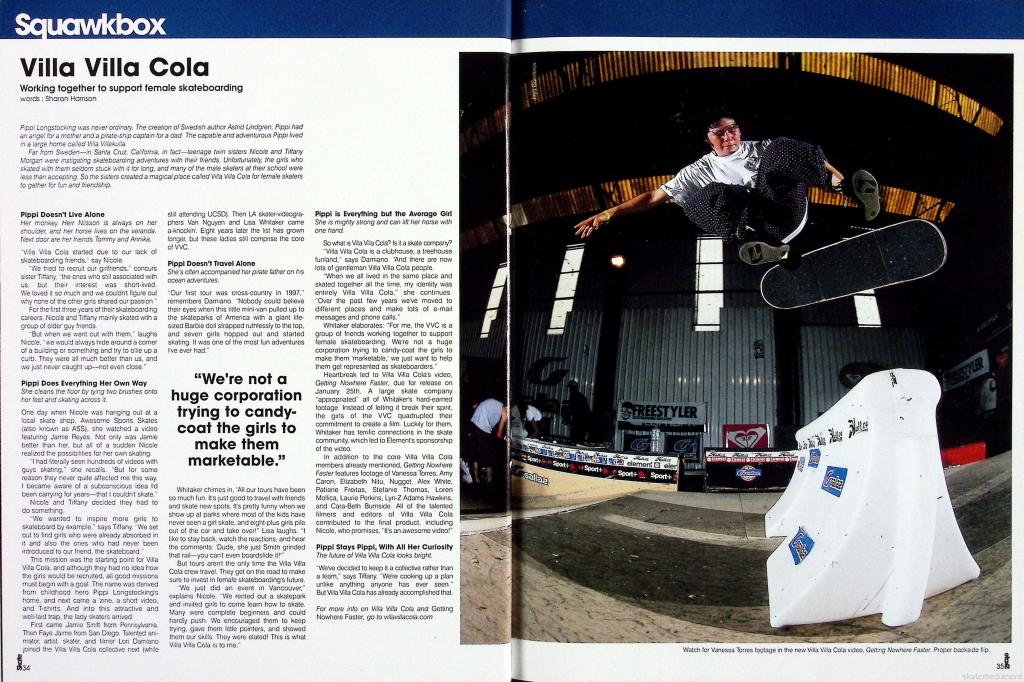
The Morgans then launched a skateboarding collective in 1997 called Villa Villa Cola (VVC) in San Diego. The name was a tip of the hat to Villa Villekulla, the fictional home of wild child Pippi Longstocking concocted by Swedish author Astrid Lindgren.
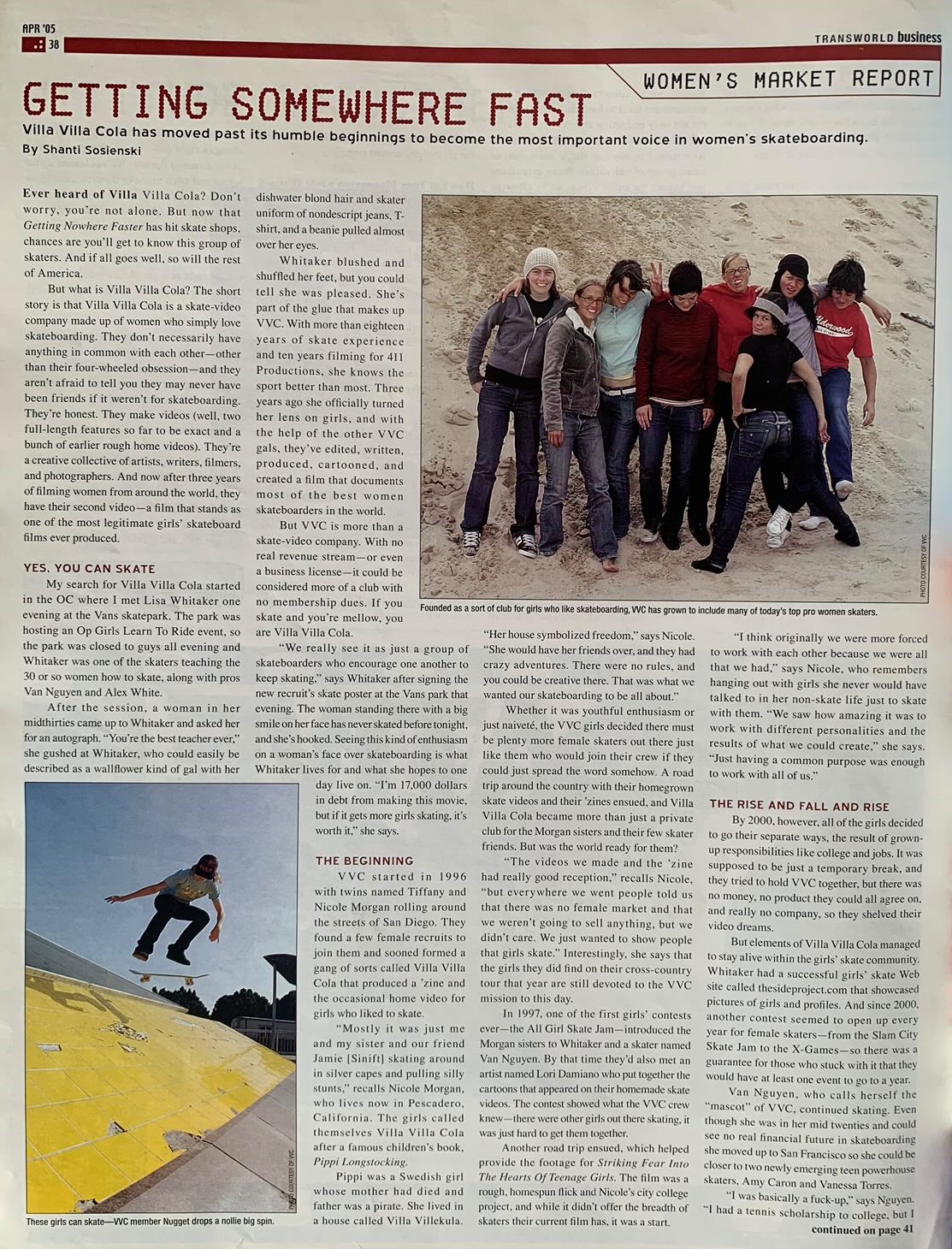
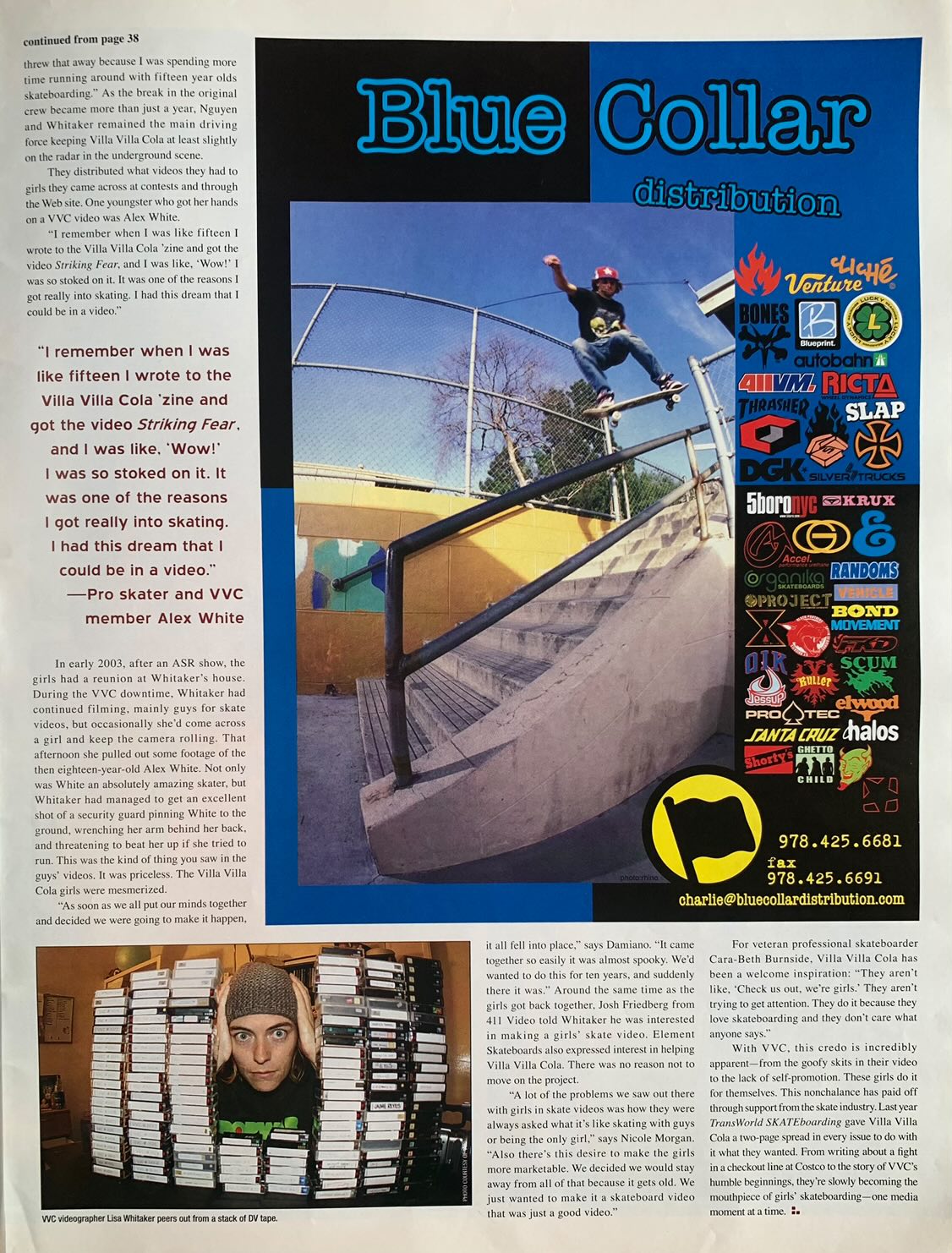
In an interview for TransWorld Business (April 2005), Nicole said that the name emerged because Villa Villekulla symbolized freedom, “[Pippi] would have her friends over, and they had crazy adventures. There were no rules, and you could be creative there. That was what we wanted our skateboarding to be all about.”

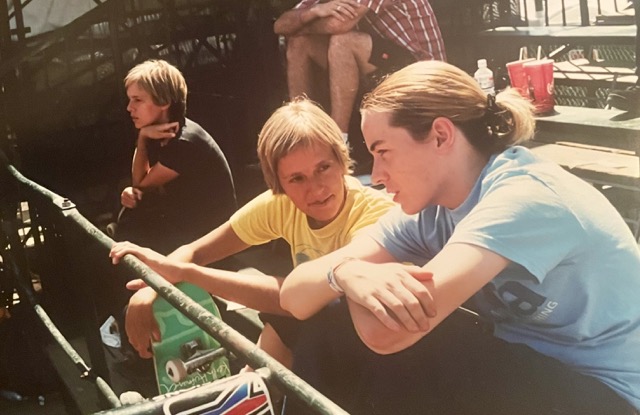

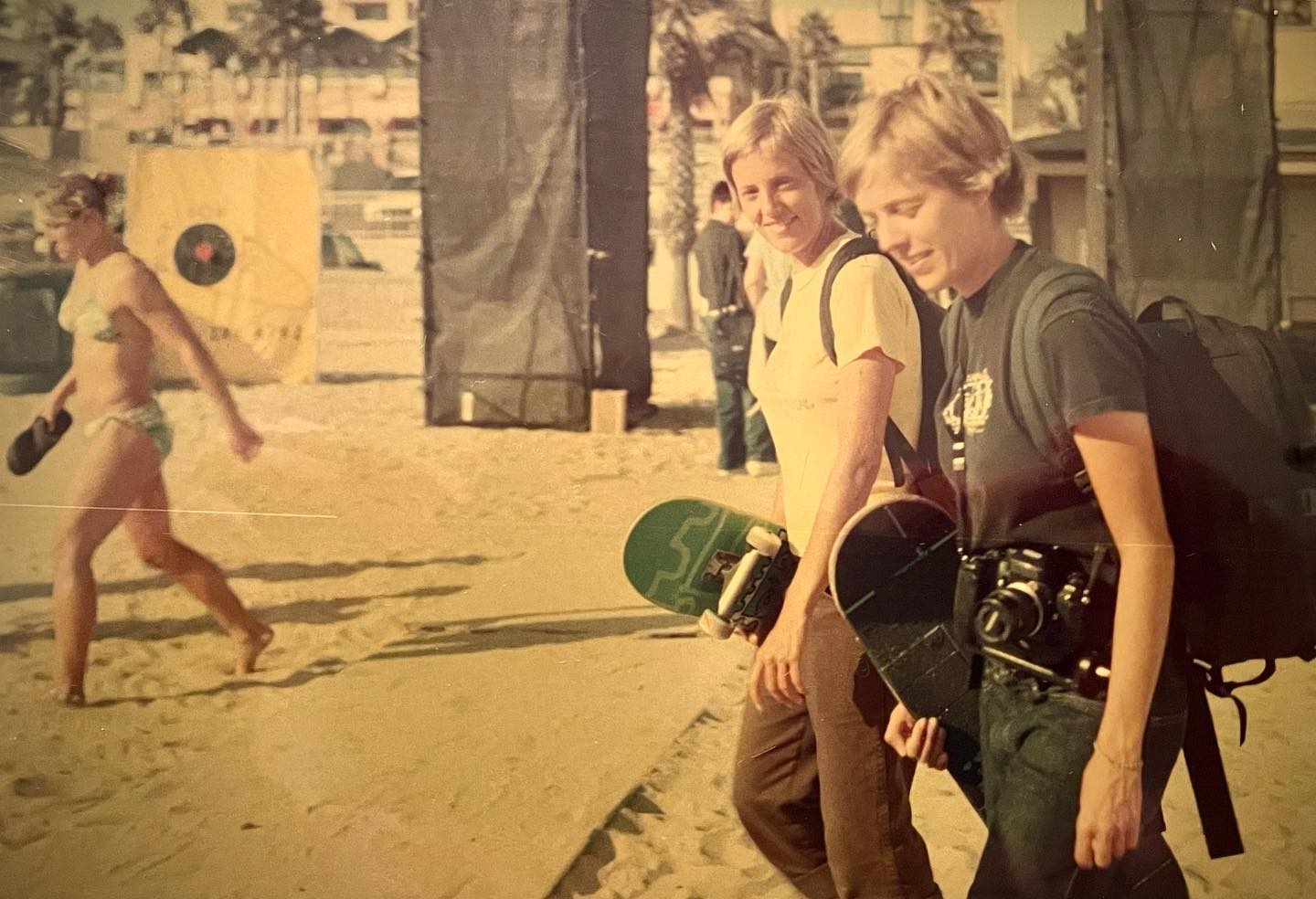
Photos: Nicole and Tiffany in the 1990s with Lori D. recording Van Nguyen, and the photo with Lisa Whitaker is also by Lori Damiano
VVC was also the name of their zine, which became a creative outlet to share their adventures. The cover of the first zine featured Nicole, Tiffany, and their friend, Jamie Sinift rocking silver capes and getting into some sort of mischief.
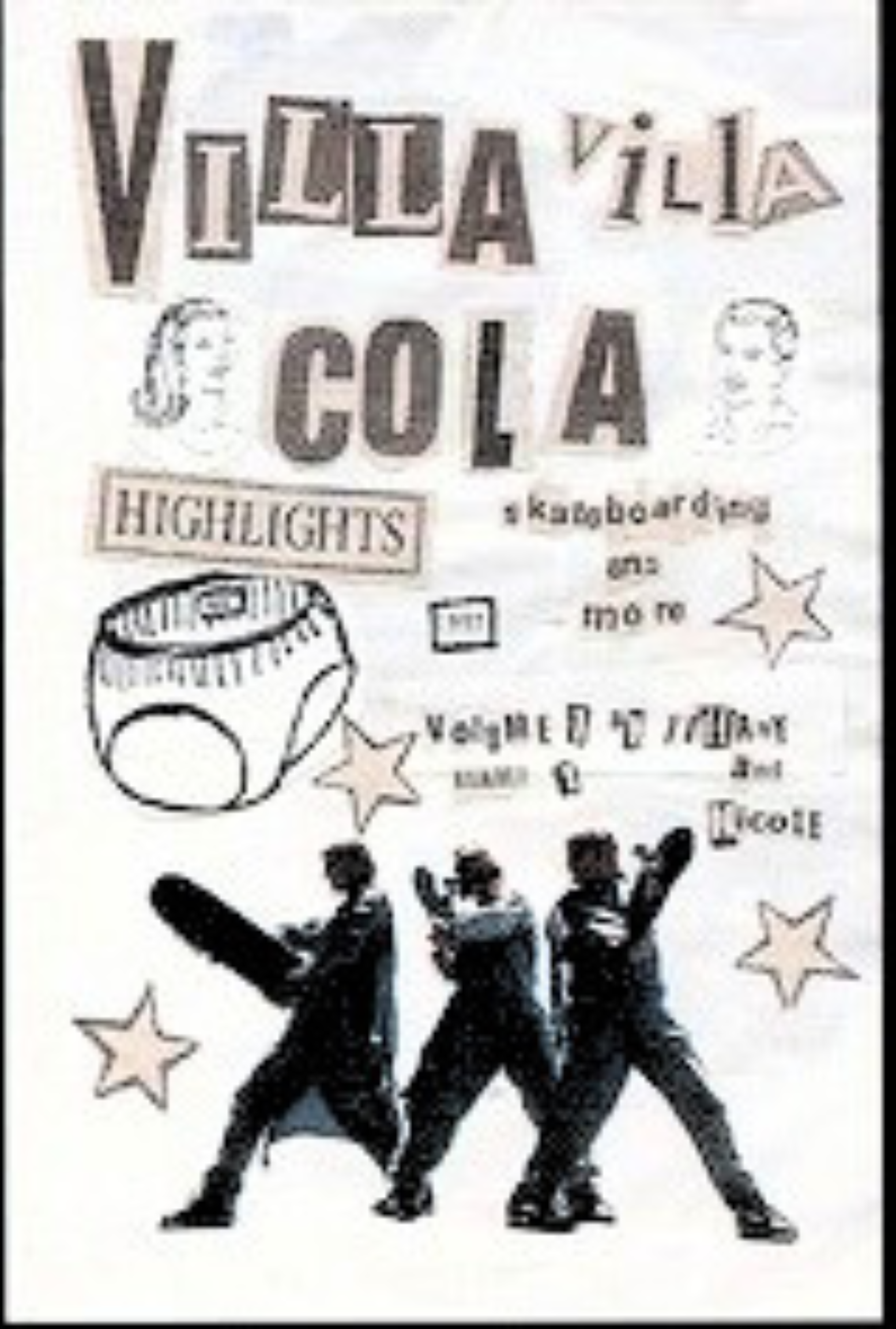
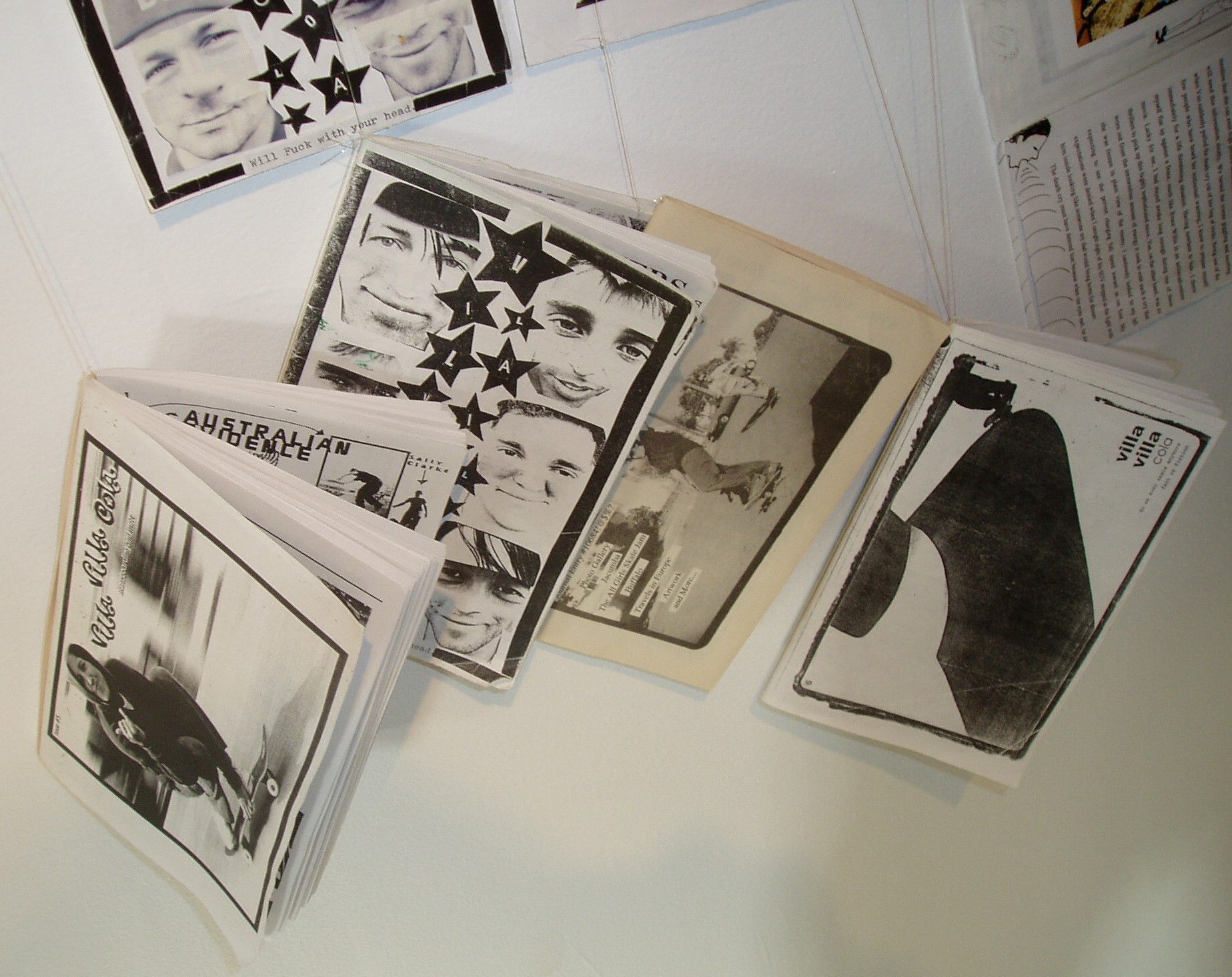
Lori Damiano, an artist, skateboarder and VVC member, said, “We didn’t see ourselves reflected in the media of our skateboarding community so together we made zines and skate videos featuring the girls and women we knew that skated. Other frequent collaborators in the early days were Van Nguyen, Faye Jaime, Lisa Whitaker, Michelle Pezel, Jamie Sinift, Andria Lessler, and Rebecca Burnquist.” And many of these early recruits came about because of the All Girl Skate Jam, which Patty Segovia launched at the Graffix Warehouse in Chula Vista in September 1997, including Whitaker and Nguyen.


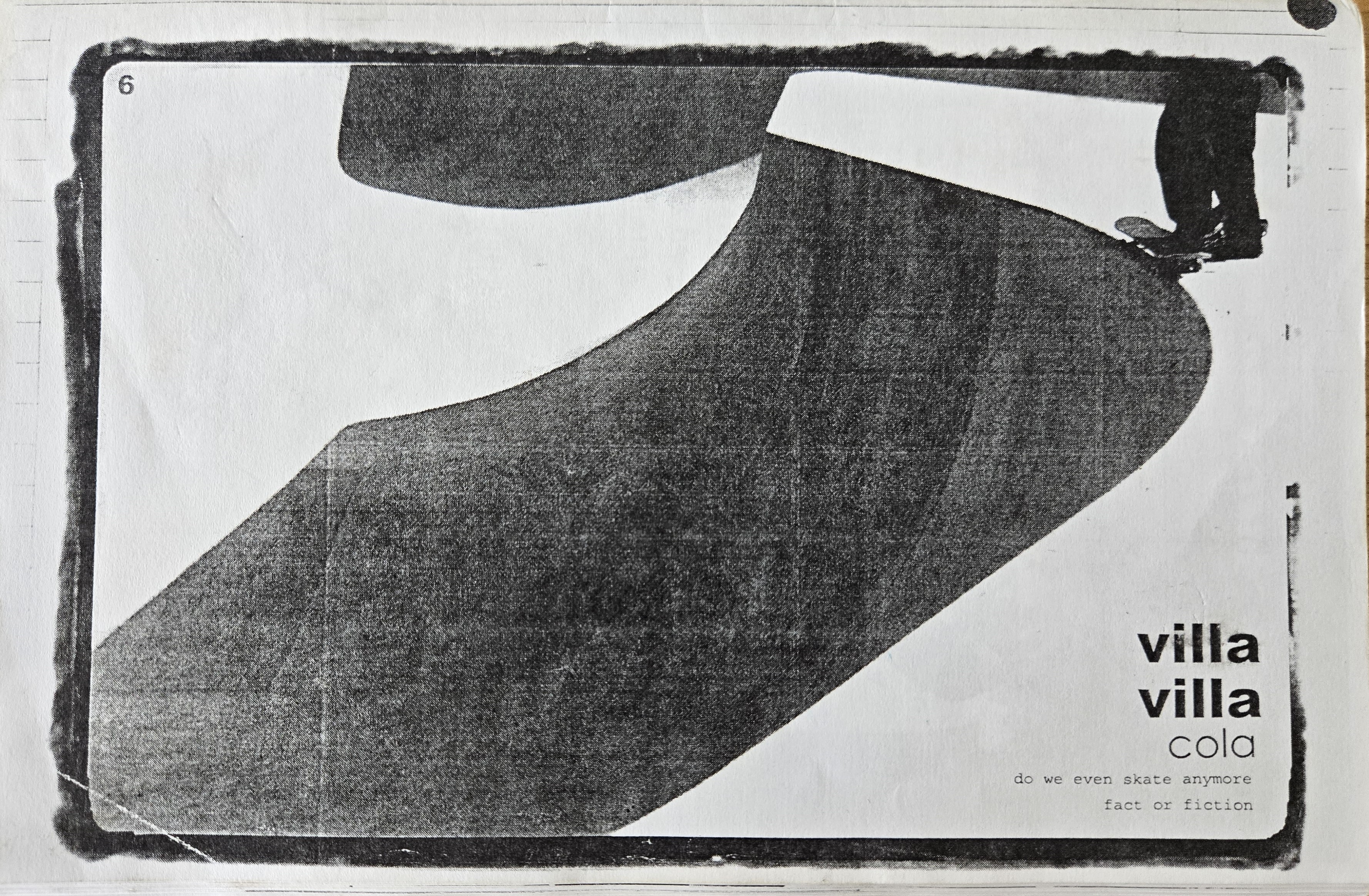
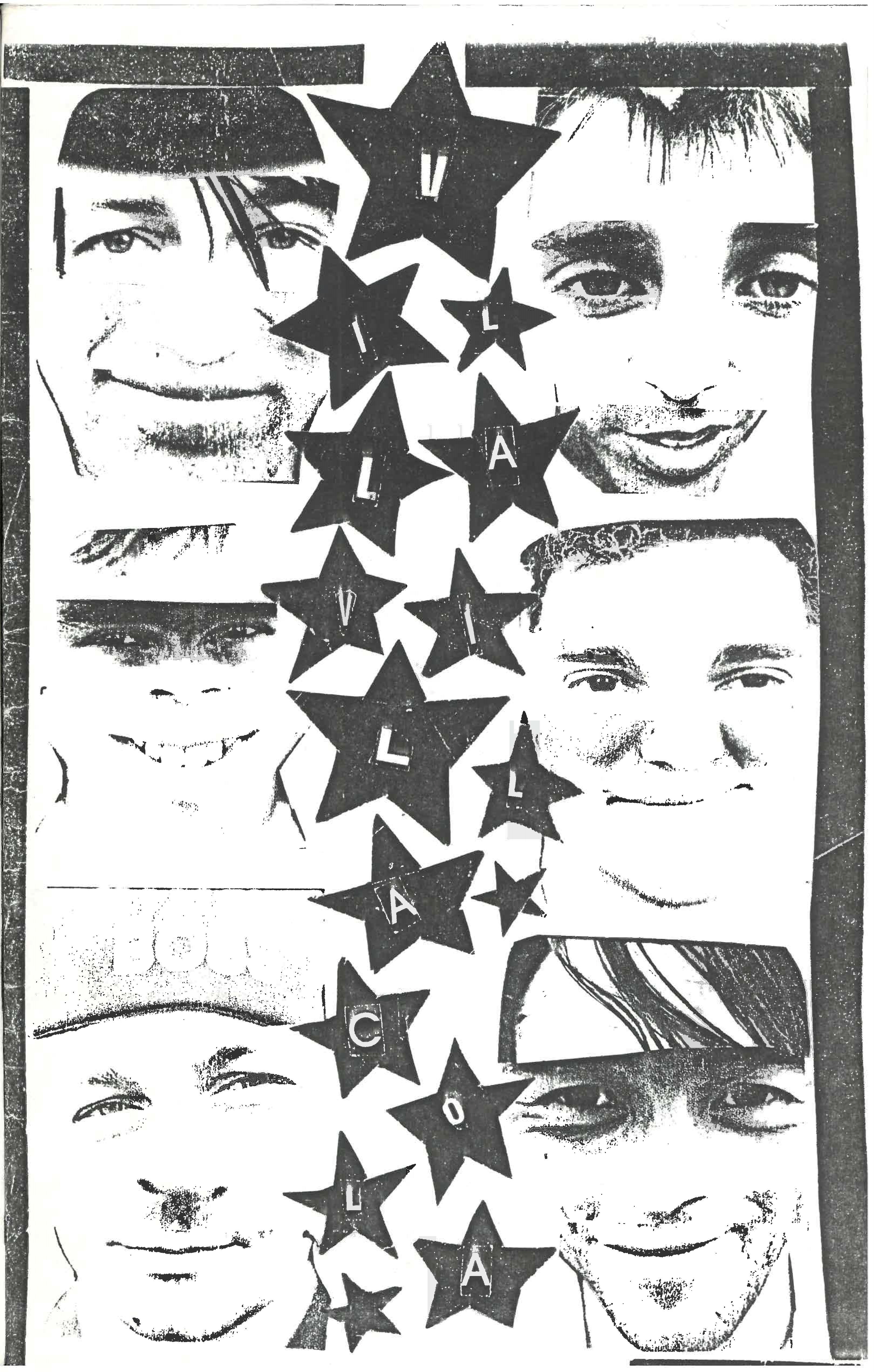
To build their scene, the twins traveled round the country sharing their zines and videos, which were positively received and created a devoted following even if people in the skate industry insisted that there was no female market. Lori Damiano described their first tour in 1997 in Skateboarder. “Nobody could believe their eyes when this little mini-van pulled up to the skateparks of America with a giant life-sized Barbie doll strapped ruthlessly to the top, and seven girls hopped out and started skating. It was one of the most fun adventures I’ve ever had.”
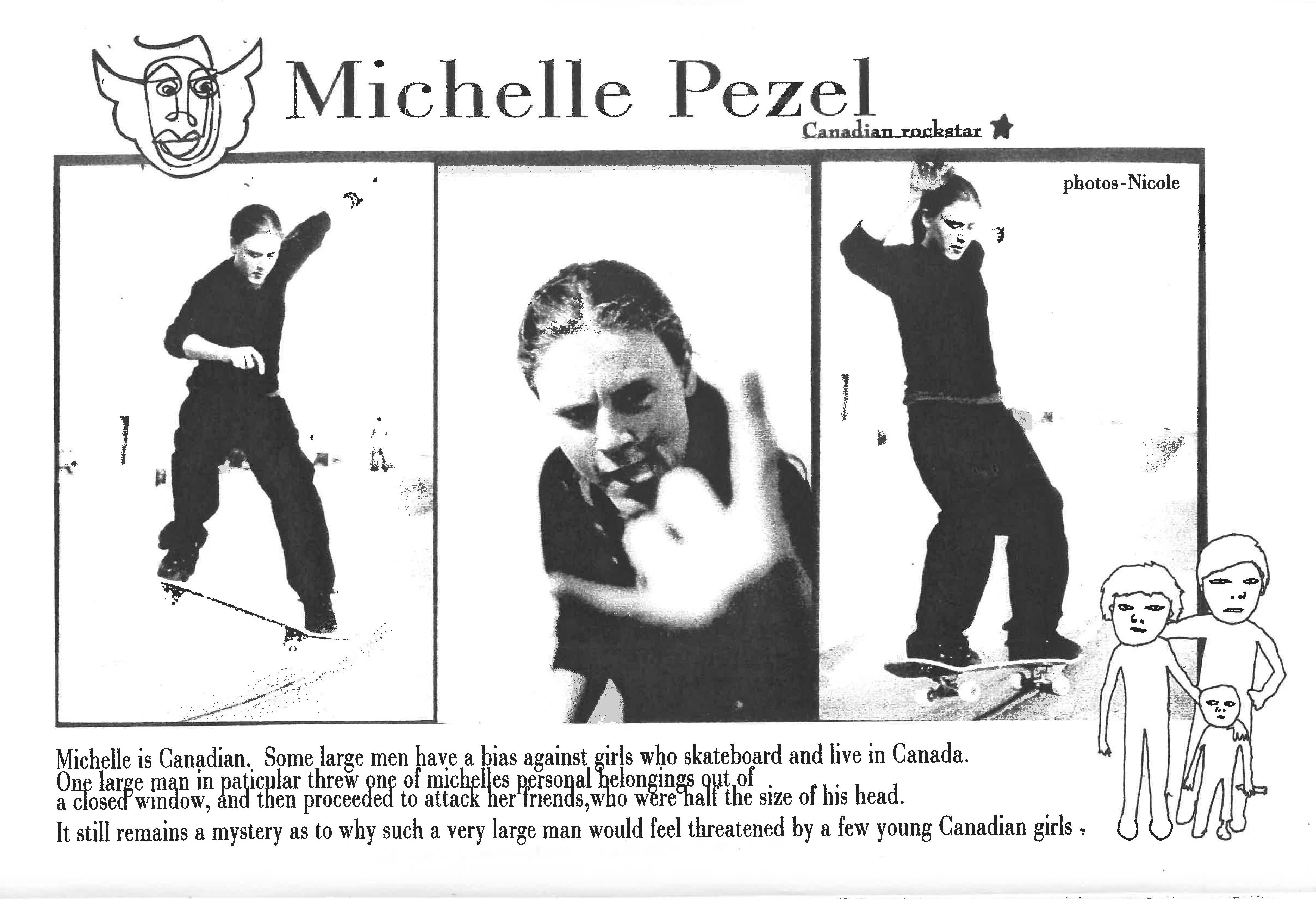
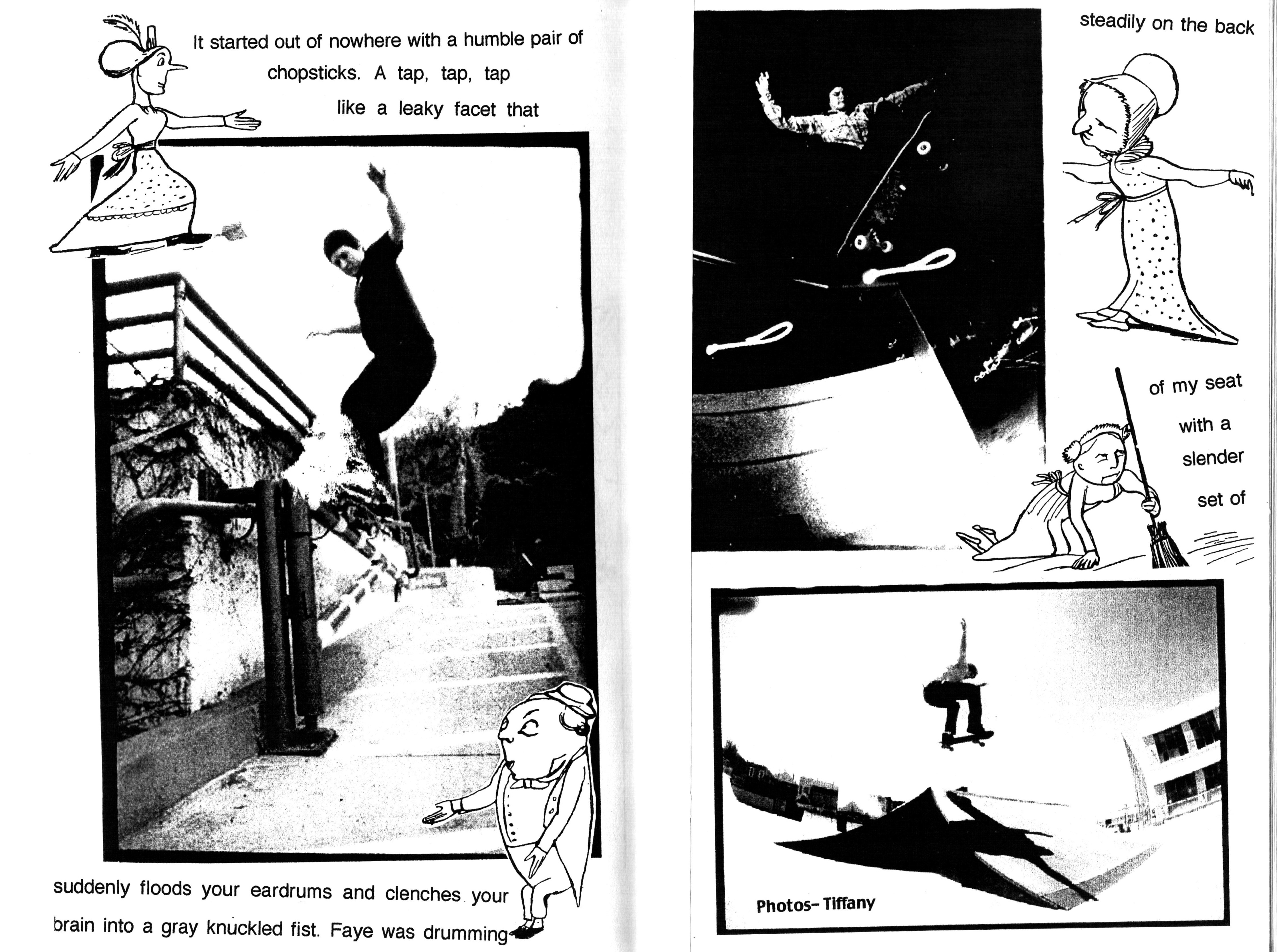
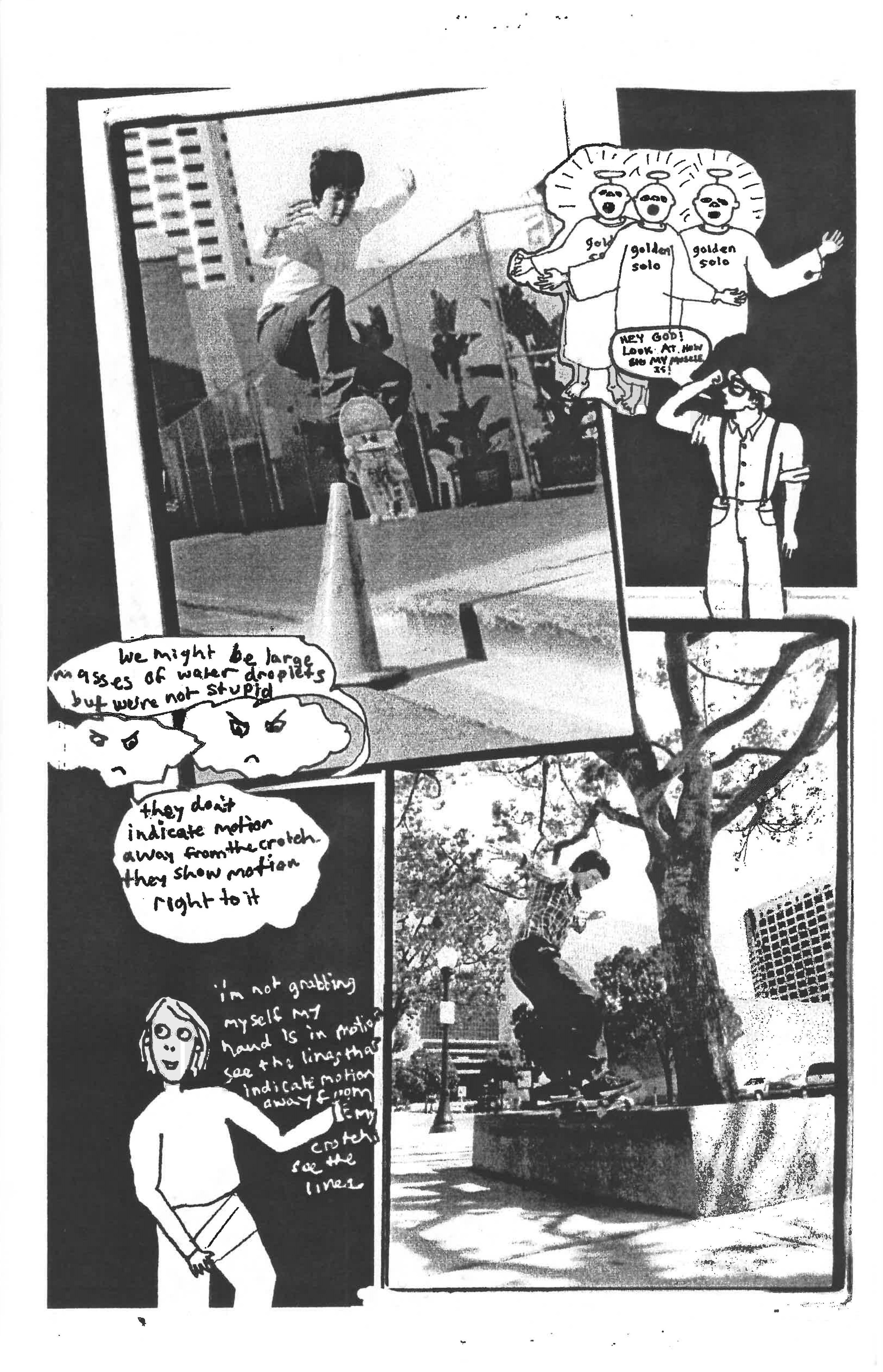
Photos: zine scans featuring Michelle Pezel, Faye Jaime, and Van Nguyen
The Villa Villa Cola zines were full of photos, stories, rants, drawings, recipes, and hilarity. Memorable features included a series of photos of Faye attempting to skate a ledge with a handbag, then taking out her wrath on her skateboard for “getting in the way of my purse,” reports on the All Girl Skate Jam contest series, road trips to Canada and overseas to Australia, and horoscopes that might predict “sex with an alien.” Tiffany wrote an account of skating Burnside in Portland for the first time, dealing with hostile motorcycle mechanics, fronting as an all-girl rock band for a photo shoot, among many other random anecdotes.
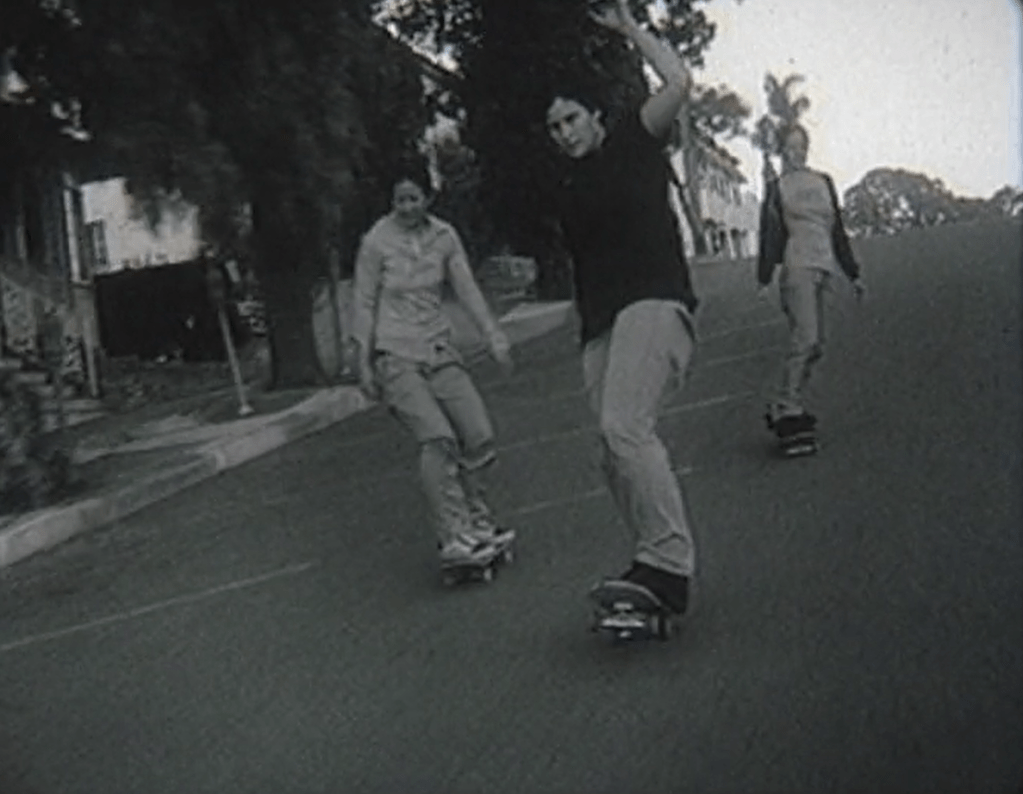
Photo: Still from Defeating Projections by Lori D.
VVC expanded their efforts, producing skateboarding films like Striking Fear into the Hearts of Teenage Girls (1997) produced by Nicole Morgan, which was briefly shared on the website GirlShred.com and Lori Damiano’s school project Defeating Projections (1999), a 16mm documentary about VVC for a class she was taking at UCSD.
Faye Lynn Richards reviewed a VHS tape that contained both films in her zine, Second Wind (No. 3, Spring 2004). Richards appreciated the skill of the skaters, the antics, the dialogue, and acknowledged the scene from Defeating Projections that showed the crew putting their zine together. “There are some words of wisdom about feeling intimidated by being the only female at a skate park and how inspiring it is to finally see another chick skating… All around, this is a good video. I am so glad that these ladies are creating things like this.”

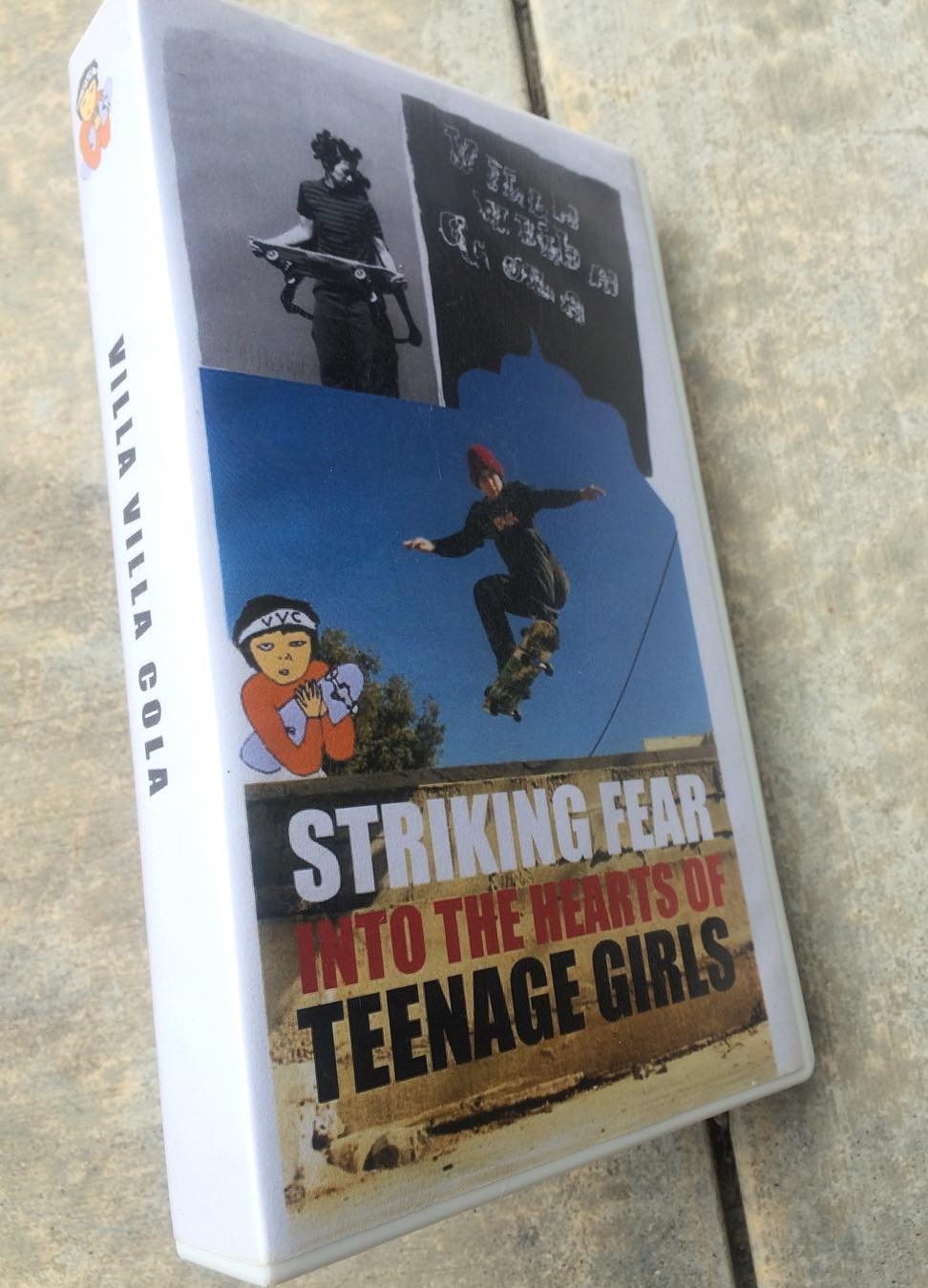
Another reader, who would go on to become a revered sponsored skater (and is still highly active in the skateboard community) was Alex White. In TransWorld Business, Alex said, “I remember when I was like fifteen I wrote to the Villa Villa Cola ‘zine and got the video Striking Fear, and I was like, ‘Wow!’ I was so stoked on it. It was one of the reasons I got really into skating. I had this dream that I could be in a video.” This dream of a proper all-girls skateboarding video was part of the VVC collective’s vision, but it was momentarily stalled.
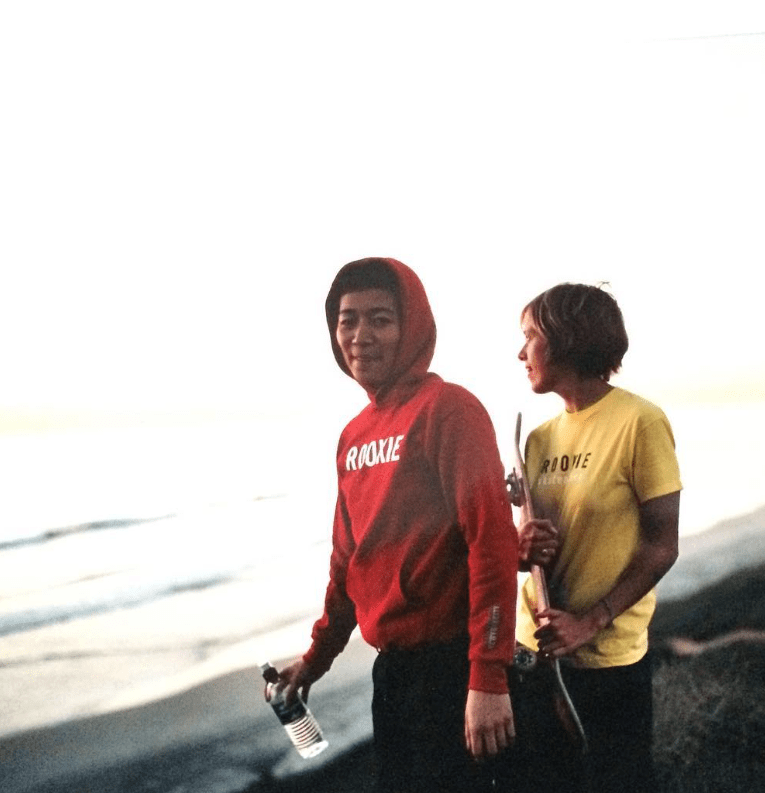
Photo: Van Nguyen and Tiffany Morgan in 1998 rocking NYC Rookie gear
In the early 2000s, the VVC members started to pursue their own independent interests like college and jobs. And yet, in their interview for TransWorld Business, Van Nguyen explained that she persevered with her skating, moved to San Francisco as a kind of “VVC Mascot,” and connected with “emerging teen powerhouse skaters, Amy Caron and Vanessa Torres.” Simultaneously, Lisa Whitaker, who had launched The Side Project website (which evolved into the Girls Skate Network) was also keeping the love for VVC alive and made a breakthrough with 411 Video Magazine. The game-changing video Getting Nowhere Faster (2004), sponsored by Element skateboards and 411VM was the product of their reunion and labour.
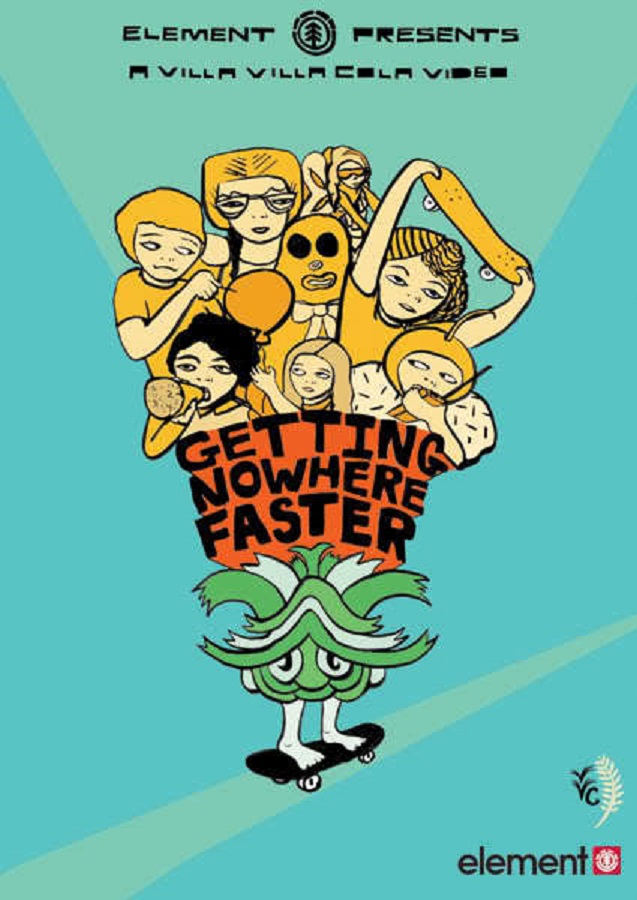
In the TransWorld Business interview, it was noted that, after an ASR show in early 2003, there had been a reunion at Lisa’s house where she pulled out some of the footage she had been accumulating, including Alex White, who was 18 and ruling!
“Not only was White an absolutely amazing skater, but Whitaker had managed to get an excellent shot of a security guard pinning White to the ground, wrench her arm behind her back, and threatening to beat her up if she tried to run. This was the kind of thing you saw in the guys’ videos. It was priceless. The Villa Villa Cola girls were mesmerized.” Lori Damiano also confirmed the conviction of the group. “As soon as we all put our minds together and decided we were going to make it happen, it all fell into place… It came together so easily it was almost spooky. We had wanted to do this for ten years, and suddenly there it was.”
Originally, Getting Nowhere Faster was just going to be a bonus feature on an issue of 411VM. Fortunately, when Whitaker dropped off the footage to Josh Friedberg, producer of 411VM, “Johnny Schillereff, the owner of Element, was there when he watched it and they were completely blown away. They had no idea that there were that many girls skating or at that level. They were like ‘forget the DVD bonus, we’ll help you make a full video’” (Lima).
In making the video, Lisa shared that the VVC crew “had worked on videos together in the past and it seemed like we all had the same views on the need for a video which will expose these girls to the rest of the world and make something they can be proud of” (Square).
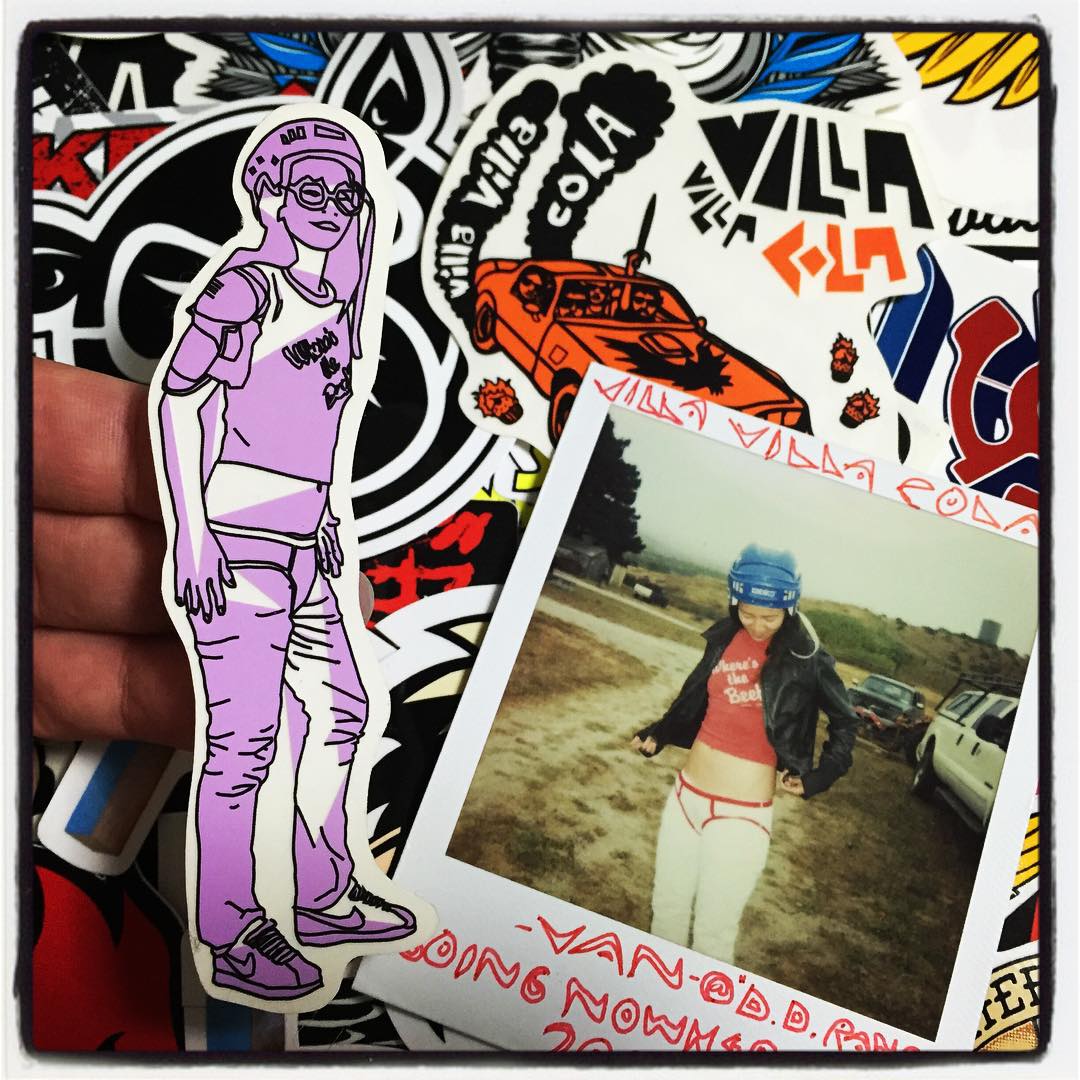
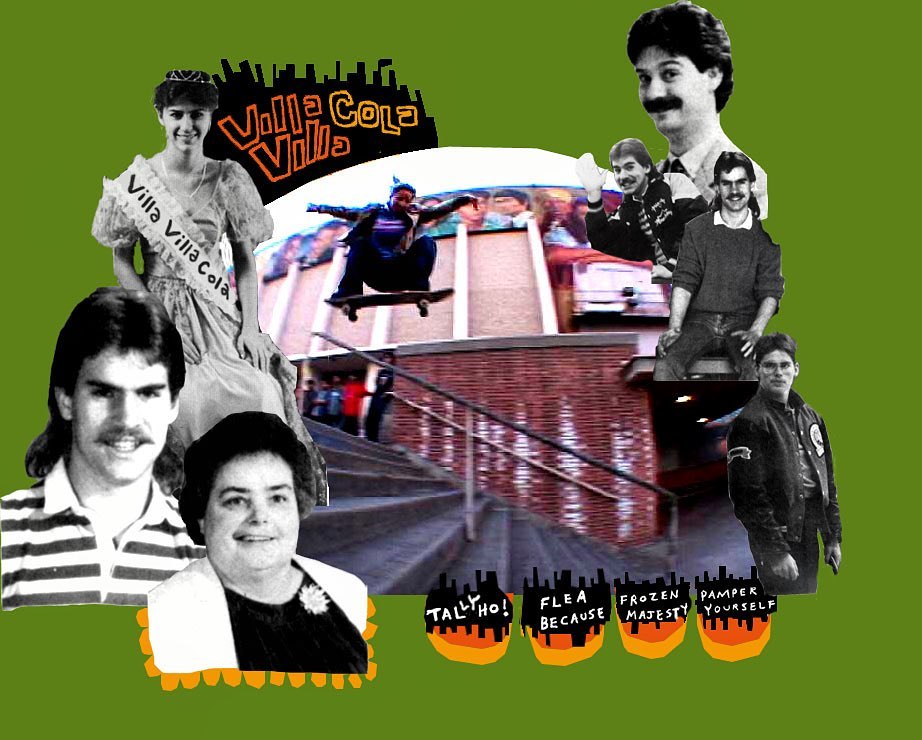

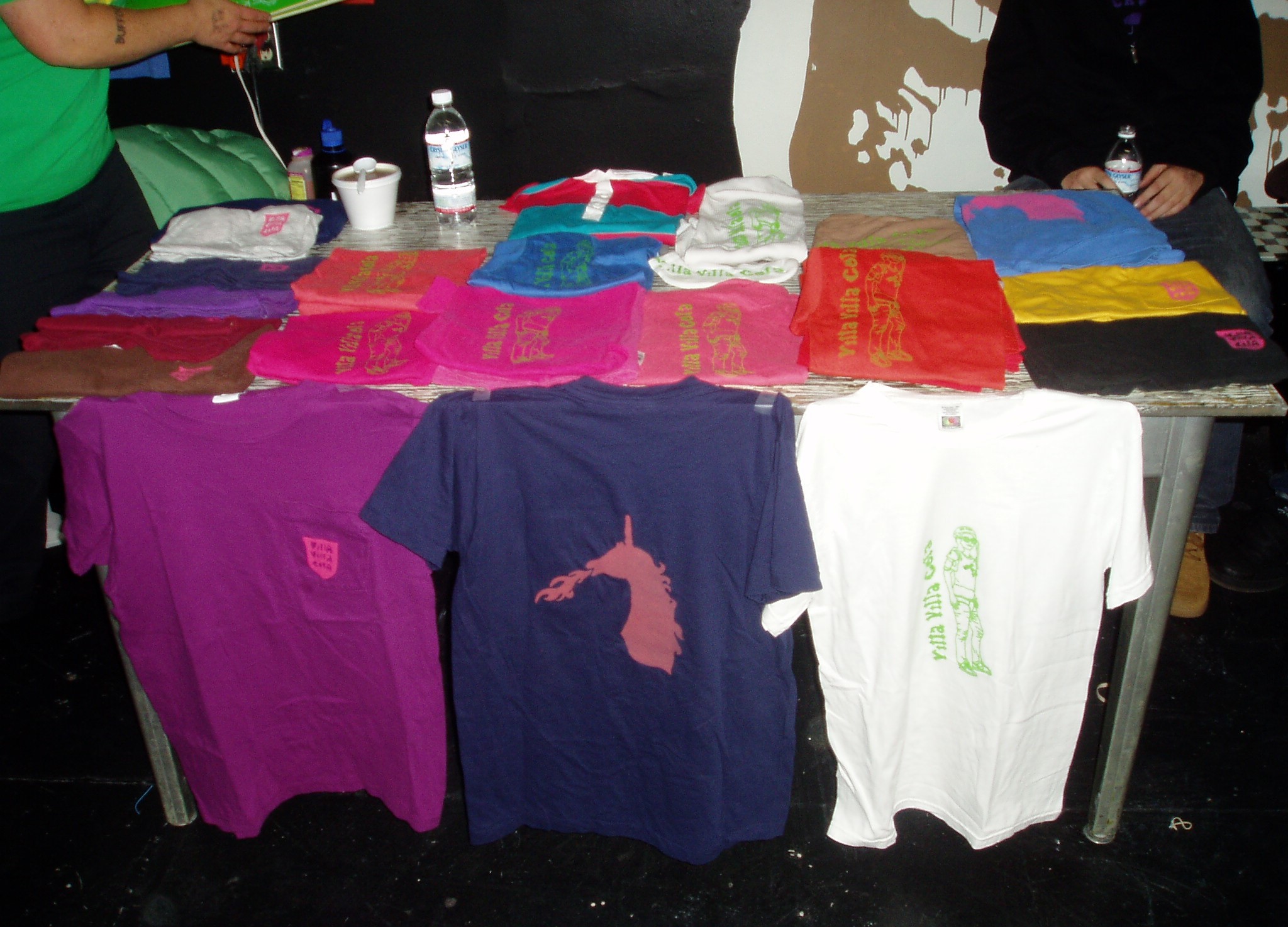
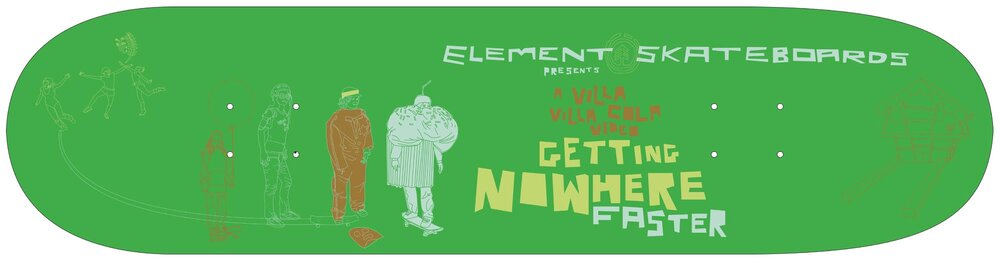
Photos: Lori D’s artwork was featured in the zines, VVC swag, and many collages including these two with Van Nguyen and Alex White launching off some stairs. And below, she designed a commemorative Getting Nowhere Faster skateboard with Element.
Getting Nowhere Faster was refreshing because, while there had been several documentaries about what it was like being a female skateboarder combined with footage, for example, Live and Let Ride (1999, dir. Tara Cooper) and AKA: Girl Skater (2002, dir. Mike Hill) featuring the Gallaz pro team, this video emphasized skating and good times. Nicole explained that, “A lot of the problems we saw out there with girls in skate videos was how they were always asked what it’s like skating with guys or being the only girl… Also there’s this desire to make the girls more marketable. We decided we would stay away from all of that because it gets old. We just wanted to make it a skateboard video that was just a good video” (Sosienski).


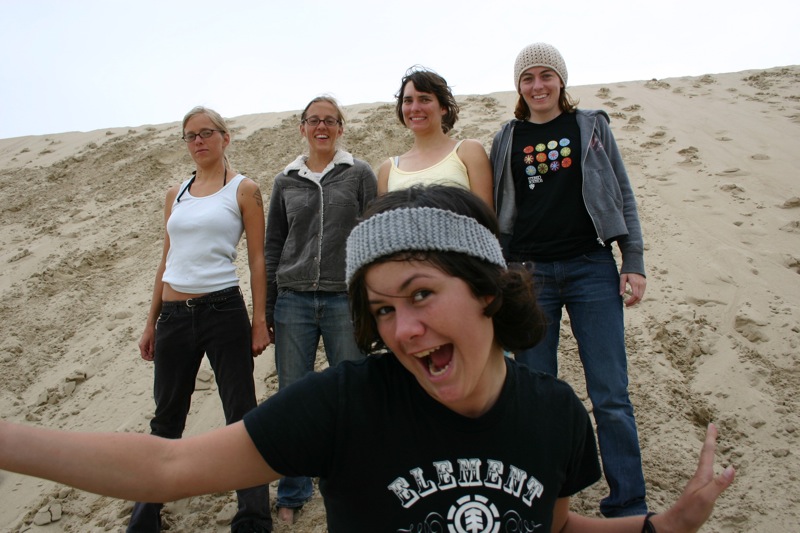


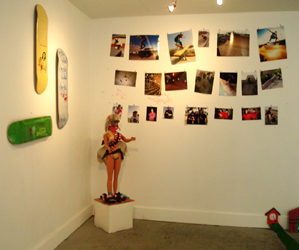
The film premiered in Vancouver, BC with a VVC art exhibit and cake walk / dance party at Antisocial skateshop gallery, thanks to co-owner Michelle Pezel and then a film screening at the Emily Carr Art Institute Theatre in October 16, 2004. Tiffany said that the video was launched during “a pivotal time before social media. VVC and GNF [Getting Nowhere Faster] were the way we connected to each other in a world of virtually zero representation and hardly any means to find each other. Epic, fun times with just the weirdest group of friends making the magic” (McGuire).

Photo: launch of Getting Nowhere Faster in 2004 with Alison Matasi, Amy Caron, Van Nguyen, Tiffany & Nicole Morgan, and Lori Damiano.
In 2004, premiere parties would also occur in Portland at the Dept. of Skateboarding, the Olympia Film Festival in Washington, in Seattle alongside a selection of bands at the Vera Project, and in San Francisco at The Roxie Theatre with Debbie Escalante in tow, eventually on to New York City and beyond! The premieres were often aligned with art exhibits and skateboard clinics thanks to the OP Girls Learn to Ride program.
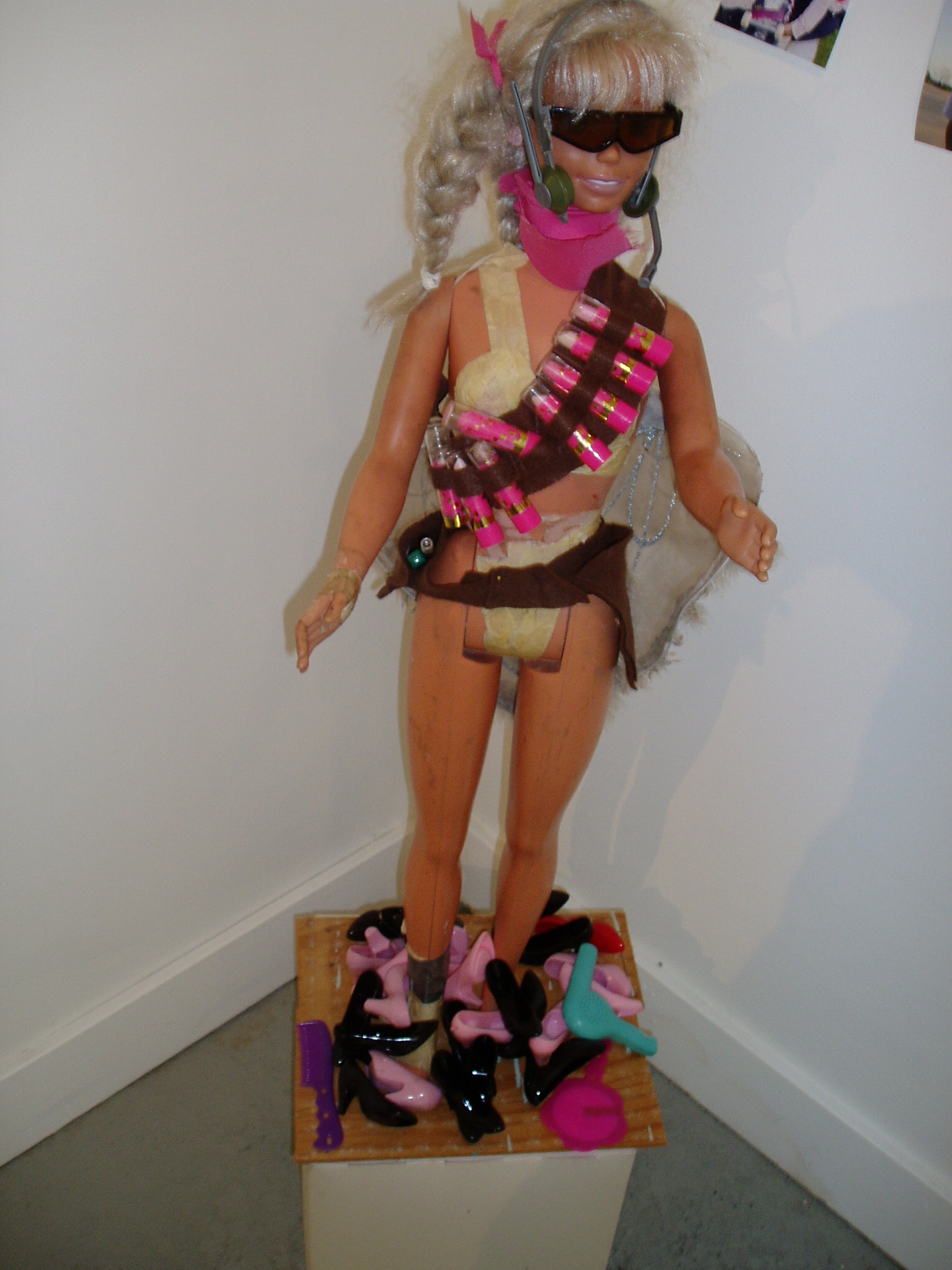
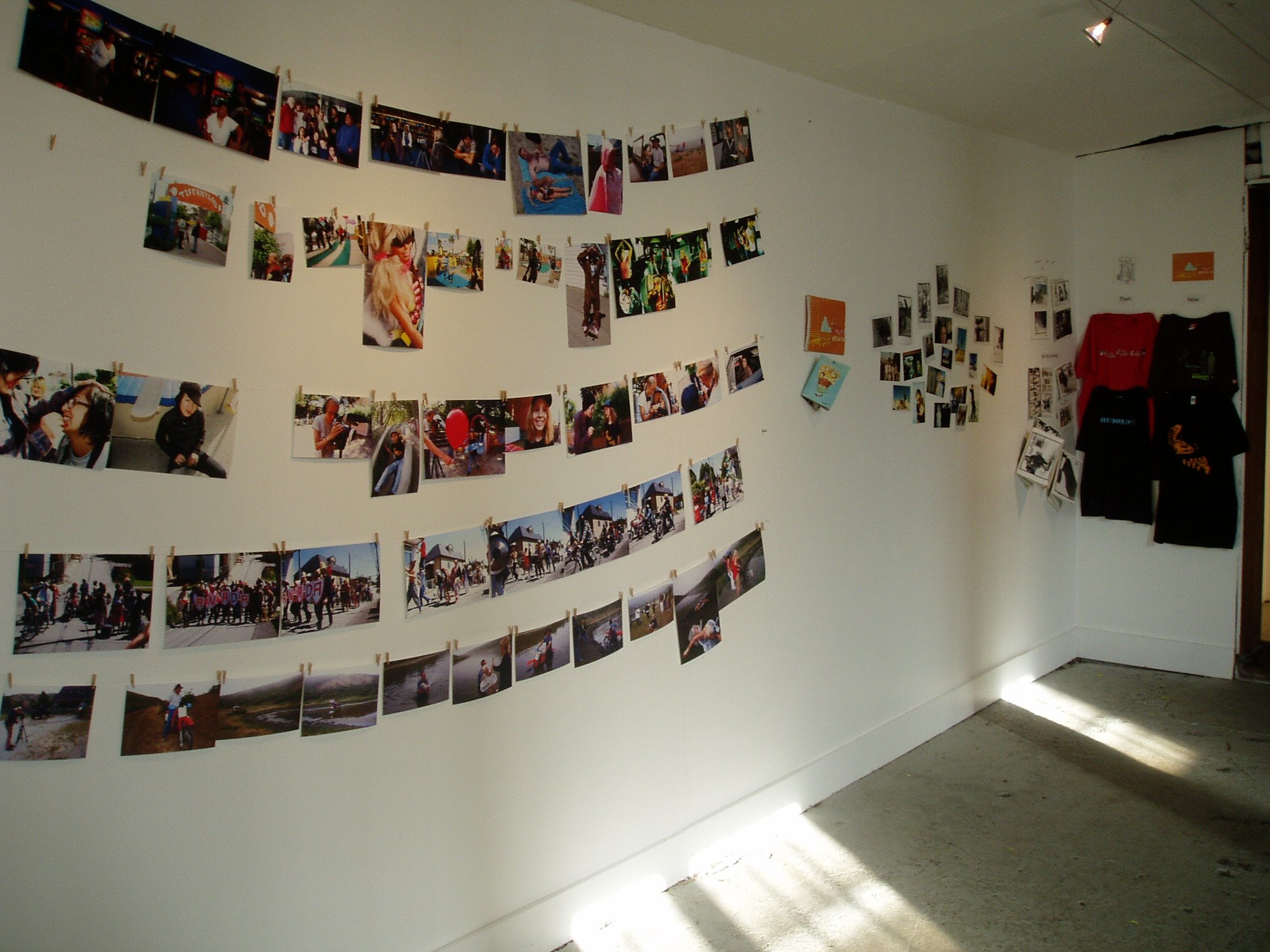
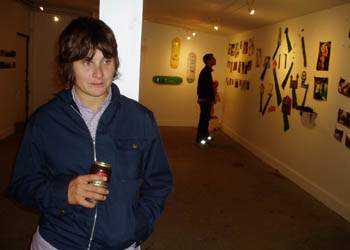
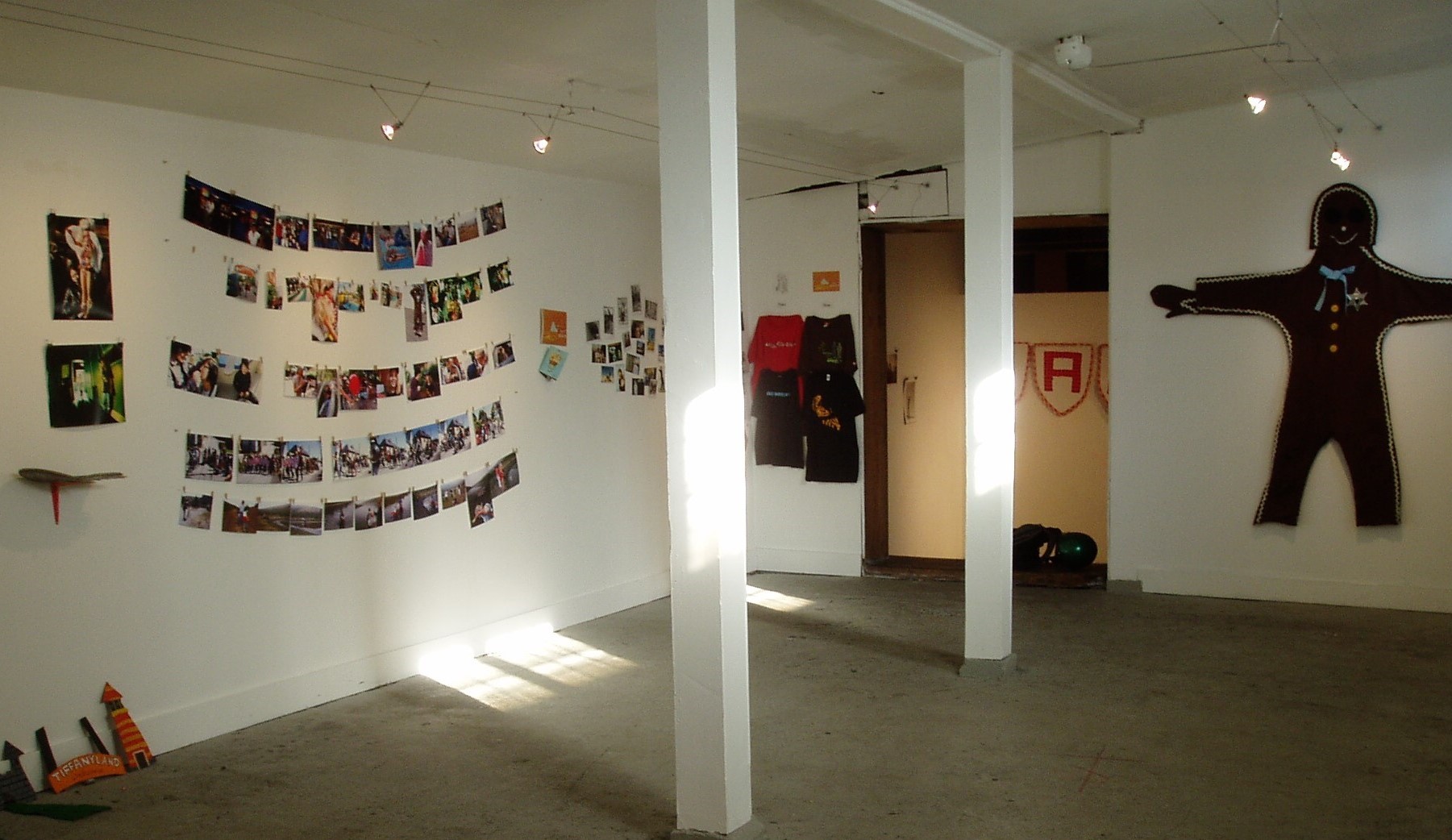
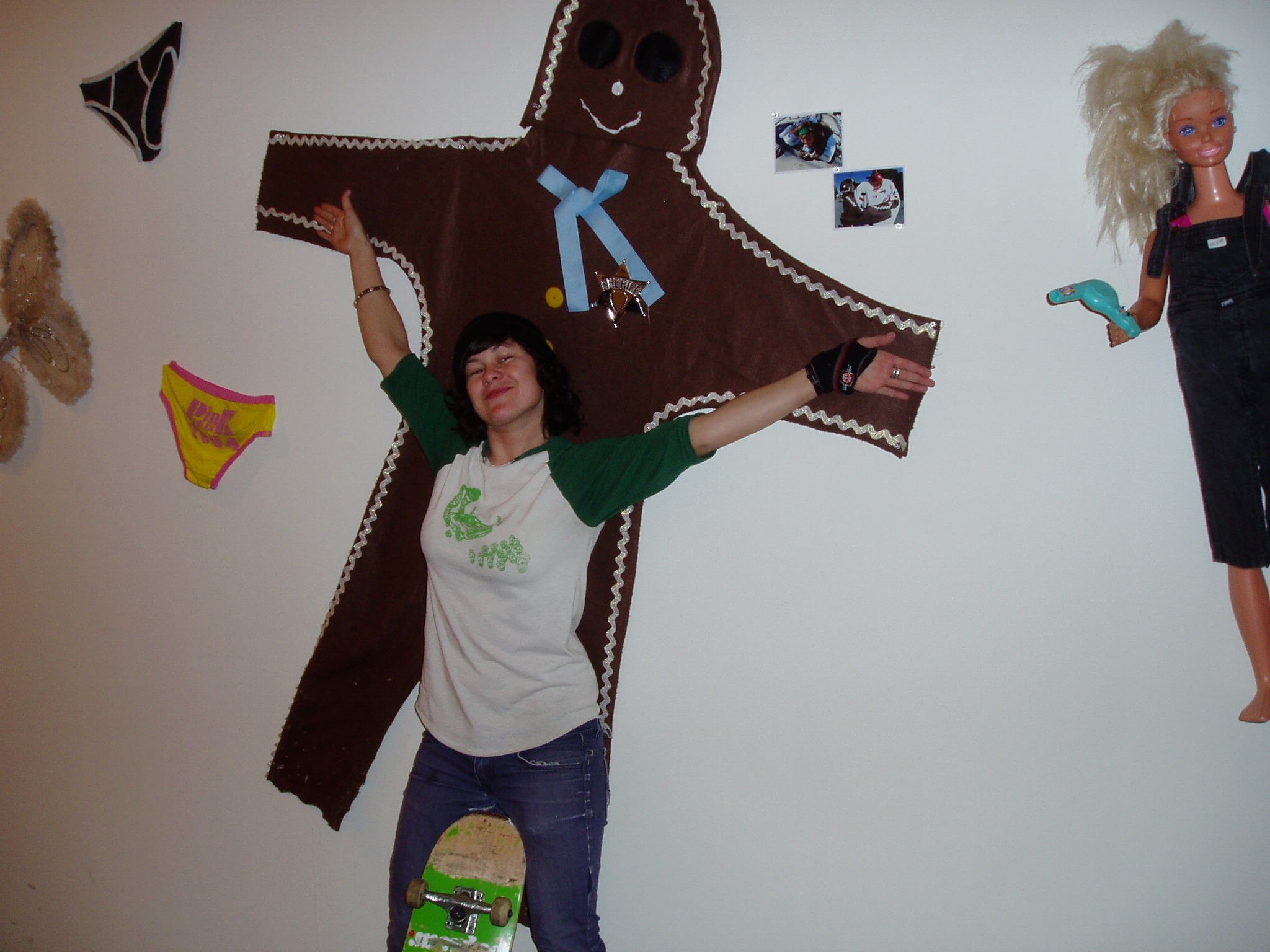
And the best part was that Getting Nowhere Faster was full of Villa Villa Cola magic with comedy, antics, random storylines revolving around “Tiffanyland Skatepark,” and bizarre characters like the child-sized Barbie doll Debbie Escalante, her cowboy side-kick and devious cupcake. It was a hilarious storyline that only VVC could concoct, and it also includes a laundry list of some of the best female skaters of the era:
Alex White, Alison Matasi, Amanda Kitt, Amy Caron, Cara-beth Burnside, Connie Hartsock, Elissa Steamer, Elizabeth Nitu, Esther Godoy, Faye Jaime, Holly Lyons, Jaime Reyes, Jayme Erickson, Jen O’Brien, Jessica Krause, Jessie Van Roechoudt, Jordyn Erickson, Kea Duarte, Kenna Gallagher, Kristin Ebeling, Lauren Mollica, Lauren Perkins, Lyn-Z Adams Hawkins, Megan Black, Mimi Knoop, Monica Shaw, Patiane Freitas, Stefanie Thomas, Van Nguyen, Vanessa Torres, Violet Kimble.
Watch the entire Getting Nowhere Faster video via The Side Project YouTube channel.
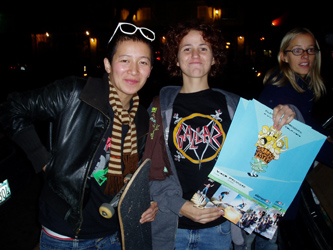


Dr. Neftalie Williams wrote a piece for TransWorld online about the film premiere (February 3, 2005) and to evoke the significance of Getting Nowhere Faster he asked, “Well, what if your video part stood for something more than a means to gain product? What if you were carrying the weight of the world on your shoulders? What if every move you made was going to be the determining factor on how history was going to be written? Damn. Scary right? That’s exactly the weight the girls of the Villa Villa Cola crew had resting on their shoulders.” Williams confirmed that “After the opening montage, we were immediately slapped with the reality that this video was going to rock.”
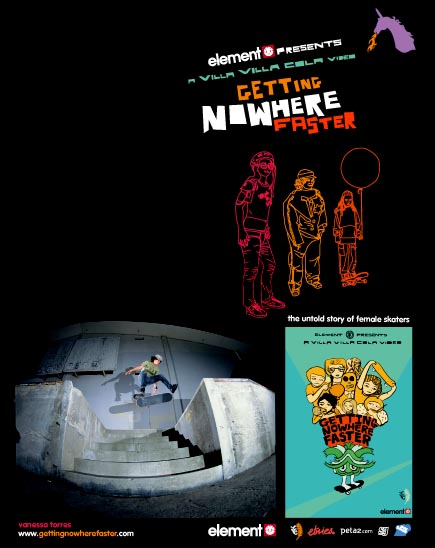
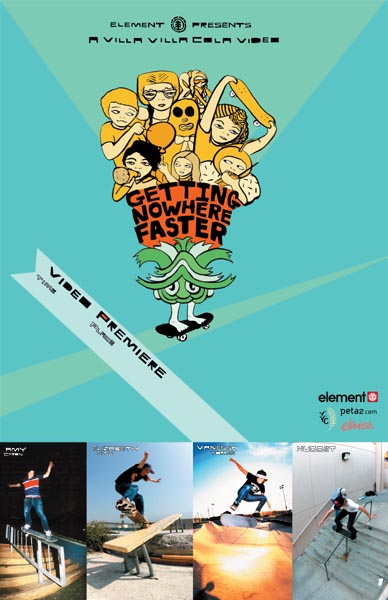
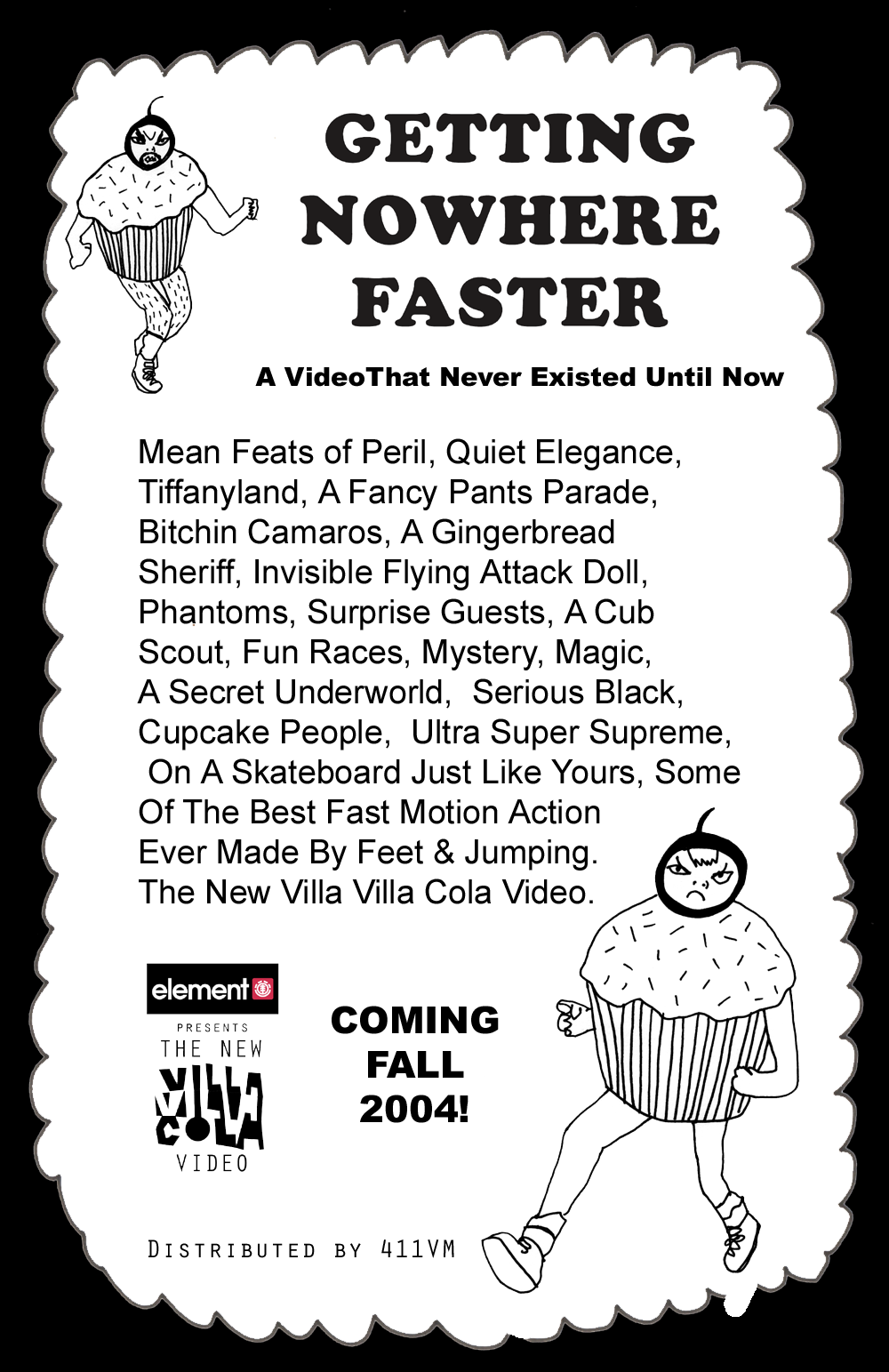


Above: promo and advertisements for the video and premiere parties
Williams also acknowledged that Lisa Whitaker and VVC had extended their reach to beyond just their core crew, to include footage of girls excelling from all over, and he concluded that the video “showed skating in its truest form, unadulterated, unbiased, and unbridled.” It was also noted that, since his review aligned with Martin Luther King’s birthday, Williams felt that the video was a great reminder for everyone to be treated with fairness and equality.
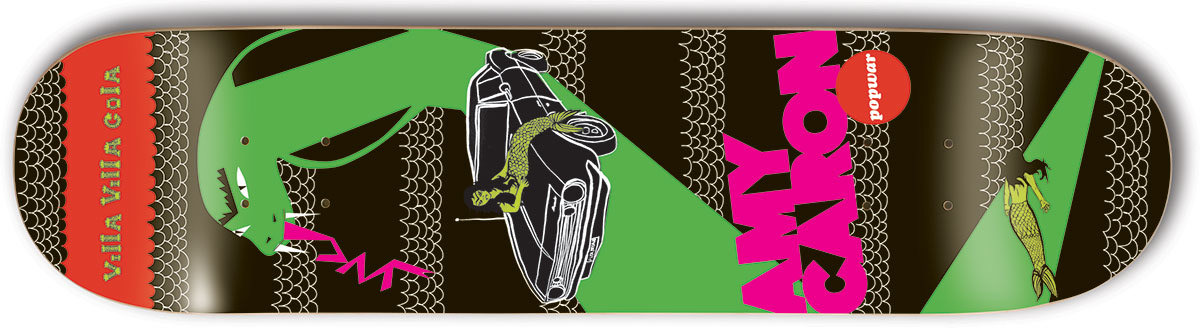
Check out Amy Caron’s limited edition PopWar skateboard from 2005 with Lori D. graphics and a great photo of wonder child Elizabeth Nitu and Caron during the filming of Getting Nowhere Faster:


TransWorld skateboarding magazine was a supporter of VVC and briefly allowed them to publish two pages of female-centric content buried inside a half dozen issues starting in October 2004, celebrating the eight years between the launch of the zine and the video. The pages were wedged in at the back of the magazine but were glorious, colourful collages created by Lori D. with a wild story, typical of VVC, accompanied by skateboarding photos. Such as, the “memorial” for Debbie Escalante in July 2005 called, “Villa Villa Cola – Making of a Masterpiece” for her “stuntwork” over the years, which evolved into a miraculous speaking role in GNF.
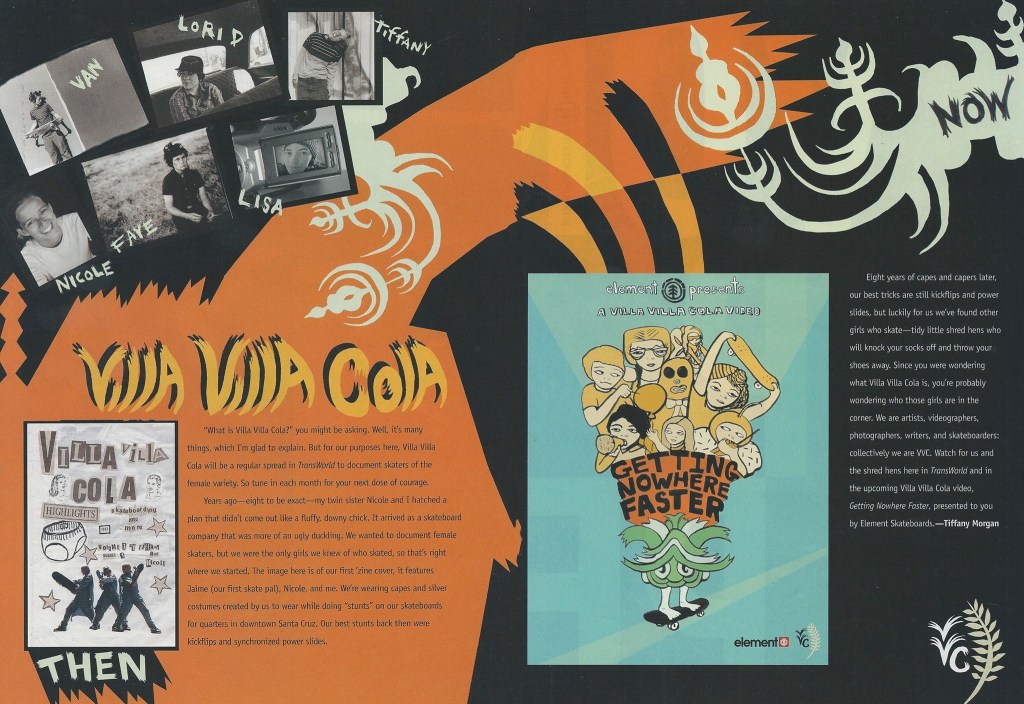
Photo: TWS feature October 2004
Sadly, the TWS coverage was short-lived. Lori said their feature was cancelled “because the magazine said it needed to sell the 2 pages for ads.” At the time, TransWorld issues were over 300 pages in length, which is significant for a skateboarding magazine. I struggle to see how excluding VVC was related to business. It was a poor excuse and the lack of any dedicated pages to female skateboarders was glaringly obvious. I also suspect that the content, such as the story about an old man calling them “dykes” in a Costco and punching a girl named Amanda, from the December 2004 issue, wasn’t content that they were used to handling or prioritizing.
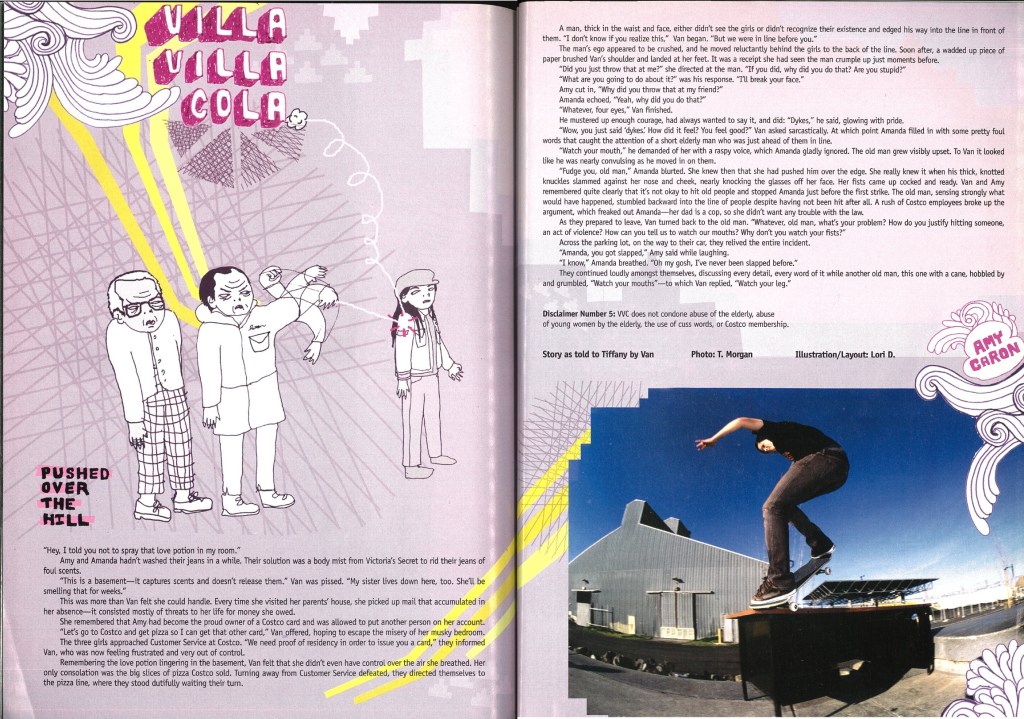
Photo: TWC feature December 2004 with Amy Caron (by Tiffany Morgan)
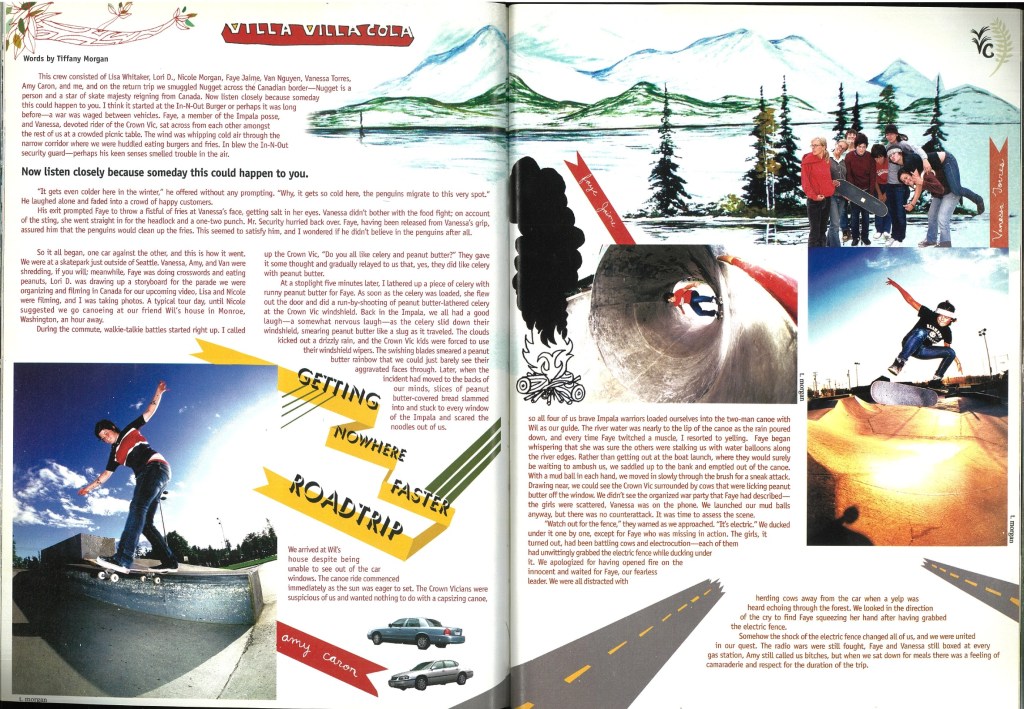
Photo: TWS feature February 2005 with Amy Caron, Faye Jaime and Vanessa Torres (by Tiffany Morgan)

Photo: TWS feature July 2005 with Vanessa Torres (by A. Acosta)
I would wager that, if you ask any woman who pursued skateboarding in the late 1990s and early 2000s, they will reference Getting Nowhere Faster as the single most inspiring and influential video for our generation. There was nothing else on the market with this kind of distribution or breadth of skateboarding skill. Plus, the video brought to life our heroes, Vanessa Torres and Amy Caron, motivating us to rally our like-minded friends in our own communities, and skate with joy and determination.
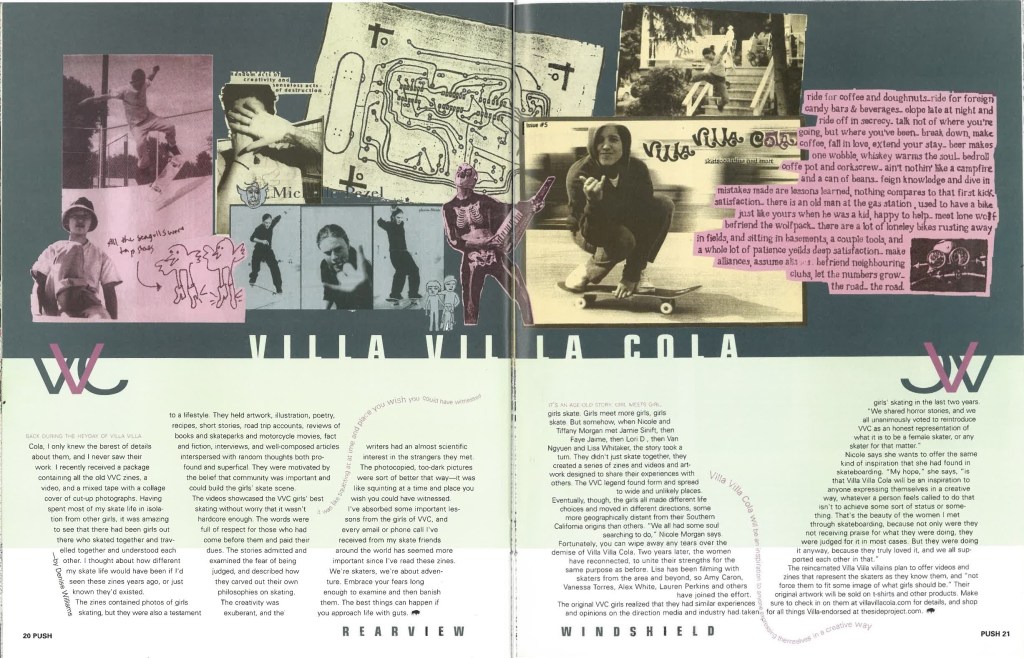
A great example of the impact of Villa Villa Cola was a report by Denise Williams, Editor of Push magazine and Frontside Betty website in eastern Canada. In the Spring 2003 issue she reported being so excited to receive the full bundle of old VVC zines, a video, and a mixed tape with collaged cover. She wrote, “Having spent most of my skate life in isolation from other girls, it was amazing to see that there had been girls out there who skated together and travelled together and understood each other.” Denise noted how, “The zines contained photos of girls skating, but they were also a testament to a lifestyle… [VVC] were motivated by the belief that community was important and could build the girls’ skate scene.”
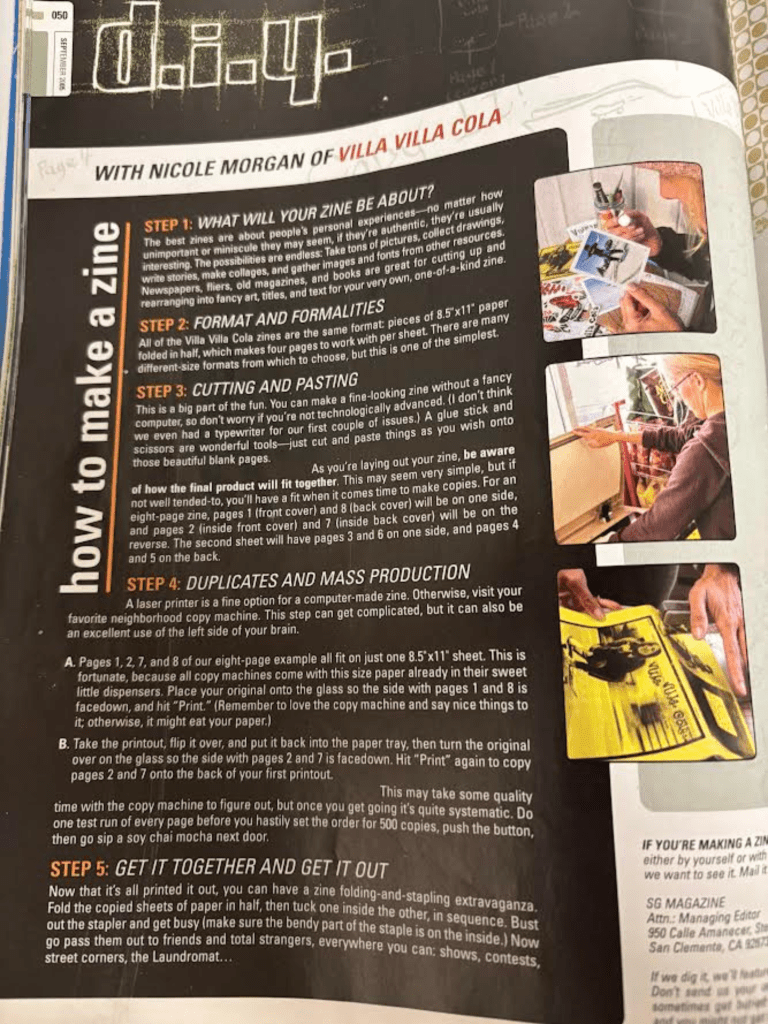
Above: SG Magazine (which stood for Surf, Skate, Snow Girl) included a “how to make a zine” article featuring Nicole Morgan in their September 2005 issue.
We have the Villa Villa Cola crew to thank for this evolution, and those skateshop owners who informed Tiffany and Nicole that there was no market of female skateboarders. And, thanks to their friendships with skateboarders in Vancouver, these zines made their way to Canada and were the first that I ever encountered, when the concept of do-it-yourself was a revelation to me.

Above: Tiffany and Nicole Morgan bookend Lori Damiano and Lisa Whitaker
In 2014, Villa Villa Cola Productions created a documentary, this time about surfing called Dear and Yonder: daring stories of ladies united by the sea, directed by Tiffany Campbell and Andria Lessler. One of their features was about the 1960s legend, Linda Benson for her legacy as a surfing pioneer, while recognizing her history as a skateboarder.

There’s a growing list of zines created for and by female skateboarders throughout the decades (check out the Zine page!), and the Villa Villa Cola zine is slowly being celebrated and recognized more widely for being a life-line for many, and a powerful creative outlet for female skateboarders in the late 1990s. Recently, the 2024 exhibit at SF MOMA organized by Jeff Cheung called “Unity Through Skateboarding” acknowledged VVC, and a mini reunion ensued!
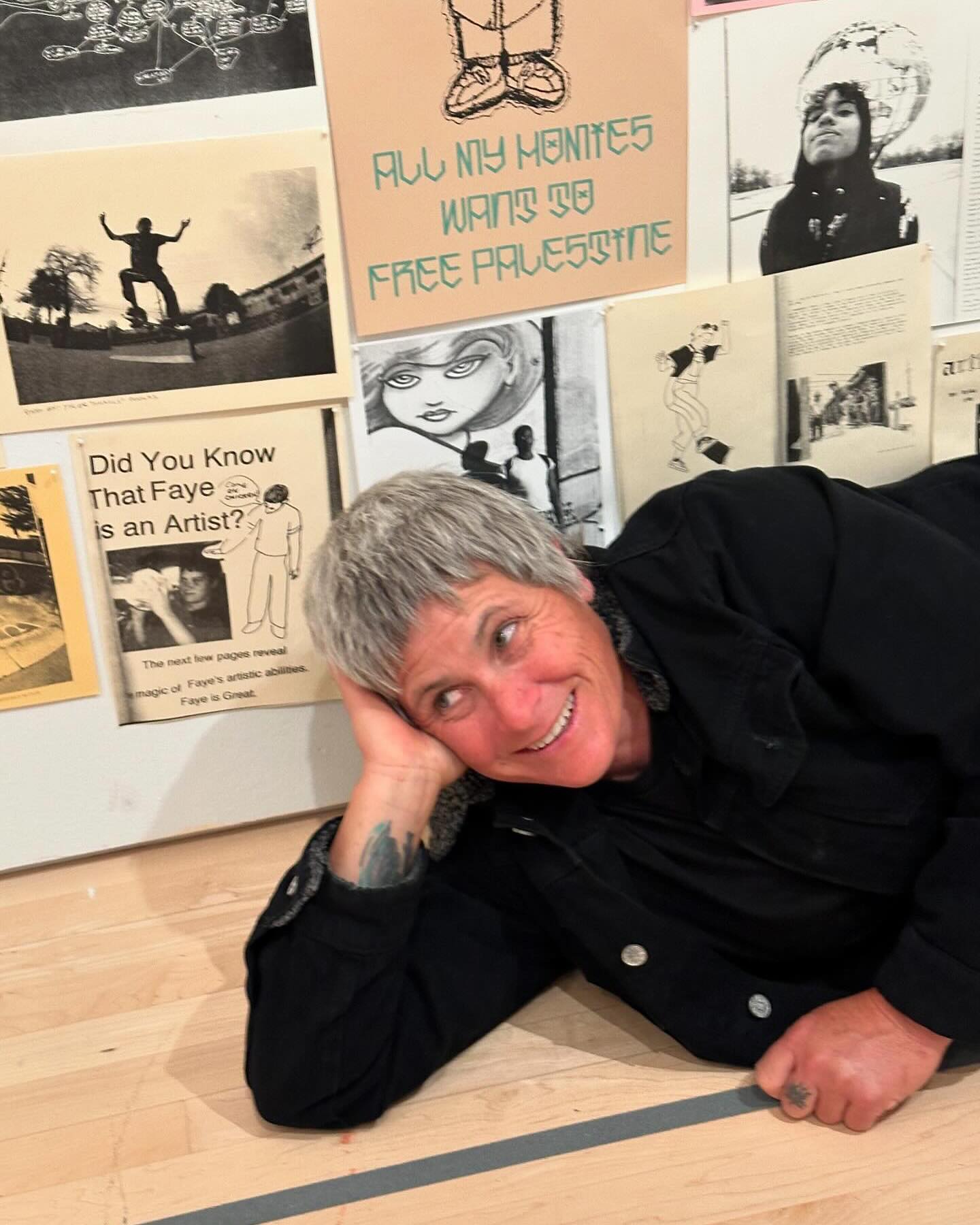
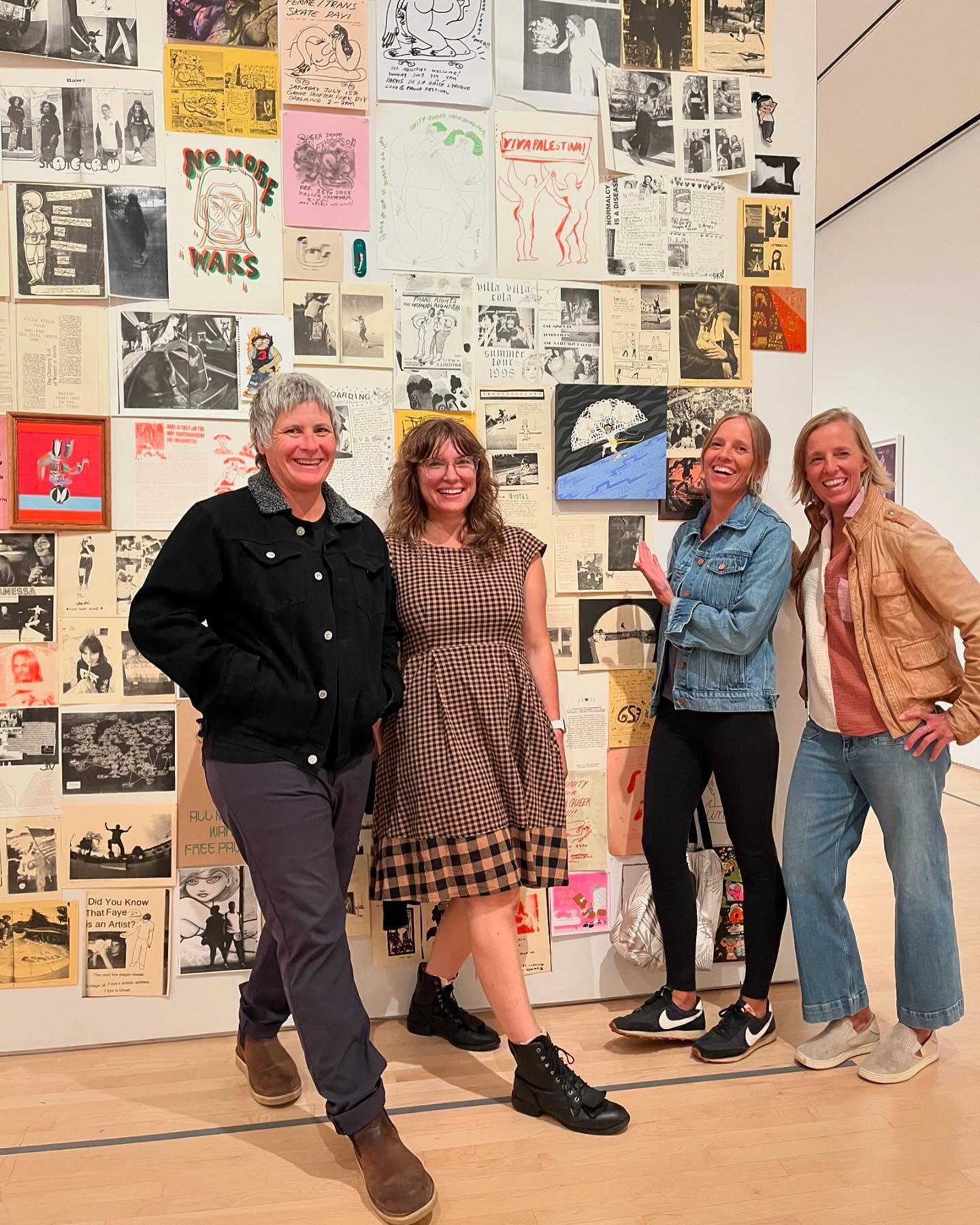
VVC members knew that they had to create visibility themselves, their own way and we’re all grateful for it. In Push magazine, there’s a great quote by Nicole where she said that her hope was that, “Villa Villa Cola will be an inspiration to anyone expressing themselves in a creative way… That’s the beauty of the women I met through skateboarding, because not only were they not receiving praise for what they were doing, they were judged for it in most cases. But they were doing it anyway, because they truly loved it, and we all supported each other in that.”
Follow VVC @villa.villa.cola on Instagram to stay informed!
References:
- Damiano, Lori. “Villa Villa Cola,” LoriDamiano.com (2023).
- Harrison, Sharon. “Villa Villa Cola: working together to support female skateboarding,” Skateboarder (February 2005), 34-35.
- Lima, Maria. “Creating an archive of womxn’s skateboarding history: a conversation with Lisa Whitaker,” Skateism (June 1, 2020).
- McGuire, Meghan. “Revisiting Villa Villa Cola’s ‘Getting Nowhere Faster,’ – the words of Tiffany Campbell,” Bigfoot Skateboarding Magazine 1, no. 1, (May 26, 2022).
- Sosienski, Shanti. “Villa Villa Cola: getting somewhere fast” TransWorld Business (April 2005) 38, 41.
- Square, Douglass. “Lisa Whitaker: Outtapocket and underpaid,” Check it Out: skateboarding 4 girls 16 (2004) 41-43.
- Whitaker, Lisa. Personal interview, September 19, 2024.
- Williams, Denise. “Villa Villa Cola,” Push magazine 1, no. 2 (Spring 2003): 20-21.
- Williams, Neftalie. “Villa Villa Cola Premiere,” TransWorld (February 2005).
 Womxn Skateboard History