
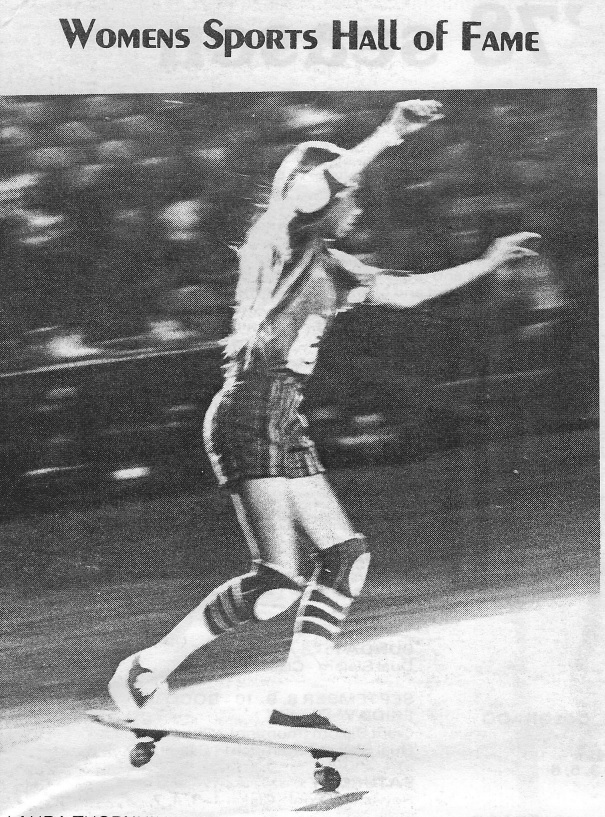
An archive on the history of women skaters wouldn’t be complete without Laura Thornhill (Caswell) with her massive list of contest wins. Her legacy is very much tied to the 1970s, and the photos of her taken by the legendary photographer Warren Bolster are iconic, among many others.
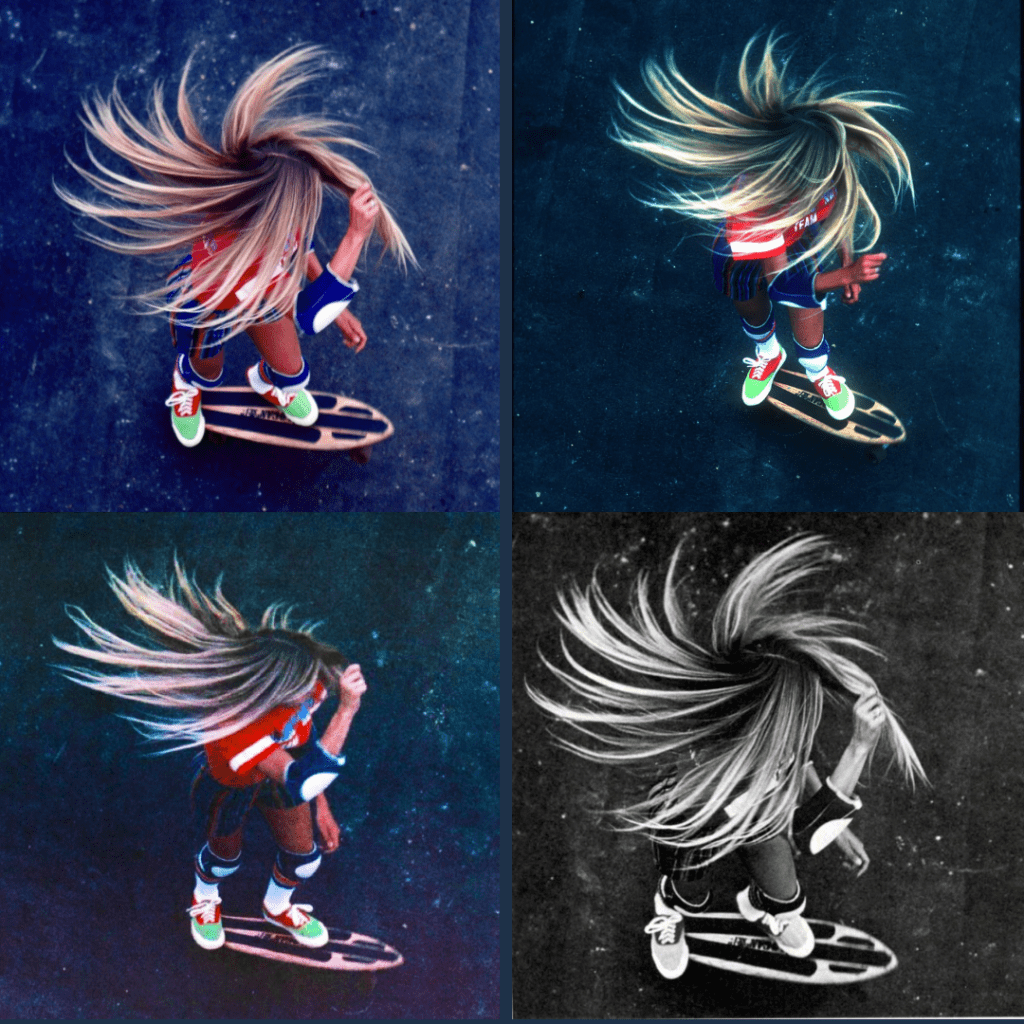
When I tell people I’m writing about the history of women in skateboarding the first names to pop up are always Laura, Cara-beth Burnside and Elissa Steamer, depending on the person’s decade of interest. In some ways these three skaters have been tokenized, and perhaps others have received less limelight as a result, but these skaters are revered for a reason, and this is what I’ve compiled regarding Laura.
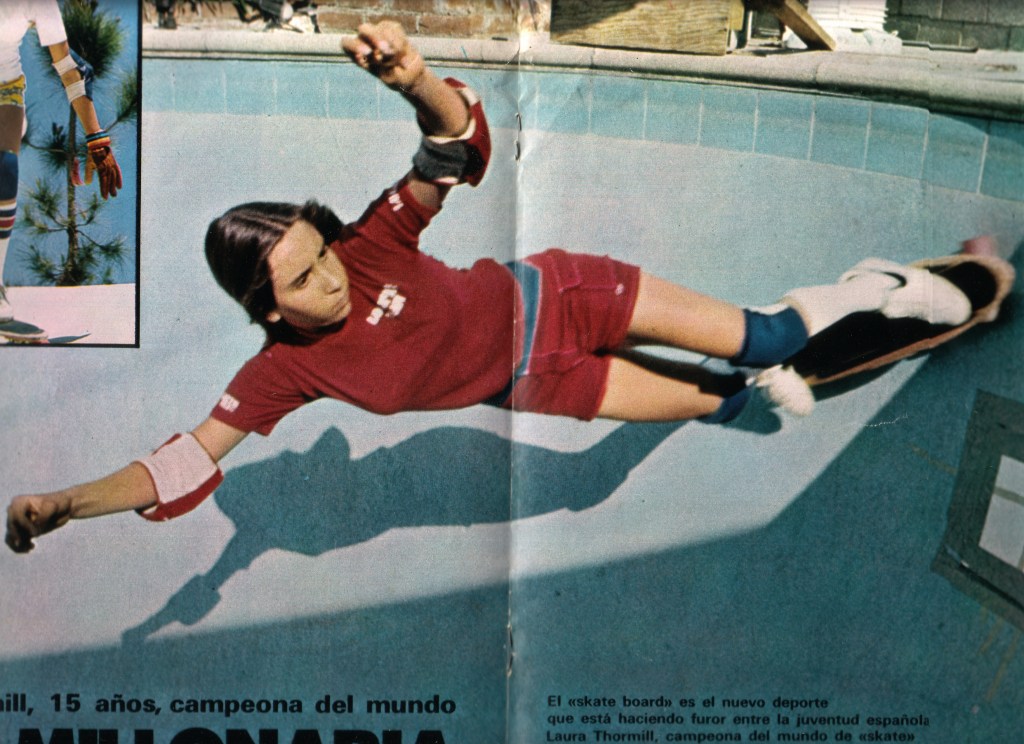
Photo: Laura skating pool, featured in Gaceta Illustrada, July 30, 1978, which was a Spanish magazine out of Barcelona.
Laura was born in 1961 in Dallas, Texas and as a kid “I was such a tomboy. I did every team sport imaginable. I was a die-hard roller skater. Every weekend, every holiday, I was at the roller rink” (Schiot). Laura then noticed that the six boys next door kept abandoning their skateboard on their lawn or front porch which she could easily borrow / steal for a day or two. “It was a beater board with clay wheels and steel ball bearings, but I had gotten pretty good at kick turning” (Dootson).
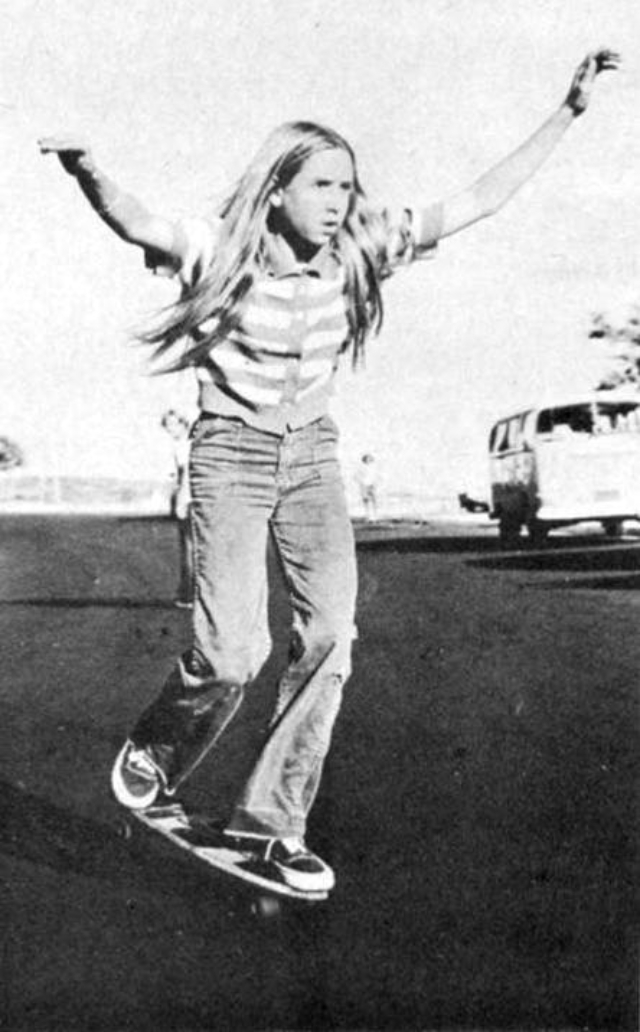

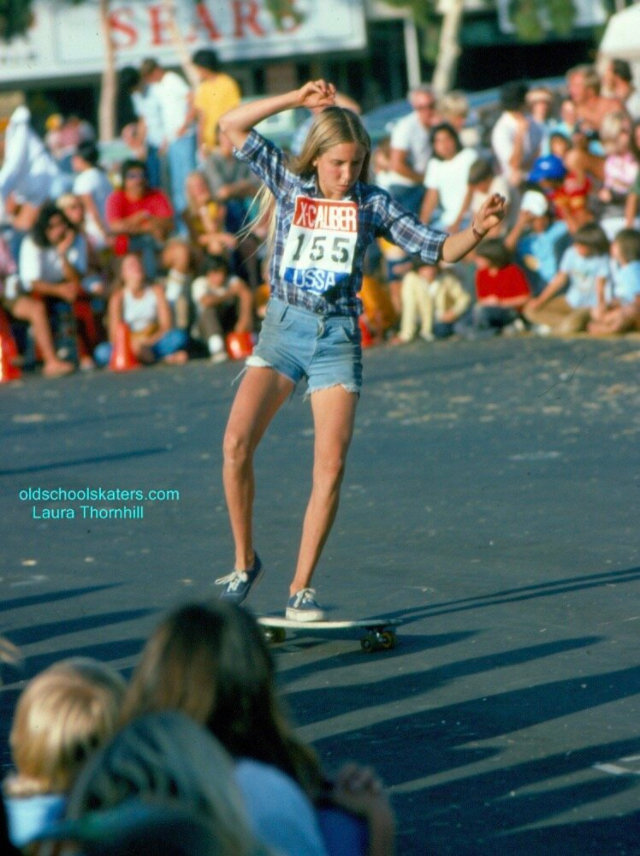
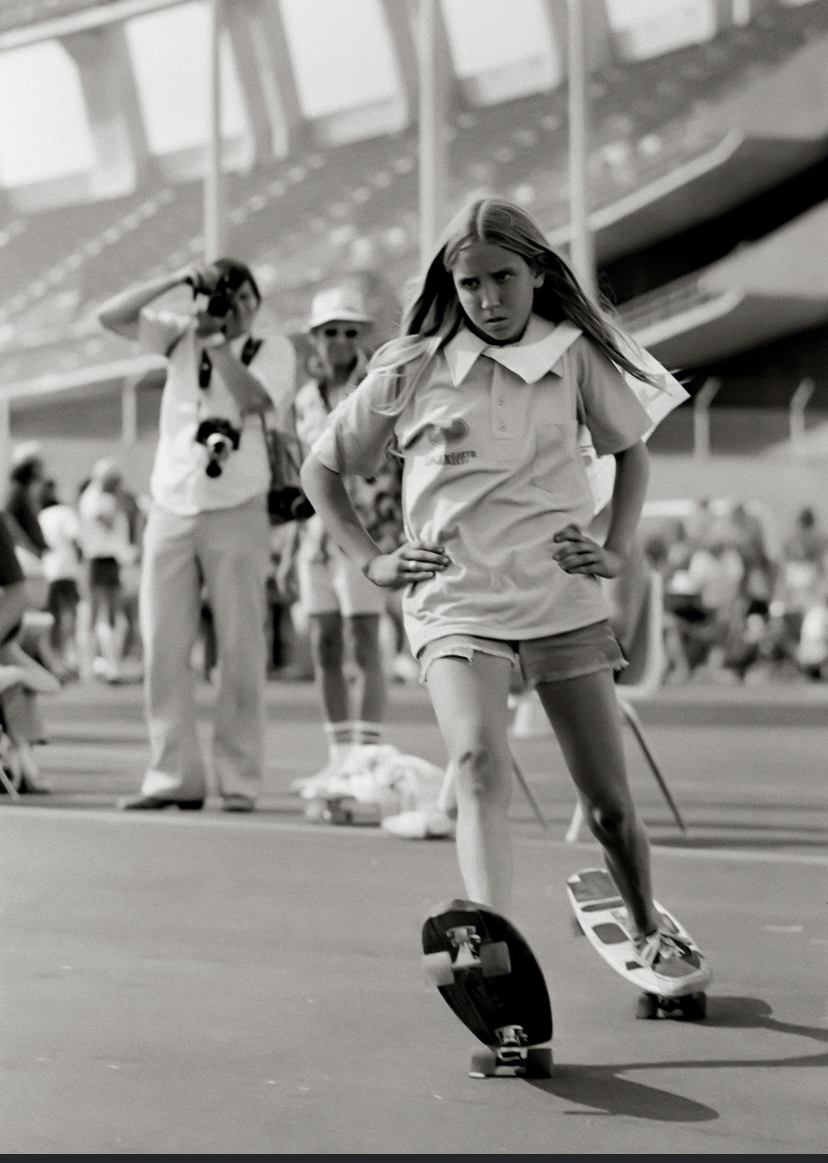
Photos: James O’Malley, Hugh Holland
Her family then moved west to Redondo Beach, California on Super Bowl Sunday in 1974 when Laura was in 7th Grade. Laura also received her first board that year, a Black Knight with black wheels for her 13th birthday. She would skate down on the strand and around Riviera Elementary School where she skated her first bank (O’Mahoney).
For Christmas, Laura upgraded to a “new white Hobie Super Surfer that had these super cool blue urethane wheels on it… it was a beauty and truly one of the coolest boards out at that time” (Dootson). Laura even found where her mom had hidden it, and did some test runs, wiping off the wheels carefully, and then pretending to be surprised on Christmas Day! She also acquired a copy of the Summer 1975 issue of Skateboarder magazine with Gregg Weaver on the cover, and noticed photos of Linda Delgado, Peggy Oki, and Robin Logan within the pages and knew instantly she wanted to be in that magazine (Balma).
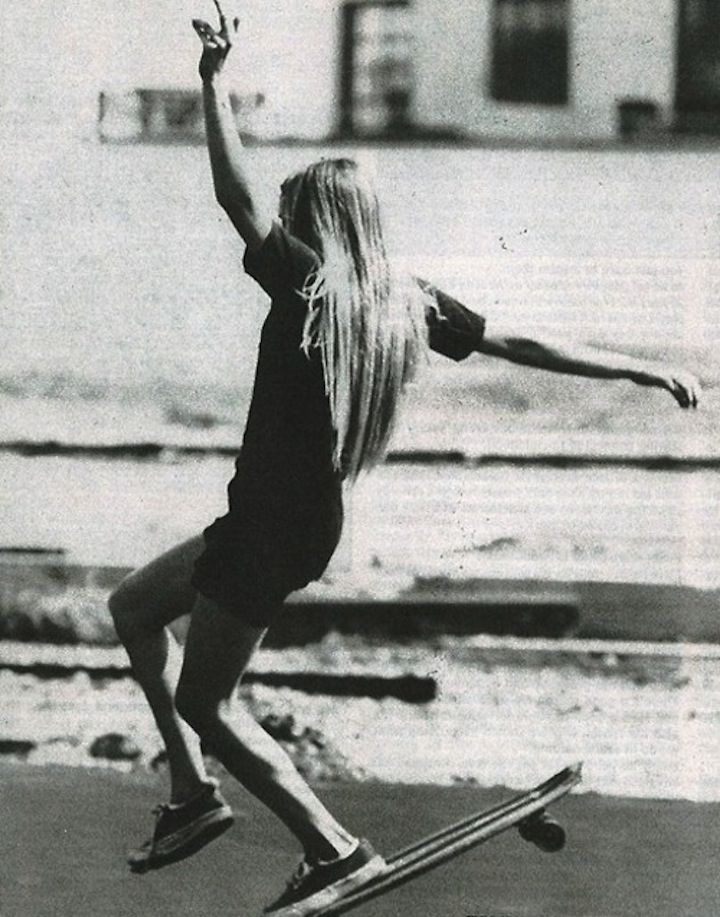

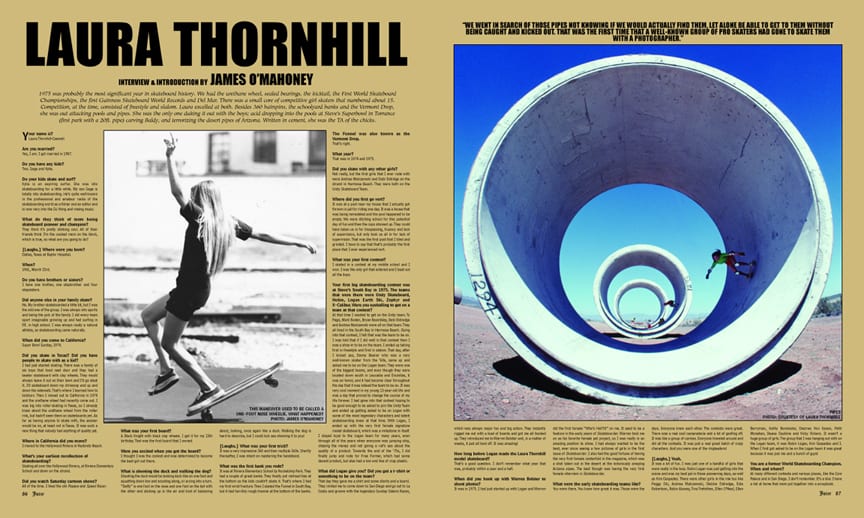
Photos: James O’Mahoney
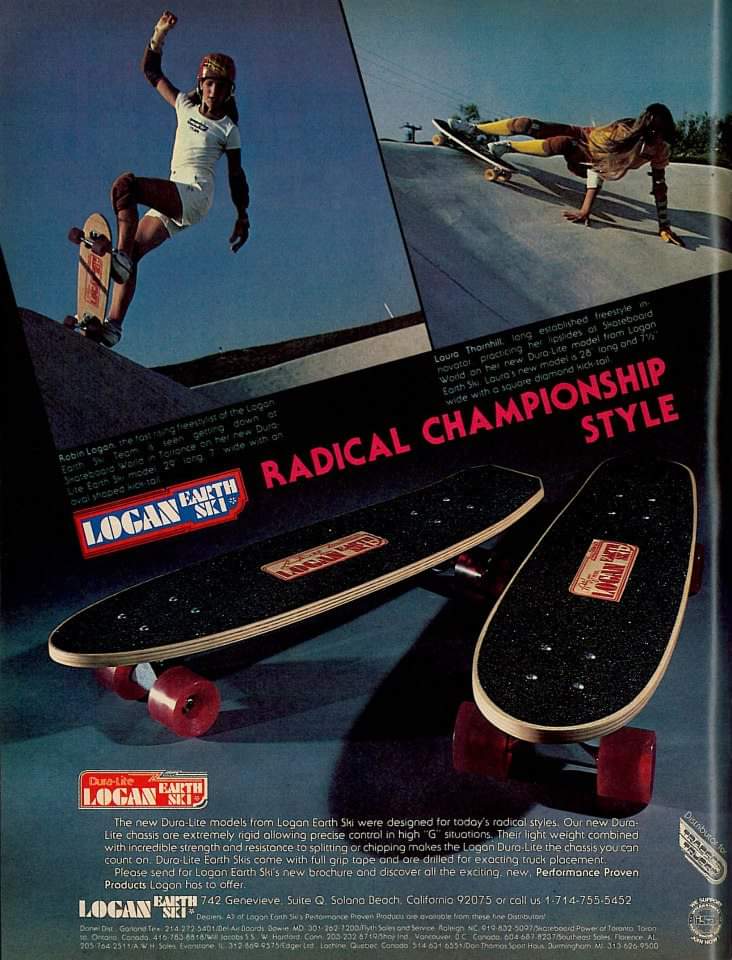
Laura promptly started competing, entering a contest at her school, and winning it even though she was the lone female against the boys, which set a trend. “A month or so later, there was the Steve’s South Bay contest and I won it, too. At that contest, Danny Bearer came up to me and said, ‘Congratulations! You did great in the contest,’ and asked me to be on Logan [Earth Ski]… I started with Logan and stayed with them for a long time” (Balma), although eventually at the end of the 1970s she switched to Free Former.
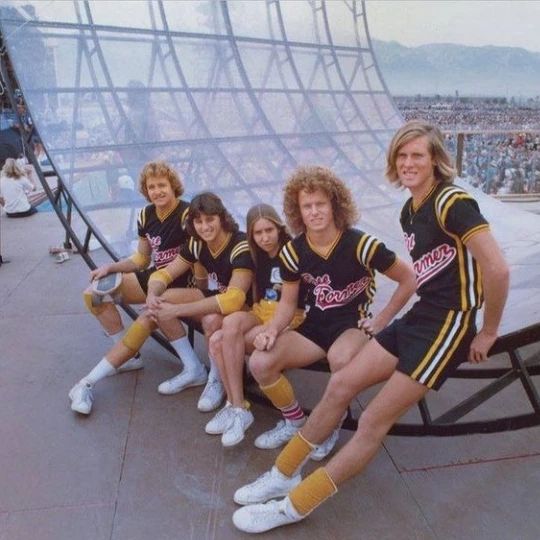

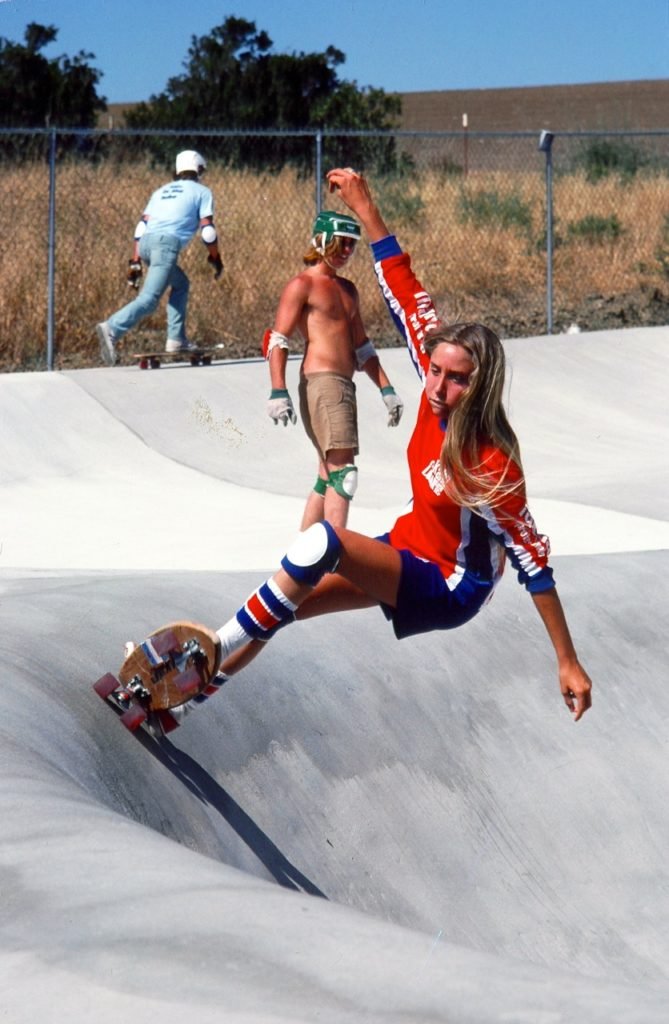

Photos: James O’Mahoney with the Logan Earth Ski ad appearing in the February 1977 issue of Skateboarder magazine
Laura’s original goal had been to join the Unity Team, along with Debi Eldredge and Andra Malczewski who she skated with on the strand in Hermosa Beach, but Logan Earth Ski was also very desirable, so she left the contest at age 13 with one of their oak boards and a coveted blue team jersey (Dootson). The team also invited her to “come down to San Diego and go out to La Costa and groove with the legendary Sunday Slalom Races” (O’Mahoney).
Vintage footage of Laura in 1976 at the USSA World Invitational Skateboard Championships, Jack Murphy Stadium, San Diego, CA.
Word of Laura’s skill spread quickly and in the Winter 1975 issue of Skateboarder, an article called “Another Look at Tricks” included a photo of Laura mid-360 spin with her face blurred by a stream of long hair. A few pages later she appears doing a double nose wheelie freestyle move. Laura was successful in her dream to be in the magazine!

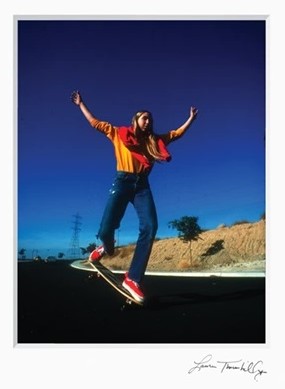
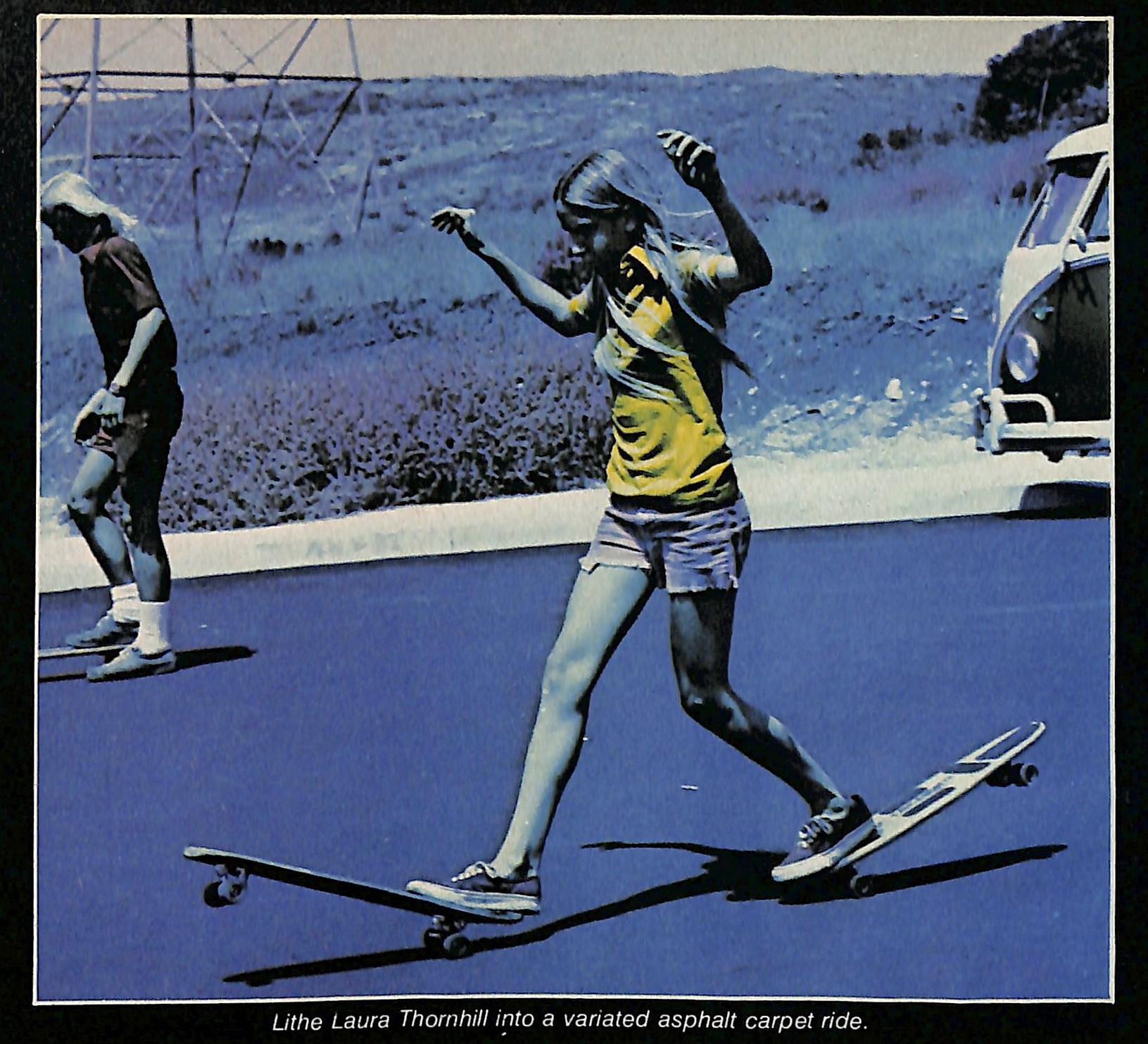
Laura would stay with the Logan family in Encinitas almost every weekend since “John O’Malley had just built the Carlsbad skatepark and we would go out there and skate until it got dark. We were also shooting some things for Skateboarder Magazine at night, including my [Who’s Hot] interview” (Balma). These night sessions were lit up by car headlights and some light from a nearby shed.
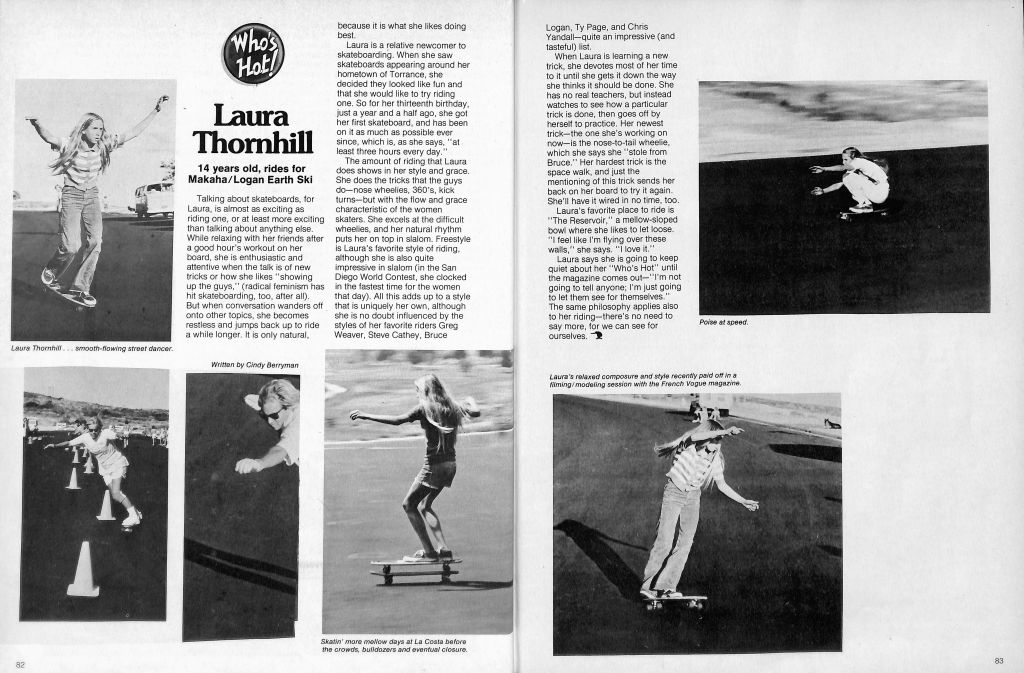
Within a year Laura was interviewed by Cindy Berryman for the “Who’s Hot!” column in the April 1976 issue of Skateboarder at age 14, which was the first time the magazine had featured a female skateboarder. It was Bolster who made the decision. “I quickly became one of his favourite female photographic subjects” (Dootson).
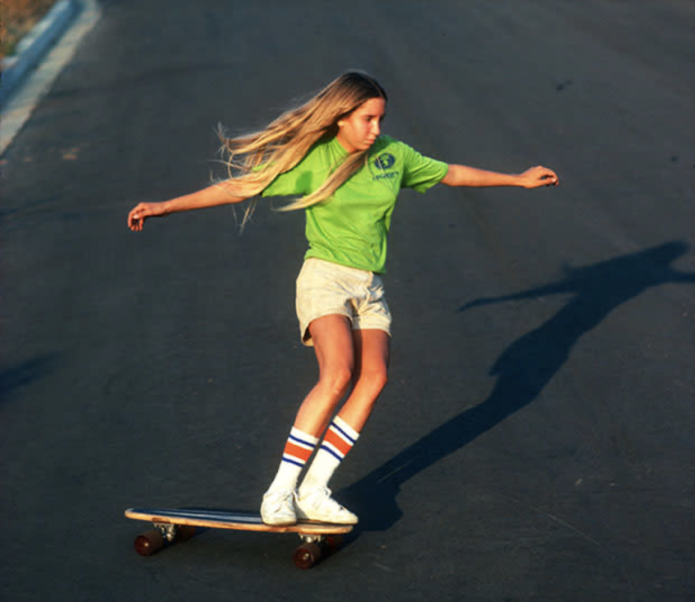
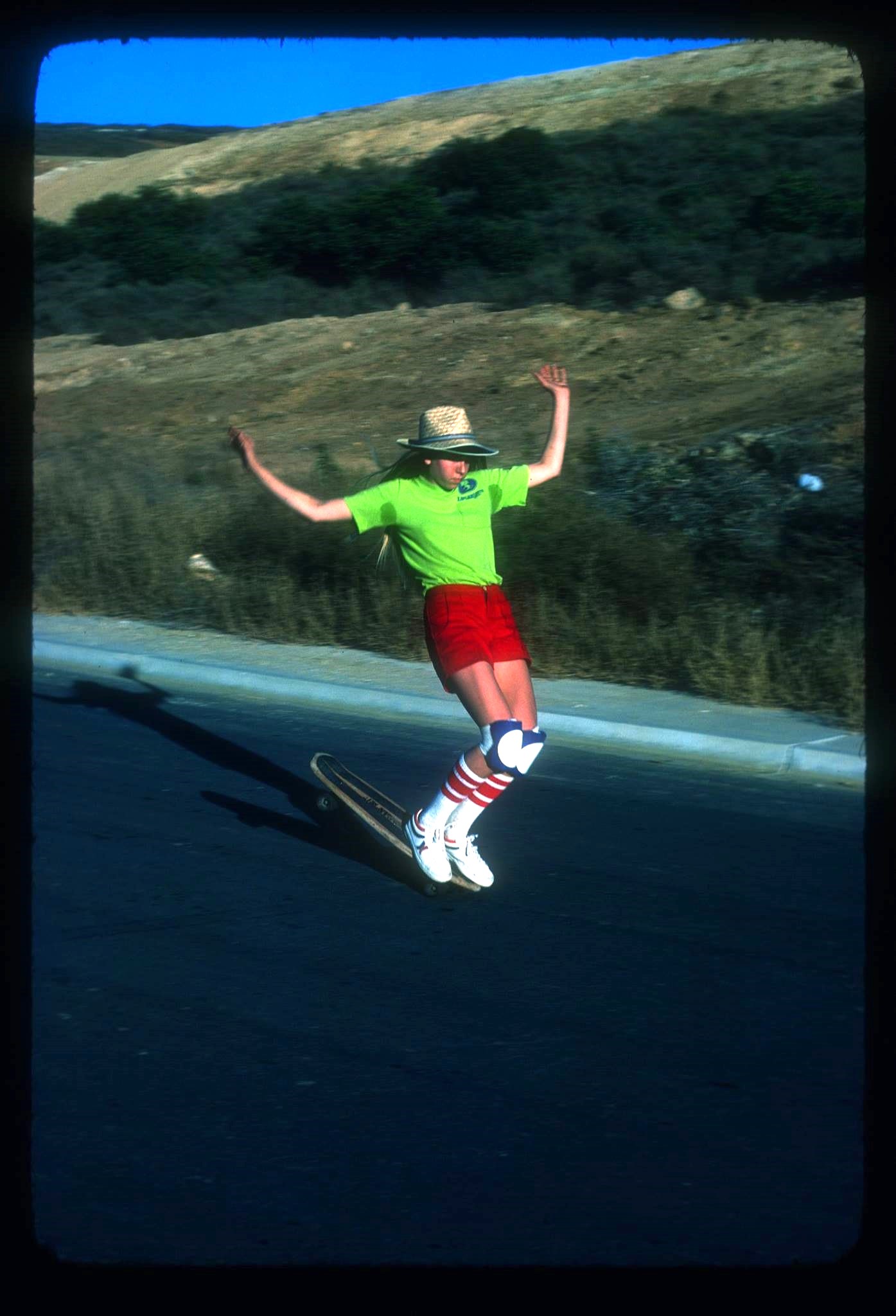

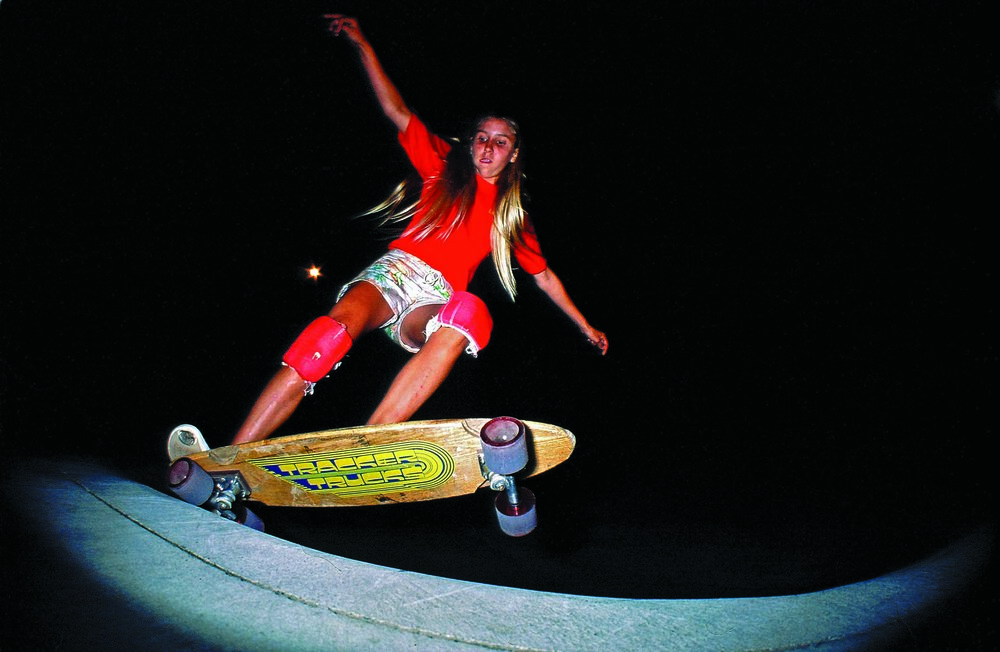
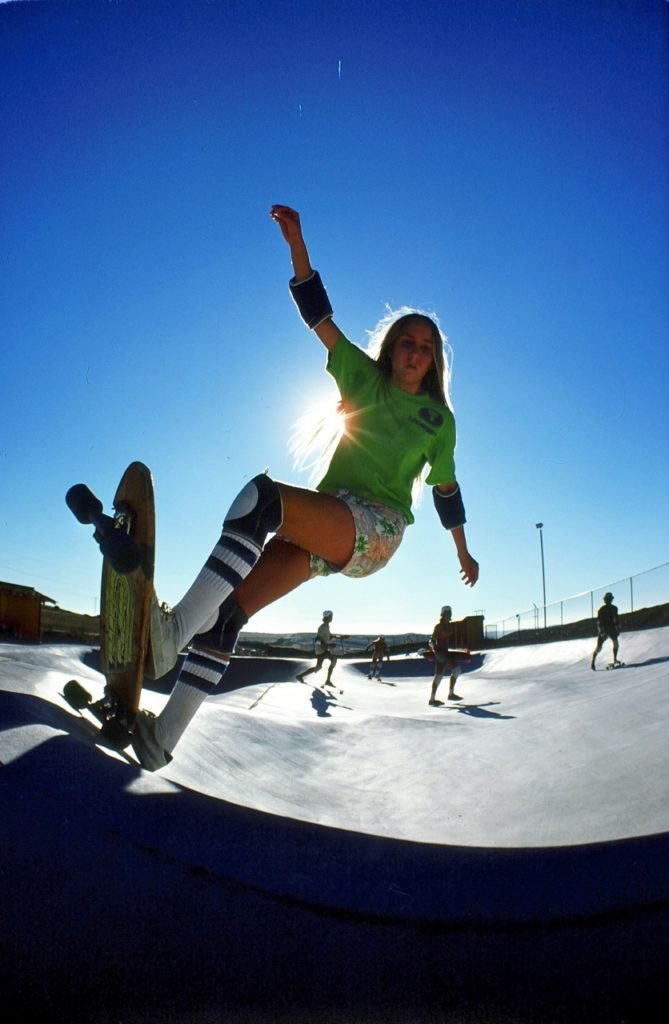
Photos: Warren Bolster
For Skateboarder Berryman wrote, “While relaxing with her friends after a good hour’s workout on her board, she is enthusiastic and attentive when the talk is of new tricks or how she likes ‘showing up the guys,’ (radical feminism has hit skateboarding, too, after all).”
Laura’s favourite spot at the time was The Reservoir. “‘I feel like I’m flying over these walls,’ she says. ‘I love it.’” Laura was determined to improve, watching others and practising, and it paid off. There’s even a note above the bottom photo explaining that, “Laura’s relaxed composure and style recently paid off in a filming/modeling session with the French Vogue magazine.” She also became a La Costa regular ripping down Black Hill as seen in her “Who’s Hot!” feature with so many influential skaters to inspire her there.
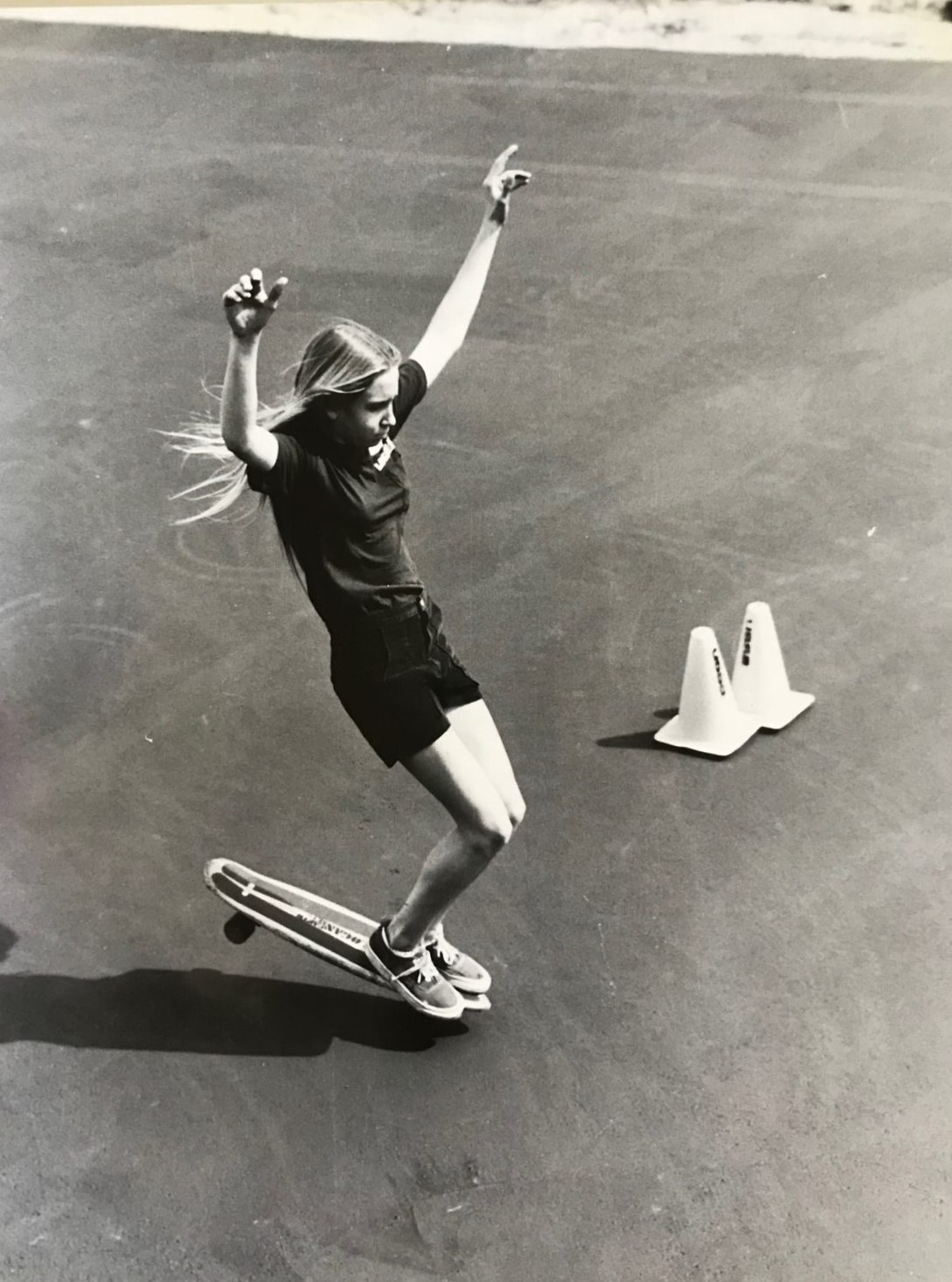
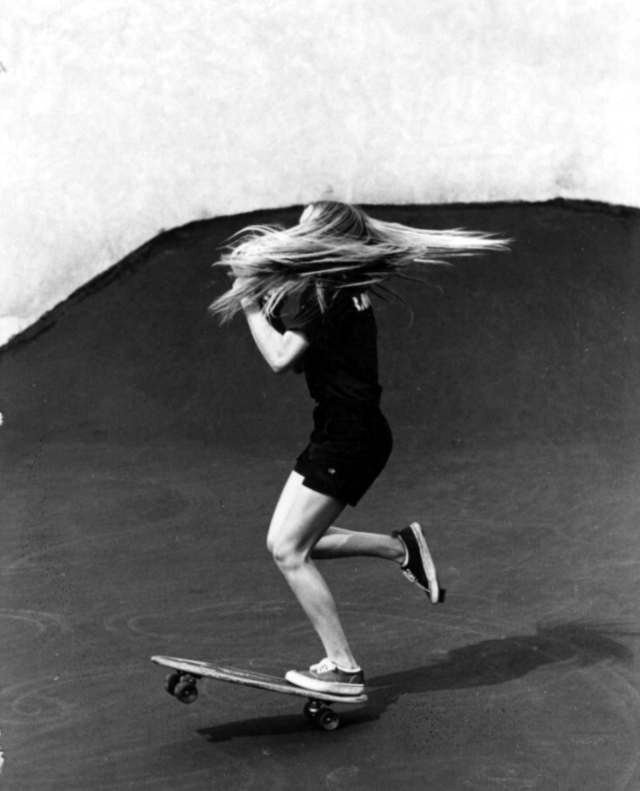

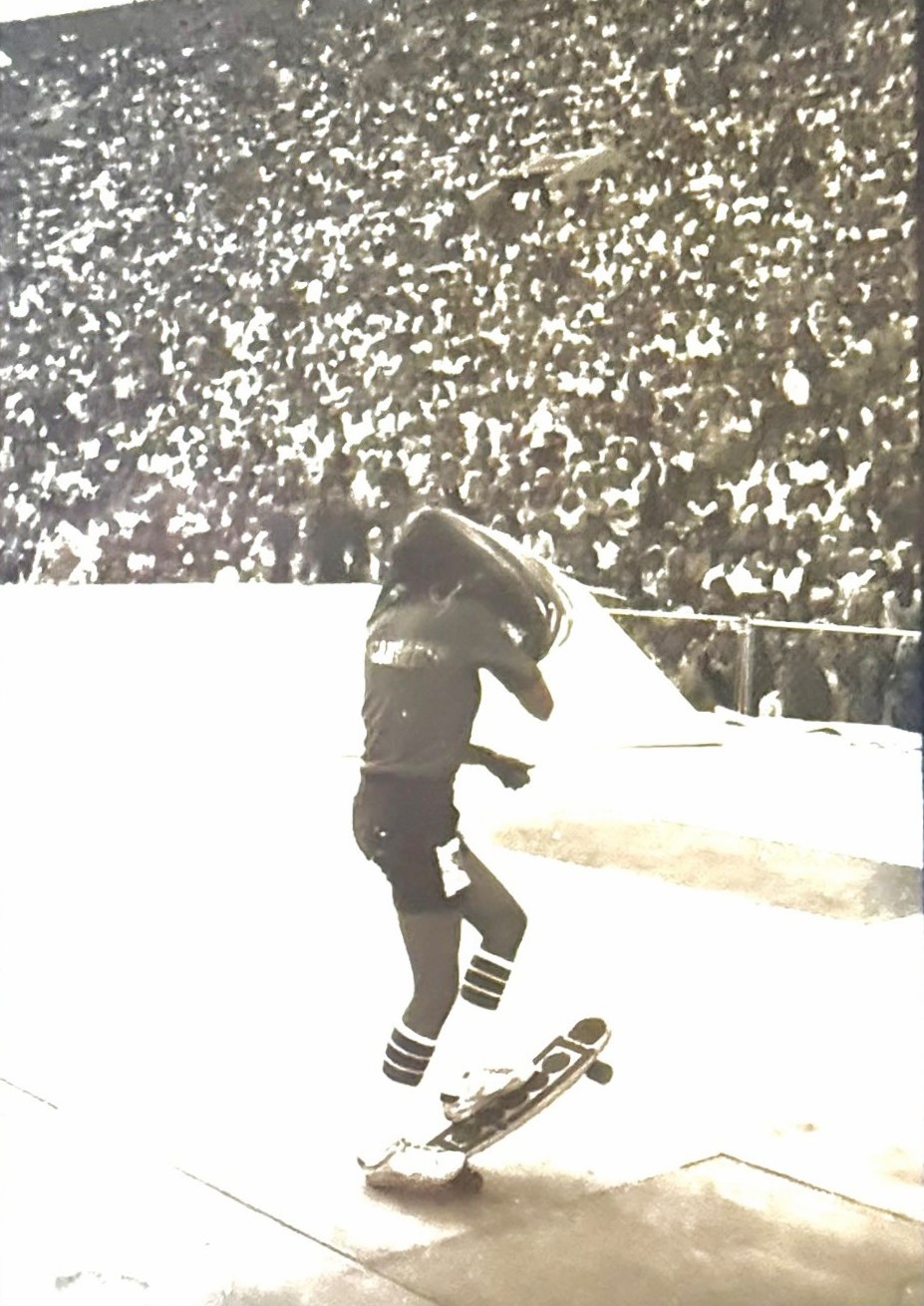
Photos: Jim O’Mahoney, including an image from August 15, 1976 performing a spin on stage at the LA Coliseum during Jethro Tull’s “Too Old to Live” tour in front of 70,000 people. Ellen Berryman described the experience from a skater’s point of view.
Laura was very determined and would practise slalom and freestyle every day, observing other skateboarders and then figuring out through trial and error how to master a trick. Bolster added another photo of Laura to Skateboarder in the June 1976 issue floating through Carlsbad, and then Cindy Berryman made sure to include Laura in her game-changing article, “Let’s hear it for the ladies,” for Skateboarder a few months later in the August 1976 issue with Laura skating Carlsbad park, again photographed by Bolster.
1976 was a big year for Laura, such as winning the Hang Ten World Pro-Am Championships at Carlsbad for women’s freestyle! Here is some footage of her competing in freestyle at the World Free Former Championships, placing second:
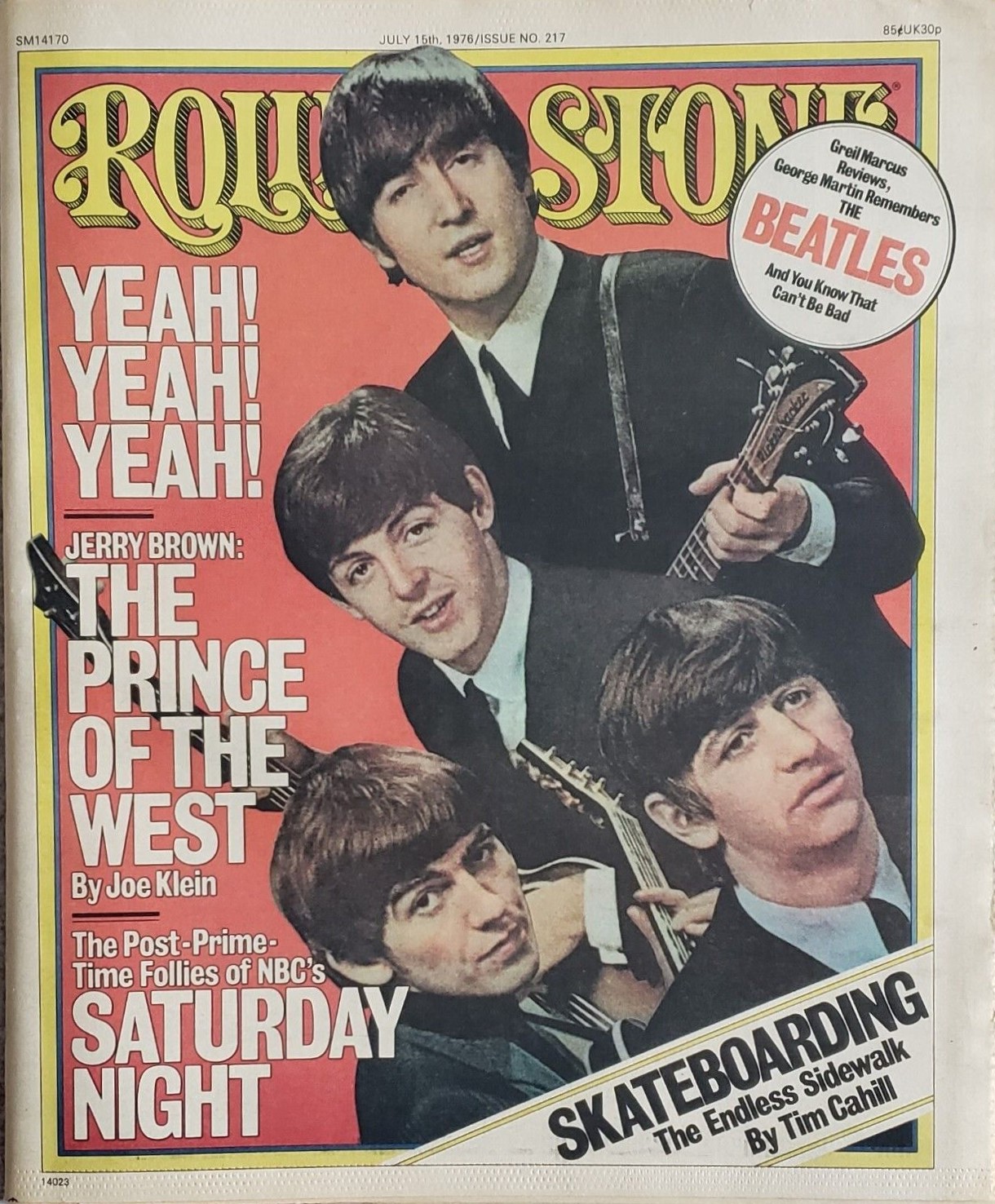
Next up was being included in a massive article called “Endless Sidewalk” by Tim Cahill in the July 15, 1976 issue of The Rolling Stone, with the Beatles on the cover. Thanks to Skate and Annoy blog you can read the entire 7-page article, which includes a photo of Laura on p. 52.

Laura then had four photos within the October 1976 issue of Skateboarder magazine on the Contents page. And then on page 52 a photo of her was included in the article “Skate Parks: Part IV – In Search of Skatopia.” Laura would be featured again in the Contents page for the December 1976 issue of Skateboarder skating Carlsbad and La Costa, photos thanks to Bolster.
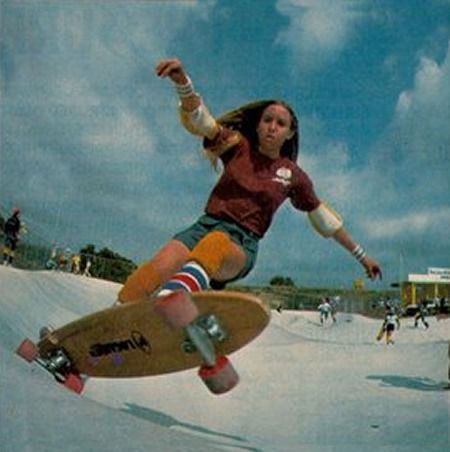
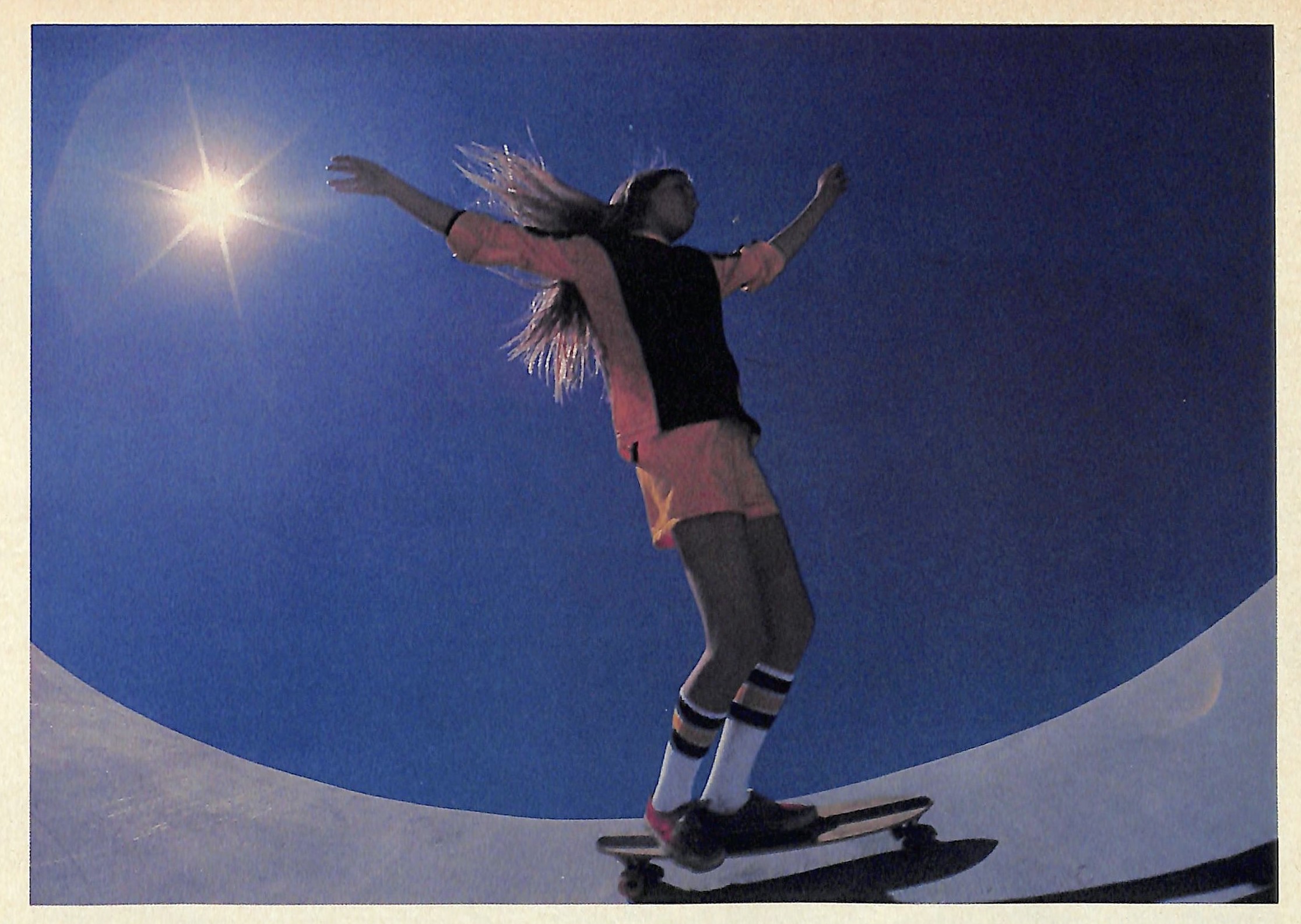

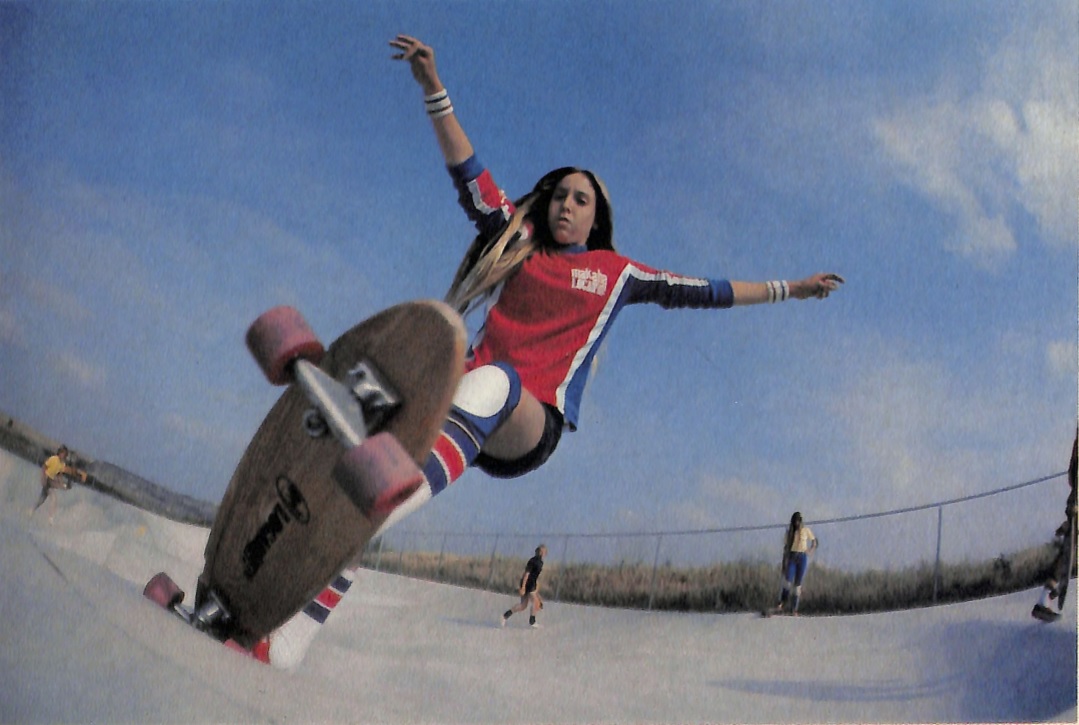
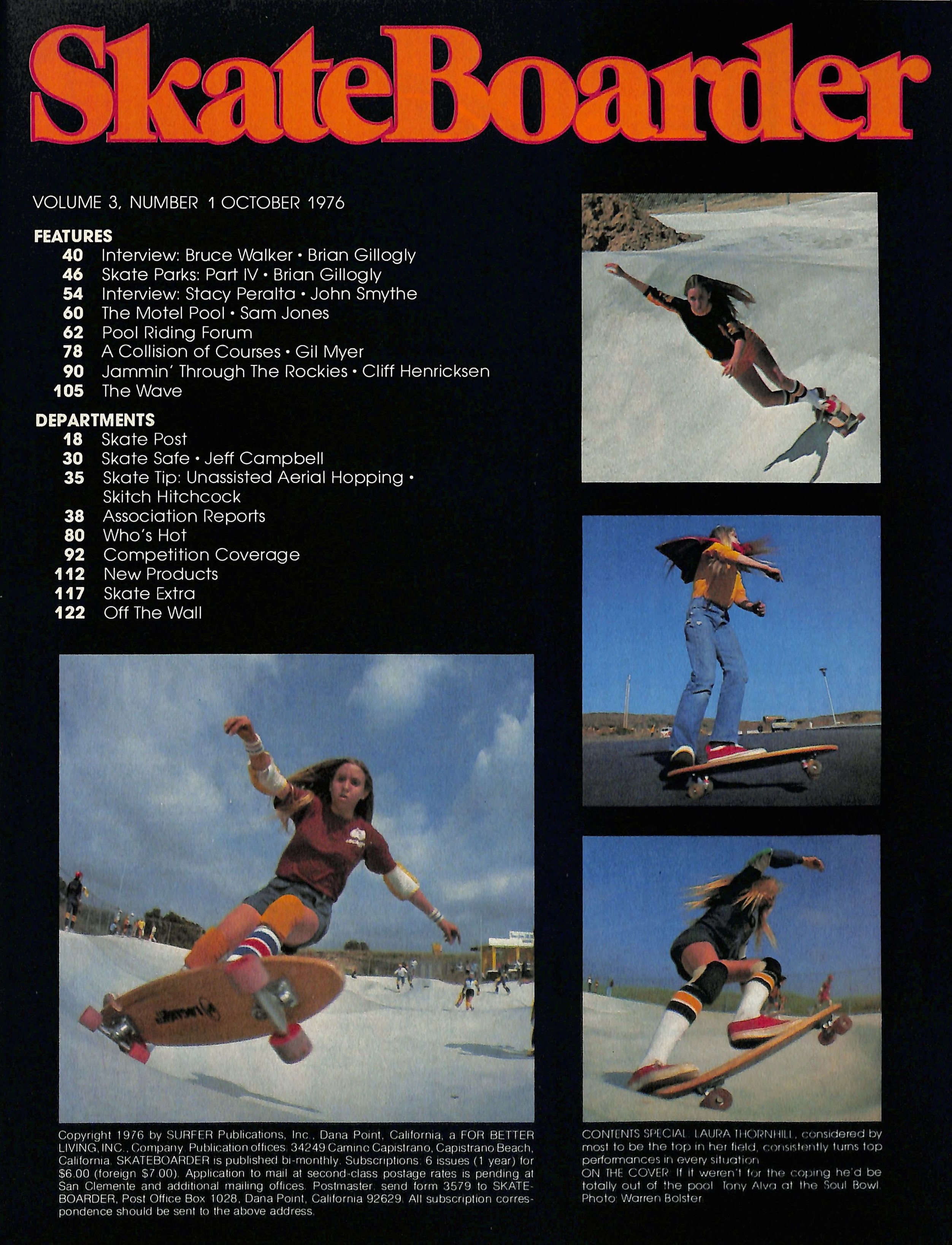
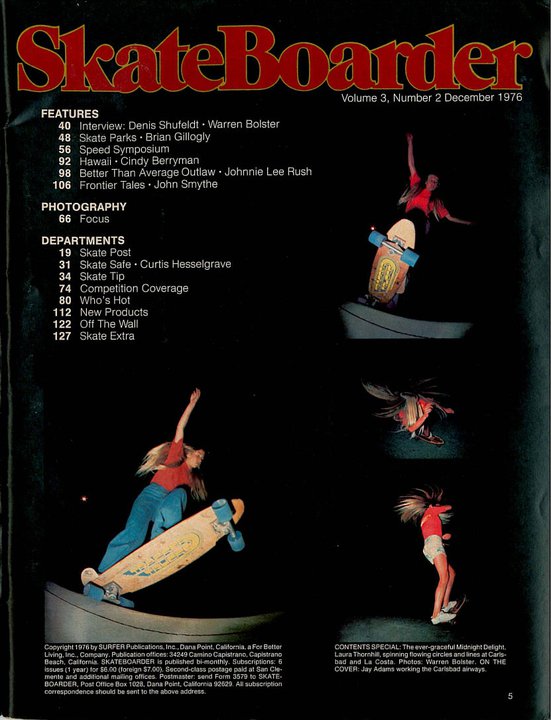
Photos: Warren Bolster
That same month Laura also took the cover of the October 1976 issue of the National Skateboard Review competing in a slalom race at La Costa as the Women’s World Champion – photo Larry Balma. Balma of Tracker trucks would go on to interview Laura forty years later for the Tracker history website as they were one of her sponsors. It was noted that Laura was a big deal, and many a teenaged boy had a crush on her.
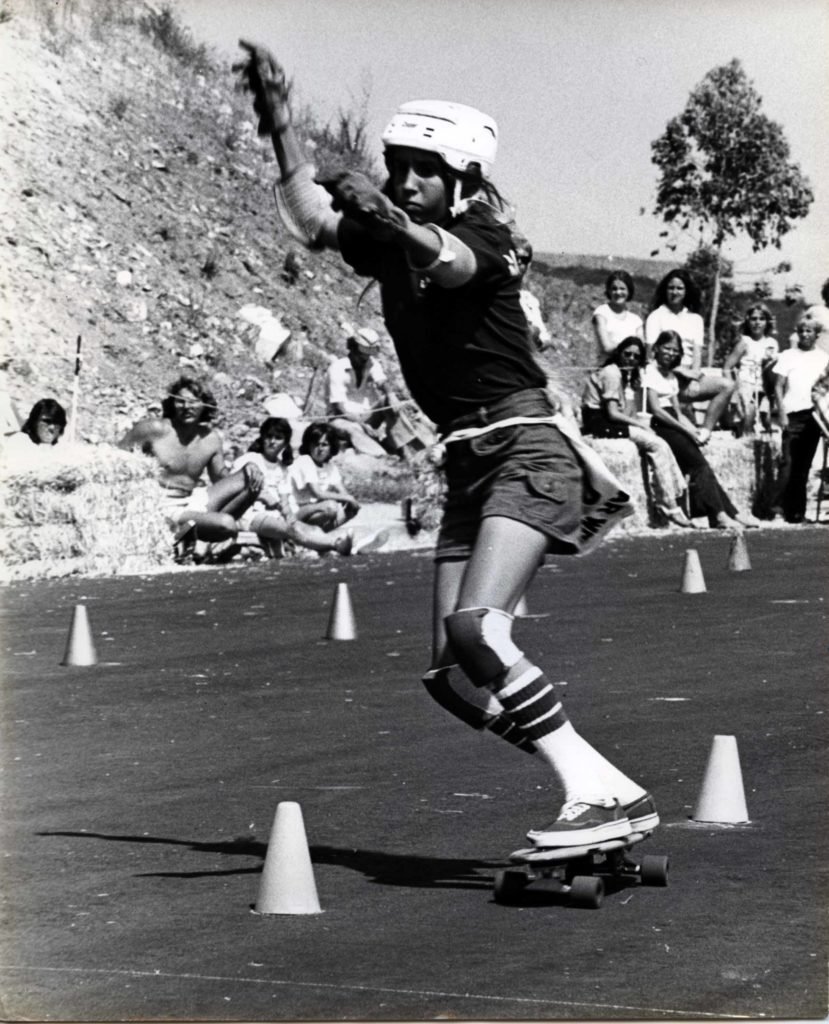
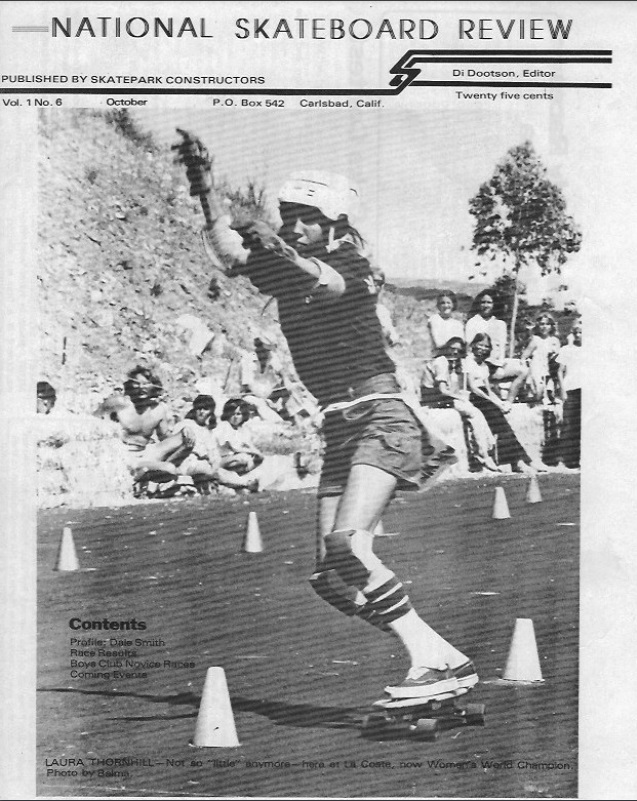
Photos: Larry Balma
Laura had a blast going on roadtrips with her team, and her mom was mostly reassured that she would be in good hands with the Logans, plus “there were always women around” (Balma) such as Robin Logan, Kim Cespedes, Ellen Oneal and Desiree Von Essen. Laura would also become one of the few women to have her own signature Pro skateboard with Logan Earth Ski as sponsor, which was a first in the 1970s, within a year and a half of sponsorship.
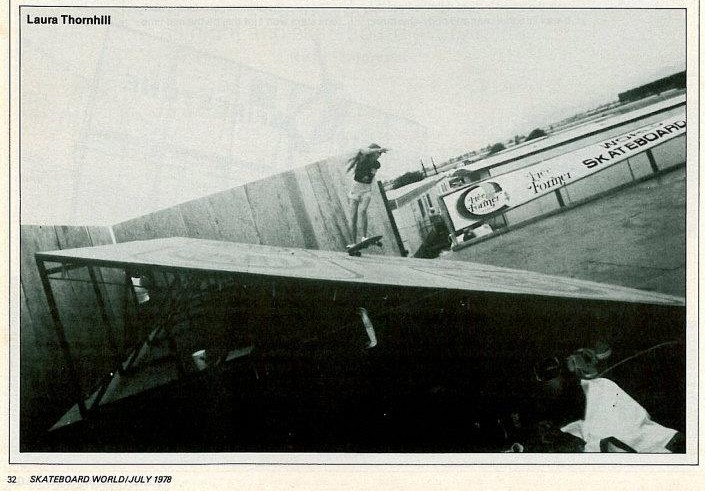

In an essay called “Confessions of a Skateboard Heretic” from the book The Skateboarder’s Journal – Lives on Boards (2009), Daniel Gesmer recalled purchasing Laura’s board because he had been so impressed with her skating at a 1970s demo at Six Flags. It became his favorite set-up in high school. “I never expected the ridicule that the board drew from other skateboarders, who thought it wrong to ride a deck endorsed by a female (even if she was a champion). I suppose that was an omen of more ostracism to come. I hope things have changed a little since those days.” The quote was fascinating, and a reminder that the dominant attitude towards women was tainted but individual male allies still existed.
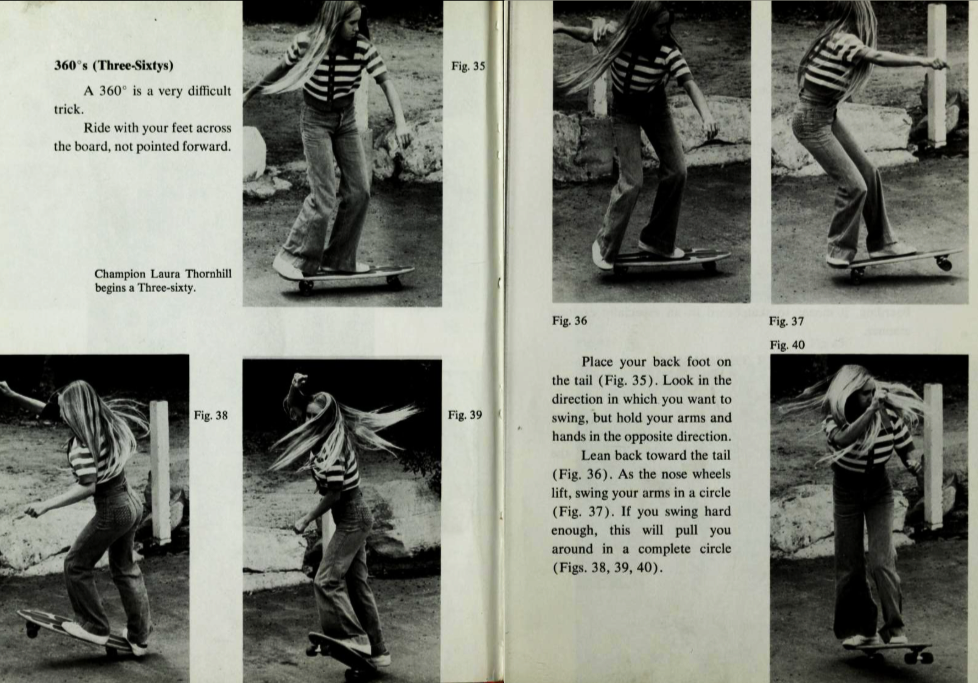
Above: Laura performed a 360 spin in LaVada Weir‘s book Skateboards and Skateboarding (1977) and also had a bio within Laura Torbet‘s Complete Book of Skateboarding (1976).
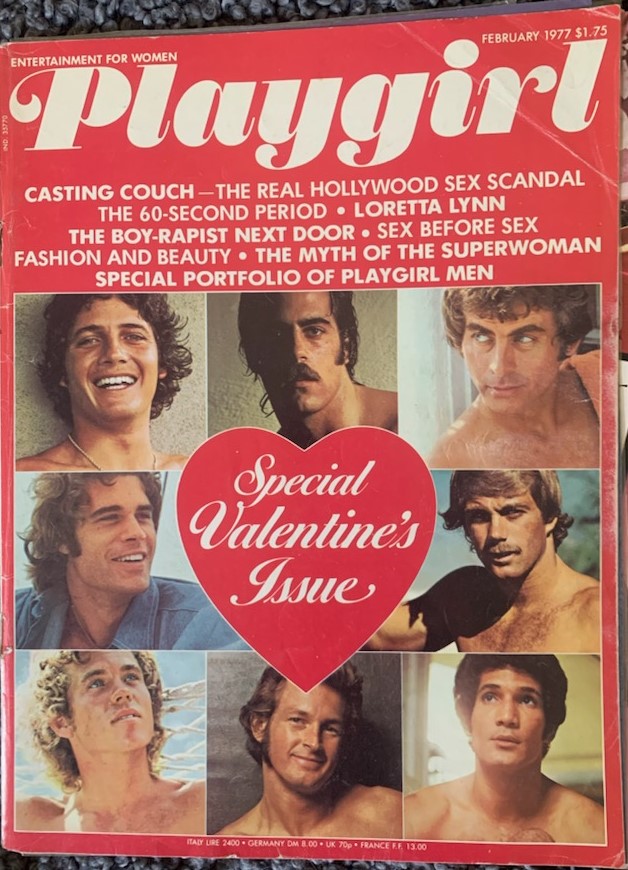
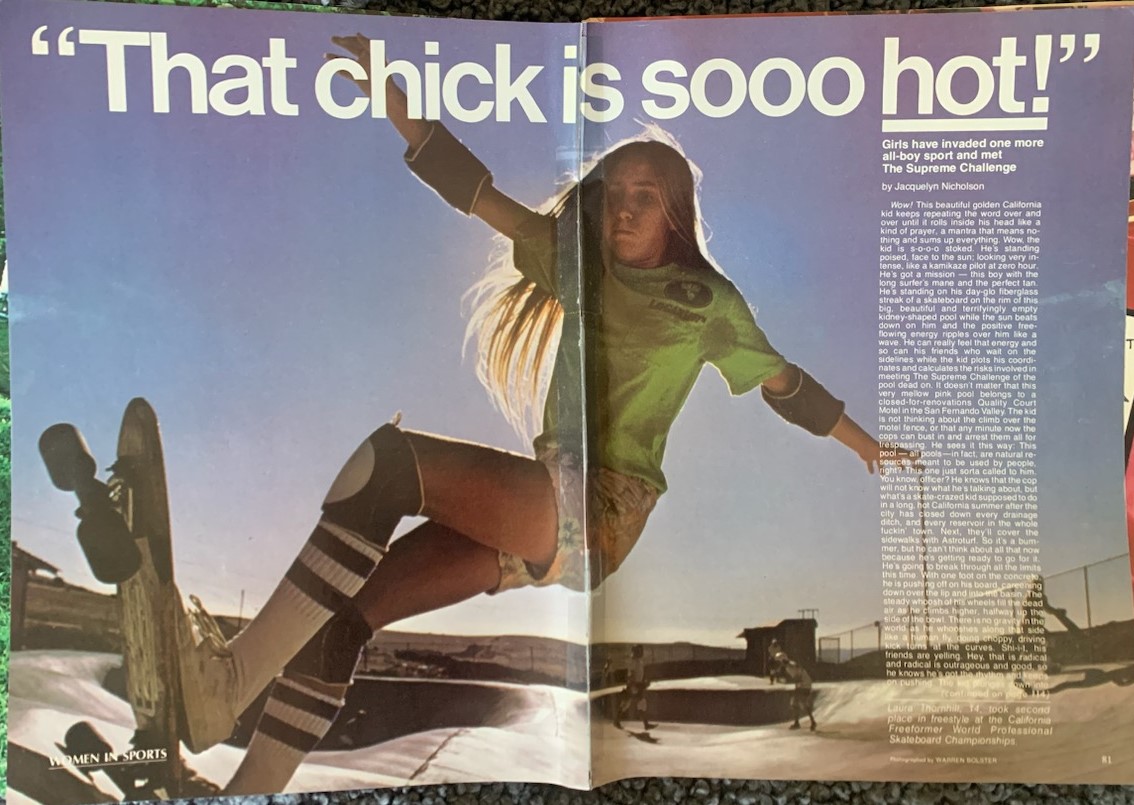
My favourite feature of Laura has to be the spread in the February 1977 issue of Playgirl magazine which states, “That chick is sooo hot!” Laura has a funny story about her grandma hitting up a local store and having to request the issue from the clerk since it was in the R-rated restricted section! Amazing.
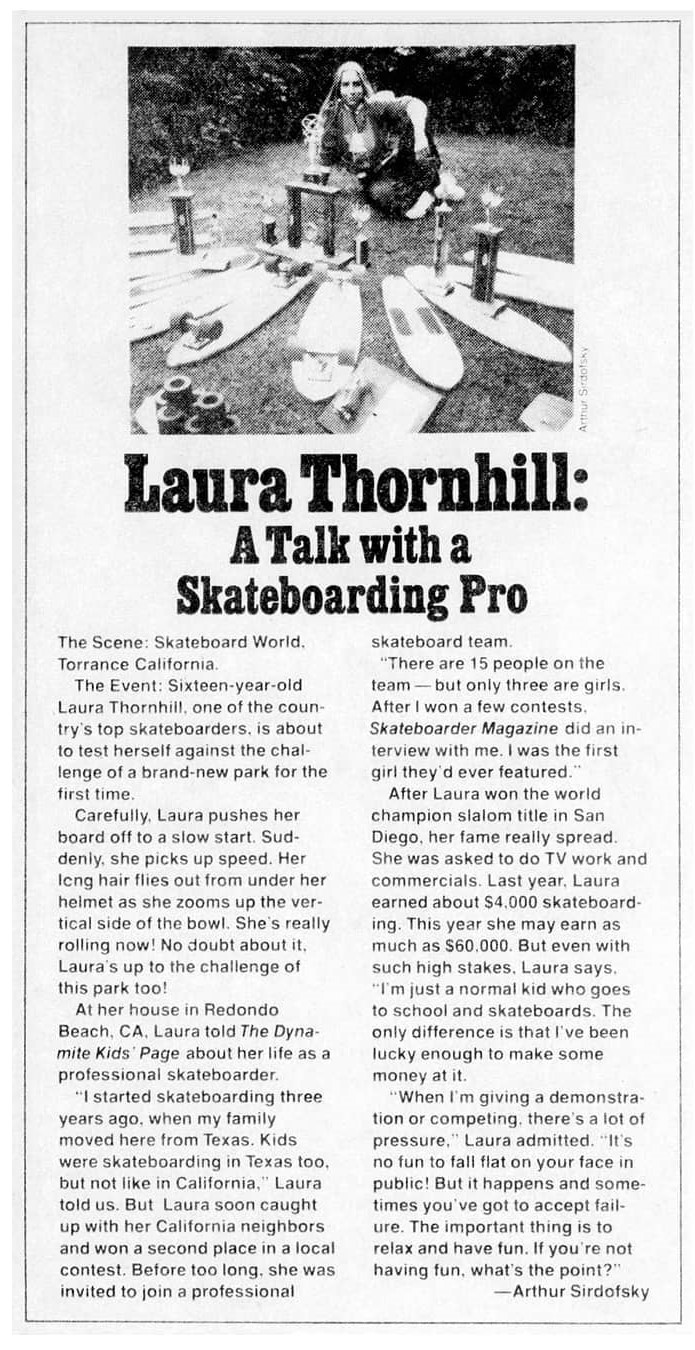
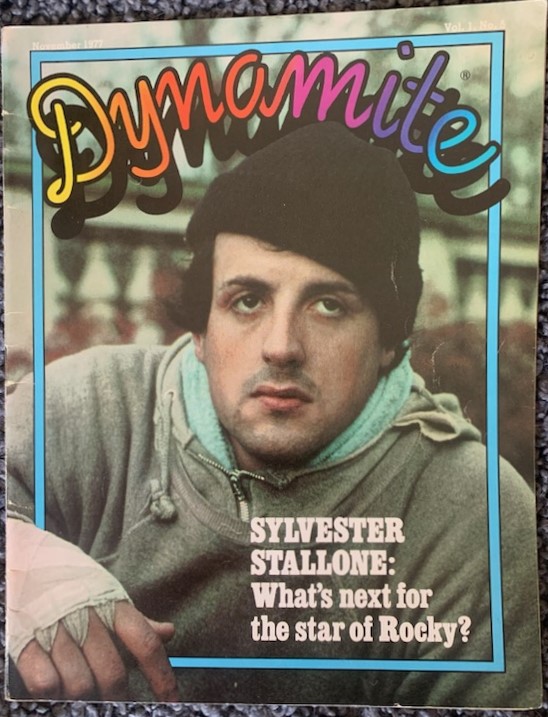
After winning the slalom contest in San Diego and becoming world champion, “her fame really spread” according to Arthur Sirdofsky in an article called “Ride On, Laura!” printed in the November 1977 issue of Dynamite magazine with Sylvester Stallone on the cover (it was reprinted in the Akron Beacon Journal June 29, 1978).
“Last year, Laura earned about $4,000 skateboarding. This year she may earn as much as $60,000. But even with such high stakes, Laura says, ‘I’m just a normal kid who goes to school and skateboards. The only difference is that I’ve been lucky enough to make some money at it.” Laura also emphasized the importance of having fun, and not dwelling too much on the times you fall on your face in public during a demonstration! Laura seemed so wise for age, noting that sometimes failure and frustration just need to be accepted.


Laura would translate her skill to new parks, for example, she was there at the launch of Skatopia in 1977, as reported on in the Los Angeles Times (June 6, 1977 and June 23, 1977 with photos by Gil Cooper), and was starting to see the added perk of making some cash from her winnings as a pro.
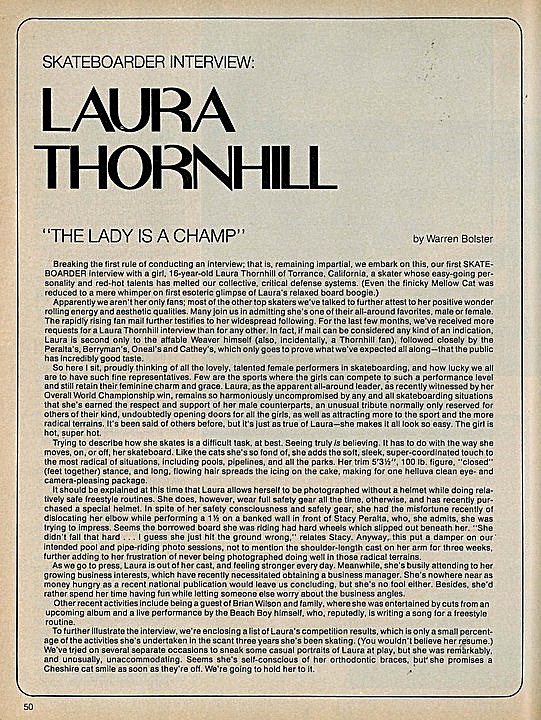
An amazing eight-page interview by Warren Bolster called, “Laura Thornhill: The Lady is a Champ” (pp. 50-57) was included in the June 1977 issue of Skateboarder, which was the first of its kind, and included her long list of contest results and some candid conversation, some a bit intent on determining her dating interests!

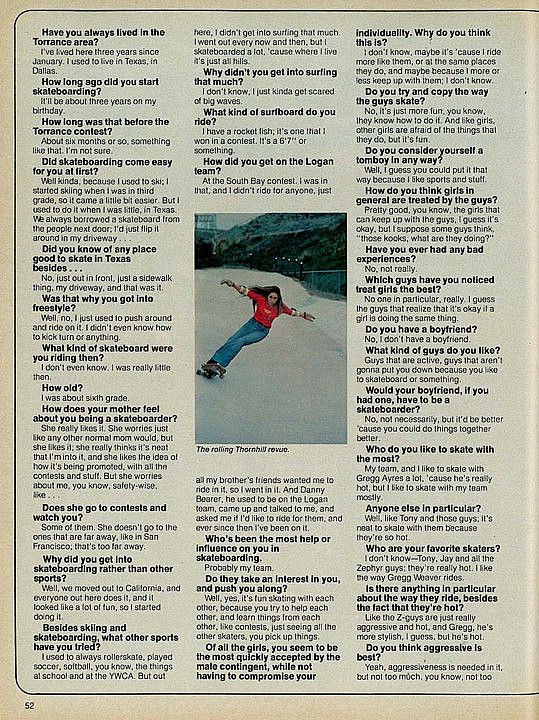
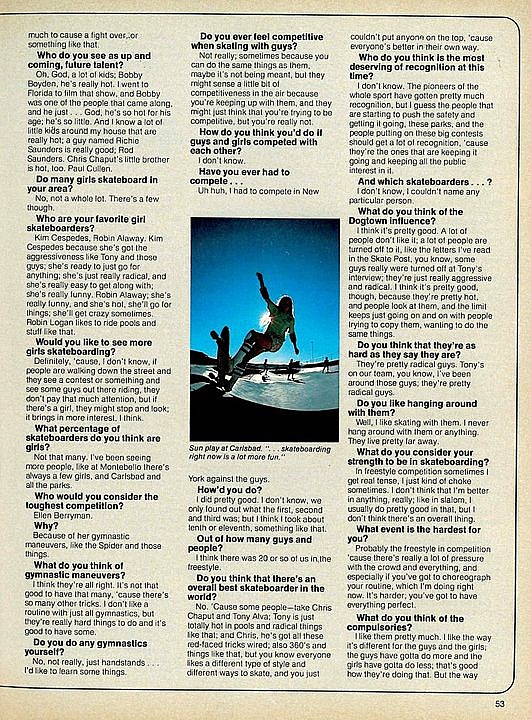
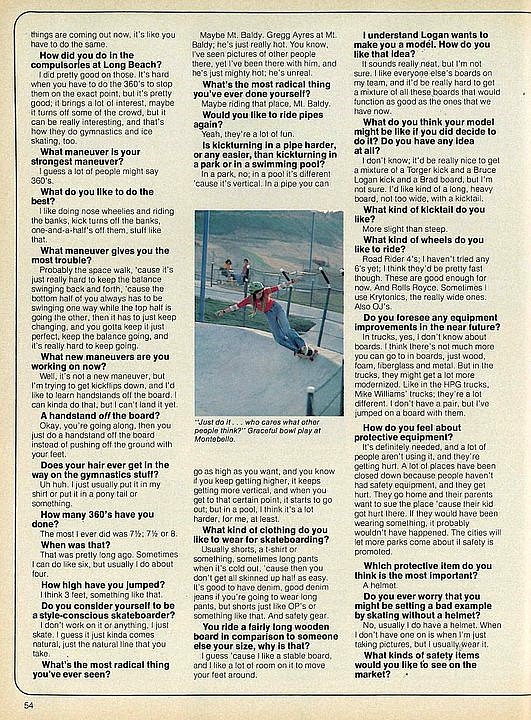
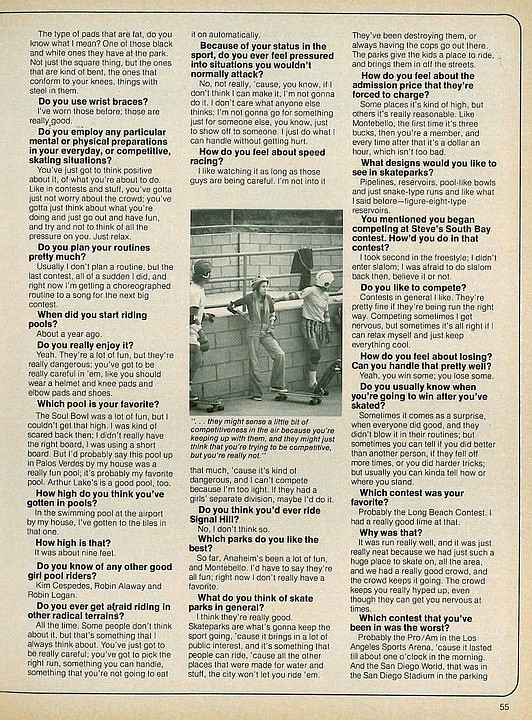

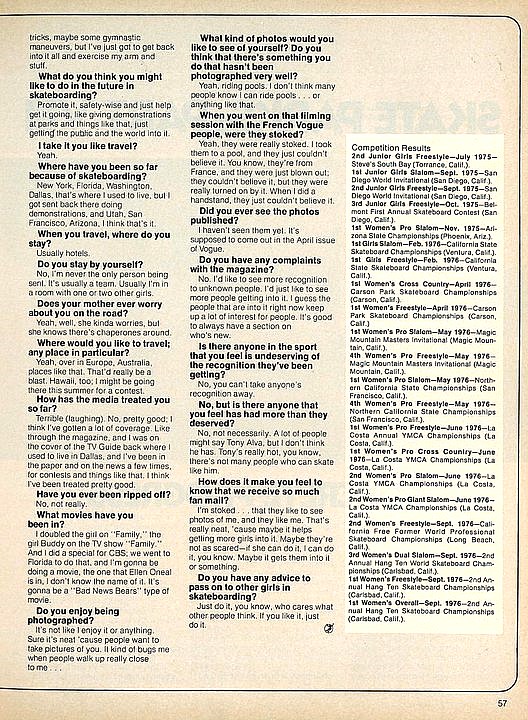
Laura acknowledged her favourite female skaters were Kim Cespedes for “just getting radical” and being easy to get along with, Robin Alaway because “she’s really funny, and she’s hot, she’ll go for things,” and Robin Logan because she “likes to ride pools.” Laura noted that her toughest competition was Ellen Berryman with her gymnastic maneuvers. Laura shared that the expectation of being perfect in a choreographed freestyle contest was a lot of pressure.
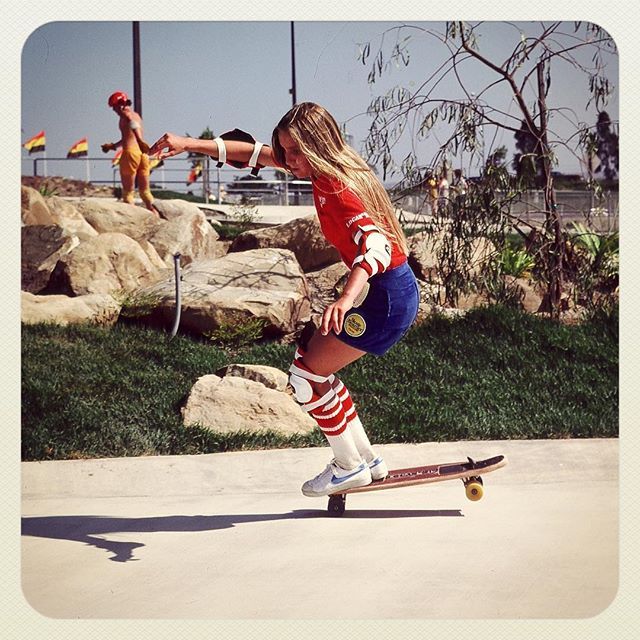
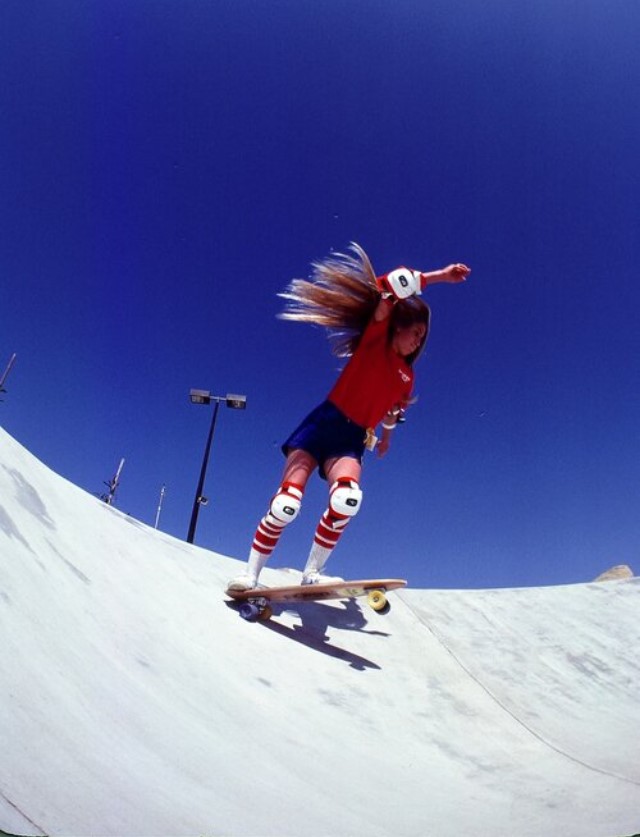
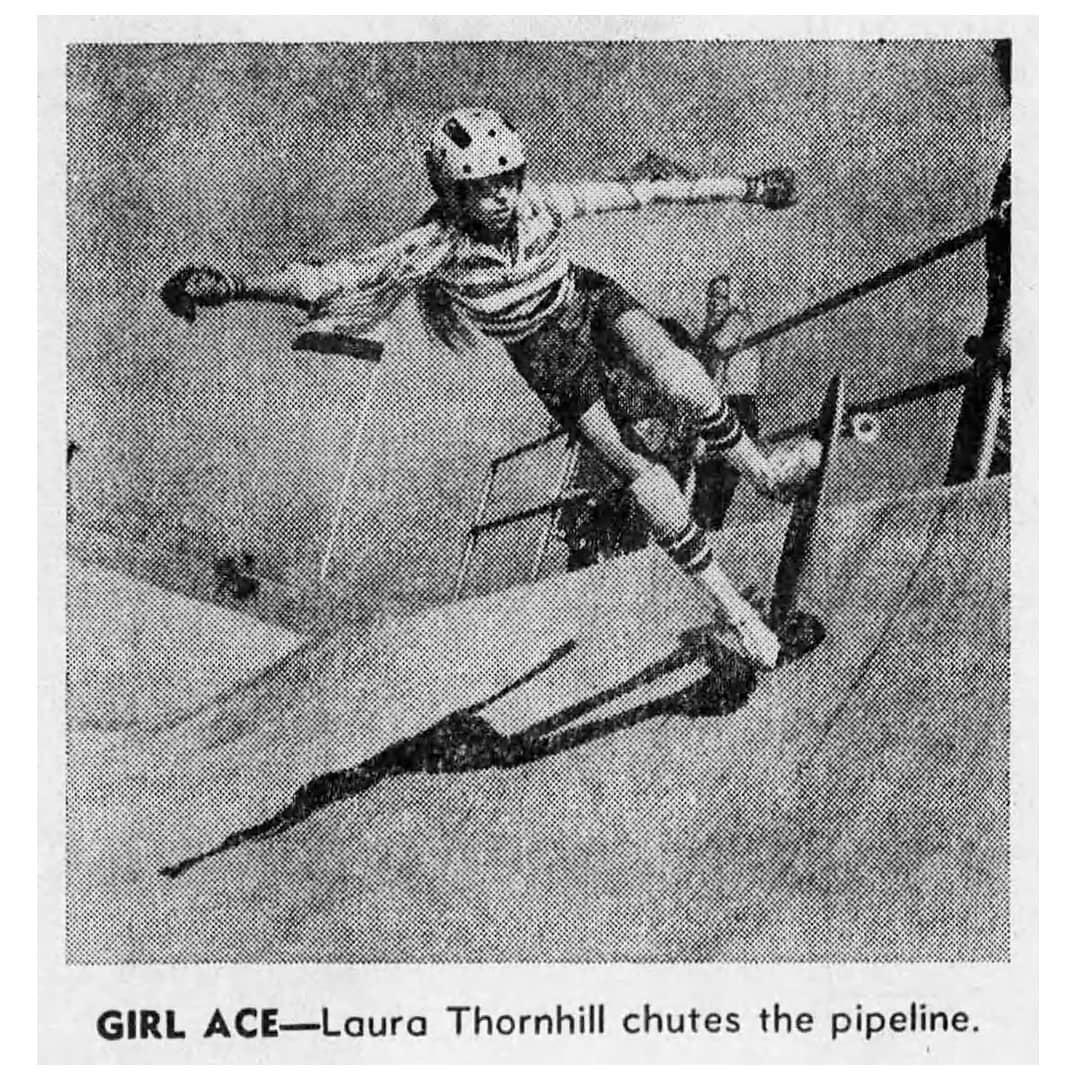

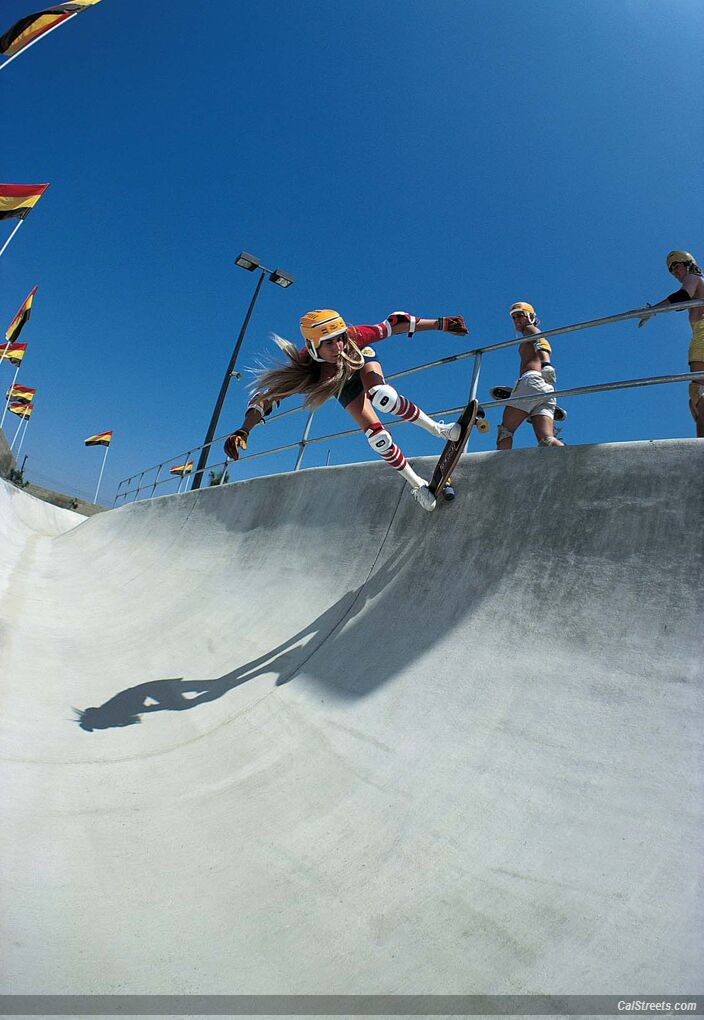

Photos: Bolster & Gil Cooper
And when Bolster wrote an article called “Desert Discovery” for the July 1977 issue of Skateboarder, showcasing skateboarders floating through 18-footer concrete pipes in Arizona, Laura was documented in full colour! She was the lone female skater among 12 guys invited to find the pipes. Laura said, “we saw them in the distance, these scattered, huge, gigantic sections of pipe… Oh my God, the car was just rocking back and forth with excitement. We were freaking out… These were the most perfect pipes. Seamless” (Schiot).
The photo below with Laura in the gigantic pipe would be the first centre-fold of a female skater in a magazine!
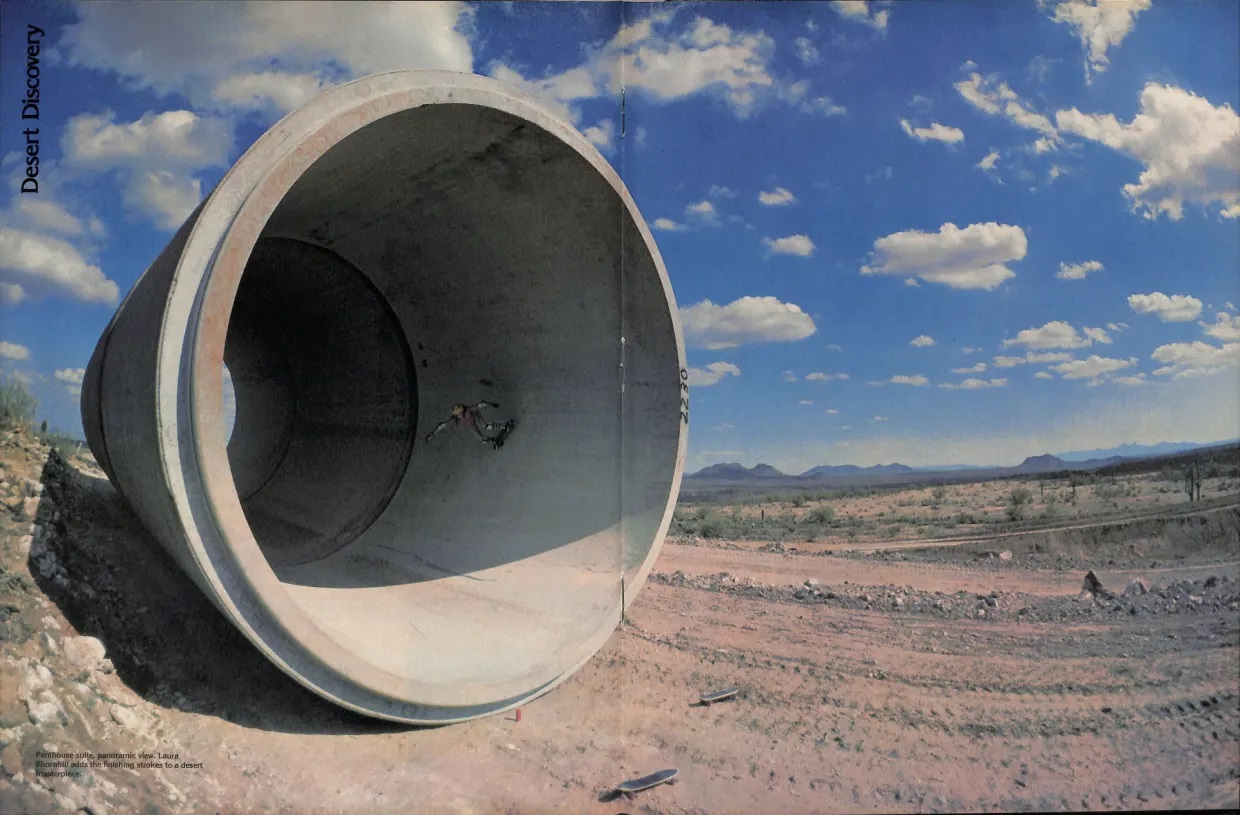

Laura shared that the Arizona pipes “was my first experience in a serious back-to-back vert place. I had gone out to Mt. Baldy prior to that, but there was always water running down it. The Escondido reservoir really didn’t qualify as vert. Back then, everyone was kind of an all-around skater: freestyle, downhill, slalom, vert and cruising” (Balma).
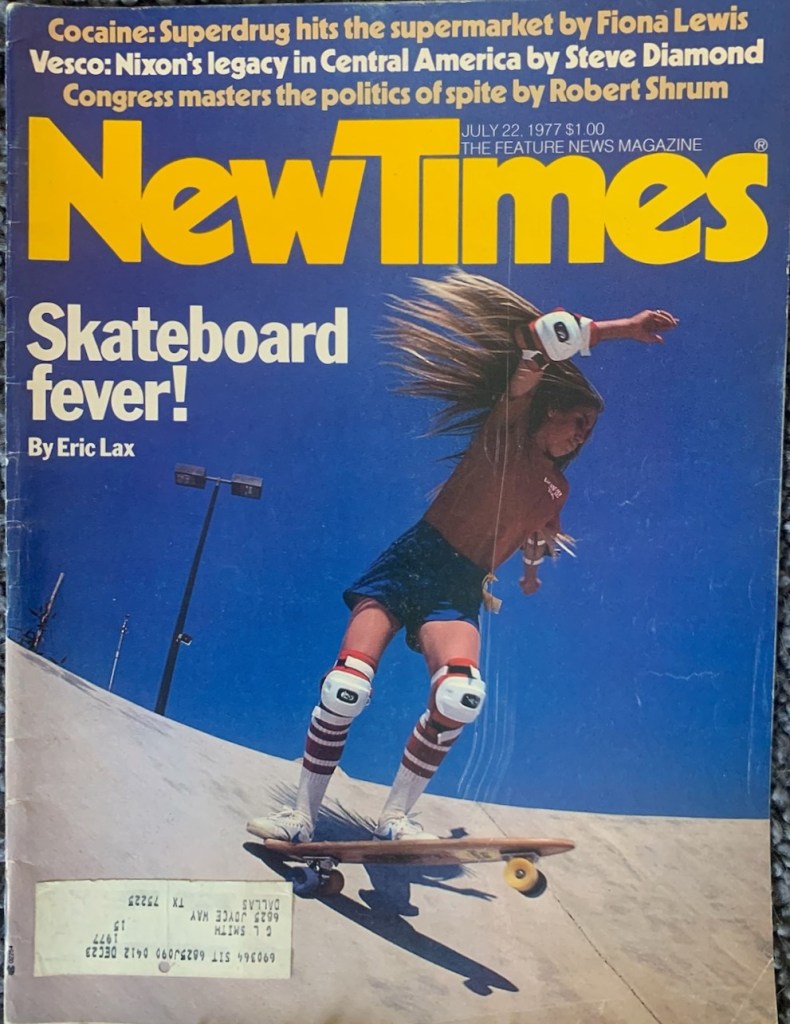
Photo: Laura takes the cover of New Times July 1977
Laura even snuck into a few backyard pools in her day. For example, she shared with James O’Mahoney her first experience skating vert.
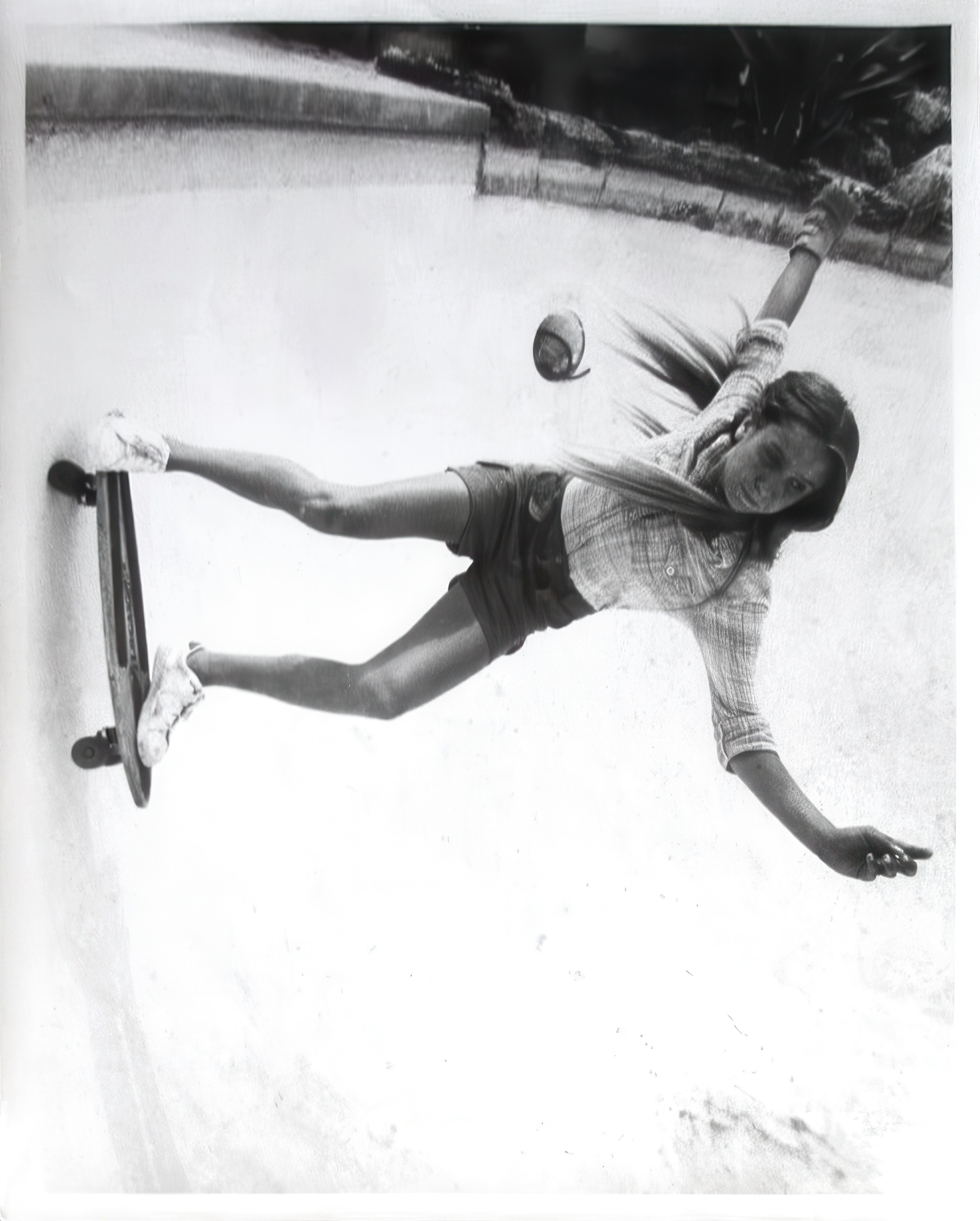
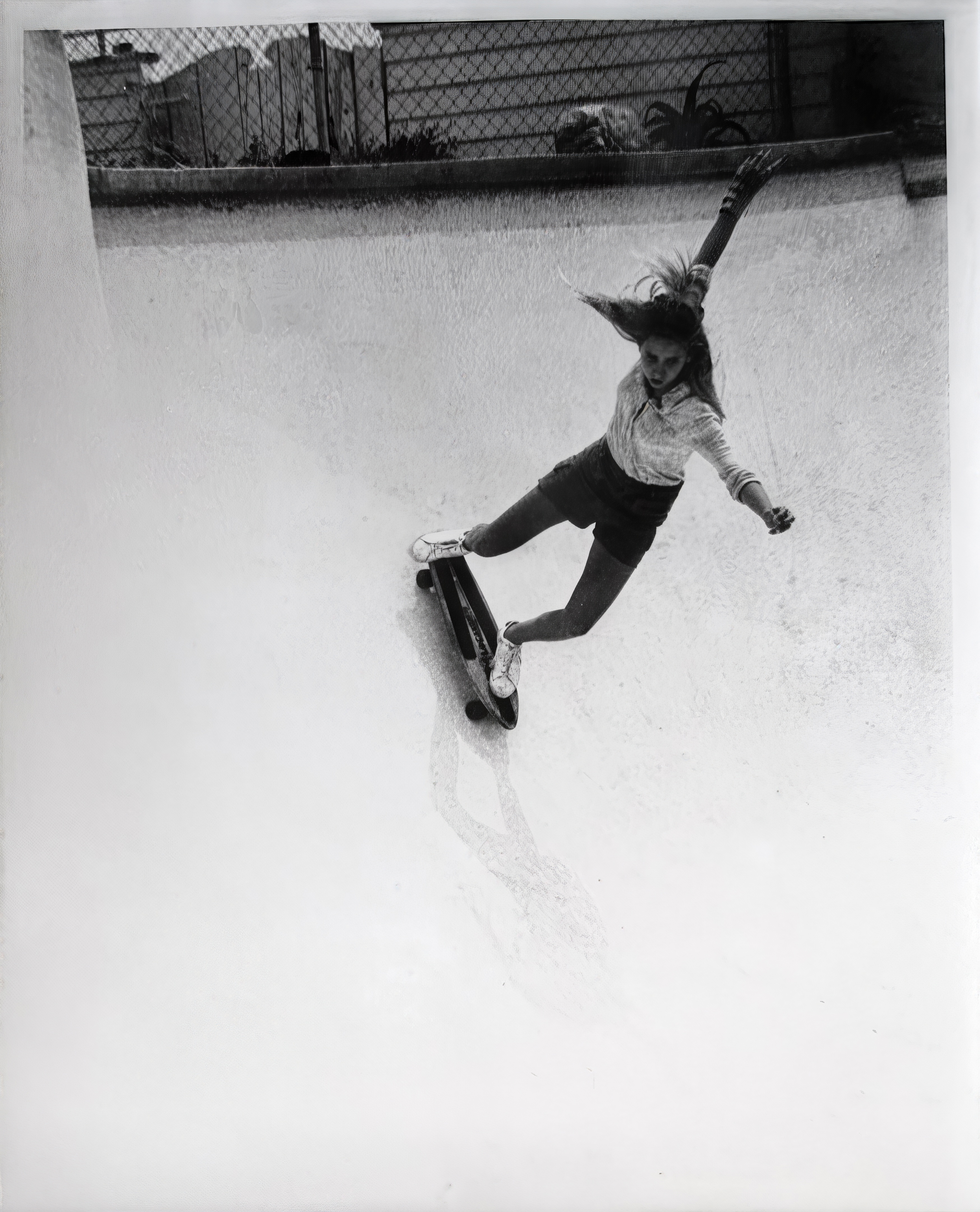
Photos: Laura pool skating by Ed Economy

Photo: Warren Bolster documented Robin Alaway, Laura Thornhill and friends at the SDSU Soul Bowl in 1976
“It was at a pool near my house that I actually got thrown in jail for riding one day. It was a house that was being remodeled and the pool happened to be empty. We were ditching school for this potential day of fun and then the cops showed up. They could have taken us in for trespassing, truancy and lack of supervision, but only took us all in for lack of supervision. That was the first pool that I tiled and grinded.”

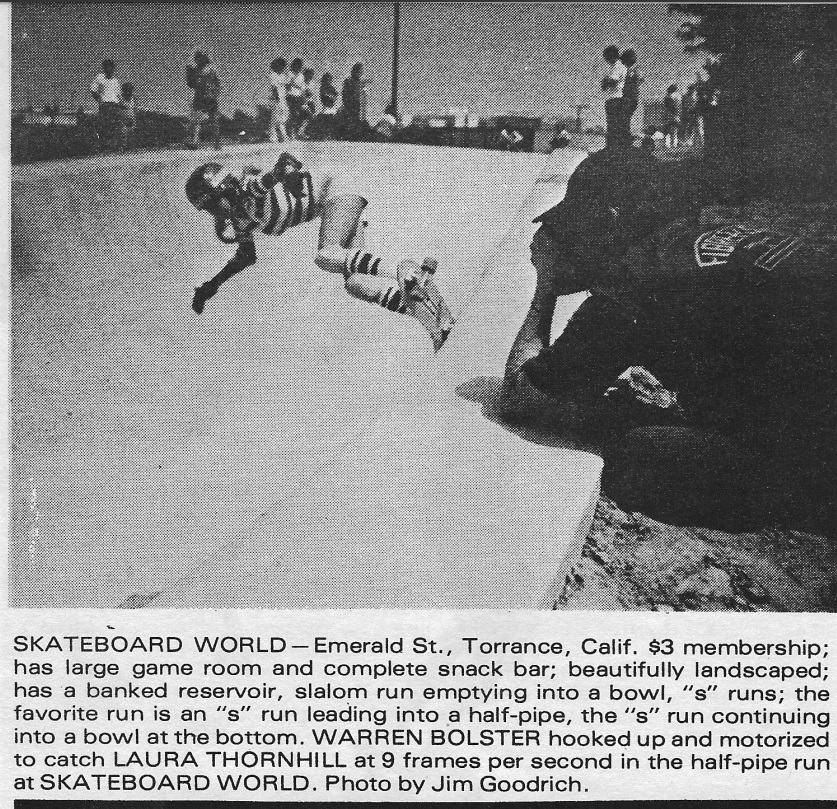
Photos: Jim Goodrich (August 1977, National Skateboard Review)
Regarding competition against other women, Laura explained to Leo Baker that in Molly Schiot’s book Gamechangers that, “yeah, we were competitive. You were competing and there was prize money, but at the same time, you were friends with everyone. But yeah, you wanted to win… There was always a women’s division, and the guys’ prize money was always more. There was always inequity” (p. 128). And yet, among the skateboarders themselves Laura felt that “The girls weren’t being disrespected. The girls were encouraged back when I was riding. The guys dug it. They weren’t like, you can’t ride this bowl. The girls were always given equal skating ground [in the 1970s]” (p. 130).
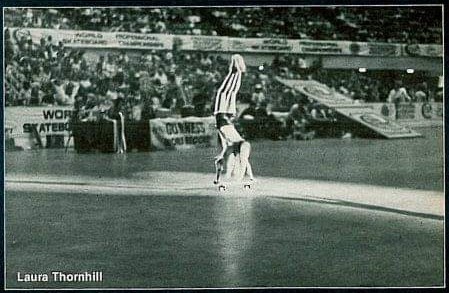
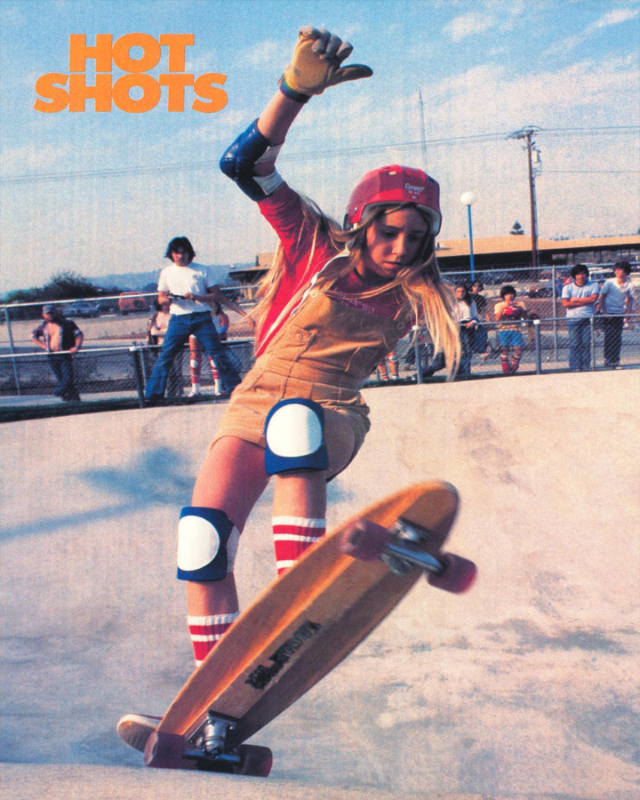
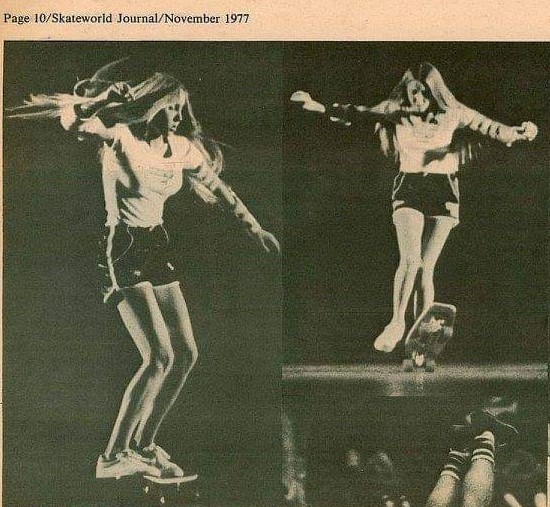
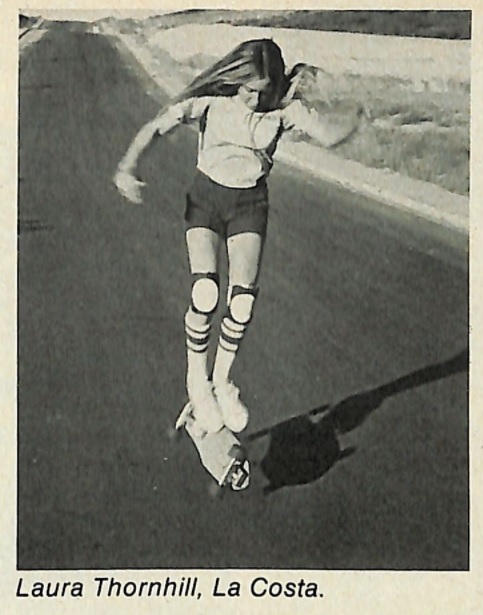
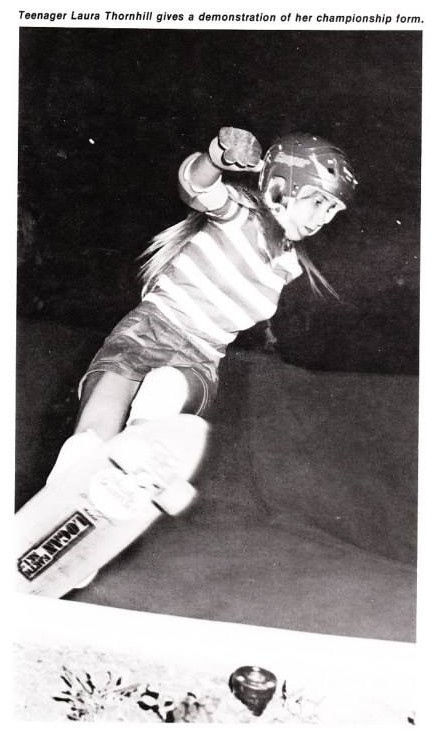
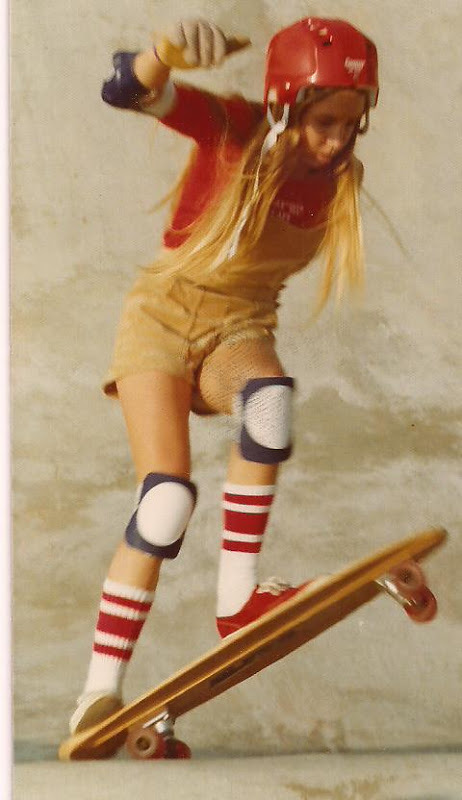
Laura featured in many skateboarding magazines around the world, including an article in a UK publication called Skateboard! in the October 1977 issue alongside Ellen Oneal. Laura was 15, and explained that, “I receive a monthly salary from the Logan Team, I win prizes at contests, and I travel around a lot to different States and different countries doing demos.” She also highlighted how “the girls hang out together and like to skate together – the guys are more solitary.”

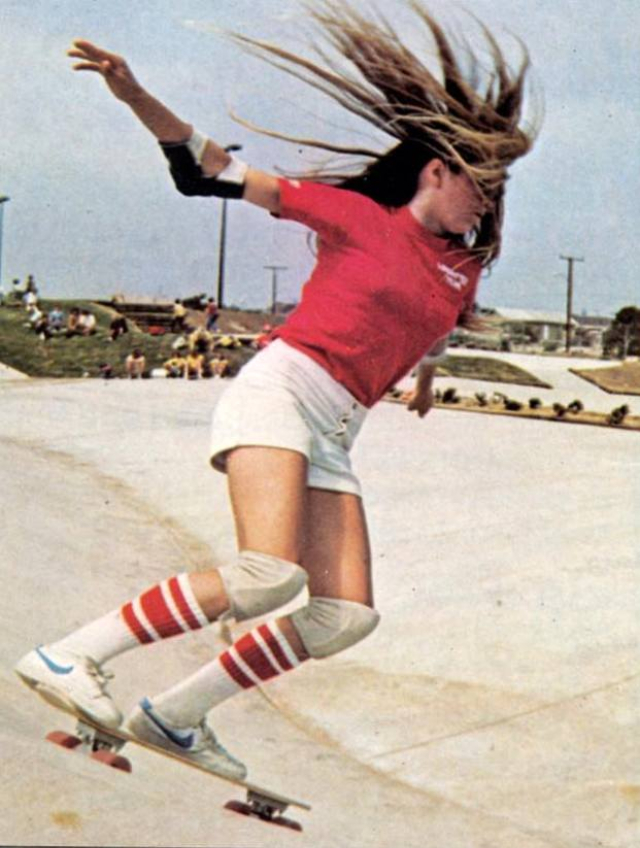
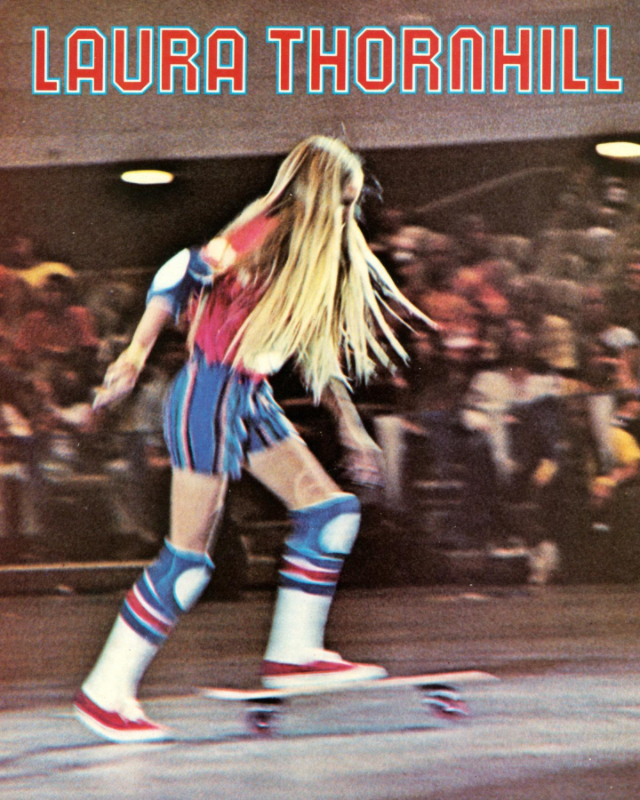
And when asked about the Olympics, Laura said, “No doubt about it, they’ll have free-style, compulsories, slalom, cross-country and bank-riding.” She also felt that it was important to have coaching, “especially for the Olympics. Entrants will have to train and be coached intensively. Here’s looking forward to it.”

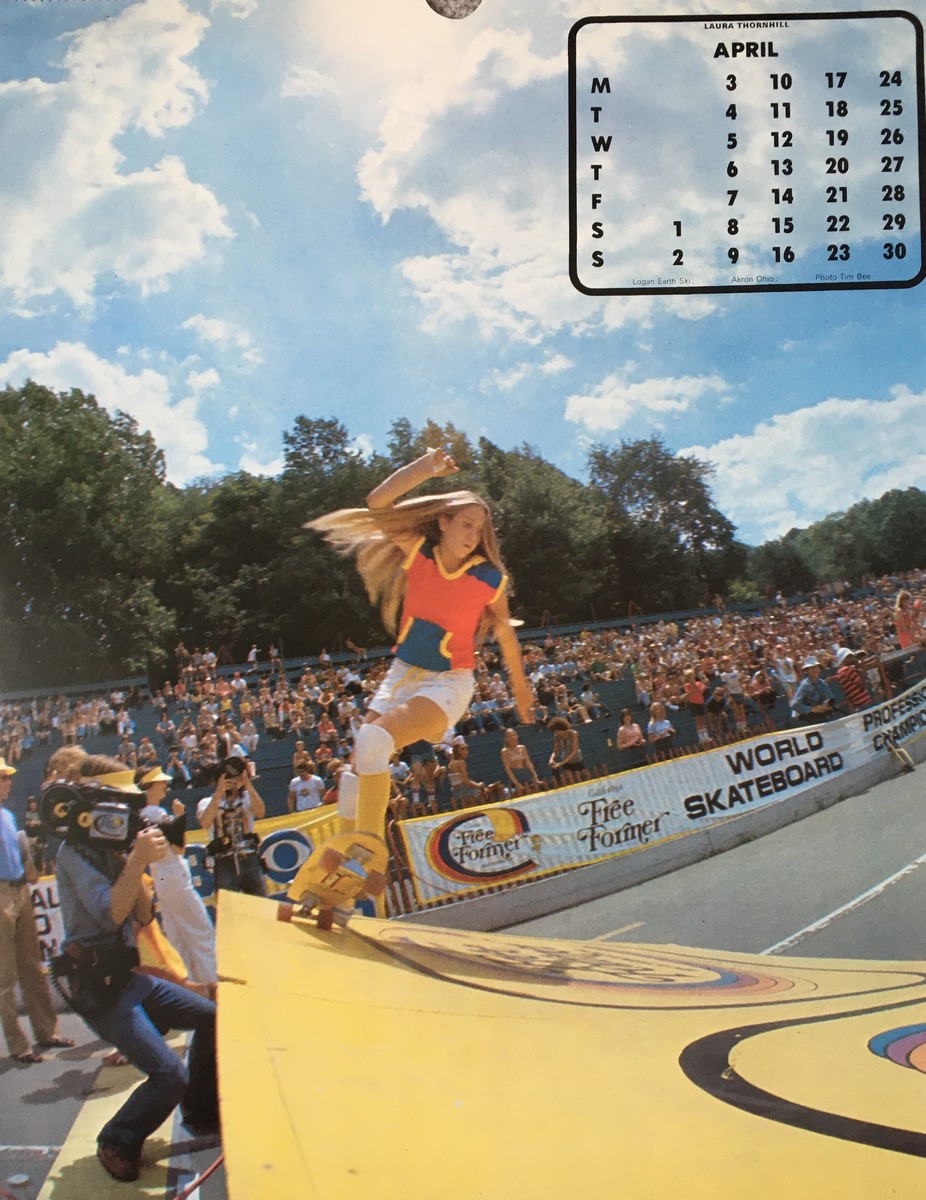
Laura easily won the first annual Skateboarder magazine poll in 1978 among an incredible line-up of women being Ellen Oneal, Kim Cespedes, Jana Payne, Robin Logan, Ellen Berryman, Desiree von Essen, Robin Alaway, Michelle Matta, and Edie Robertson. And in 1978, she was the skater for April in the International Skateboard Calendar, which was published and printed by ABC Printers in Sussex, England.

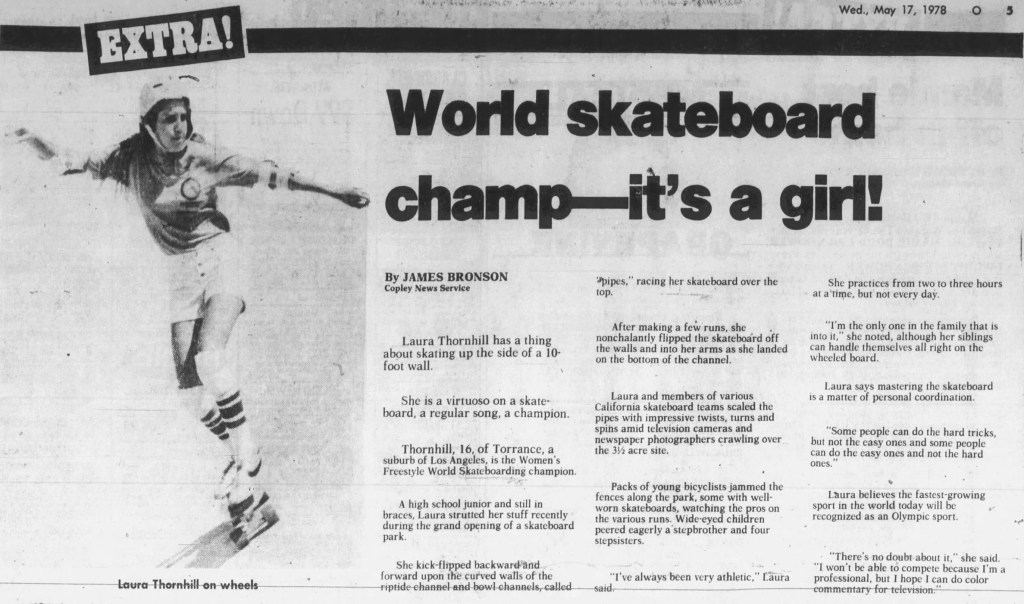
Above: Feature in the Oakland Tribune (May 17, 1978)
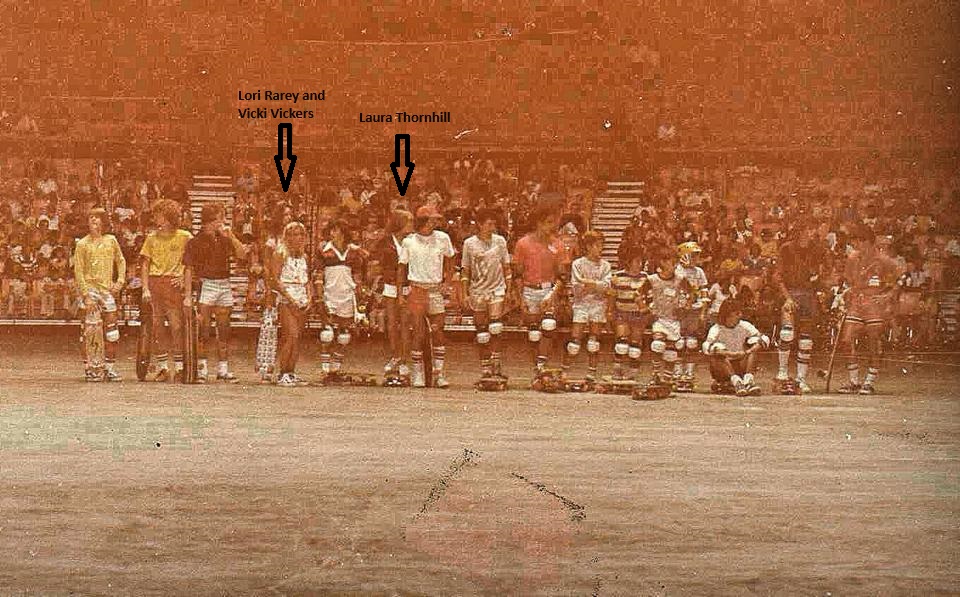
The following year, in 1979 Laura had the opportunity to travel to Caracas, Venezuela along with Vicki Vickers, Lori Rarey, Chris Chaput, Paul Hoffman, Bobby Boyden and Tony Jetton.
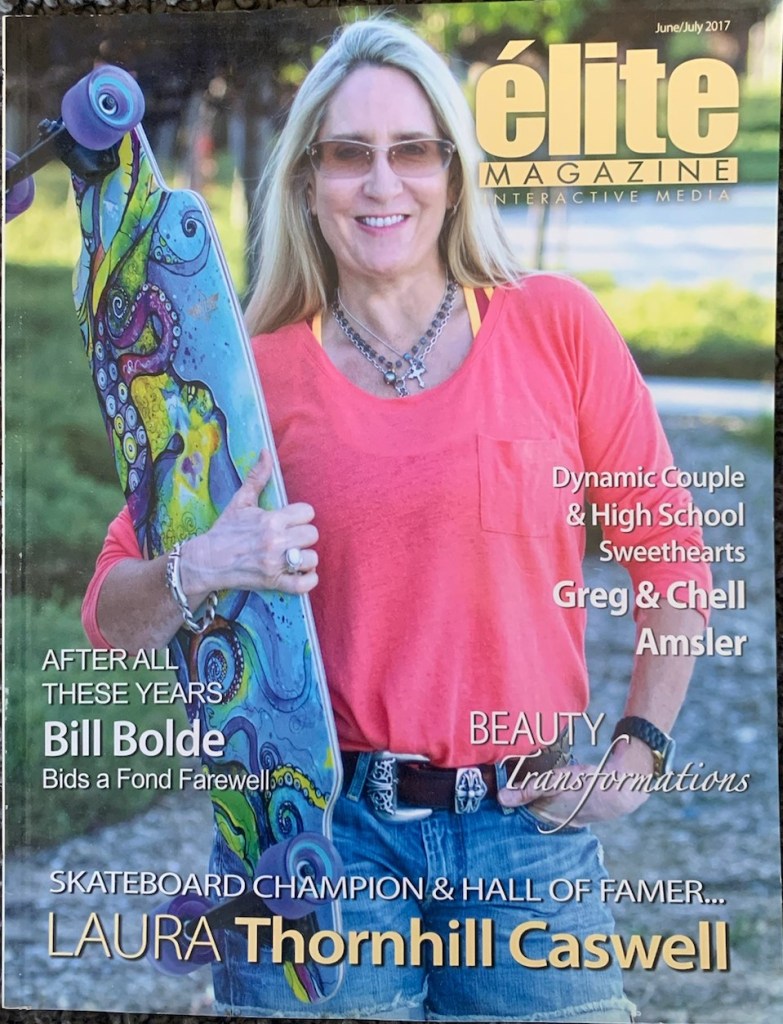
In her 2017 interview, Laura said she was still skating, performing some freestyle and enjoying a cruise or carve. She was still mindful of an old injury any time she stepped on a board. Her competitive career had ended because she dislocated her elbow at the Skatepark Montebello in the late 1970s on slick concrete the day before it opened taking Stacy Peralta’s board for a spin.
Laura would dislocate her elbow a few more times, and realized this was the beginning of the end because firstly “I ended up with a cast on my arm for the new few months; and two, my fearless edge, and go-for-it attitude had given way to being extremely cautious… I continued to ride and still be one of the top female skater thru 1979 but through it all, the pain in the joint and the slightest little bump against anything was well beyond something that would quickly heal” (Dootson).
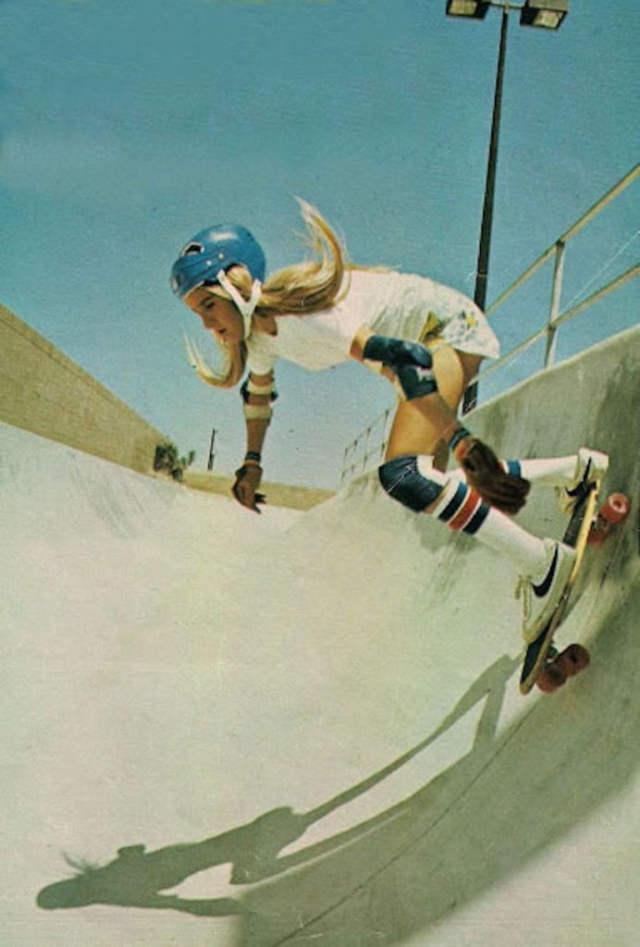
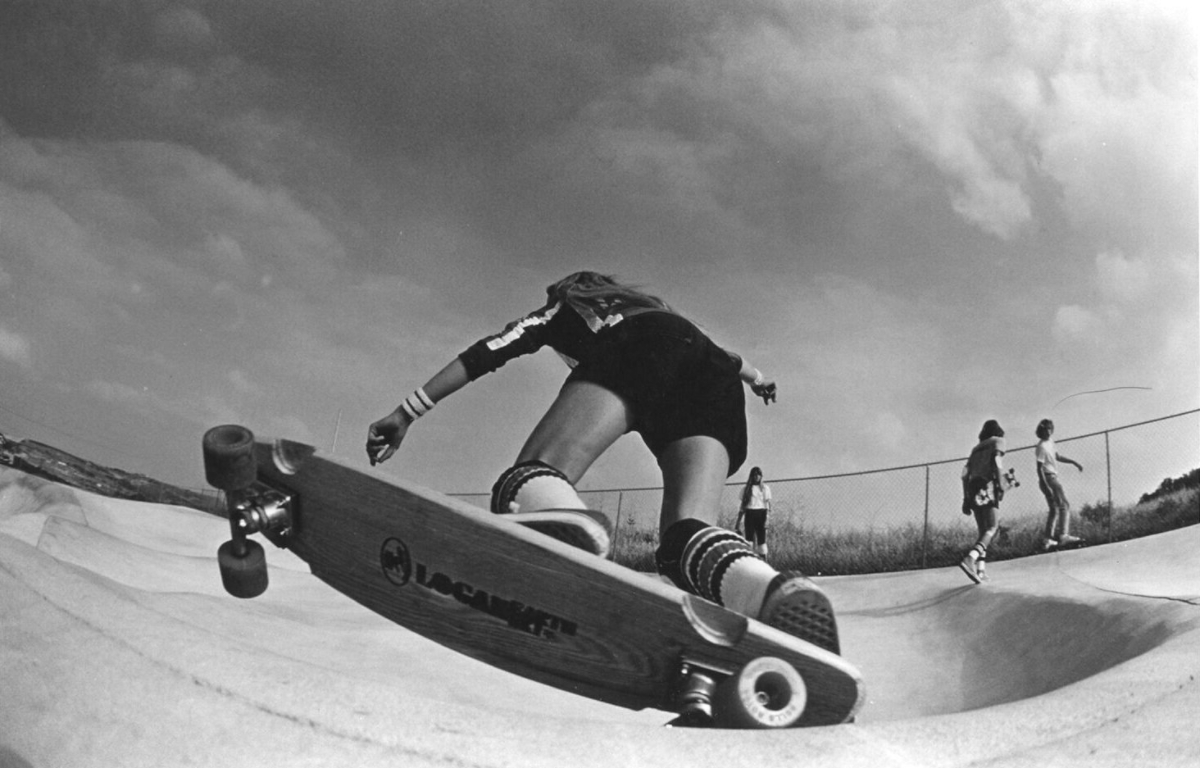
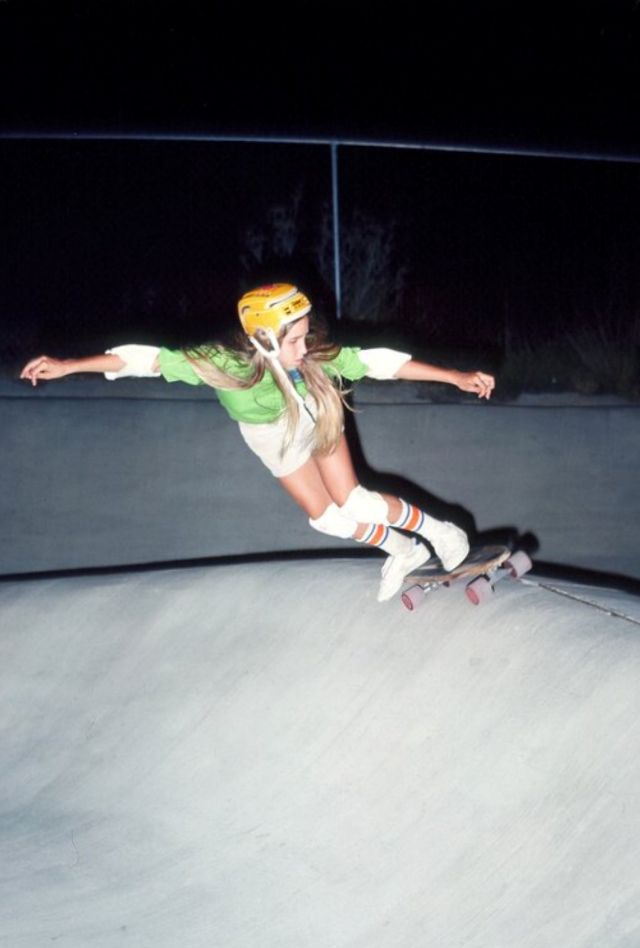

Laura’s path then turned towards a career working in the entertainment industry, including a massive Closing Ceremonies celebration for the 1984 Summer Olympics! She met her husband and partnered in their own company involving music production, record distribution, a rehearsal studio and soundstage for music videos and TV shows (Dootson). “Sports, entertainment, and creative endeavors are indeed my passion and are still at the core of all that I do” (Balma). Laura also has two children, Sage and Kylie.
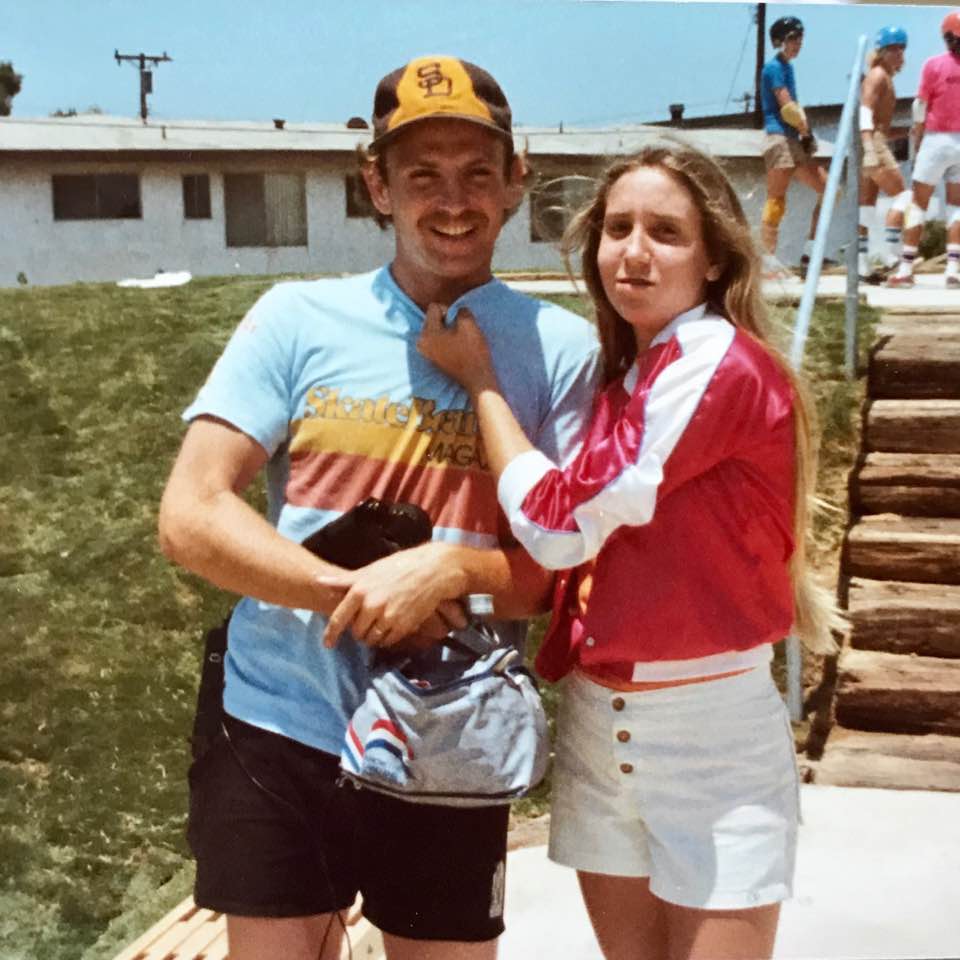

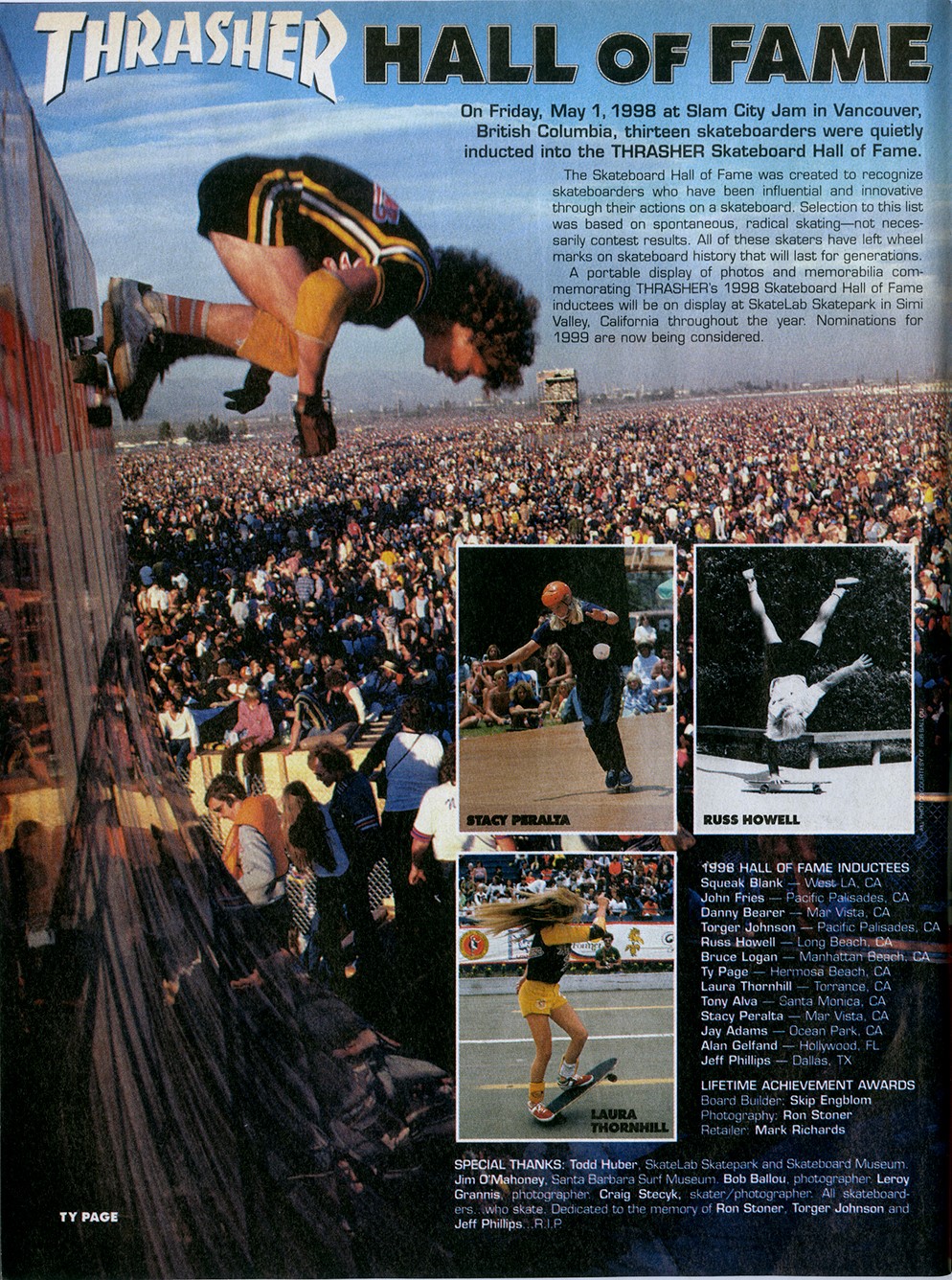
In 1998, Laura was inducted into the Thrasher Hall of Fame and then in 2013, she was inducted into the Skateboarding Hall of Fame. Laura continues to be active in the skateboarding community, such as attending the annual Mighty Mama Skate-O-Rama launched by Barb Odanaka, who honored her in 2004 and often appearing at fundraising and celebratory events, as she is the co-producer of the Skateboarding Hall of Fames Awards.
In her final remarks with Di Dootson she acknowledged her mom and stepfather for making that life-altering decision to move the family to Southern California back in 1973!
References:
- Balma, Larry. “Laura Thornhill Interview.” Tracker History. January 16, 2017.
- Berryman, Cindy. “Who’s Hot! Laura Thornhill.” Skateboarder Magazine. April 1976, pp. 82-83.
- Bolster, Warren. “Laura Thornhill: The Lady is a Champ.” Skateboarder Magazine, Vol. 3, no. 5. (June 1977): 50-57.
- Charlton, Vicki. “Skateboard! interviews two of America’s hottest female stars.” Skateboard! (Vol. 70. No. 2) October 1977, pp. 26-27.
- Dootson, Di. “Laura Thornhill-Caswell: Then and Now.” National Skateboard Review website. Unknown date [early 2000s].
- Gesmer, Daniel. “Confessions of a Skateboard Heretic.” Lives on Board: the Skateboarder’s Journal. Morro Skateboard Group, Morro Bay (2009), pp. 191-205.
- O’Mahoney, James. “Laura Thornhill.” Juice Magazine. December 1, 2008.
- Schiot, Molly. Game Changers: the unsung heroines of sports history. Simon & Schuster, 2016, pp. 126-131.
- Sirdofsky, Arthur. “Laura Thornhill: a talk with a skateboarding pro.” Akron Beacon Journal. Thursday, June 29, 1978.
 Womxn Skateboard History