
Àngels Borrell was 13 years old in 1978 when her skateboarding story began near Barcelona, Spain. And decades later, in her forties and fifties, she continued to skate thanks to a reunion with her childhood friends. Àngels also became a key resource when a dedicated crew of skaters began a movement to unearth the very first concrete Spanish skatepark called Arenys de Munt, which was her local park.
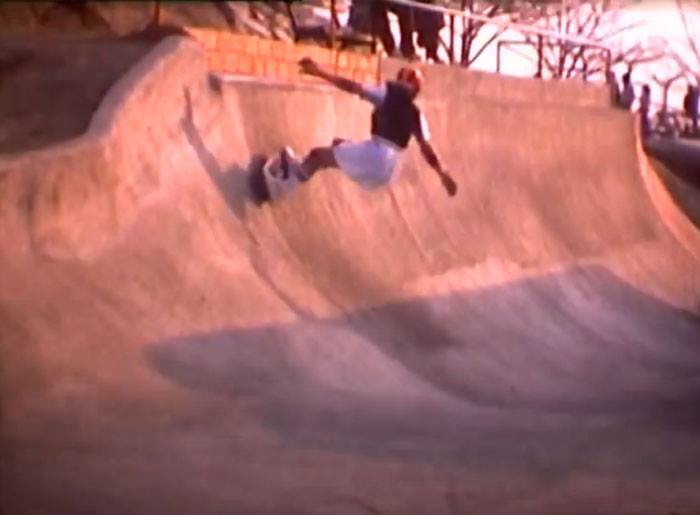
“My best childhood friend showed me a skateboard she’d been given. She said, ‘Try it and see.’ I lived in the countryside, and we were at my house on a concrete patio. She got on first, and just watching her movements on the board, I didn’t hesitate for even two seconds. My first time consisted of putting one foot down, then the other, and in two seconds the board shot forward a few meters, and I landed on my butt. I told her, ‘I’m not getting on here again.’ But somehow, I found myself back on it, feeling a sensation that captivated me. That’s where it all started. We were a group of friends, and my friend and I were the only girls who skated. We skated all the time: in the schoolyard, on the street, on the downhill slopes of housing developments, around town, etc.” (Prados).
The community of kids became obsessed with skateboarding, and Àngels recalled how,
“One day, we decided to build some ramps at my friend’s house in an empty water tank that had been used for It was watered and abandoned. This was my first real skatepark. Now when I think about it, I feel like laughing, because even though it was the place where I learned the most, I realized later that what we built was a prototype half-pipe with wooden planks. When I did a jump or a turn on them, sometimes a nail would pop out or one of the planks would break. We spent many afternoons and every weekend there, until one day… the greatest day of our lives arrived” (Prados).
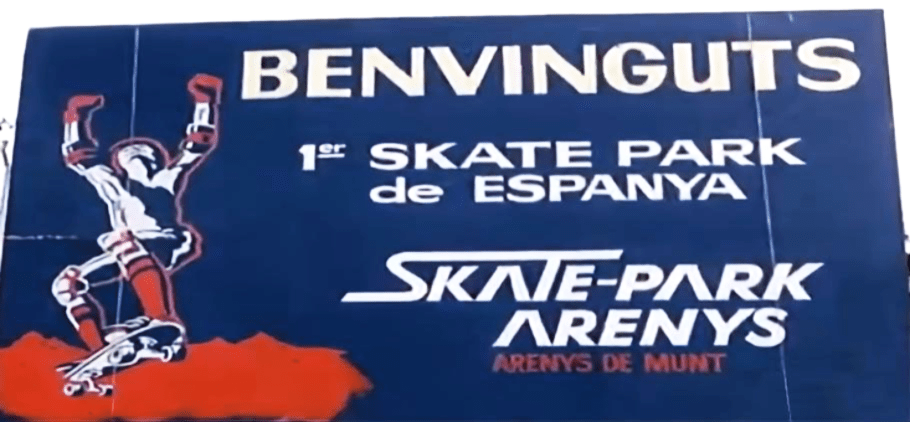
The gamechanger was when Àngels learned that the Arenys de Munt skatepark was being built near her home. Arenys de Munt was a town with around 8,000 inhabitants, close to the coast, and 45km away from Barcelona and apparently an American named John McDonald, who spent his summers in the area, donated the land for this purpose. The park officially opened on July 7, 1979.

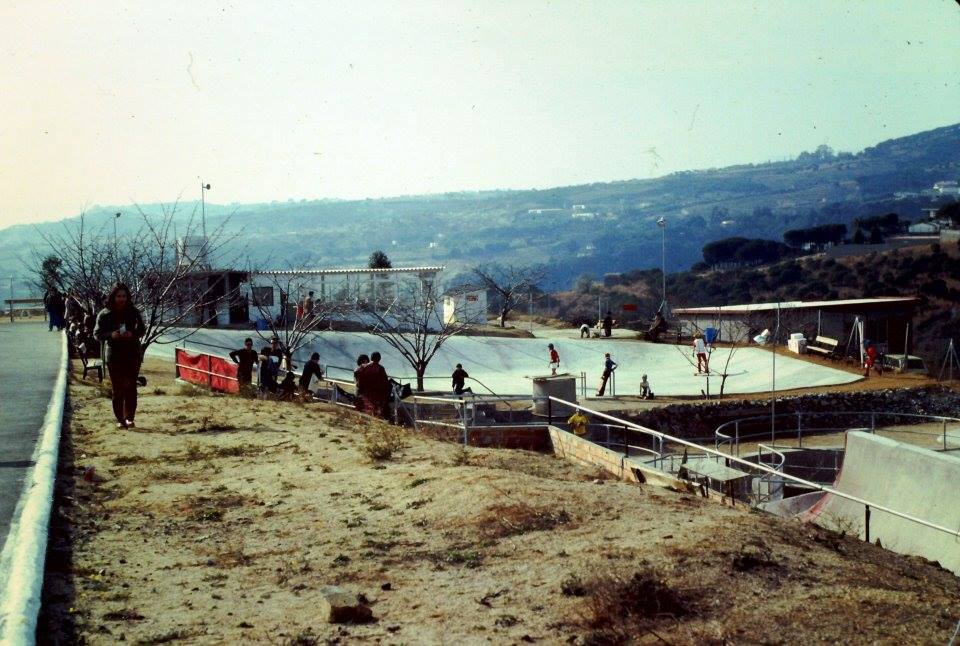
“We escaped by train to Arenys de Mar and had to walk about 4 km further to reach what would become my favorite place. I remember exactly everything I felt when I first saw this skatepark… we paid the entrance fee and as we climbed the hill before reaching the ramps and began to peer over that concrete paradise… my eyes couldn’t believe what I was seeing. It was incredible! We screamed with joy! We started going down the freestyle ramp and skating all over the place… it was like being in California, it was a dream!” (Prados).

It was a magical time for Àngels, who would often spend her entire weekend at the park from 10am until the evening. And a community was formed, where the skatepark felt like home and her fellow skaters, a kind of family. “We had a great time there. Besides, there were people from all over Europe… People from France in their vans, there were celebrations, people from Madrid or the Basque country. It was unbelievable… So just imagine! Fifteen-year-old kids, a party. I mean, it was amazing!” (Mayor).


Even better was when Àngels was approached by the skatepark owner, Kim Roig and his friend named Pep (a ski slalom coach) wondering where she was from and where she had learned to skate. They then invited her to join the Skate Club Catalunya. Àngels was blown away because she didn’t even know that a team of kids existed. She was told to attend the tryouts and was offered a slalom board (which was new to her) to attempt a slalom course and dodge some cones.
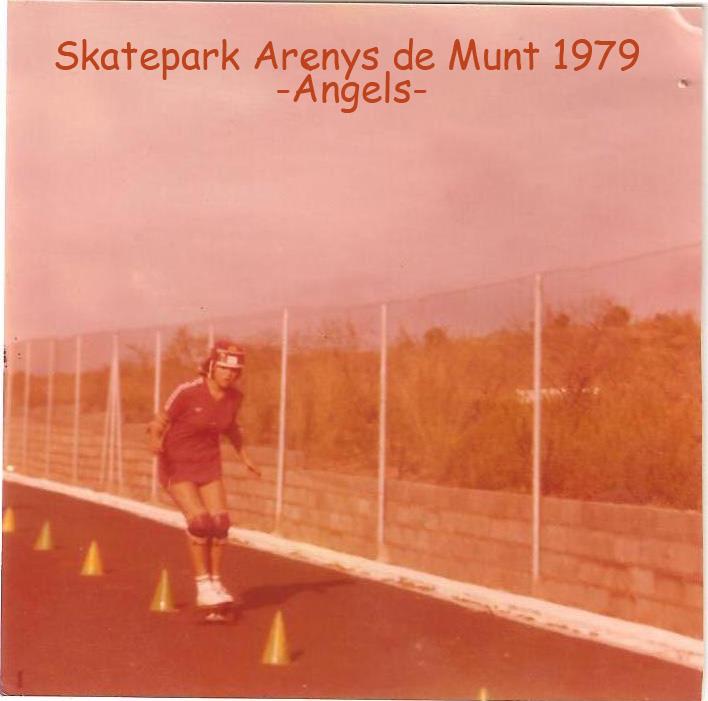
Àngels was sure she would just knock them all down, and her first try was a disaster, but Kim and Pep were supportive. Initially, Àngels told Kim not to call her dad and invite her on the team, since her parents had no idea that she was skateboarding! “But of course, I gave them my number, they called, my father came, and they signed me for the club” (Prados).
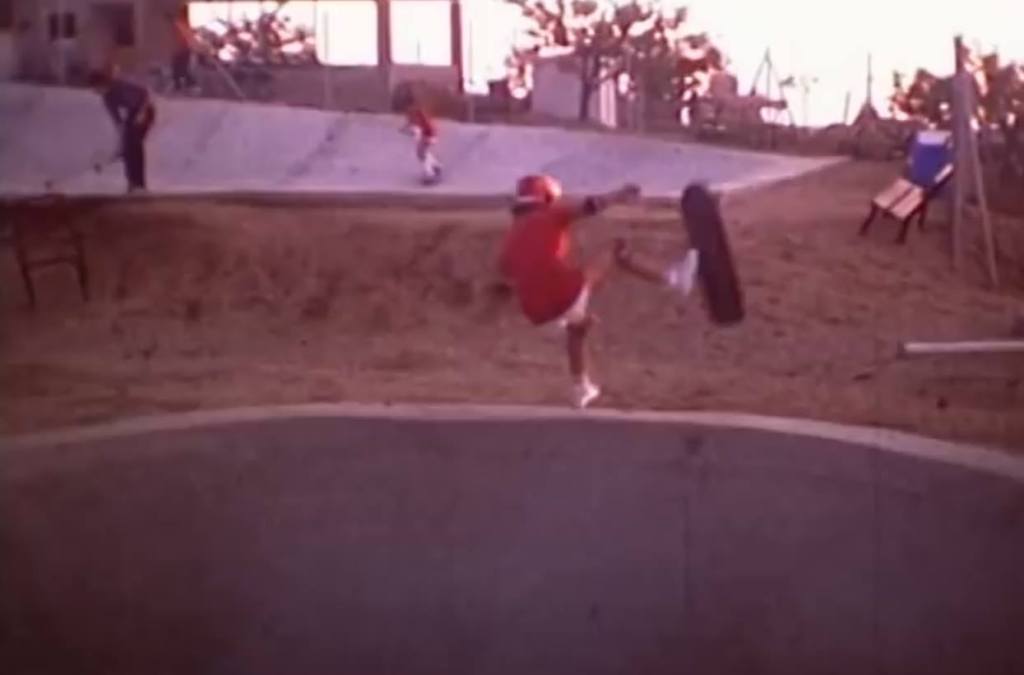
And after that, Àngels said she spent almost every weekend at the Arenys de Munt skatepark. There were moments that she felt lonely as the only girl, but “it later turned out to be the only place I wanted to be every minute of my free time, and where, years later, I’ve realized I had some of the greatest moments of my life. Meetups, competitions, parties… and an atmosphere that made you feel like you were floating!” (Prados).

Àngels also had a twin sister and brother who would accompany her to the park, but her sister seemed more interested in enjoying the swing-set, while Àngels practised her skills. Check out this Super 8 footage from her collection from 1979, at age 15!
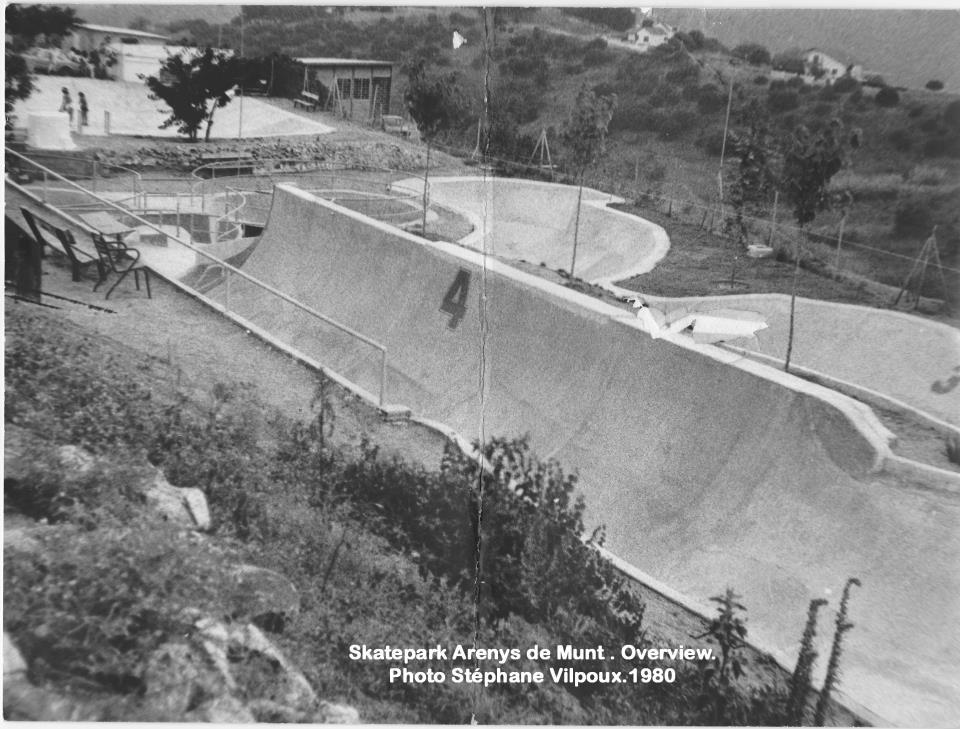
Arenys de Munt enjoyed some glory days from 1980-1982, hosting contests and memorable skate sessions. Unfortunately, in the mid-80s, the skatepark was partially torn down and buried under rubble. There had been a real downturn in the skateboarding industry, especially in California, and that had major repercussions on the popularity of skateboarding around the world. The skatepark became a distant rumour for decades.
In a documentary called Digging by Enrique Mayor (2012), Àngels said the demolition was “the biggest disappointment in my life… It was heart-breaking. You can imagine how I felt when I found out it was closed. It’s always been a part of my life” (Mayor). Thankfully, the skatepark wasn’t forgotten and Mayor reported on his website that around 2010 an initial attempt was made to clear the freestyle area, followed by the bowl.
Even Nike SB got involved to help, recognizing the grassroots efforts of local skateboarders who performed all of the physical labour on weekends. Nike helped bring in the excavators to speed things along. There were other challenges, too, like getting the support of Kim Roig who still owned the land, and the Arenys City Council but there was a lot of momentum. Àngels recalled how, “The first time I saw the bowl, and it was uncovered, it was through a photo. It felt as if my heart had opened again. It was amazing. And let me tell you when I saw the bowl here, I shed a couple of tears. Yes, I admit it” (Mayor).
An additional documentary by Ty Evans called We Are Blood emerged in 2015, celebrating this vintage skatepark, considered the oldest in Spain.
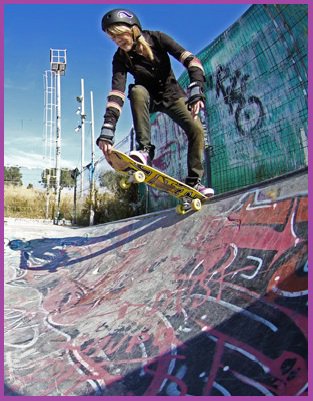


Above: photos of skateboard progress from 2011, 2016, to 2018
For Àngels, 2009 was a special year for her because it was thanks to a website called 40sk8.com by Alfredo Prados that she reconnected with some of her early skateboarding friends after thirty years. They had a reunion which inspired Àngels to take up skateboarding again and buy a board at age 44! She described the reunion as “the ultimate expressions of indescribable happiness” (Prados) and it was her intention to keep on skateboarding for as long as possible.
Prados helped keep the story of Arenys de Munt alive through memories collected on his website. And here is a tribute that Àngels created in April 2015 for her YouTube channel to honour her beloved skatepark:
Another video was created from 2011 showing Àngels as a 46-year-old skateboarder returning to Arenys de Munt to explore the space and honour a skater friend who had passed away.
On January 9, 2021, Àngels was interviewed for a show called La Comparsa on Radio Nacional de España 4 (National Radio of Spain). She should be revered in Spain and beyond as a legend, representing girl skateboarders at such an important time!
Check out her Facebook page for a treasure trove of memories.

A special thank you to Louisa Menke for recommending her friend, Enrique Mayor’s film!
References:
- Mayor, Enrique. Digging (2012).
- Prados, Alfredo. “Pioneers: Angels Borrell.” Monopatin.net (January 23, 2014).
 Womxn Skateboard History