
In the mid-1990s, a group of Brazilian girls came together with a unique vision that would evolve into the publication Check it Out, which would have a profound effect on women skaters internationally.
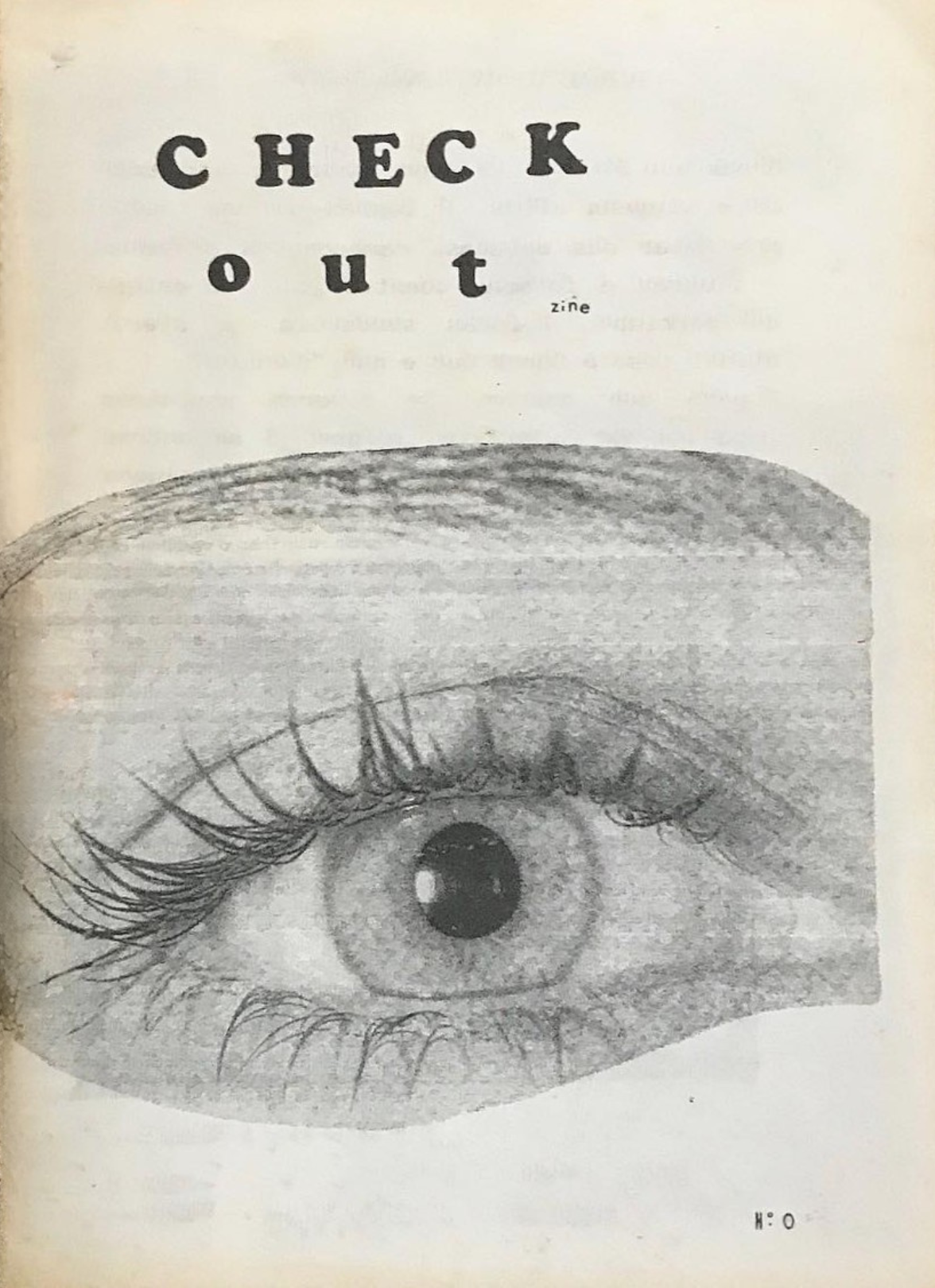
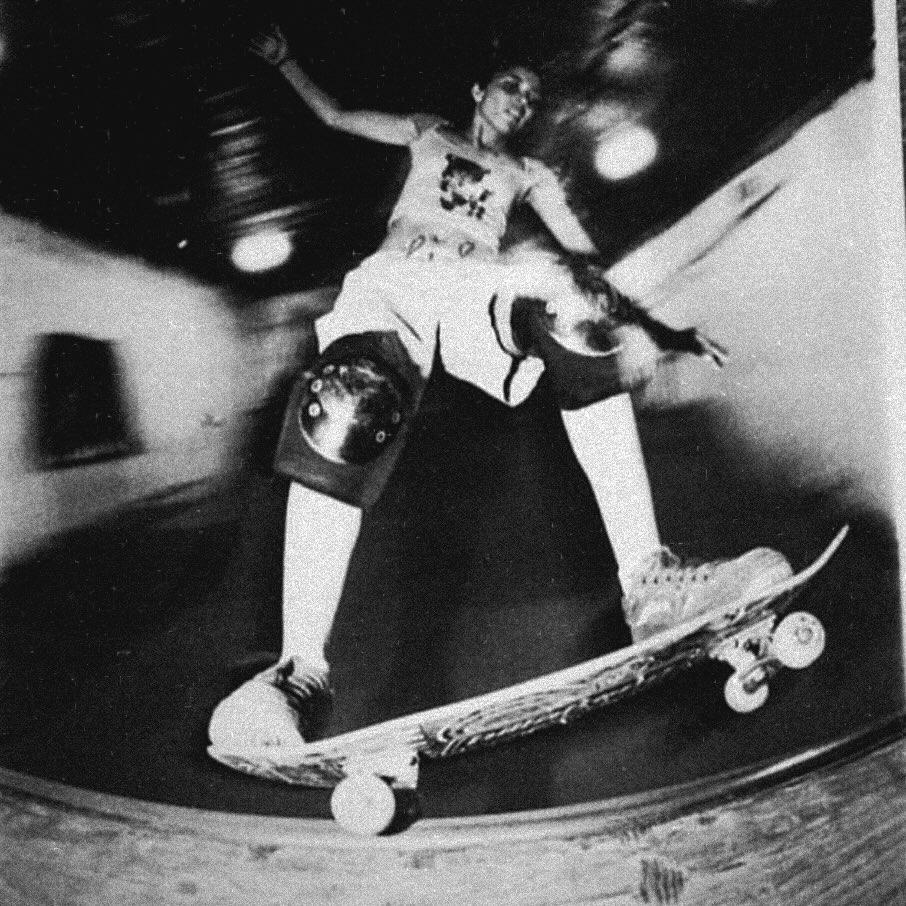
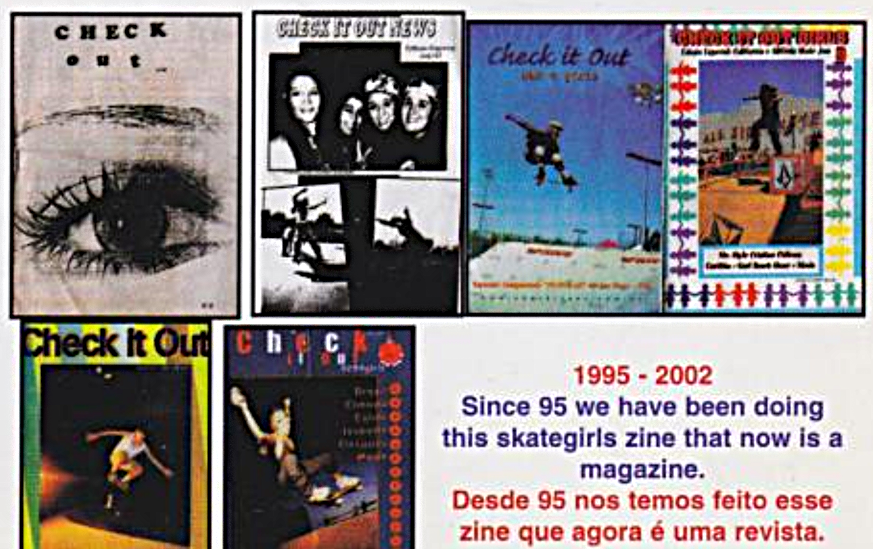
Photo: the cover of the very first zine from 1995 next to the creator, Liza grinding a mini-ramp in 1999
It all began with Liza Araujo aka Liz Angeles, from São Paulo, who started skating in 1994 and then worked in the mailroom for the Brazilian skateboarding magazine Tribo in 1995. In an interview with Alex White and Nic Dobija-Nootens for Jenkem magazine, Liza said:
“I got to read a lot of letters from girls complaining about the lack of support and discrimination every time they got to a skatepark or spot, or even buying a board at the shop, always a sexist joke… They wanted to skate and have fun with their friends, but they had to be tough to tolerate the jokes, and that would limit their progress. A platform for their voices had to be created.”
And for Clamor magazine, Liza explained, “I started a zine to inform girls about skateboarding events, results and upcoming contests. The girls at that time didn’t have any support from sponsors, event promoters, or the media. I decided that I wanted to kick open the door to the men’s club and show them that girls could skate” (Gurba).
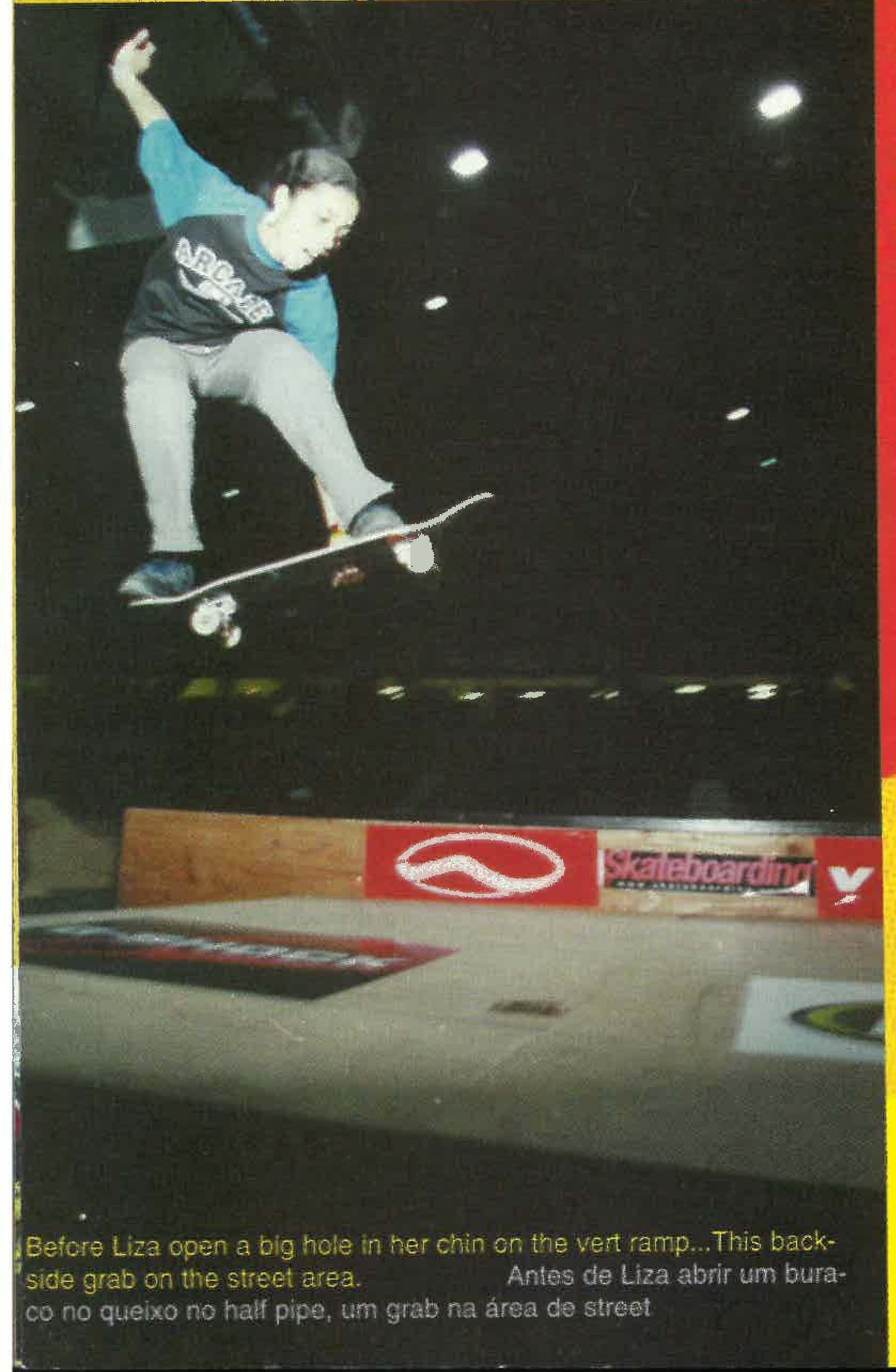
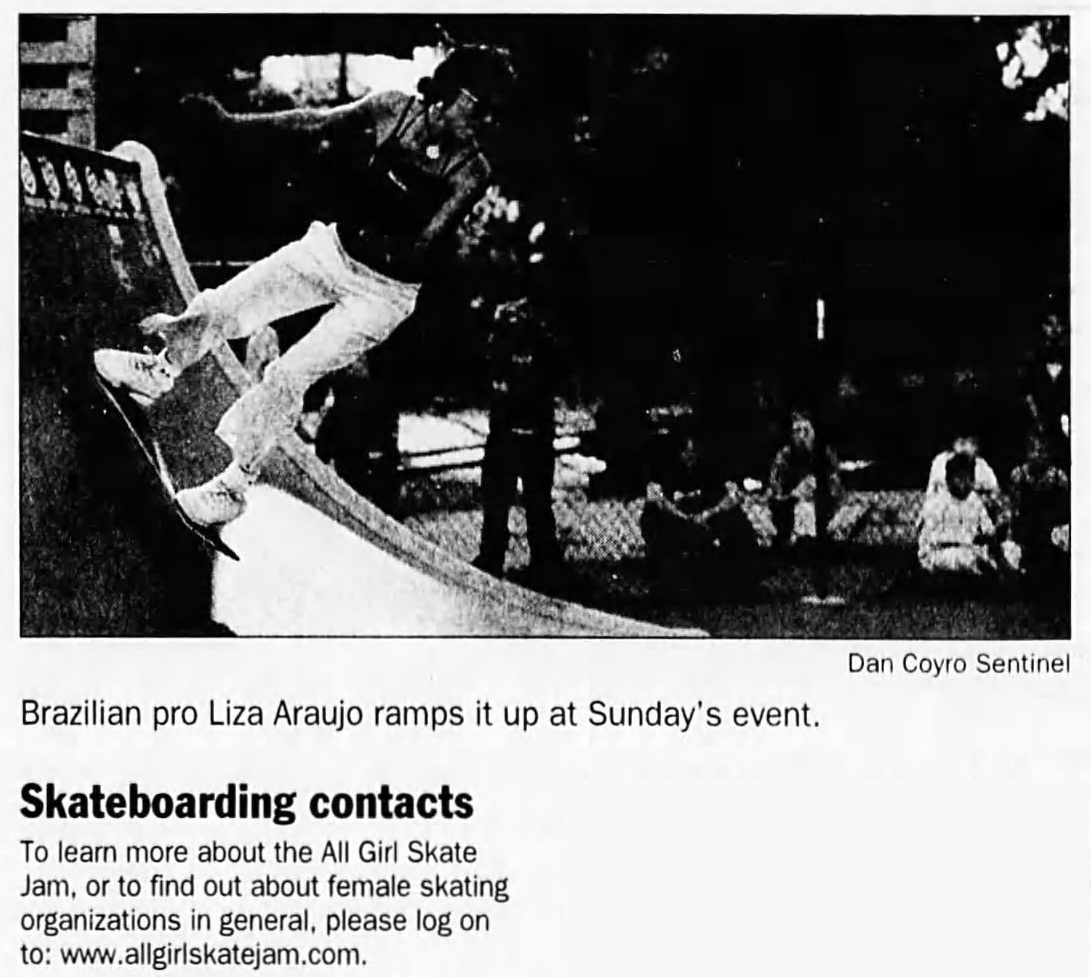

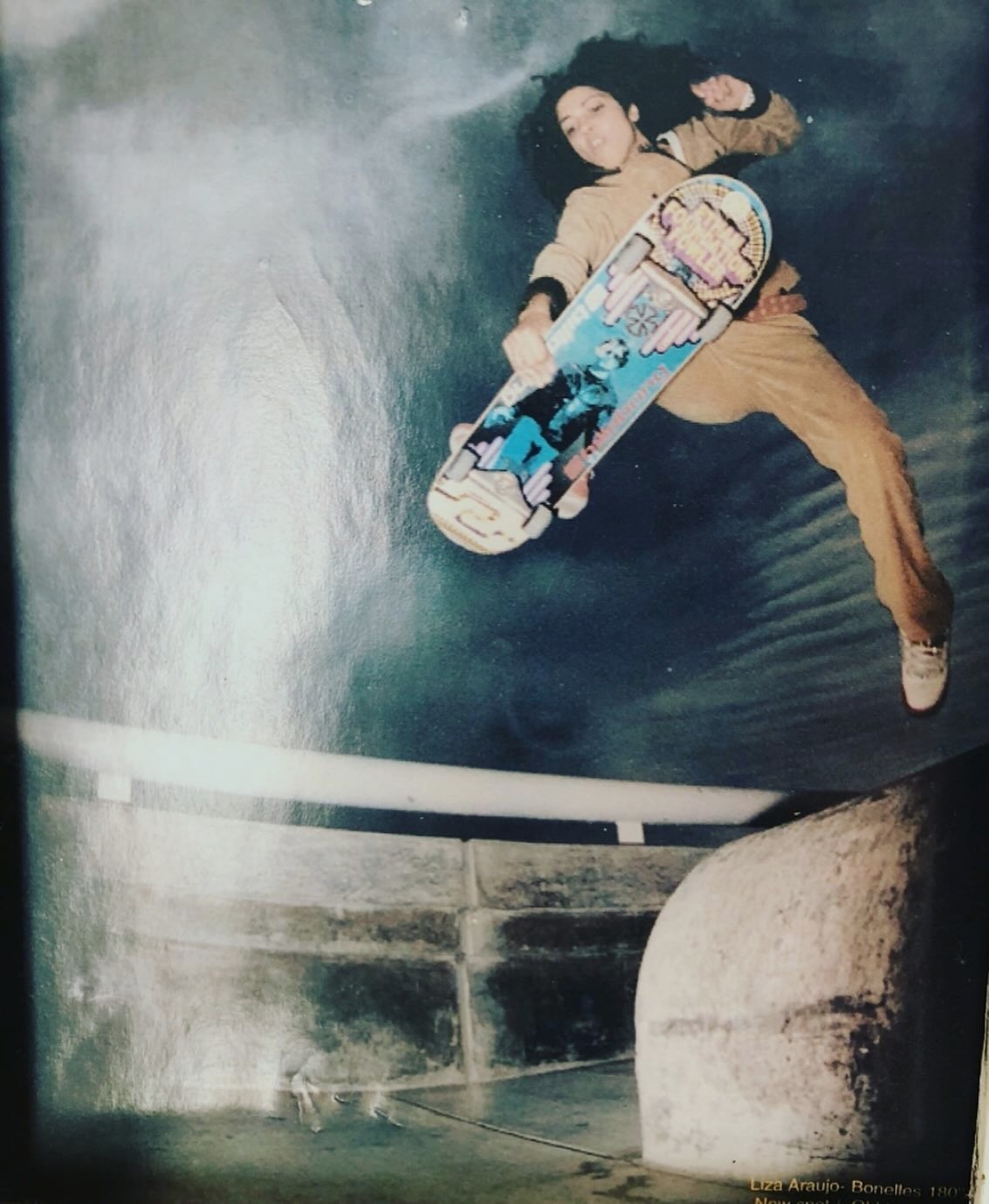
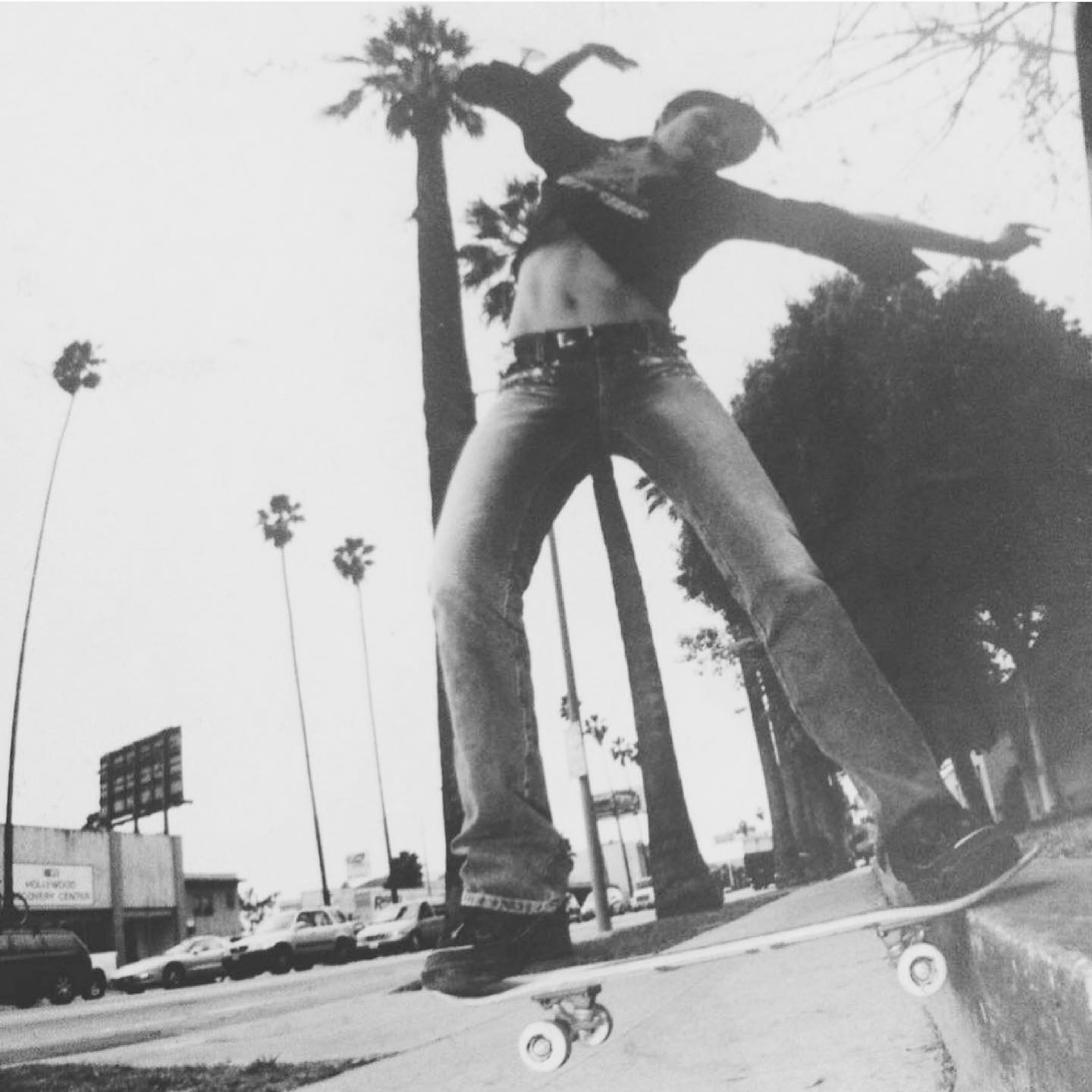

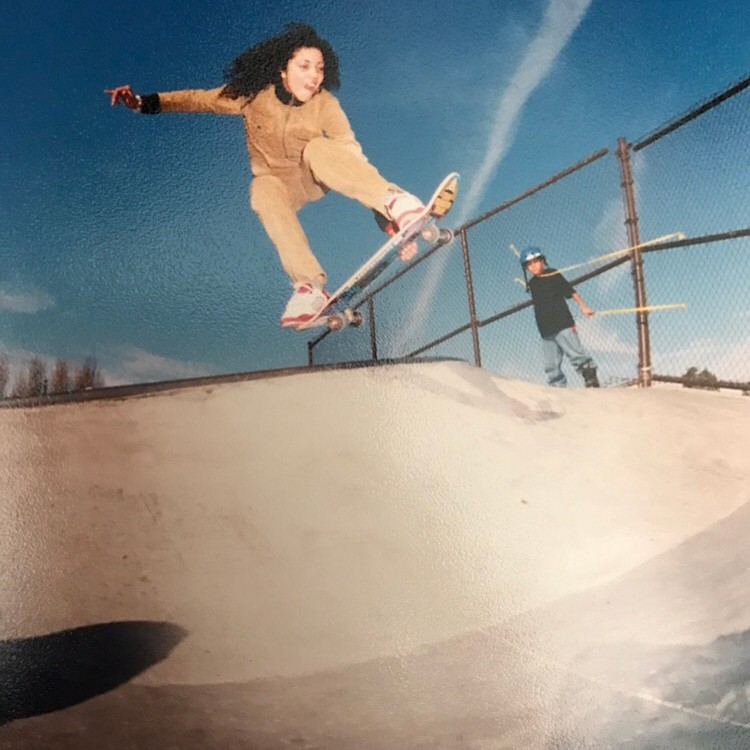

Photos: Liza Araujo from the 1990s in Brazil to the early 2000s at contests like Slam City Jam and the All Girl Skate Jam
Instead of waiting for Tribo magazine to be that outlet for girls, Liza knew she had to make change happen herself. At age 19, Liza launched a DIY zine called Check It Out: Sk84Girls in 1995, and to celebrate the publication, she “organized an all girl’s contest at ZN [Zilda Natel] Skate Park in São Paulo, which at the time was one of the first Brazilian skate contests to include women” (White). She chose that skatepark specifically because “girls were getting beat up at the skatepark. They would get their boards taken, they would get cursed out, they would be discriminated as groupies, as lesbians. No respect at all.” If a mob of women showed up together at this notorious skatepark, it would send a message that female skateboarders weren’t going away and had a right to occupy this public space.
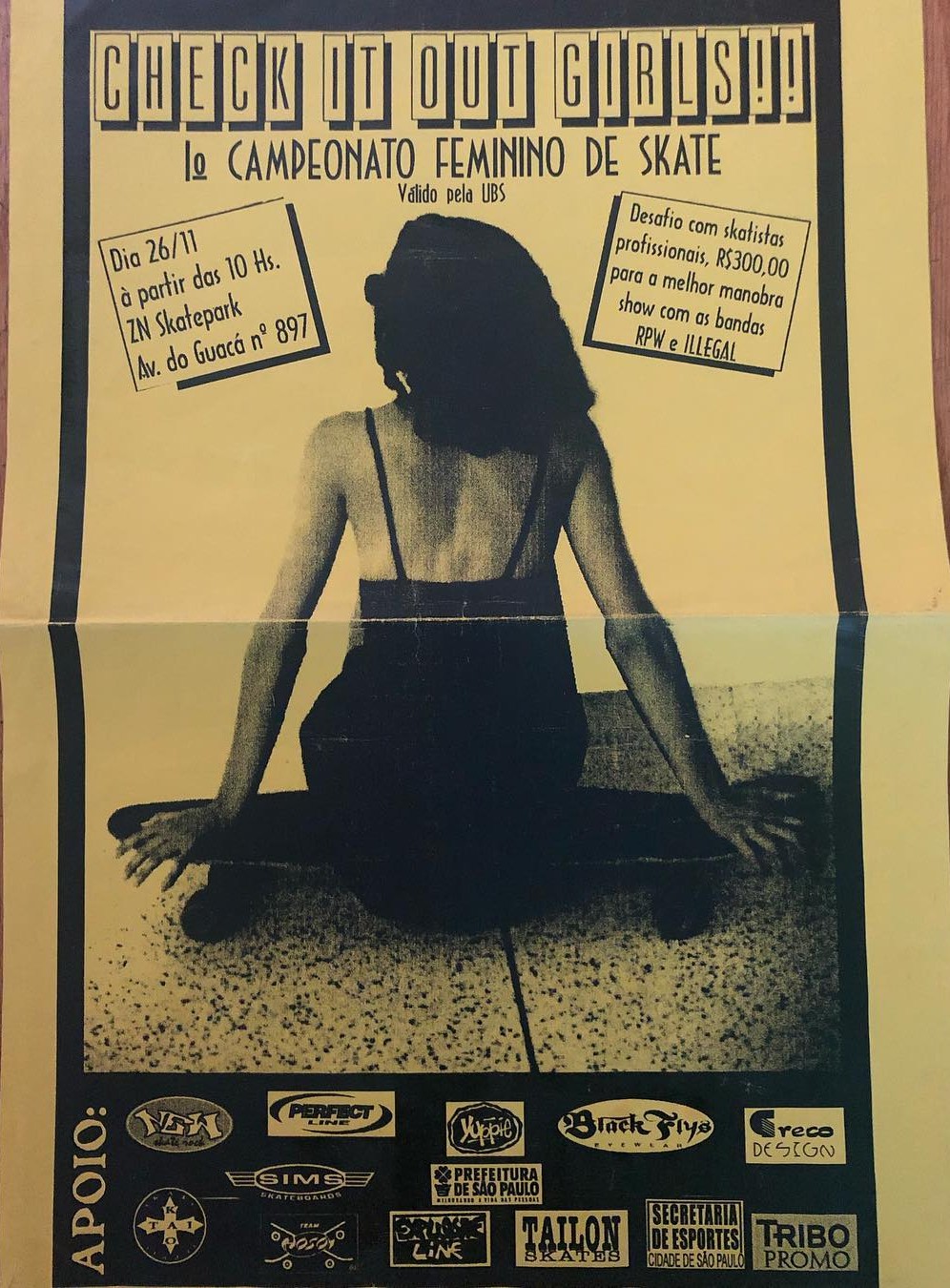
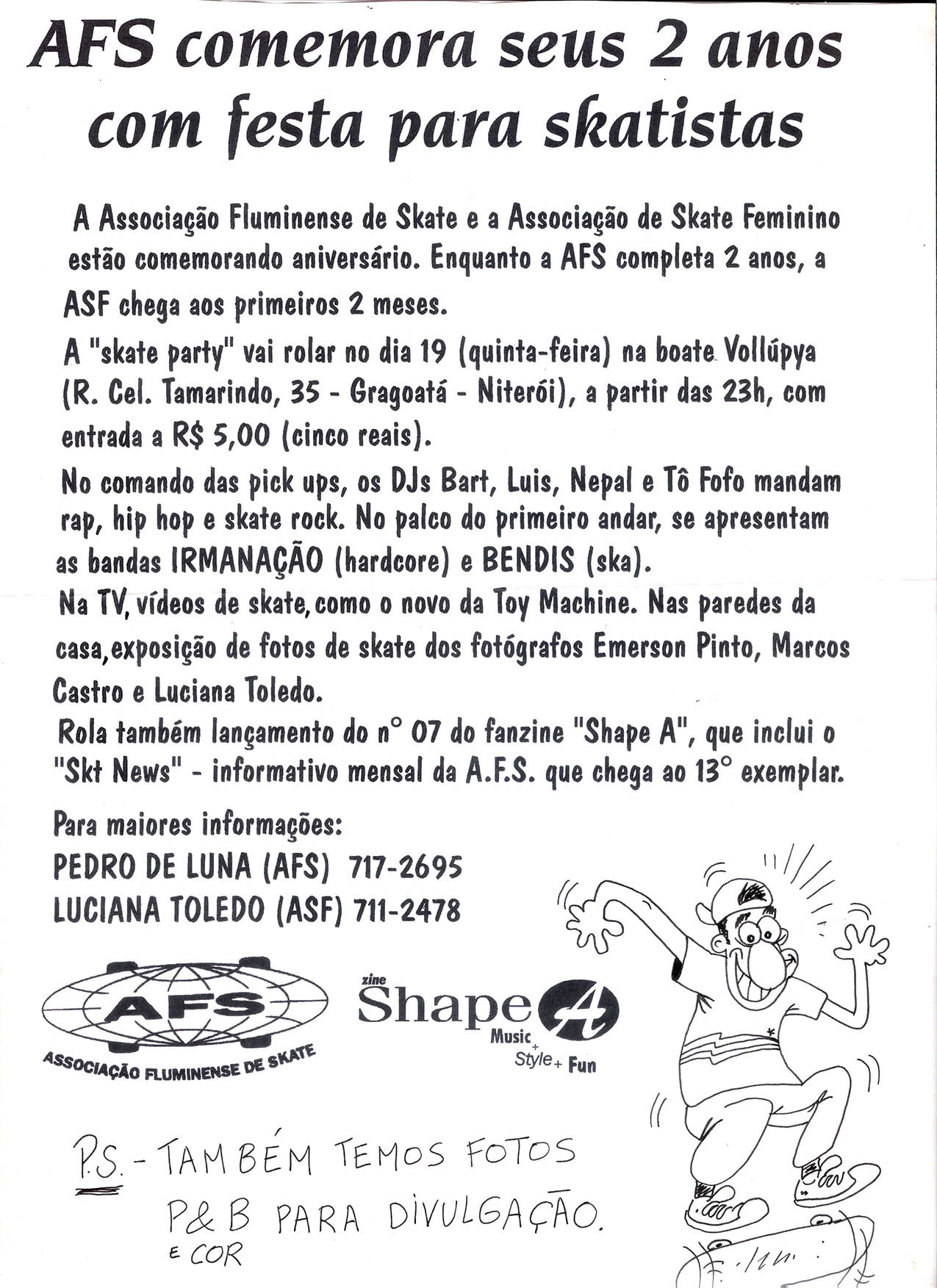
Contest flyer c/o Liza Araujo and notice of the Shape A zine / AFS two-year celebration with Luciana Toledo
And then Liza joined forces with photographers Ana Paula Negrão and Luciana Toledo, who also contributed to a zine called Shape A Fanzine by AFS out of Rio de Janeiro. As a crew, Check It Out launched a movement, which included the “Associação de Skate Feminina” (Women’s Skateboard Association) with Luciana as president when she was age 20.
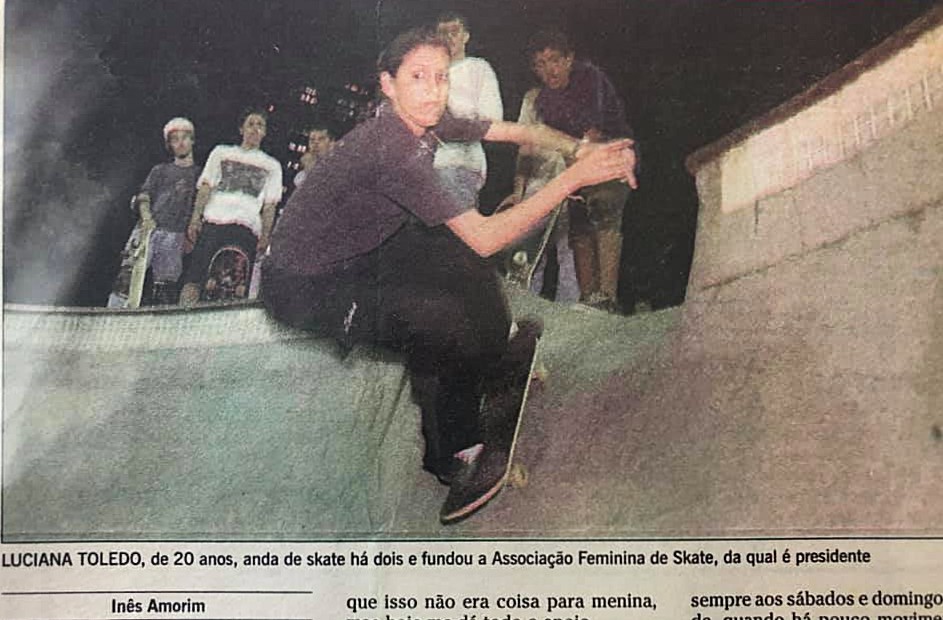
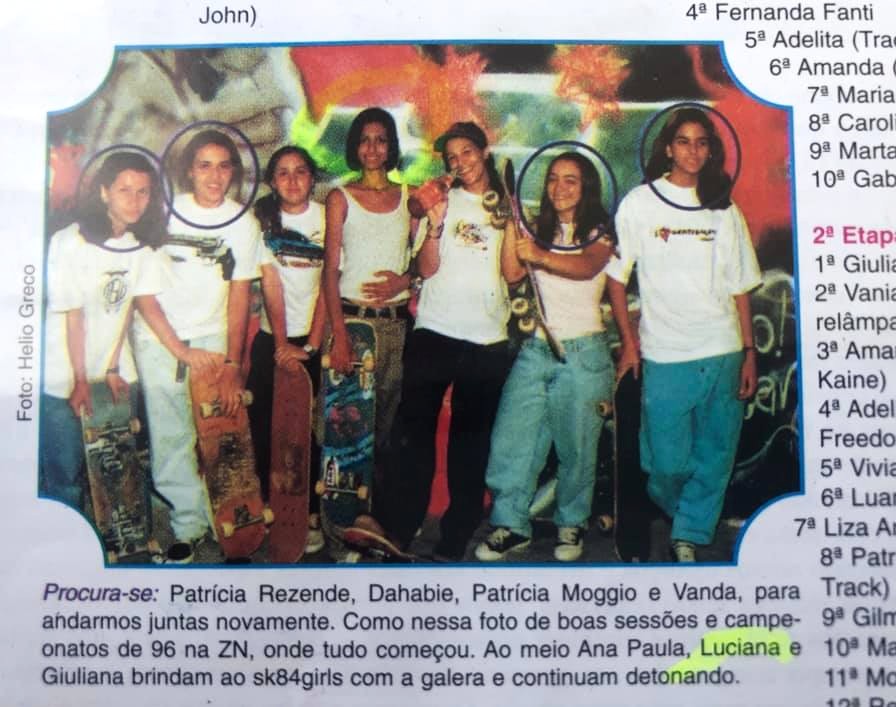


Above: newspaper clipping about Luciana’s role as president, a photo of competitors at the ZN skatepark in 1996 by Helio Greco, Luciana with friends from her archive, an article from SKT News in 1997, among others.
Luciana didn’t know that girls could skate until she discovered an interview featuring Giuliana Ricomini, a legendary skater from the late 80s and early 90s, in an old magazine. After seeing this badass skater in print, Luciana started skateboarding at age 17.
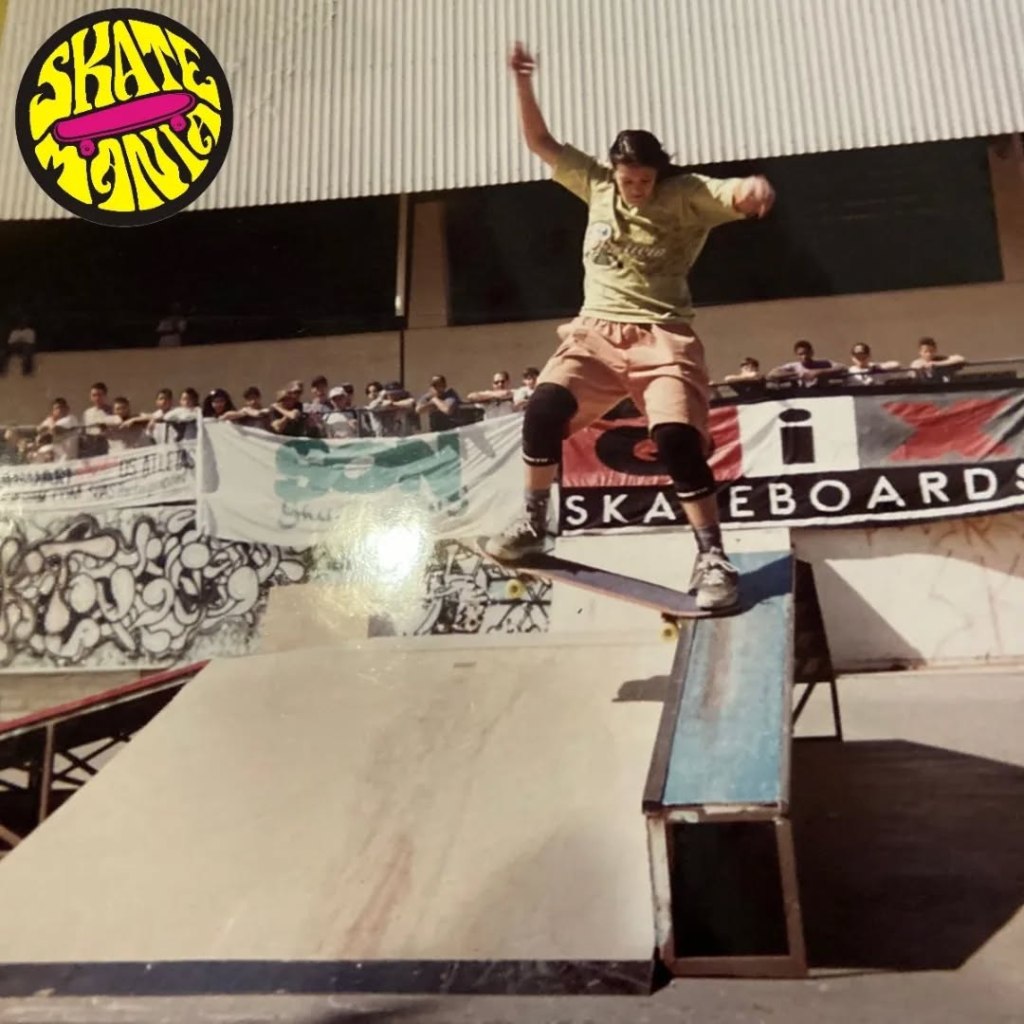
Photo: Giuliana Ricomini c/o Skate Mania Brasil
According to an interview in “Skate Mania Brasil” on Instagram, Giuliana had in turn been inspired by the 1980s skaters, Leni Cobra who won the 1987 Brazilian Championships and rode for Brand-X, Town & Country, and Queen shoes, among others, and Giuliana Guilherme (aka “Gigi da Radical”) who rode for Compania do Skate and Radical skateshop. Both Leni and Giuliana had appeared in magazines like Yeah and Overall, which also celebrated the female Anarquia! team members.
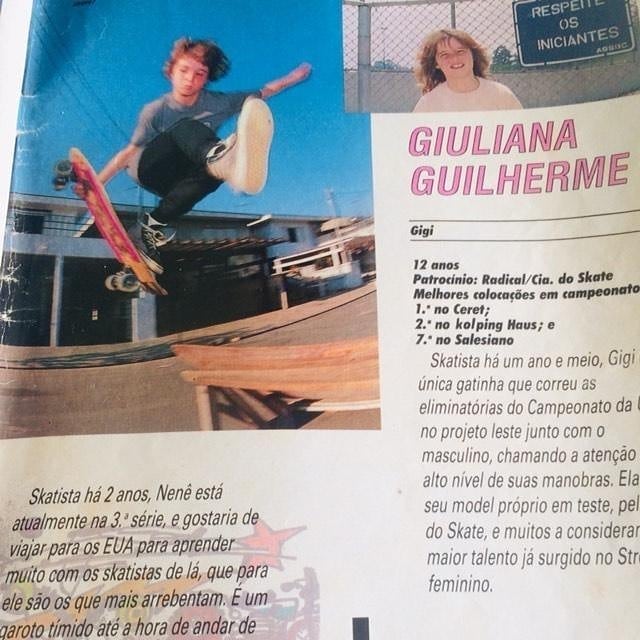
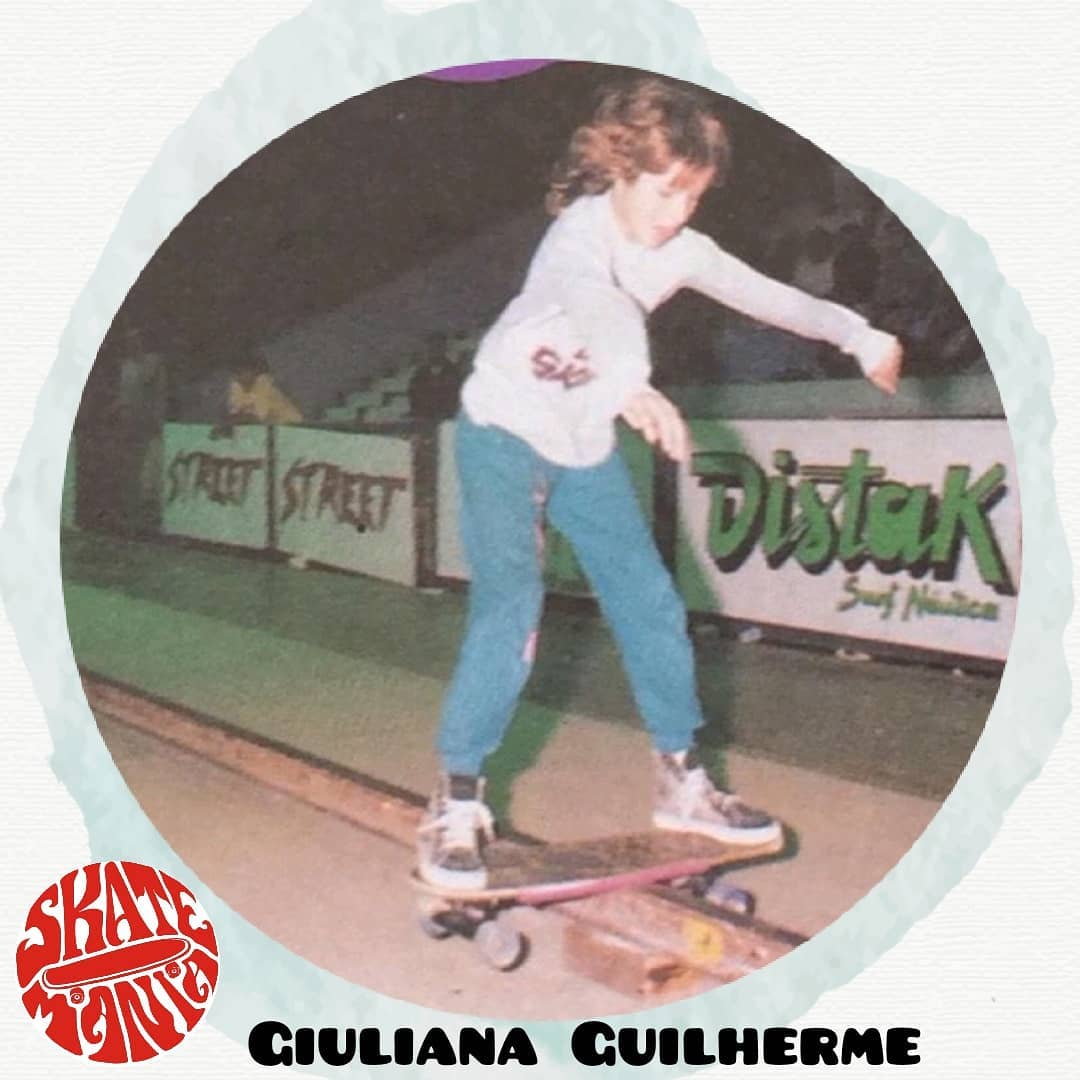
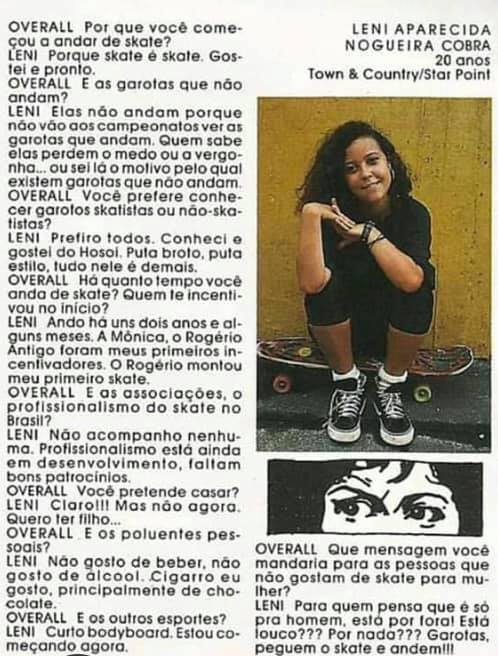
Photos: Brazilian child prodigy Giuliana Guilherme and an interview of Leni Cobra in Overall magazine circa 1980s
Vert skating pioneer Monica Polistchuk recalled meeting the Check It Out crew at the São Bernardo do Campo skatepark in 1998 while walking her baby in a stroller. Polistchuk had dominated the Brazilian championships throughout the 1980s, appearing on the cover of Brazil’s Hardskate punk zine, but had taken a break to have three kids and raise her family. She just happened to be processing a divorce and needed a positive outlet to call her own when the skatepark encounter occurred. Polistchuk was delighted by this powerful women’s network, returned to skateboarding, and was given the cover of Check It Out issue four in the spring of 2000, performing a frontside 5-0 grind along the lip of a pool.
In 1998, the first Brazilian female-focused skateboarding video Dona Maria was released, according to a Brazilian website called Amee Skate Arte. The film was produced by Vagalume and directed by Ana Homonnay, Camila Miranda, and Daniel Pereira. The video was mostly filmed on the streets of São Paulo and park São Caetano. The skaters included Liza, Luciana and Ana Paula, as well as Patricia Rezende, Giuliana Ricomi, Cherry (RIP), Catharina Hu, Patricia Moggio, and Isabelle Valdez.
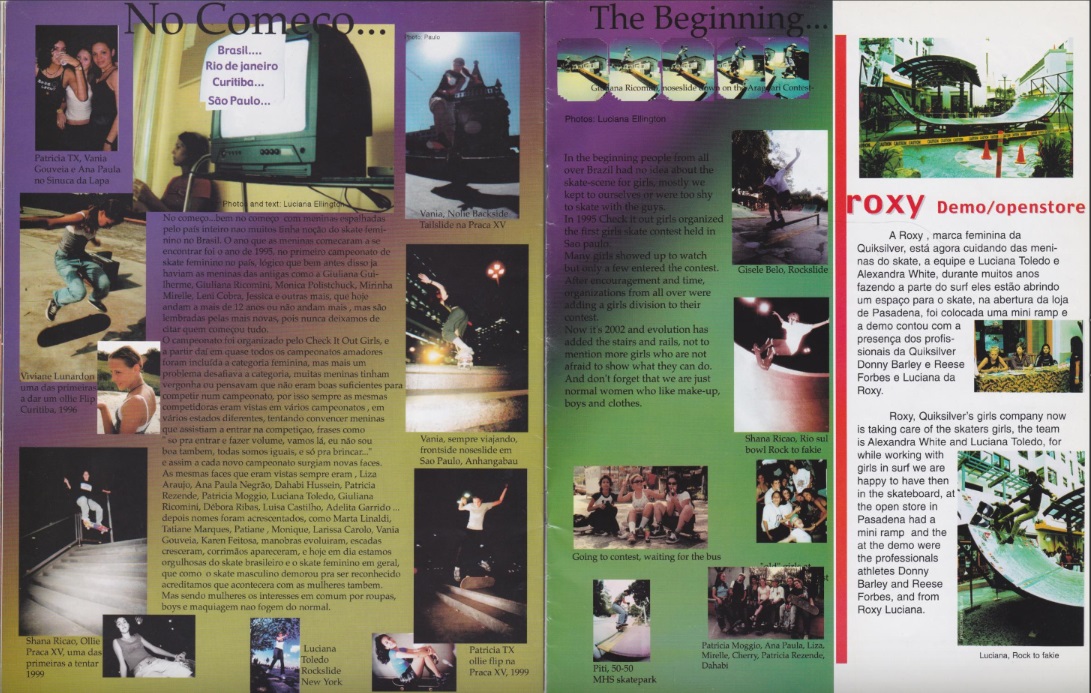
Highlights of Brazil from Check it Out in issues 11 (2000), 13 (2002) and 14 (2002/2003) and some early covers:

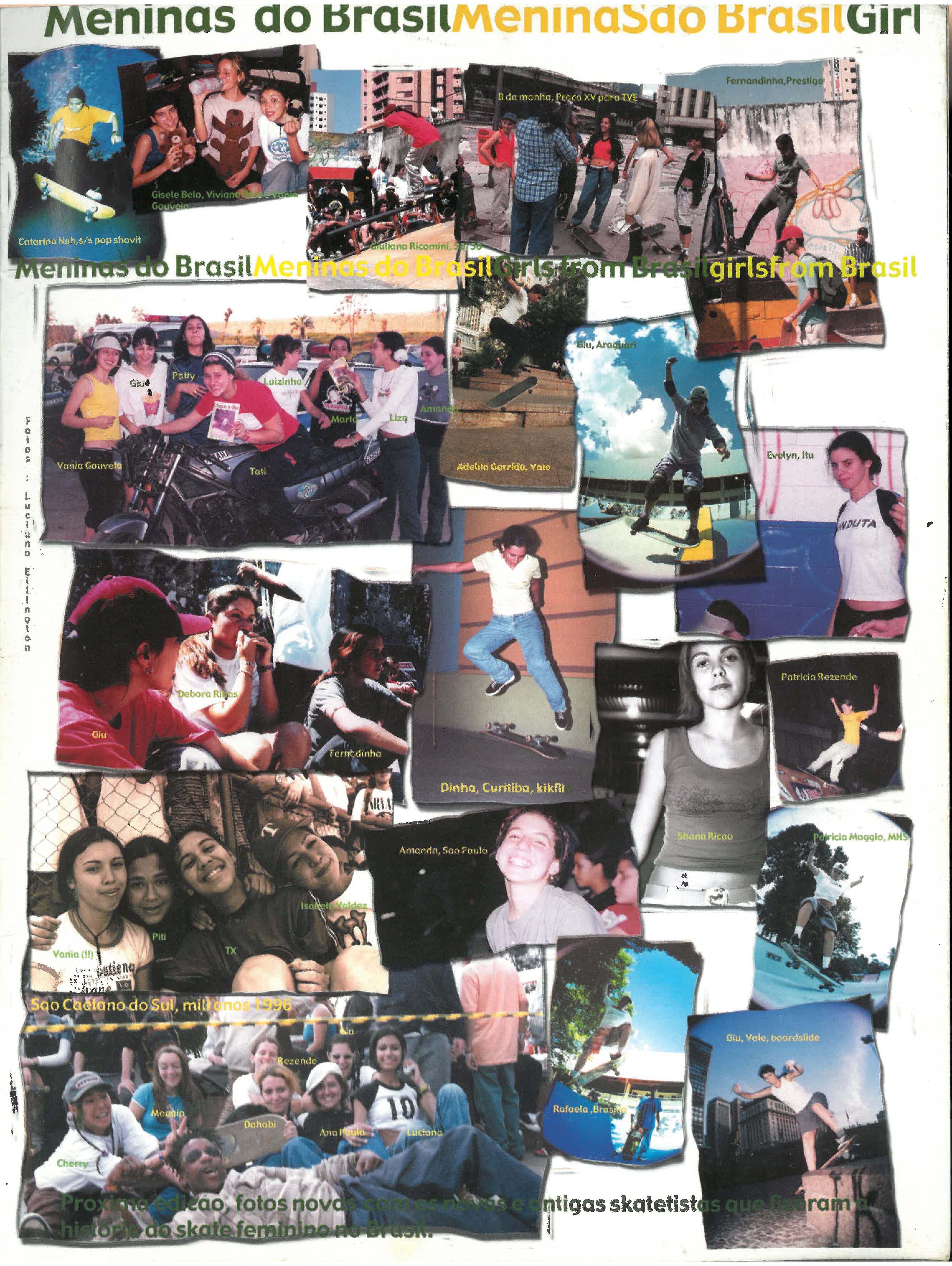
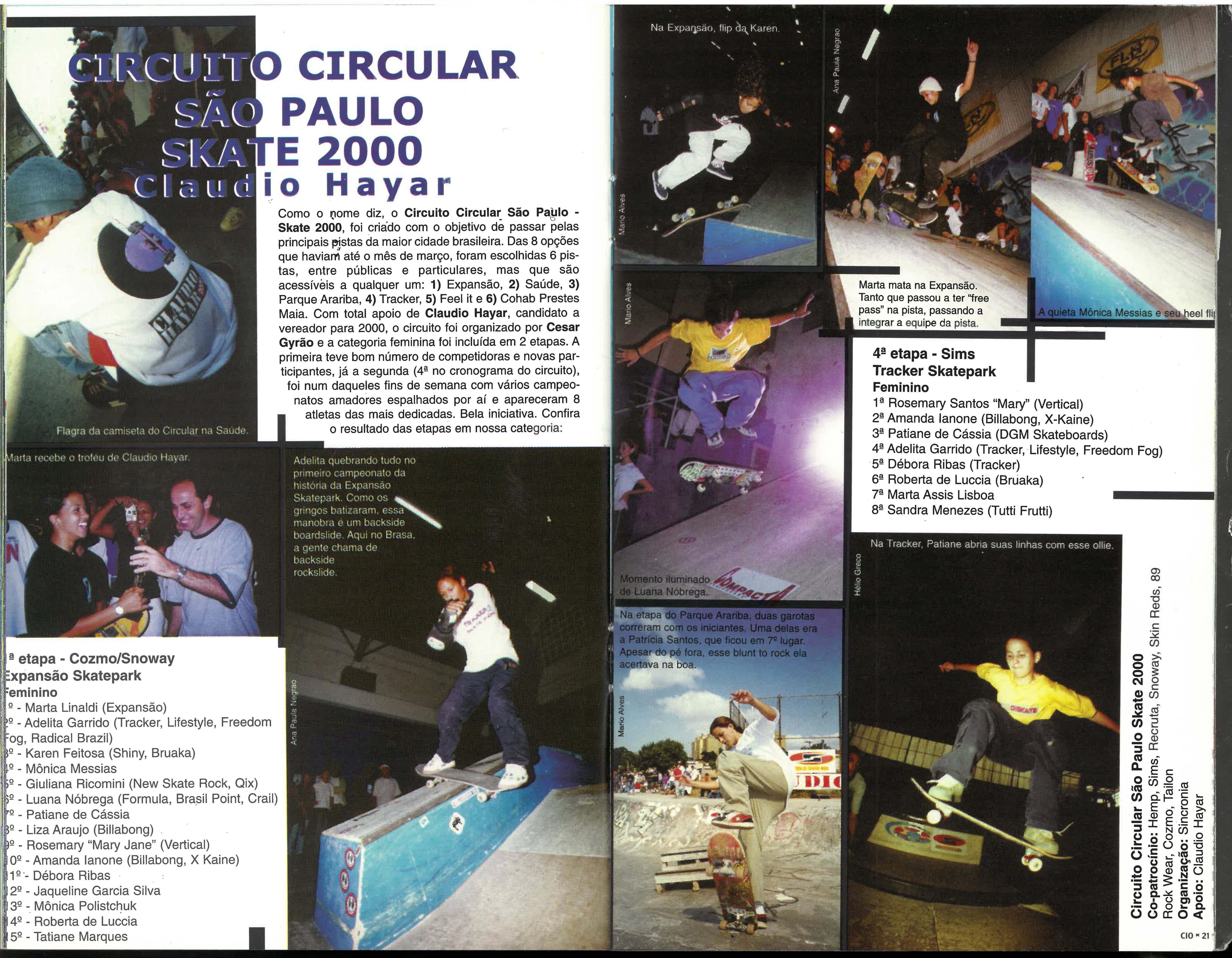
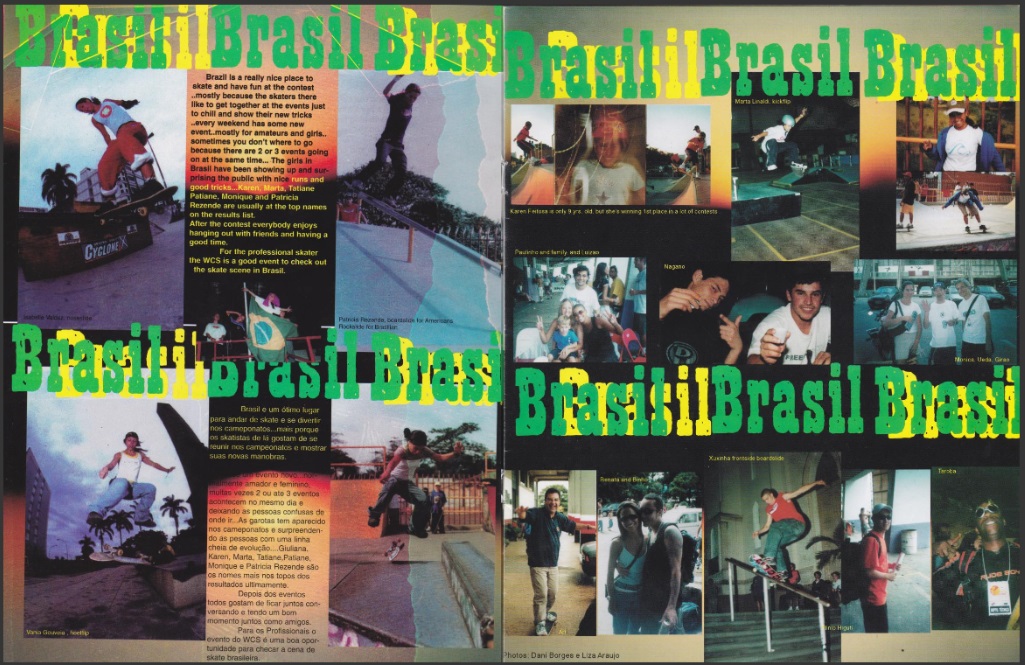
Ana Paula was interviewed by Lisa Whitaker back in March 2010 for The Girls Skate Network regarding her connection to skateboarding and photography. Ana Paula said:
“Skateboarding in Brazil was the best time of my life. We used to travel miles and miles away just to be together. We used to go to the contest producer and ask them to have a girls division and when they didn’t we used to compete with the guys. I didn’t like to compete against boys because they were too competitive and if we placed better than the guys they used to get really mad.” But these experiences just motivated the girls even more, and Ana would focus on the positive, like all the wonderful people she did get to meet while traveling around Brazil, especially in small towns.
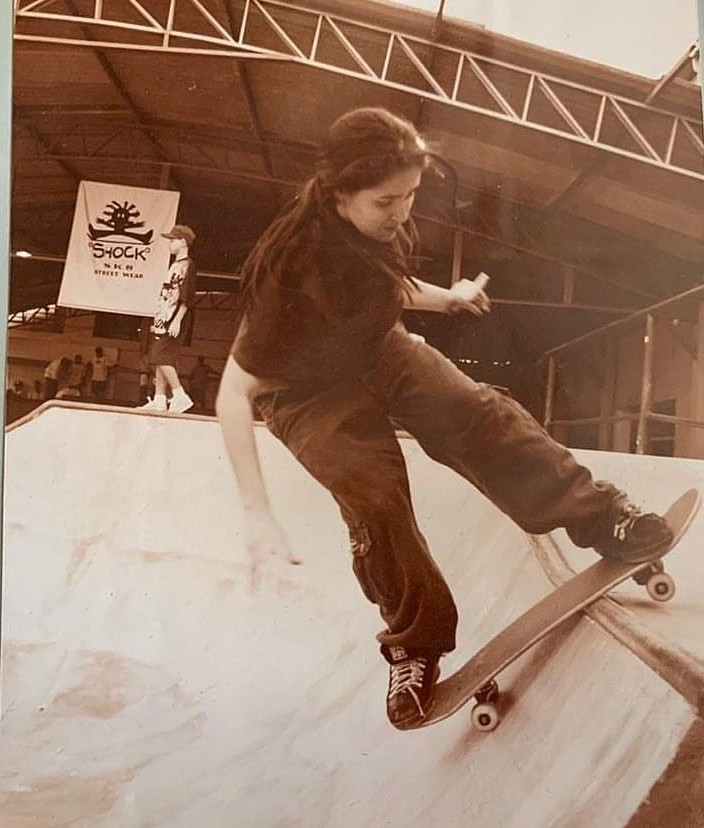
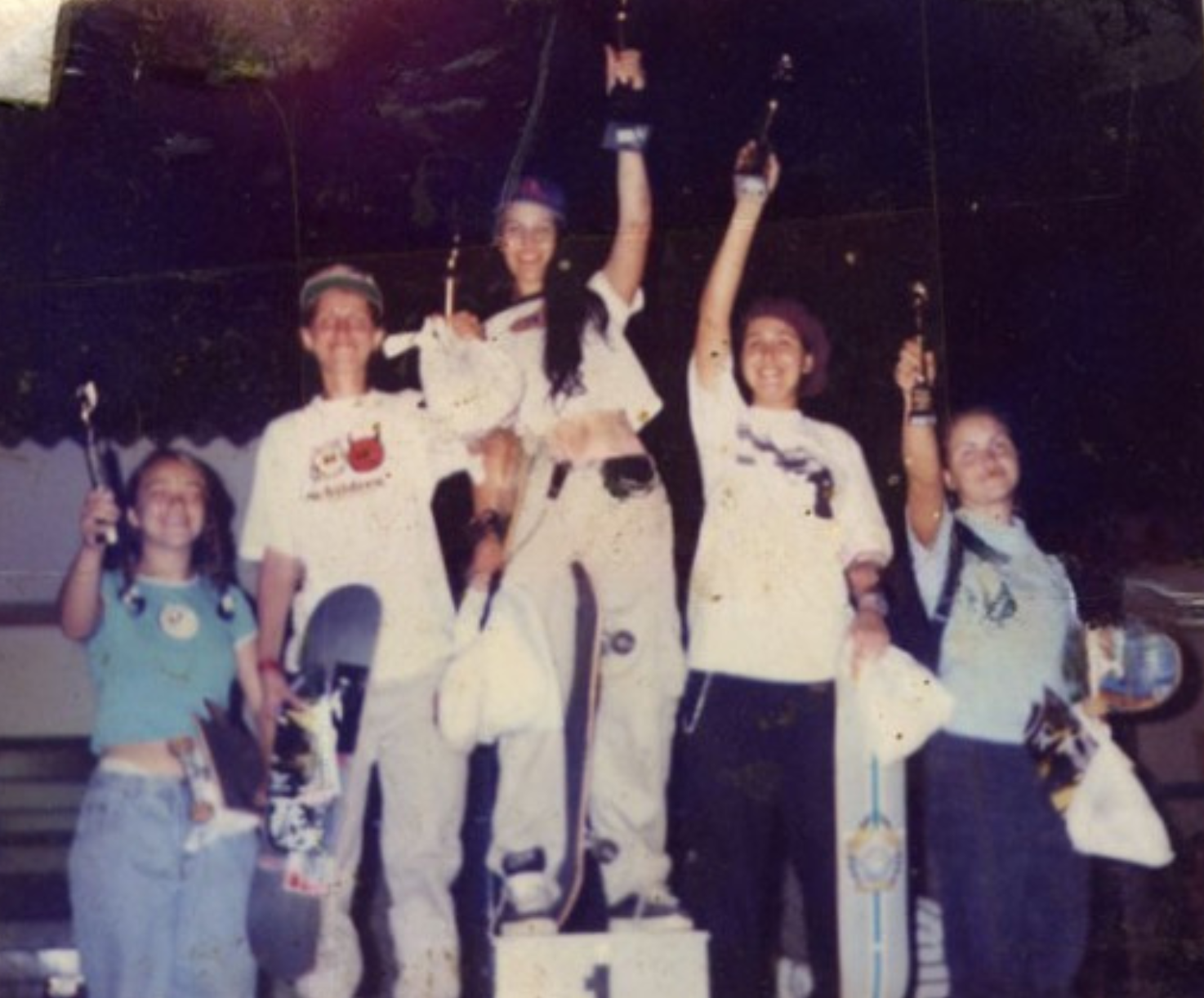
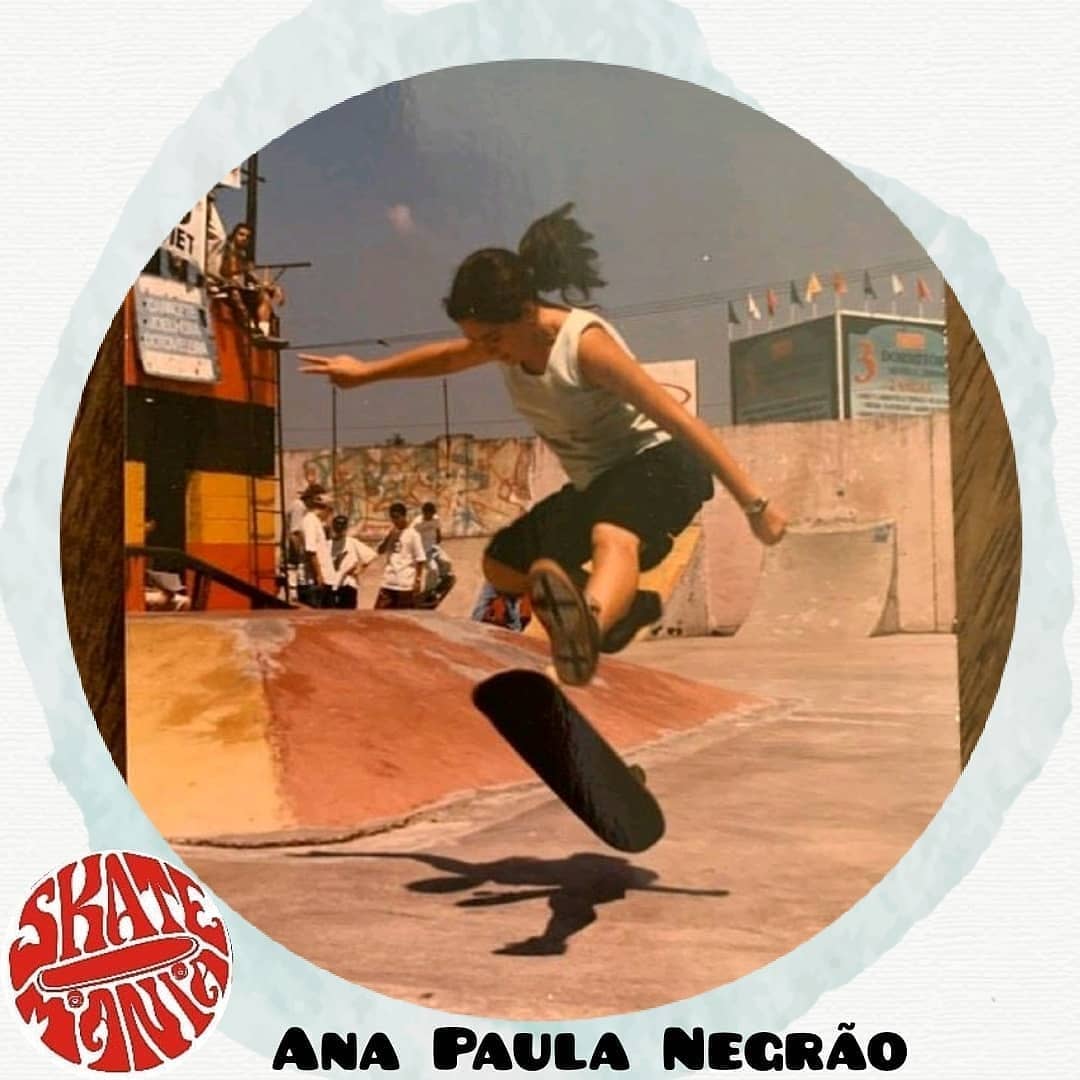
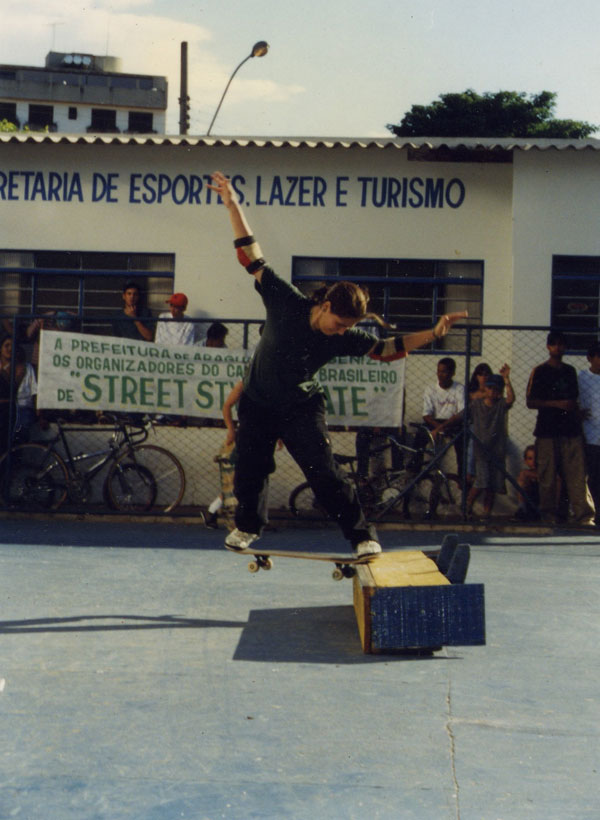
Photos of skater / photographer Ana Paula Negrão
Check It Out steadily evolved, and thanks to the talented female skaters it portrayed, the publication got noticed abroad. The zine went from being a black-and-white photocopied newsletter with articles in Portuguese to a glossy magazine translated into English due to the demand from subscribers in the United States and Canada. Patty Segovia, organizer of the All Girl Skate Jam, used her network to help expand the magazine’s distribution, and the editorial team moved to Encinitas to be closer to all the major contests and up-and-coming skaters clustered in California, according to an article in TransWorld (February 1998).
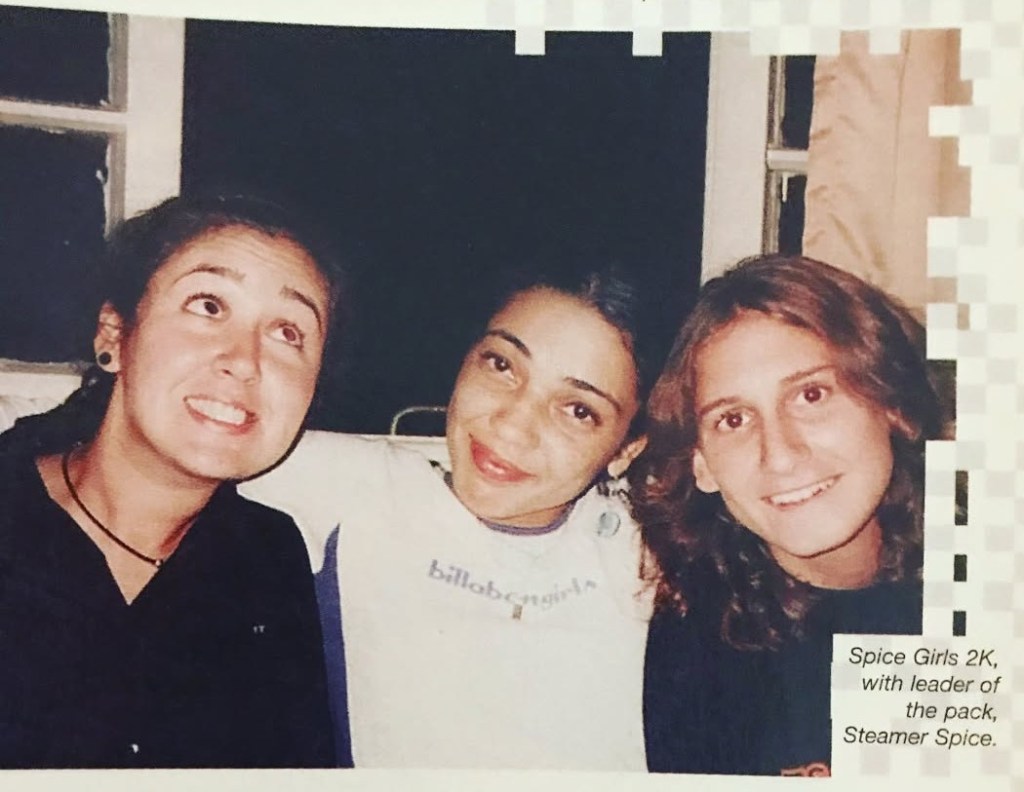
Photo: Ana Paula, Liza Araujo and Elissa Steamer from Slap magazine, May 2000
In the editorial section for issue 13 (2000), Liza wrote that:
“We want our magazine to show how skateboarding can be for any age or gender. In the beginning it was really hard because we had no sponsors, not many girls were skating in Brasil, and other Brasilian skate magazines didn’t give us any space. In that time ‘Check It Out’ (Sao Paulo) and ‘ASF’ (Rio de Janeiro) were the only zines that supported the girls skate scene. This helped to push new girls to go to contests and make the team bigger.
The skateboard magazines at the time didn’t believe in the future of the skate girls scene and thought it was funny to see girls skating. They thought that girls would never be able to do a rail, and that girls were only about posing like skaters to get hooked up with some skater dude. With time we proved different and the zines started to help unite the girls that skated and give them a place to tell about rankings and contests, because girls have a right to have this.”
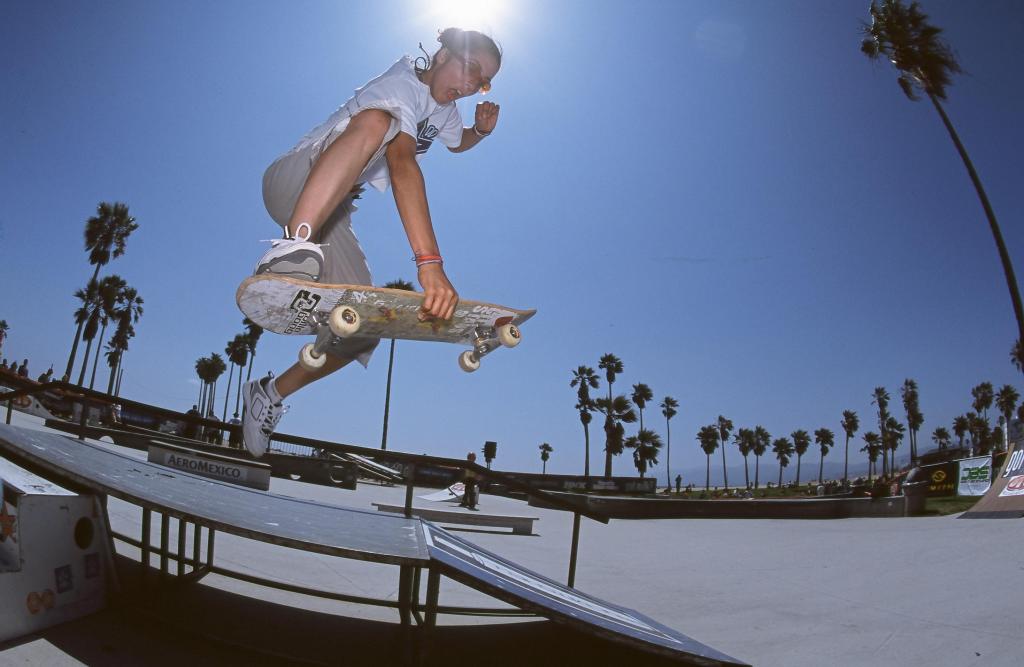
Photo: Liza Araujo c/o Jenkem magazine
It’s worth noting that the Check it Out logo, of a blindfolded women was meant to alert the skateboarding industry to open their eyes and accept girls skateboarding because we also need to see our mentors and visualize ourselves progressing. Liza, Luciana, and Ana had the logo tattooed on their ankles years later, according to Jenkem, as a demonstration of their commitment.

Check It Out was also one of the only venues for female skateboard photographers to have their work published in magazines. The skateboard industry had created a system of male gatekeepers that determined not only who was represented in the media, but who was in charge of cultural production, such as editors, photographers, filmmakers, video producers, distributors, and company owners. Check It Out included photos by Magdalena Wosinska, Patty Segovia, and Erika Dubé as contributing photographers, alongside the core team being Luciana and Ana Paula.
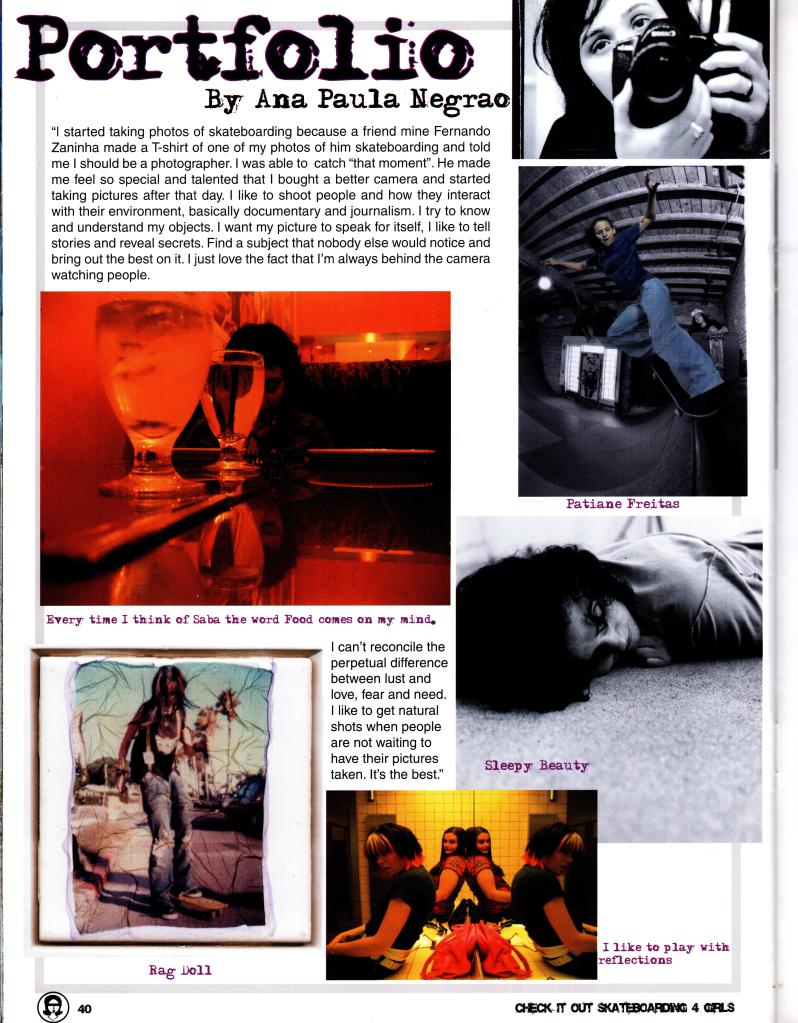
Above: a feature page showcasing Ana’s portfolio from the CIO Issue 16 in 2004.
Ana Paula explained her passion for photography with Whitaker:
“My mom used to have an old KODAK EKTRALITE 10 and I was crazy about that camera, but it was the only camera we had and she wouldn’t let me take [it] everywhere… I started working very young, so when I was 16 I bought myself a Zenitt camera with money from my first job. It was some crazy Russian camera which I loved, but it was complicated to me… so I wanted to take an amateur course to figure out how to use that camera. I did and my pictures started to show up.
As for skateboarding… my neighbor used to skate and I used to hang out with all the boys in my neighborhood; play soccer, volleyball, make kites and other games. I wanted to skate so bad but IT wasn’t for girls which made me want it even more. So me and my best friend Dahabie [Hussein] got a skateboard and we used to share (one week I had the board the other week she had it).”
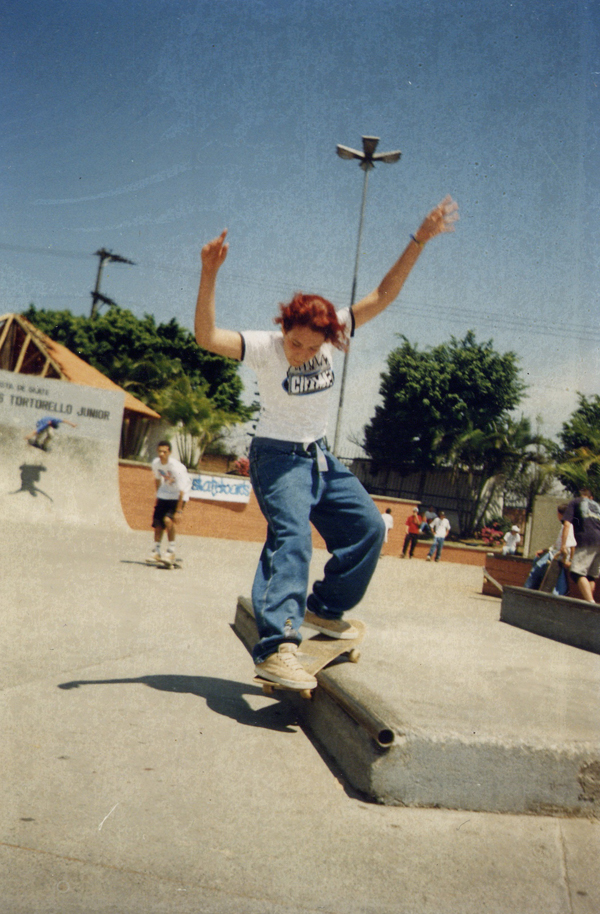
Photo: Dahabie Hussein by Ana Paula Negrão, smith grind at Sao Caetano
Ana Paula was then invited to a skateboarding contest in a nearby city in 1995 but because she felt shy, and was just learning to skate, Ana only brought her camera. “I took a great picture of my friend Zaninha kickflip’s over the hip and he made a shirt with my picture and told me I had the eyes for skate moments. That was a big incentive for me and I always loved photography and skateboarding.” Three years later, in 1998, she became the street champion in Brazil’s Nationals.

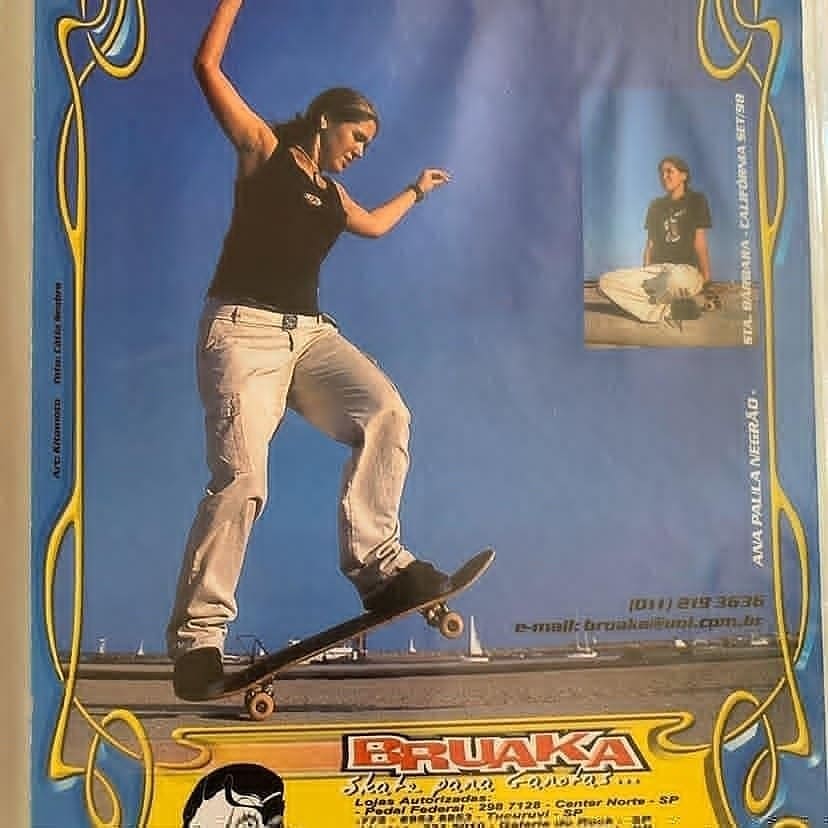
Photos: Bruaka girls’ team and Ana Paula in a Bruaka advertisement
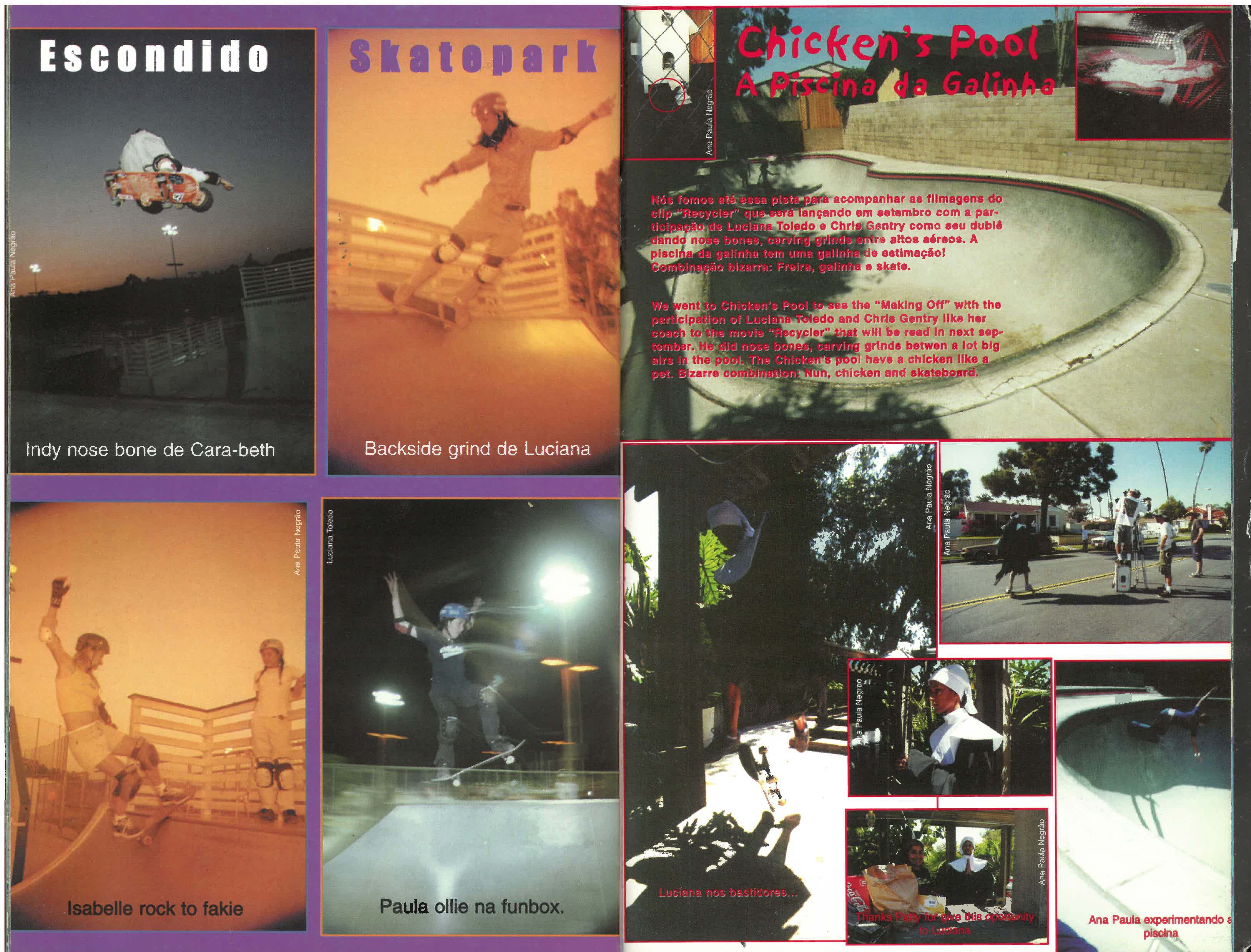
Ana then traveled alone to the U.S. to compete at the All Girl Skate Jam in Escondido, CA thanks to support from her sponsor Bruaka Skateboards (which was a female-focused skateboard brand). She was enamored with all the smooth concrete, and after a tour of California with the Check it Out crew in 1999, the whole editorial team made the move in 2000 to make their magazine a global, bilingual publication (and they even attended the San Dieguito school to study English). The skaters immersed themselves in the California community, and they were embraced. Liza even gave a big shout out to Cara-beth Burnside who became a kind of mentor and not just showing her new tricks, but also helping her improve her English and even providing Liza with a job.
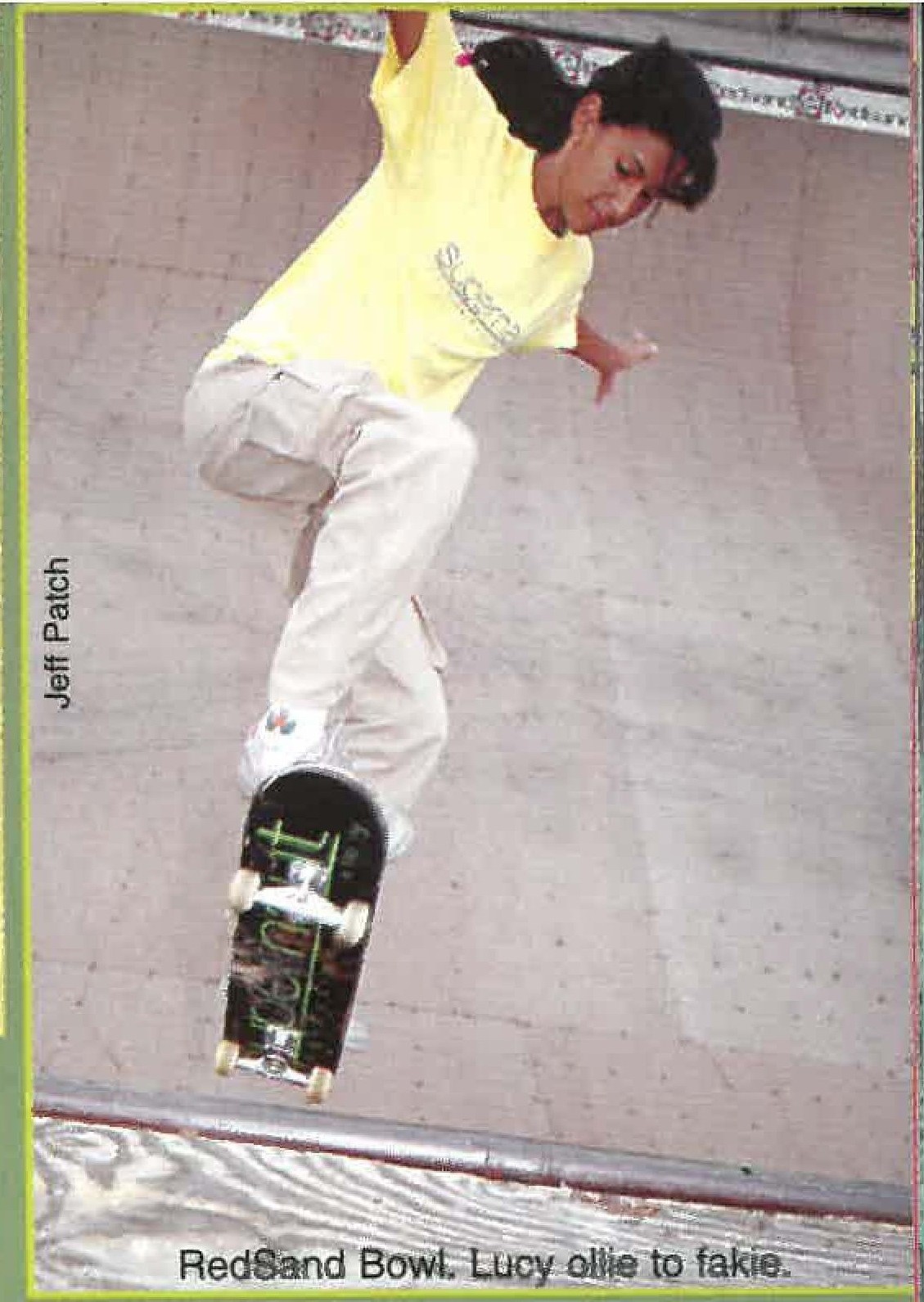
There’s many photos of the 1999 tour in issue 11, with a close-up of Luciana Toledo:


When asked who her favorite skaters were to photograph, Ana said, “I love shooting Leticia [Bufoni]…we have a trust in each other. I like shooting with you Lisa because we always get work done together. Alison “Nugget” Matasi (we shoot great pictures on our South American Tour in 2007), [Leo] Baker, Vanessa Torres, Evelien Bouilliart, Karen Jones, Xuxa, Lauren Perkins, Giuliana Ricomini, Rogerio Mancha, Biano Bianchini, Mizael Simão and so many others I can’t remember right now…but pretty much anyone who’s down to shoot.”
In 2003, Liza shared with Myriam Gurba that, “Over the last three years, we have had a really positive response from skategirls living in different countries. Now, after several years in the scene, we have subscriptions from the U.S.A., Australia, Europe, Japan and New Zealand.” She estimated that there were at least 1800 girls skating in Brazil, which was so inspiring because of their experience being mocked as beginners in the 1990s and now there were girls taking on handrails and performing flip tricks with confidence, as seen in their magazine.
During its lifetime, Check It Out celebrated the top women skaters like Alexis Sablone, Lyn-Z Adams Hawkins, Vanessa Torres, Amy Caron, Leticia Bufoni, Marisa Dal Santo, Jaime Reyes, and Elissa Steamer, but always with the intention of “uplifting and promoting young girls, even those who weren’t sponsored . . . We wanted to feature girls with all abilities, because that’s how we can push ourselves to the next level, when we feel supported,” said Luciana in Jenkem.
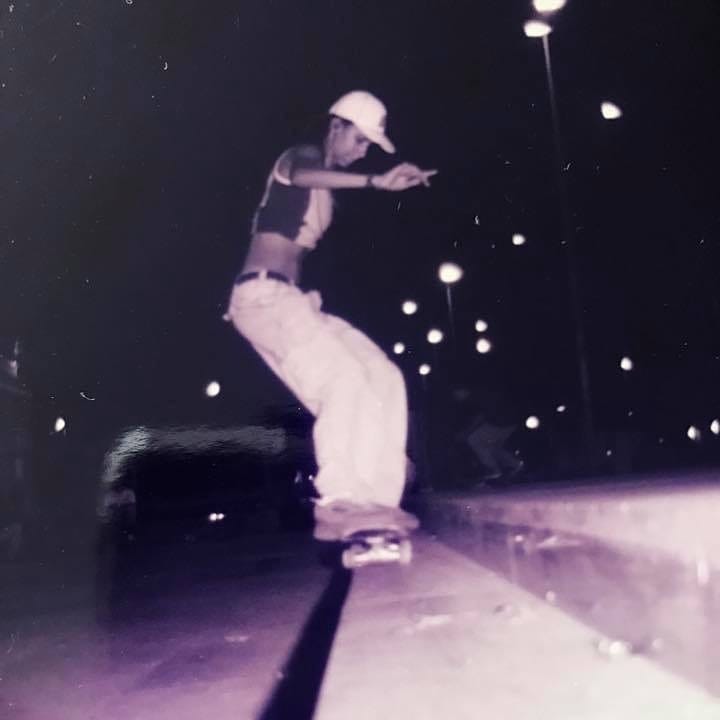
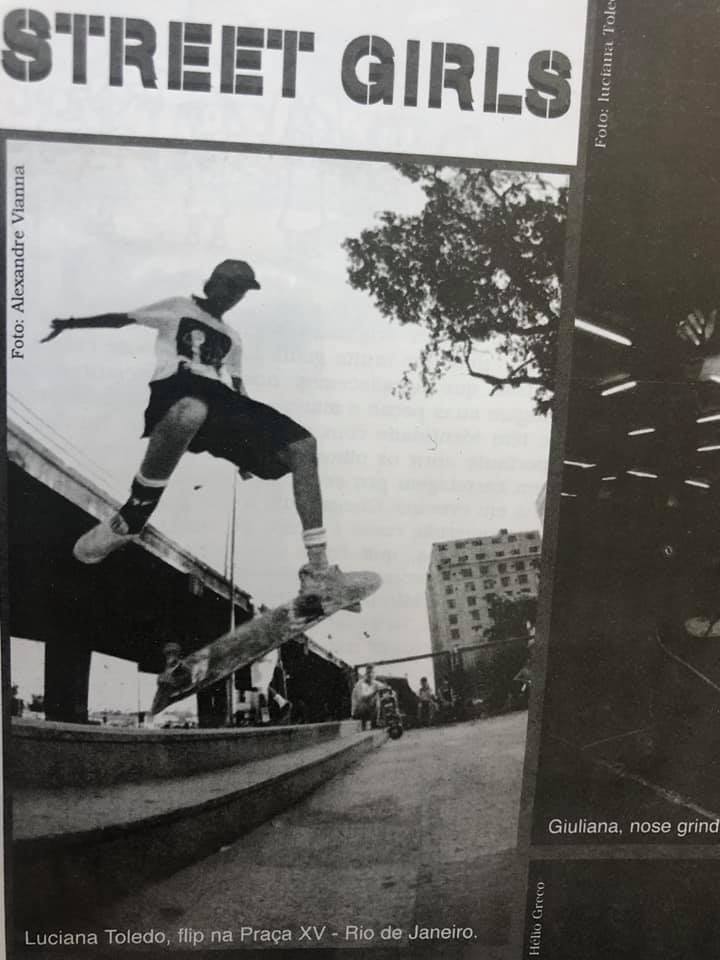
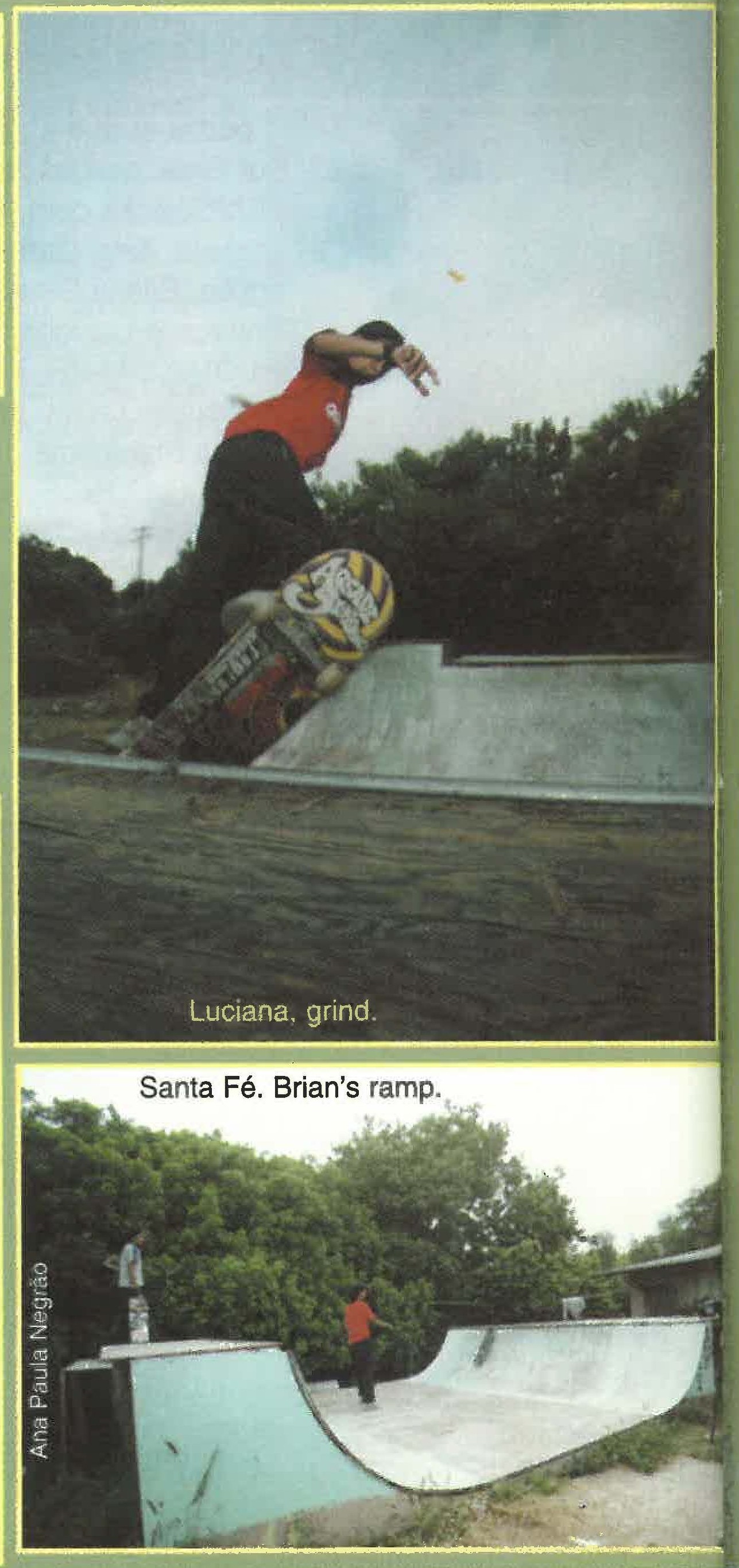
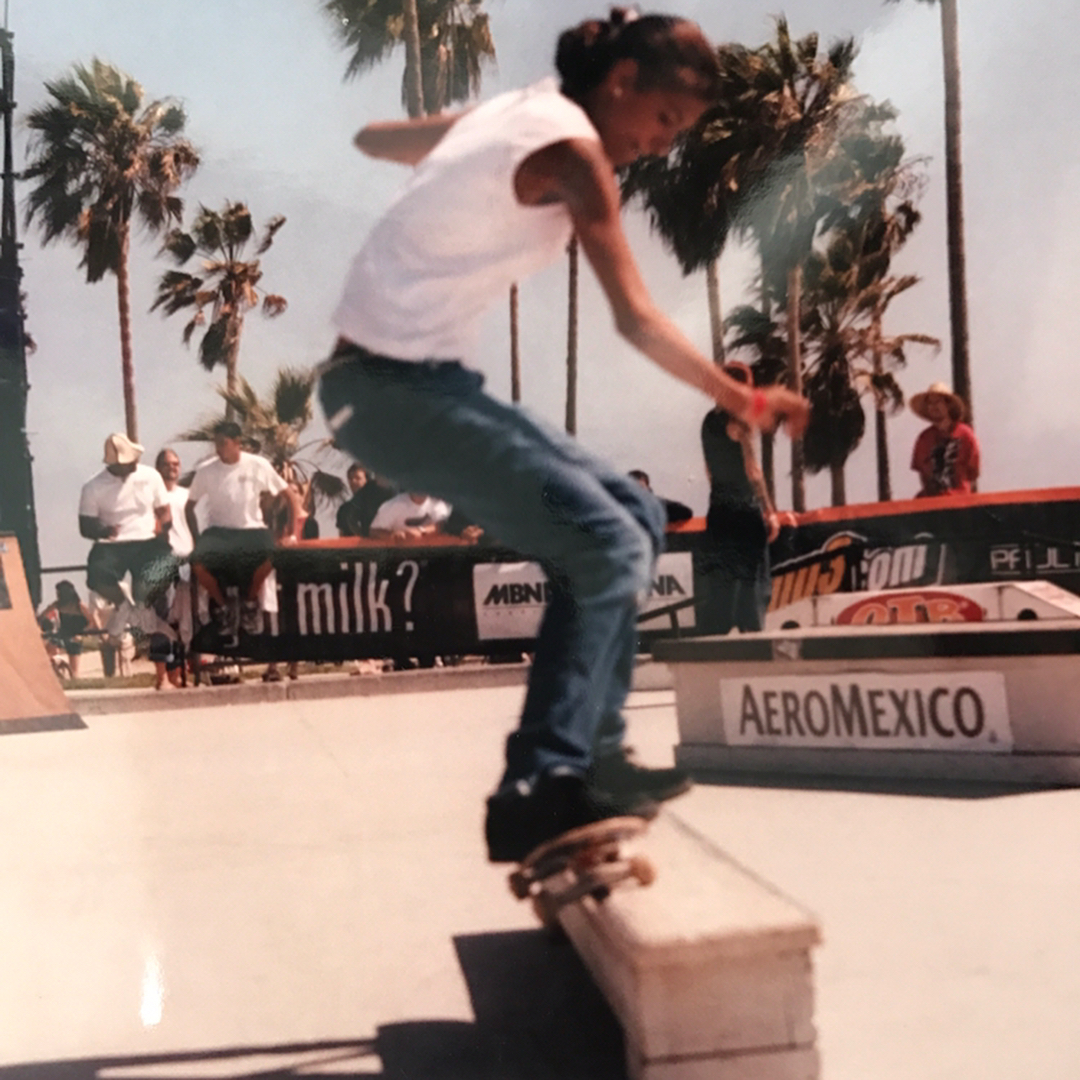
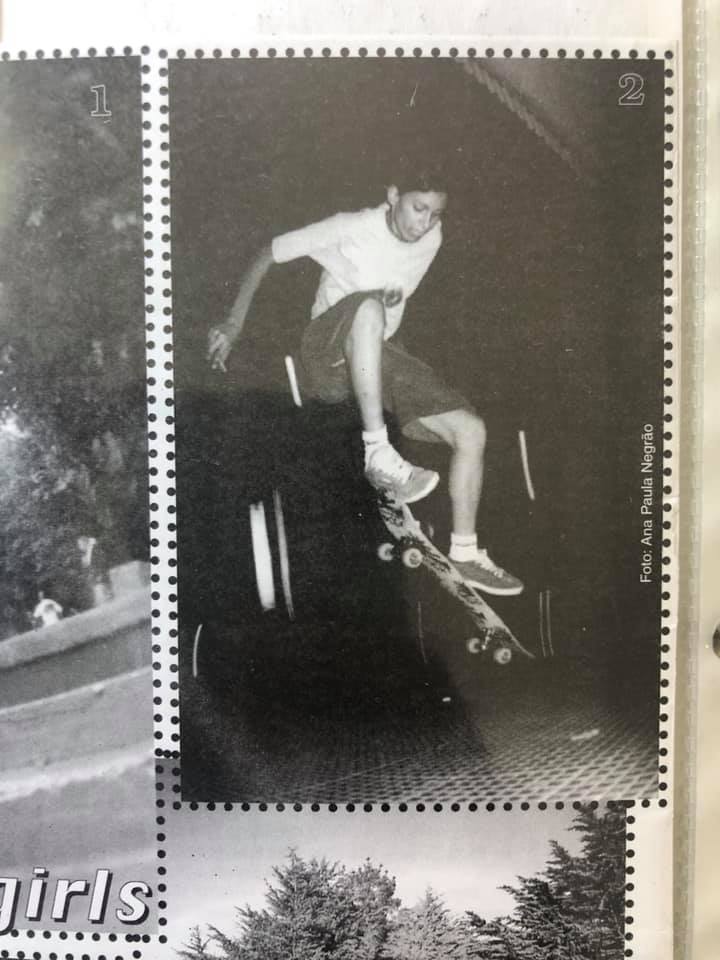
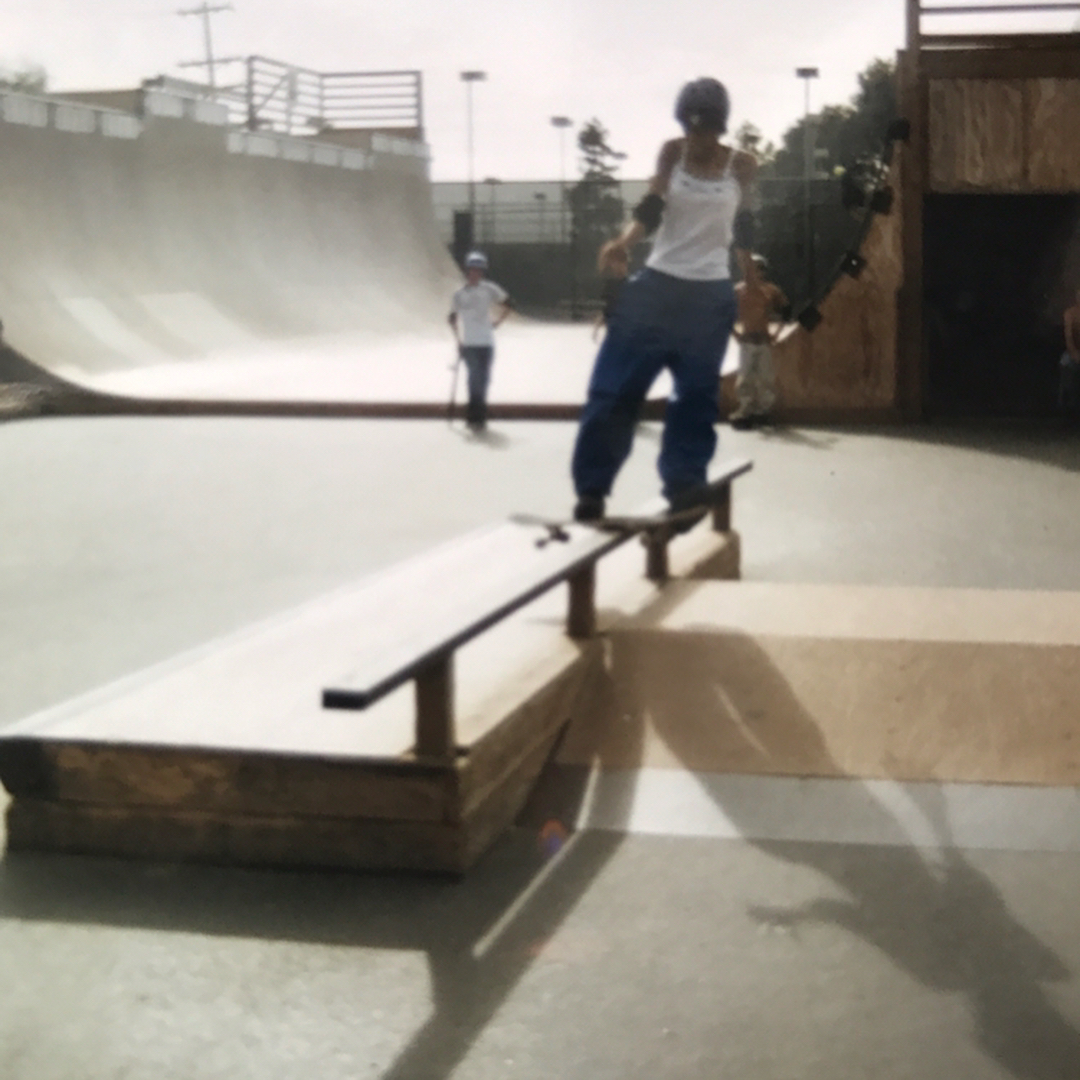

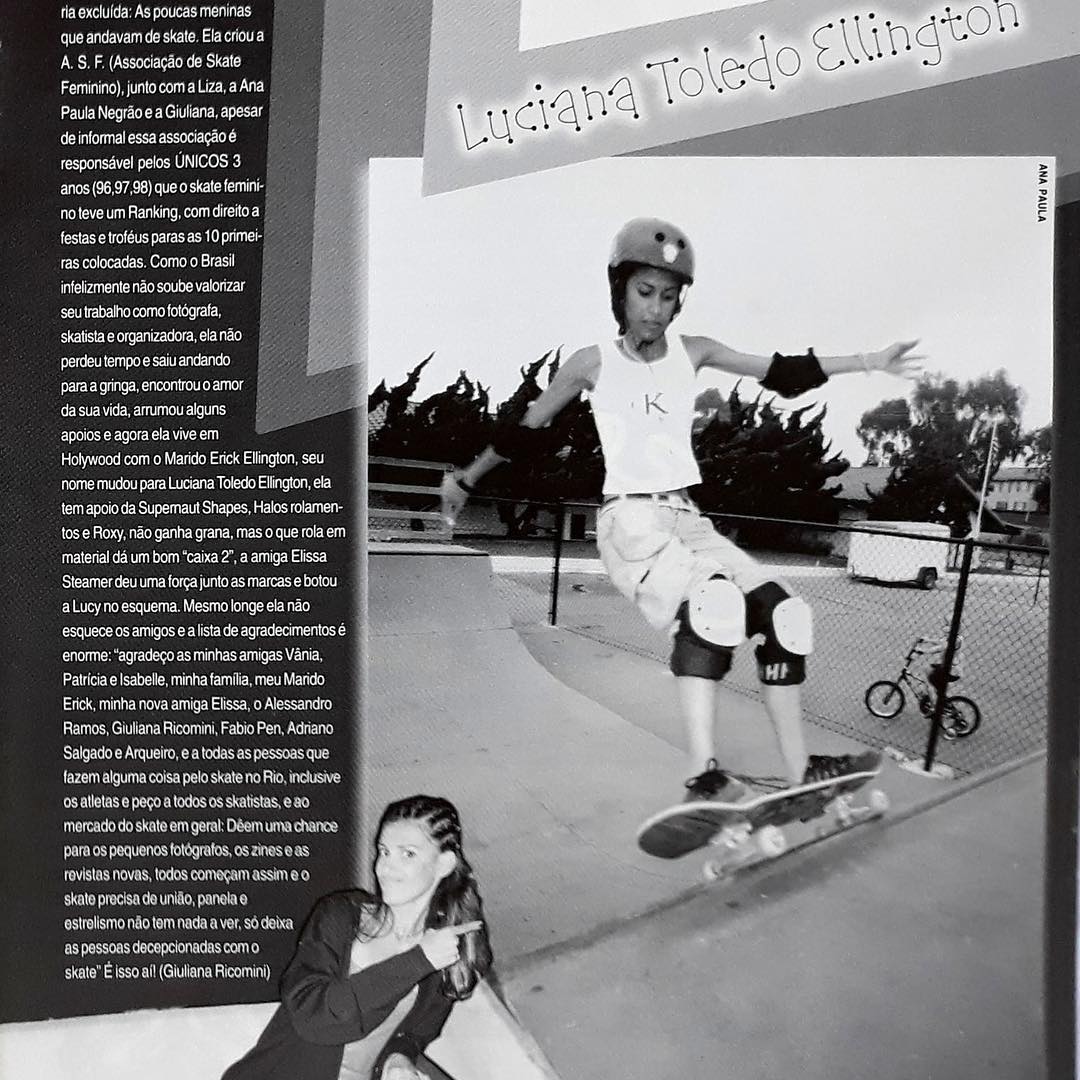
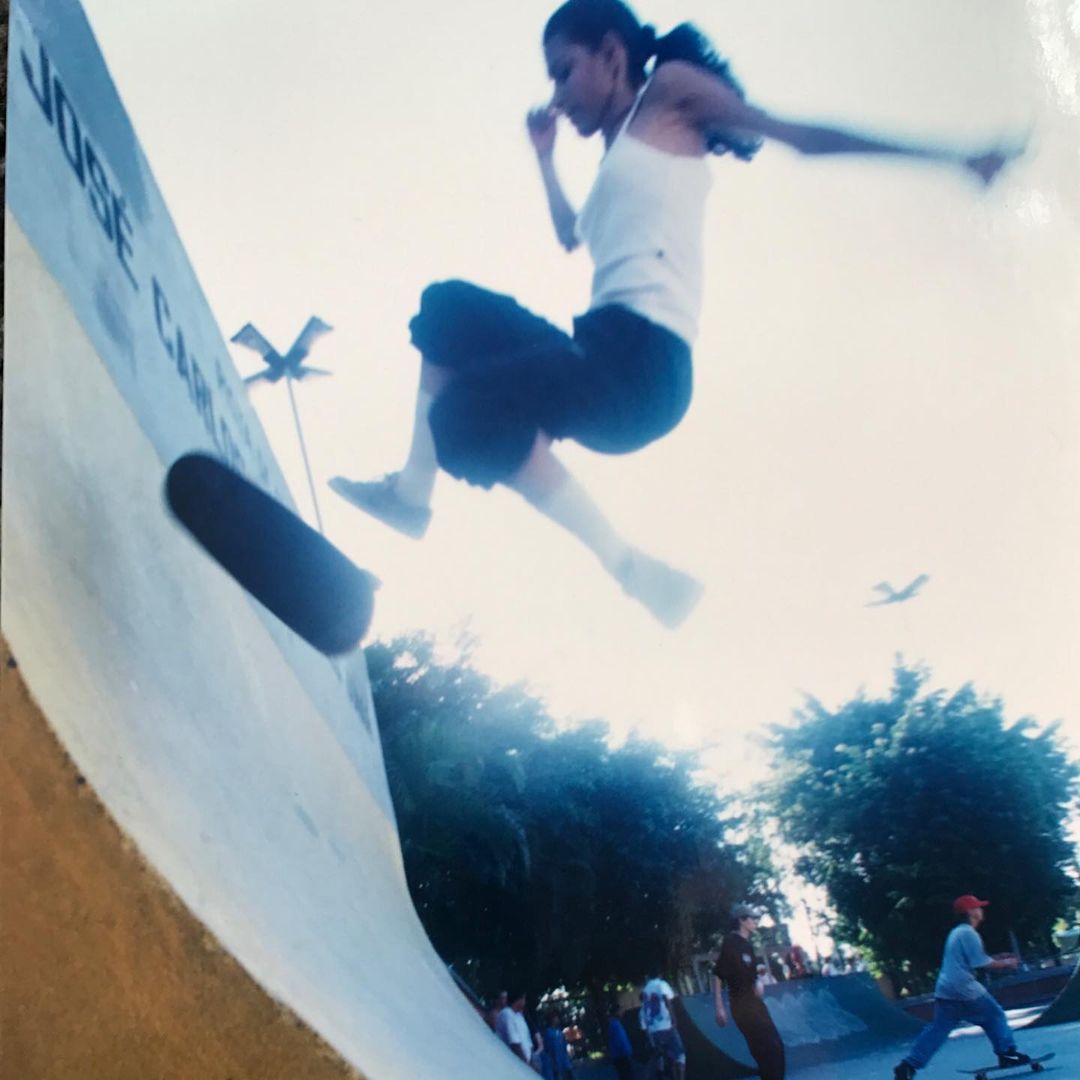
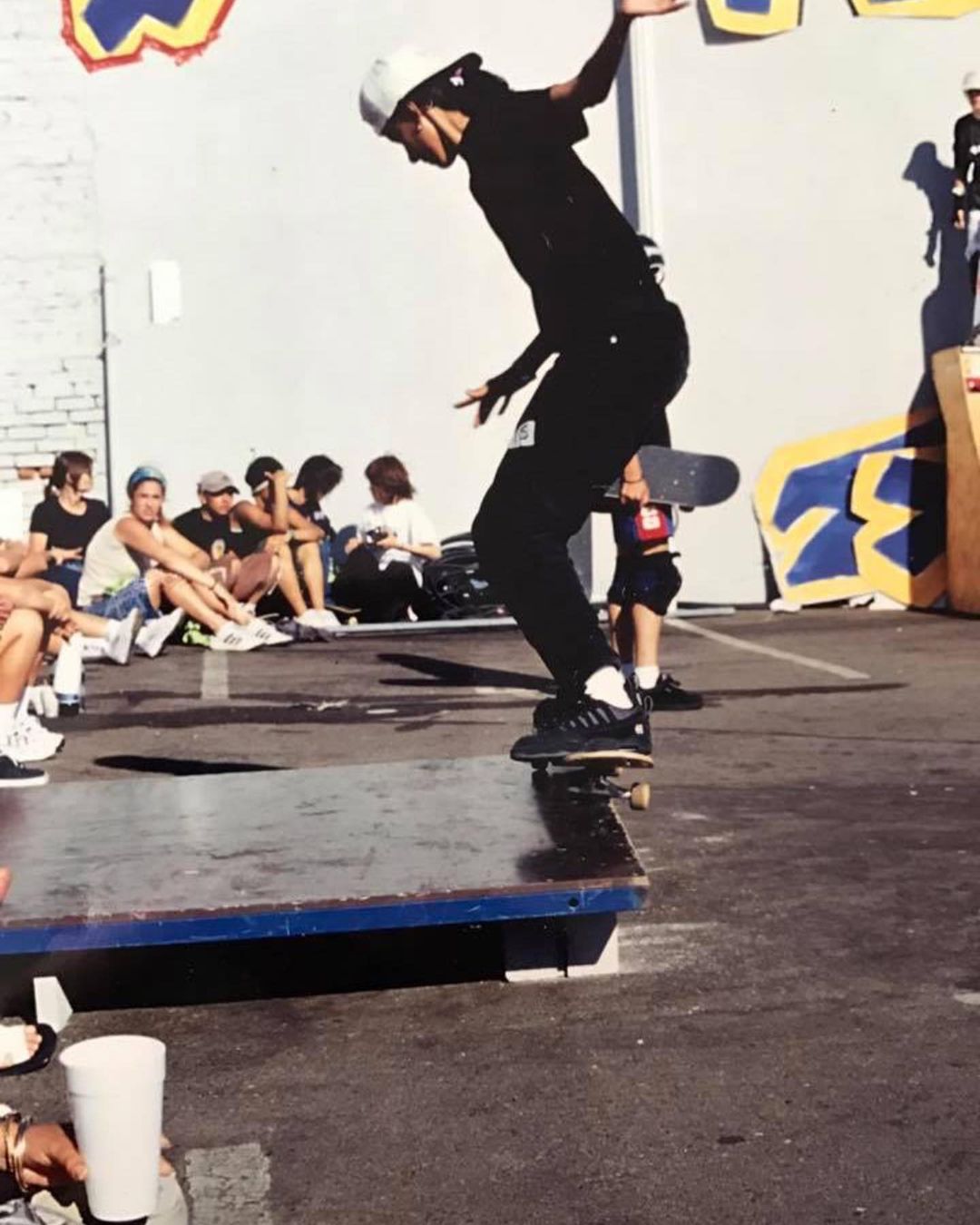

Photos: Luciana Toledo from the 1990s to early 2000s by Ana Paula and Alex Vianna
It’s no surprise that Luciana was part of the crew of professional female skaters at the X Games in 2005 who went on strike to condemn the lack of media coverage and unequal prize pay, forming the Women’s Skate Alliance.
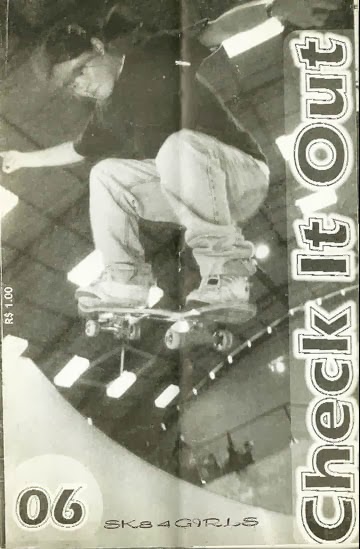
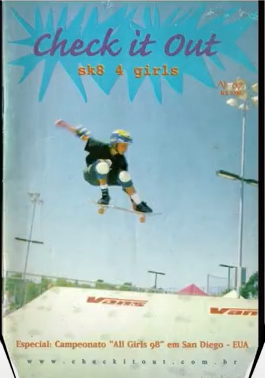
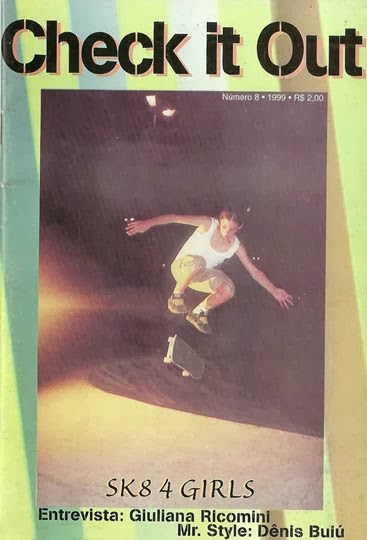
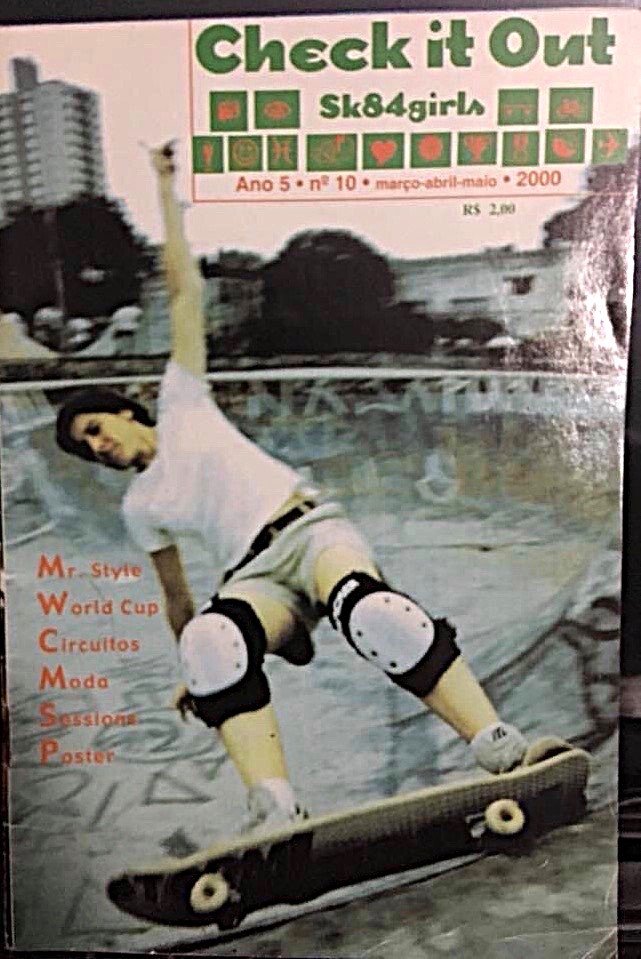
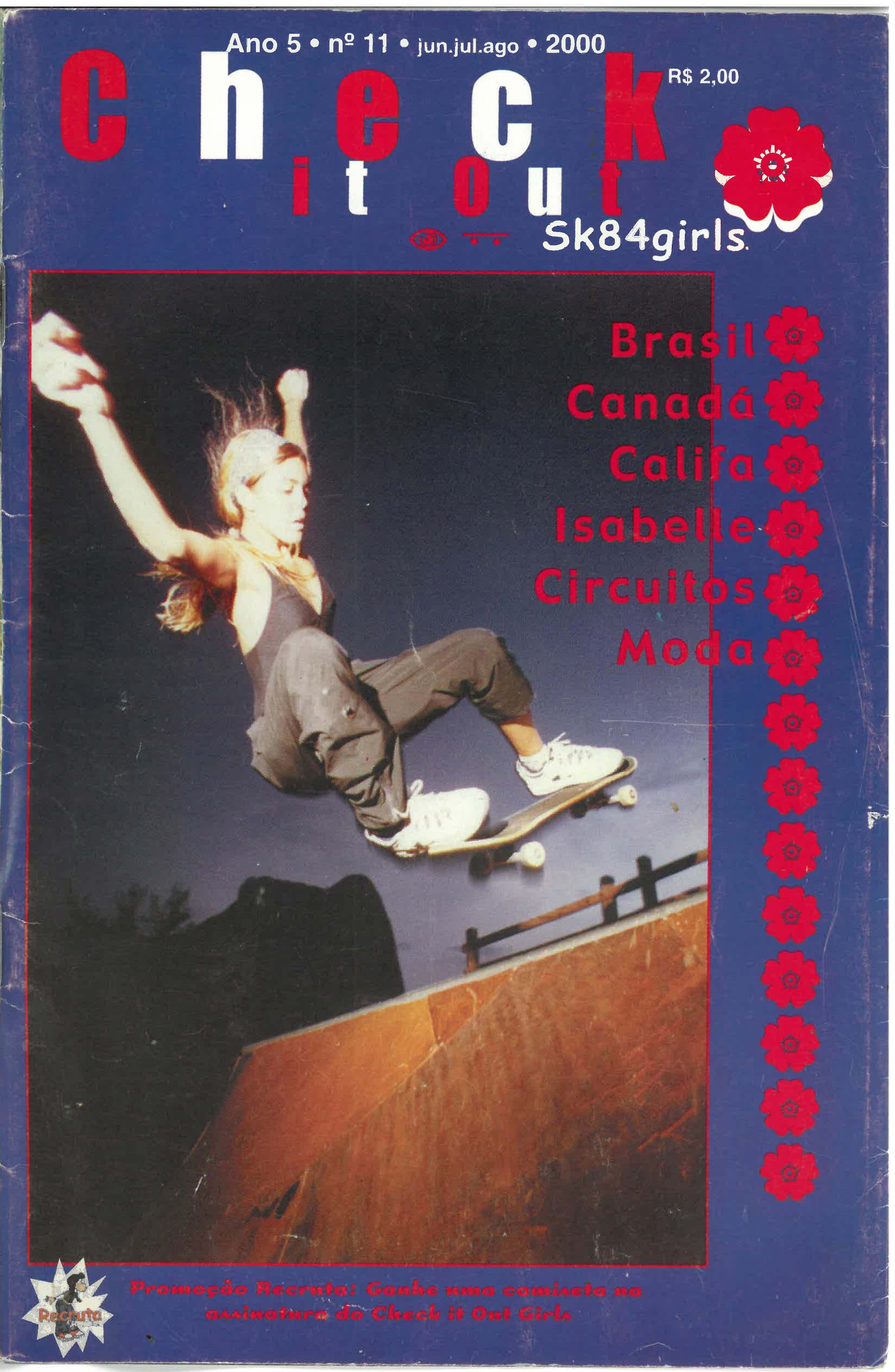
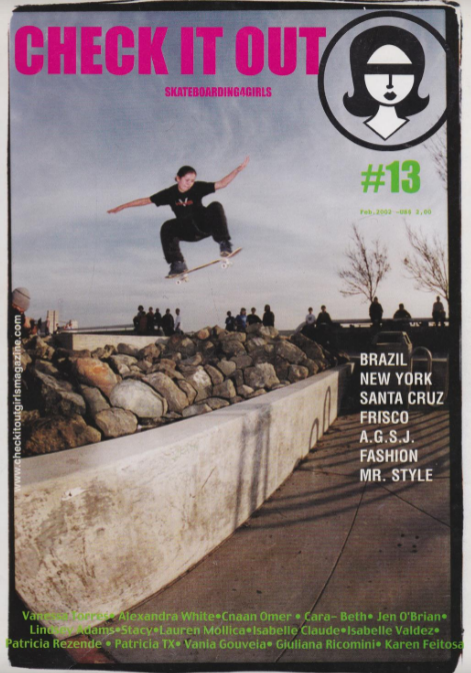

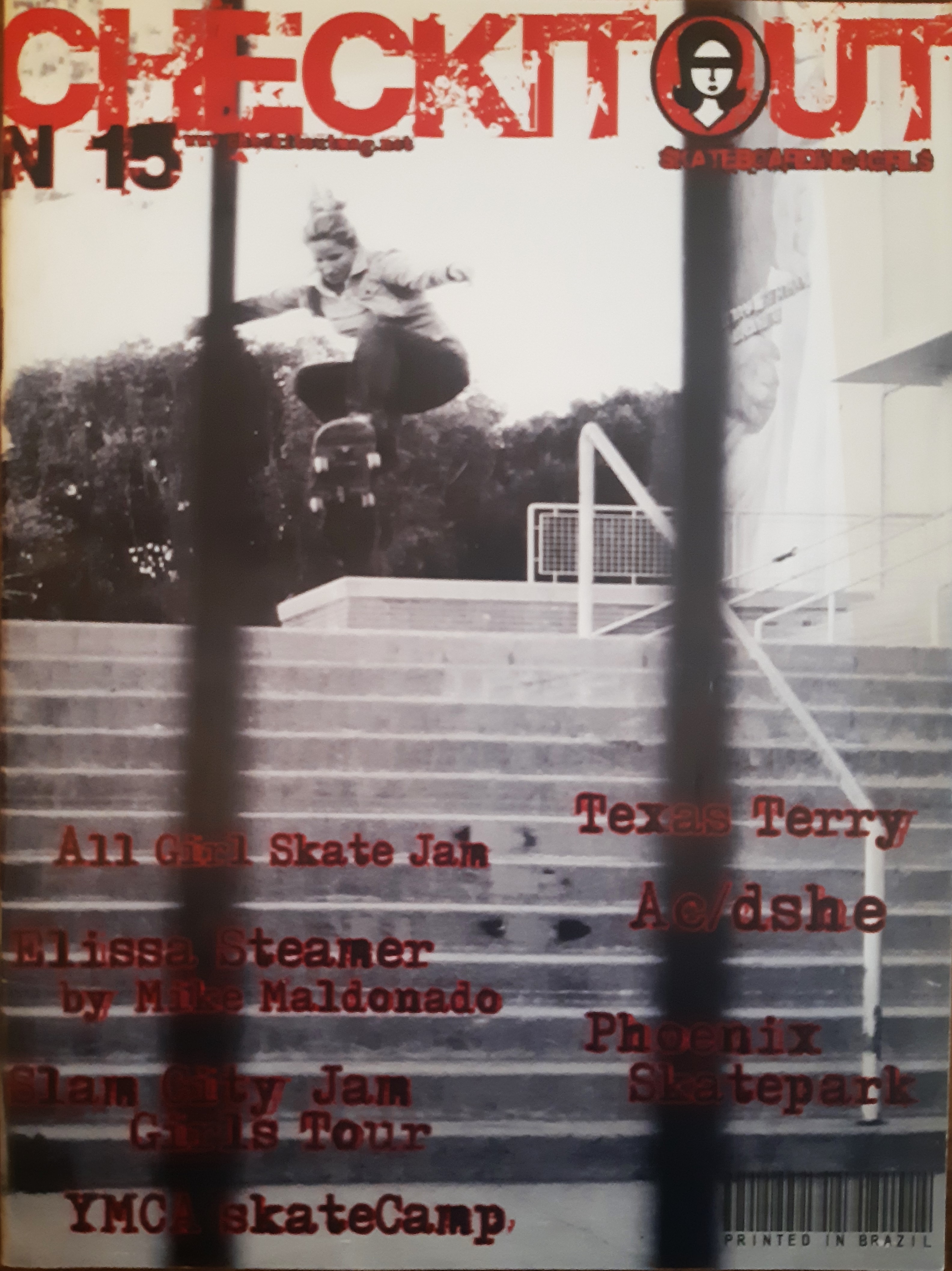
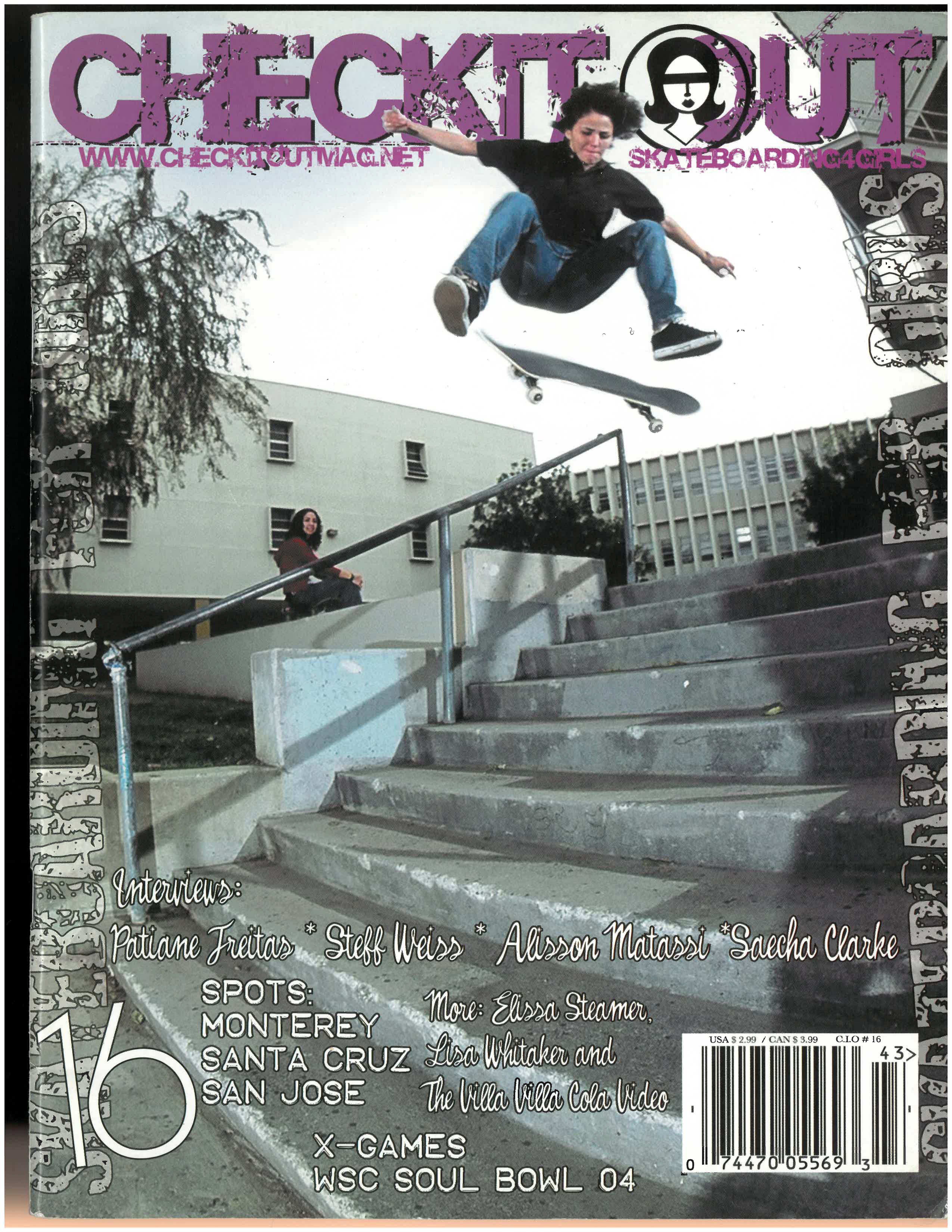
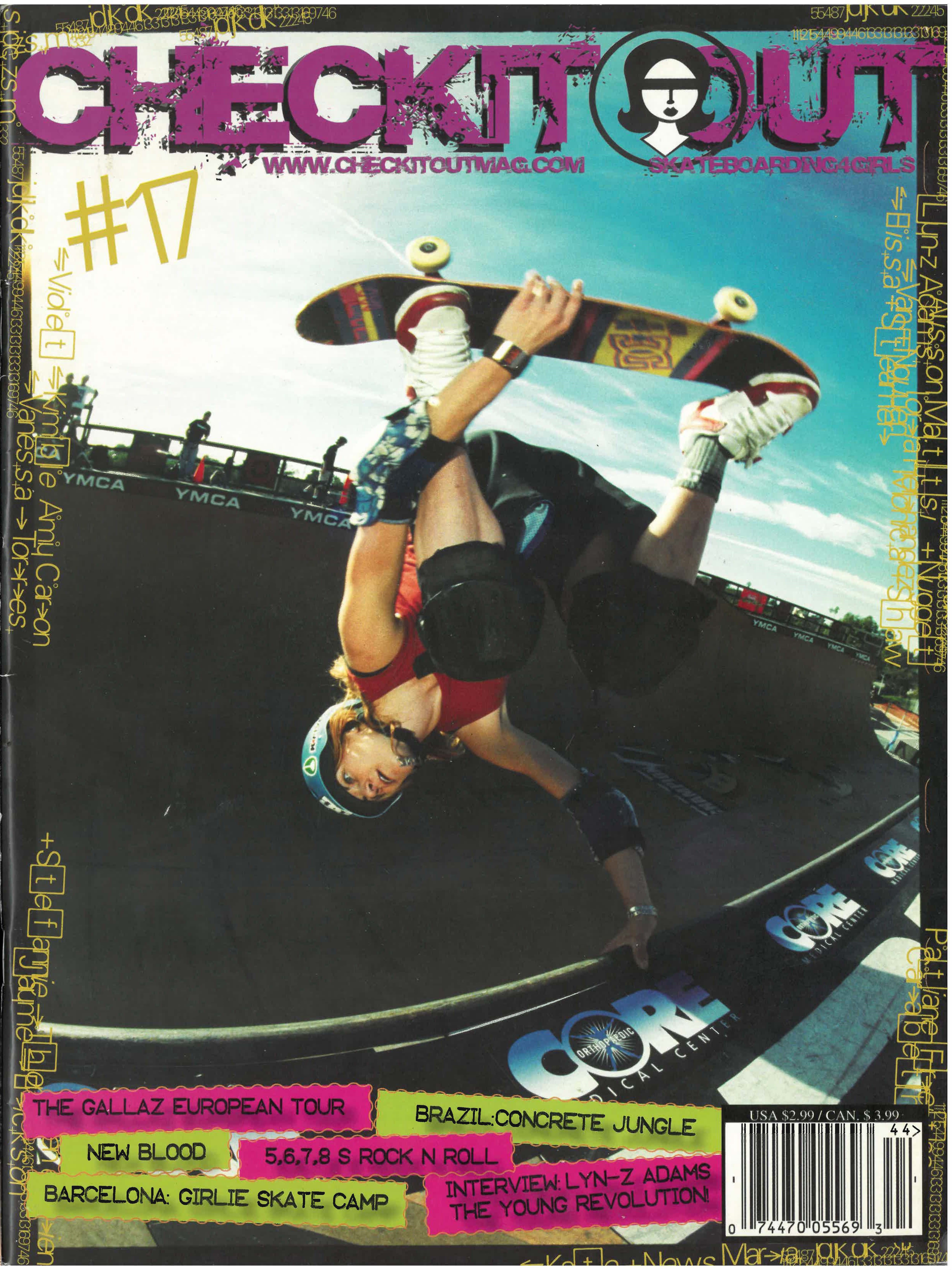
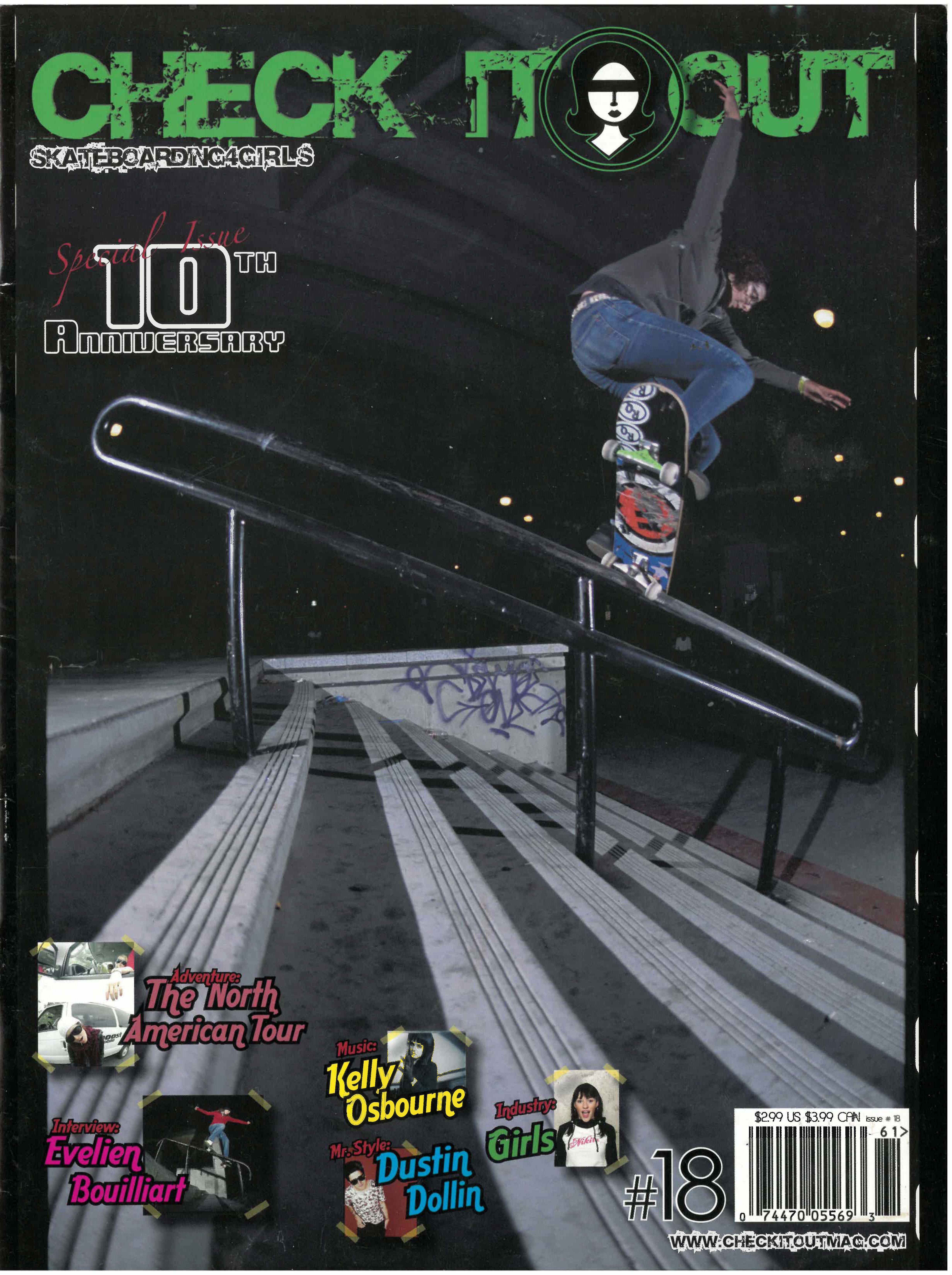
Every issue of Check It Out would be announced on The Side Project / Girls Skate Network website thanks to Lisa Whitaker, and I know that I couldn’t wait to receive my copy. There was no other magazine, besides the brief run of Push magazine (2002–03) in Canada by Denise Williams, solely dedicated to women skaters published at such a high caliber. I’m eternally grateful for this publication; scans of Check It Out have formed the foundation for many of the biographies I have written on female skaters from the early 2000s for this archive, skaters I may not have found otherwise because so many of them were ignored by mainstream skateboard magazines.
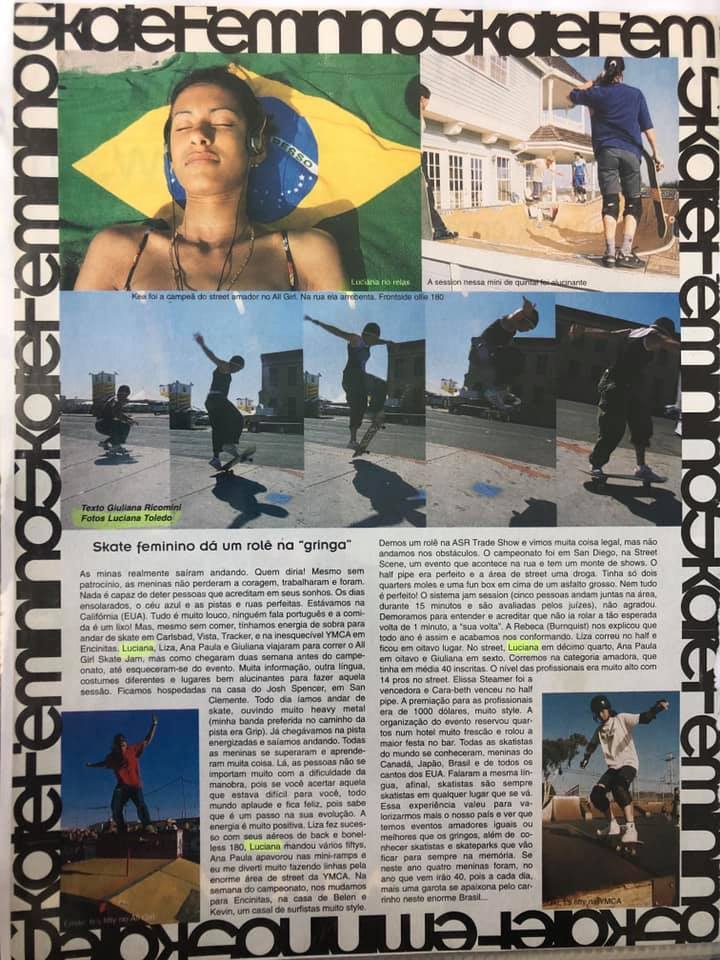
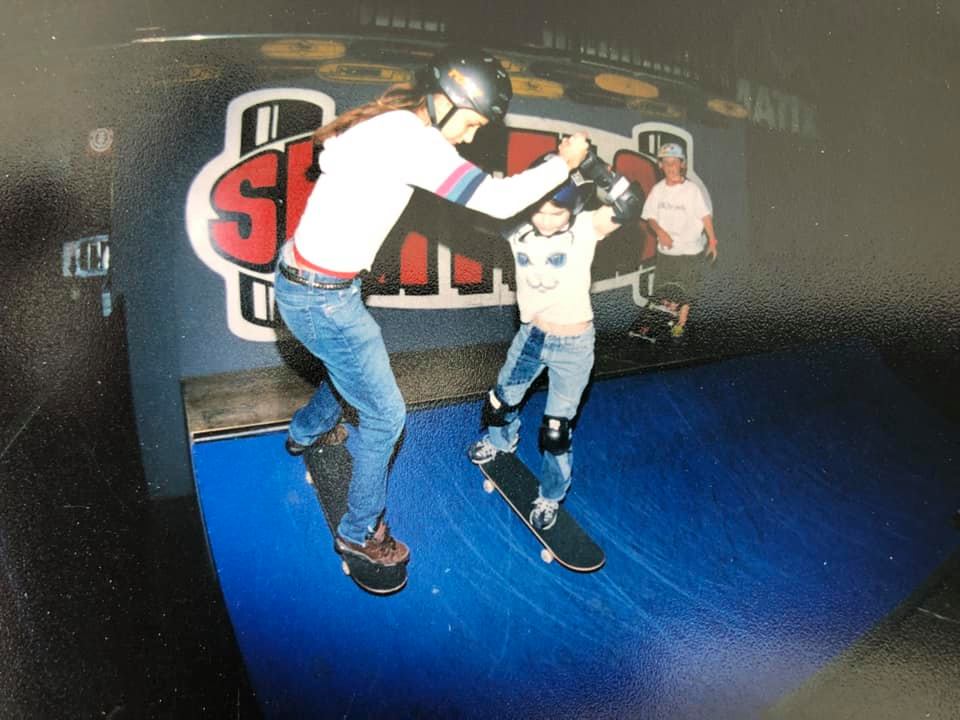
Above: an article from Luciana Toledo’s archive and a fun photo of her teaching a young skater
Professional skateboarder and sports announcer Alex White, who appeared on the cover of Check It Out issue 15 in 2003 launching off a fifteen-set of stairs, interviewed the editors and explained how the magazine was a form of activism. The women demanded the attention of major advertisers, insisted on sponsorship for female riders who were unappreciated, and often forked out their own money to keep things afloat. However, the 18th issue in 2007 was their last even though issue 19 was practically completed (a sneak peak was posted by Liza on April 23, 2019).

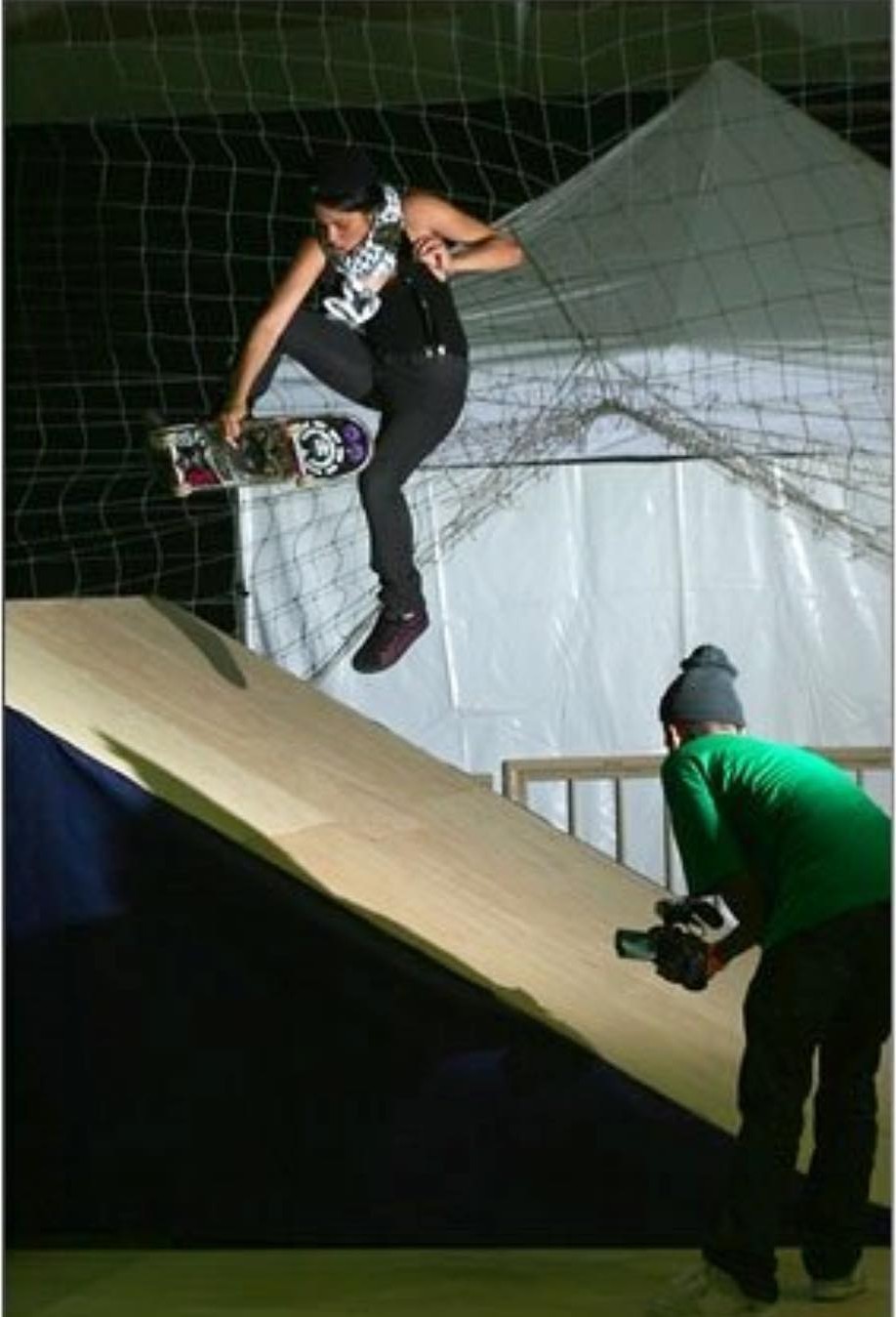
Photos: the unpublished issue 19 and Liza Araujo appearing in the May 2008 issue of Tribo, where it all began back in 1995
Liza concluded her final editorial by writing, “Back in the day we just wanted to be able to skate the park without being discriminated, bullied, and attacked by boys… Big advertisers took a long time to pay attention to women’s skateboarding, but the evolution brought this revolution and I’m glad we contributed.”
According to Vanessa Torres, “This magazine meant the world to me. It gave all women [and] young girls an insight to what was going on in the women’s scene. A chance to be part of something truly authentic. All of these women continue to inspire men and I am eternally grateful to know all of them.”
Brazilian skateboarders have long been a dominating force in competitive women’s skateboarding, all the way back to pioneers like Maria Elaigne Ferreira who started skating in 1972 and was interviewed for the documentary Into the Mirror: Fragmentos (2022) by Emilie “Pipa” Souza. In the film, Souza celebrated the strong history of Brazilian female skateboarders providing context for a contemporary movement. Liza was also featured in the film, which can be watched on YouTube:
Today, there is a fierce contingent of talented female skaters competing out of Brazil all vying to be the next Rayssa Leal, the most recognized female street skater today who consistently wins contests and has a whooping 9.1 million followers on Instagram, but her legacy was made possible because of women like Liza, Ana Paula, and Luciana demanding change.

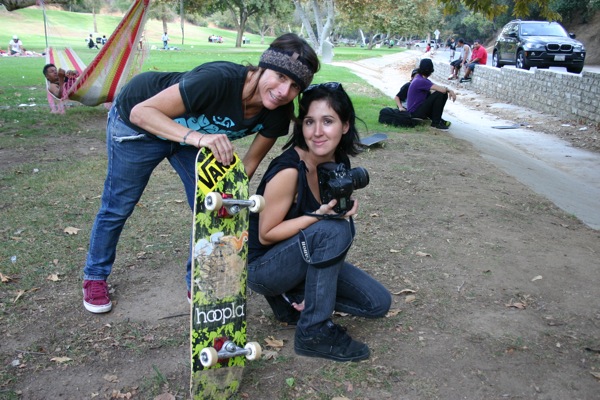
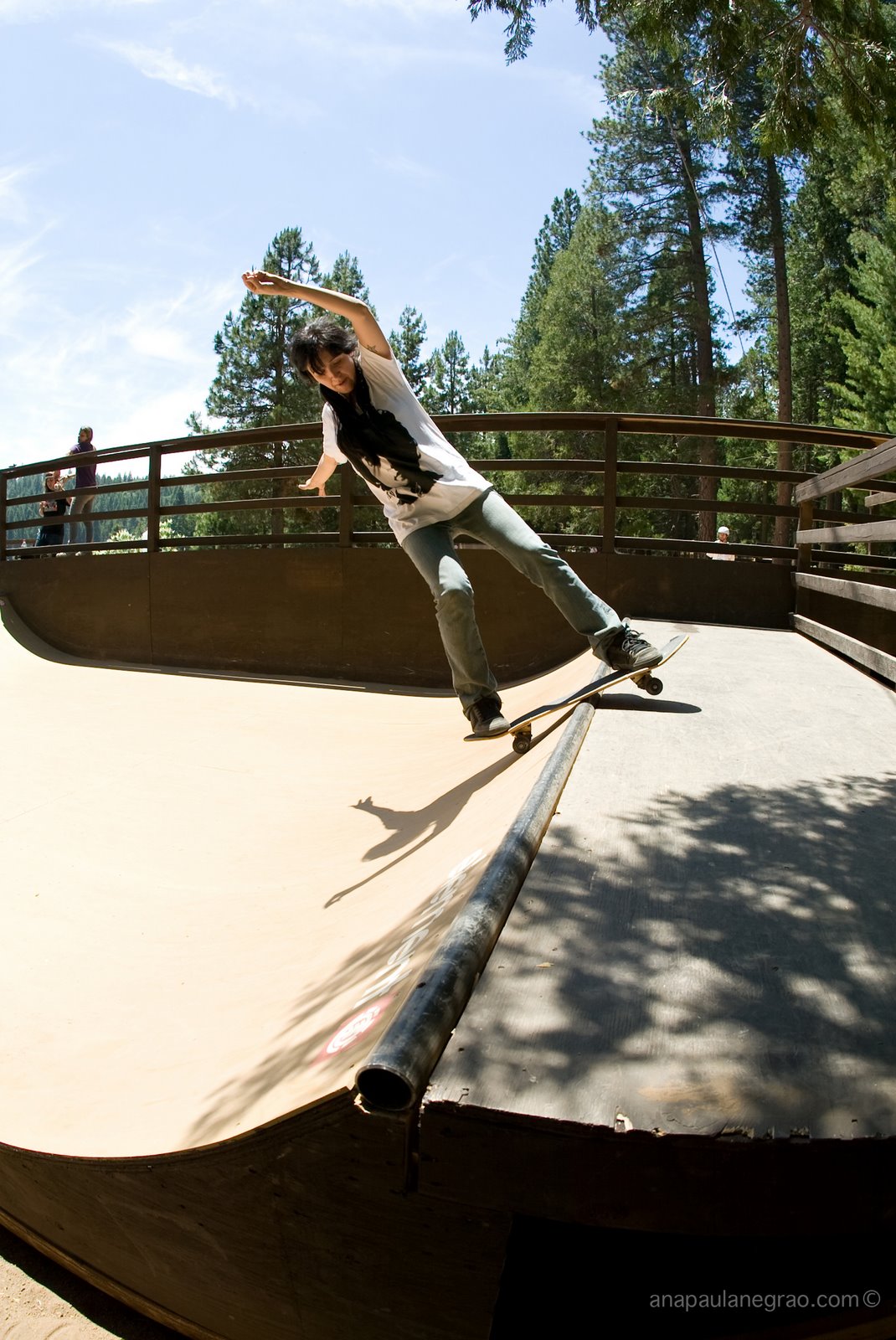
Photos: Ana Paula Negrao as photographer with Leticia Bufoni (2009) and Cara-beth Burnside (2009), as well as a skate session at Visalia camp in 2008 thanks to Lisa Whitaker
It’s thanks to Check It Out magazine that female skaters throughout Brazil and around the world could see themselves in print and know that there was a community of like-minded women in existence during some bleak periods in skateboarding history. It was never easy keeping their dream alive, let alone to make an income. Liza wrote how it was a challenge to get sponsors for the magazine which meant that their frequency was irregular, but ultimately, the crew met so many incredible people along the way and they should be recognized as trailblazers!
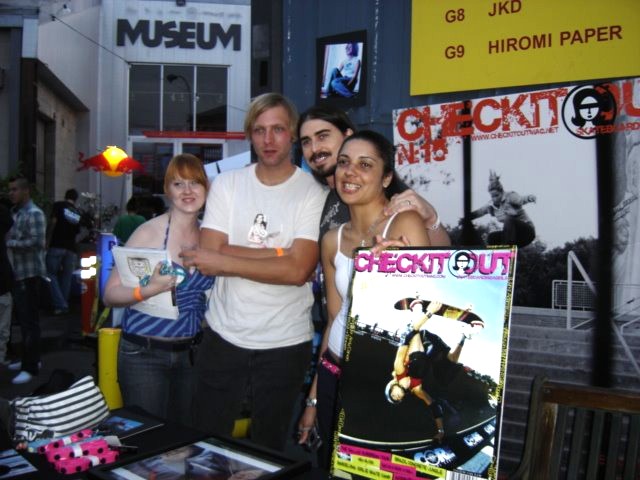
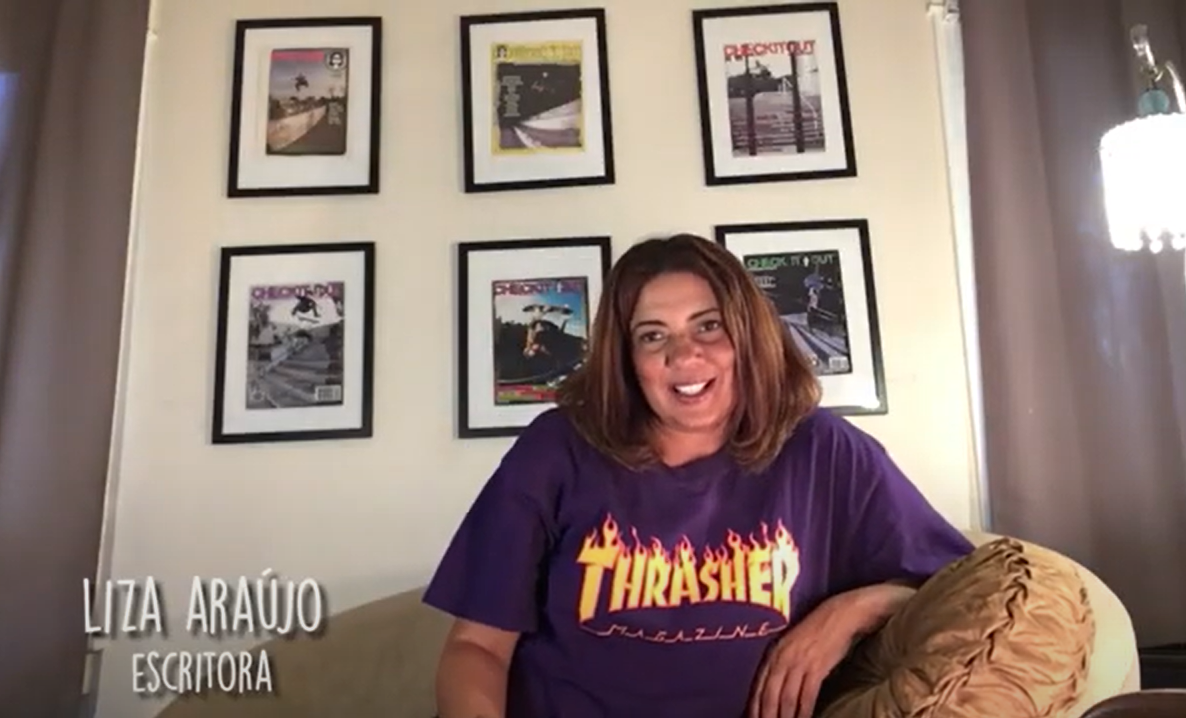

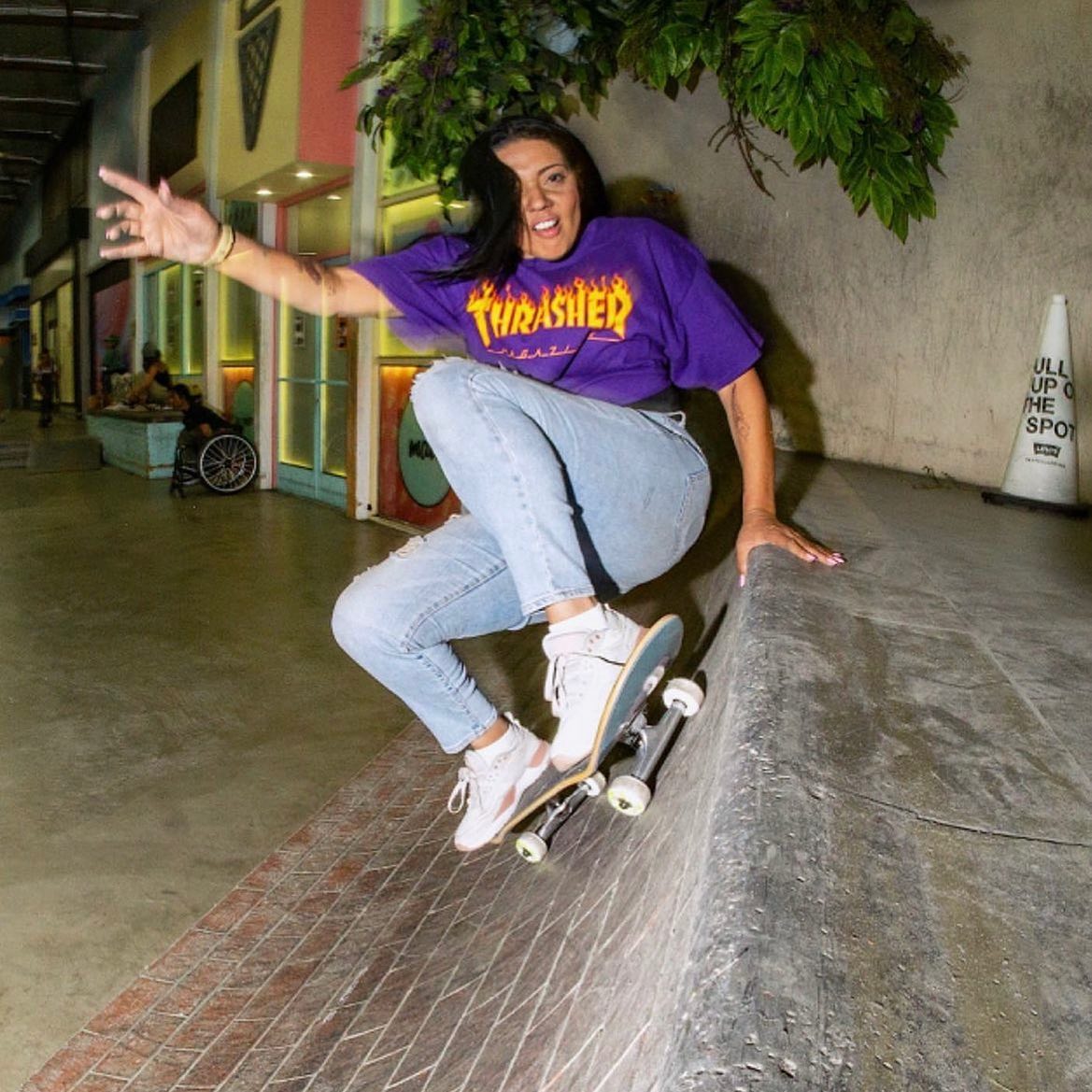
Photos: Liza Araujo at a 2006 fundraiser with All Girl Skate Jam, and more recent photos including a photo shoot for Poseiden in 2019, and one by Olga Aguilar (purple Thrasher t-shirt powerslide) from 2023.
Thankfully, in 2023, the Brazilian Skateboarding Confederation honored Liza with a Certificate of Recognition for Empowering Women and rightly so! There’s also a fantastic interview featuring Liza by Ken Hada on his podcast “I Had a Conversation” from October 17, 2021. Check it out.


Photo: Liza Araujo circa 2001 in San Francisco, also the cover for her podcast interview
Note: head to the page focused on skateboard zines and go down to the section for Check it Out to click on the issues that have been fully or partially digitized so far!
References:
- Gurba, Myriam. “Betties on Boards.” Clamor Magazine, March/April 2003, p. 24-26.
- Steffens, Tiffany. “Girls Kicking Ass.” TransWorld Skateboarding 16, no. 2 (February 1998): 160-161.
- Whitaker, Lisa. “Movers and Shakers: Ana Paula Negrao.” The Girls Skate Network (March 6, 2010).
- White, Alex and Nic Dobija-Nootens. “Remembering the First Women’s Skate Mag, ‘Check It Out,’” Jenkem Magazine (June 7, 2019).

 Womxn Skateboard History