
Dee Urquhart (Ross) could be called the Scottish godmother of skateboarding considering the role she played, alongside her late husband, Iain Urquhart, an award-winning architect who designed the famous Livi skatepark, which opened in 1981.

Photo: Dee performing an ollie grab to fakie, from her personal collection.
It was thanks to Iain’s second cousin, Parisa Urquhart that Dee and I connected via email (March 15, 2025) after I heard mention of Dee when Parisa was interviewed. Parisa has been actively championing the history of Livi skatepark and in a BBC Scotland news report called “Turning Livingston into a Skaters’ Paradise” (January 5, 2022) she explained that it was Dee who was the skateboarder, while her husband had the vision and skillset to design the skatepark and help oversee its creation.
In our correspondence, Dee shared the backstory of this remarkable partnership. Dee was brought up in Fife, Scotland and was a sporty kid who enjoyed skating at the ice rink in Kirkcaldy, roller-skating and cycling. Her parents were athletic and even met each other while playing tennis when Dee’s dad was based in Aberdeenshire, before going abroad in the war. Her mom enjoyed track & field, and her dad was an avid rugby player and boxed in the RAF (Royal Air Force).
Dee then met Iain when she was in her second year at the Edinburgh College of Art. She was pursuing woven tapestry and became a professional weaver for many years with a massive loom which “was about 10 feet high and 14 feet long, and was specially constructed from scaffolding poles to stop it warping when the tension of the big area of warp was put on it… I enjoyed my years weaving as it was always fun to see the design slowly taking shape!” Iain had transferred to Edinburgh for his final two years of architecture from the Glasgow Art School.
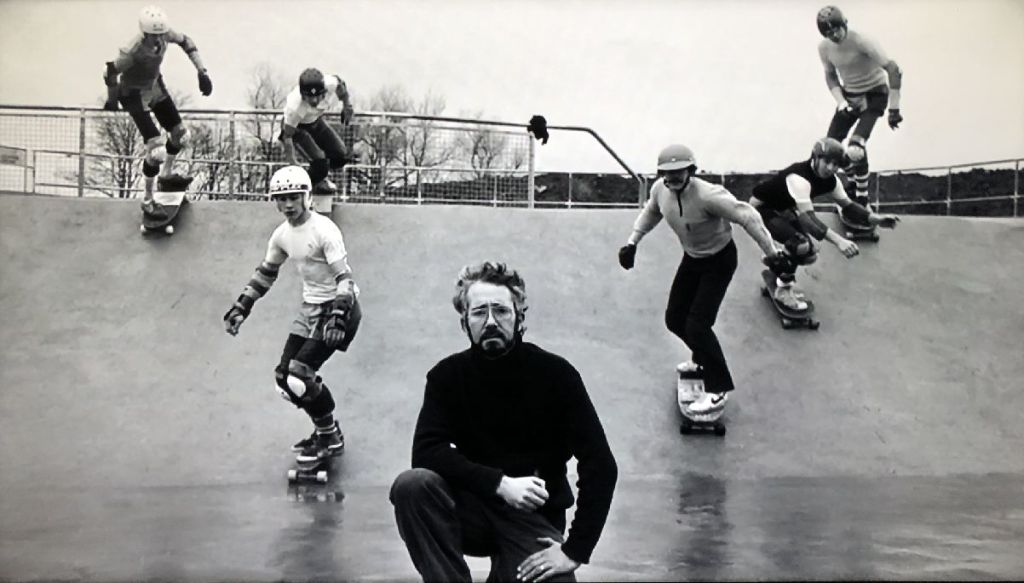
Photo: Iain Urquhart front and centre at Livi skatepark
Iain was running the college film group, which “showed very interesting and often obscure films and I often chatted to him in the college club which served meals, etc.” There was an incident when Dee was volunteering to obtain free entry to the graduates Ball, which happened to be Iain’s last day at college. She attended the Ball, but there was a “drunk and persistent chap who was being a real nuisance” to Dee. Fortunately, Iain rescued her from the annoying situation. “He walked me home across the Meadows when it ended and [he] suddenly stopped and said, ‘You know, I’m going to marry you!’ And after the usual ups and downs of young romance, 3 years later he did! I was still in my post grad year doing mostly tapestry and we honeymooned in Tunisia where we visited many weaving places.”
And then skateboarding made its appearance and transformed their lives. “By this time Iain was working with Livingston Development Corporation and ended up in a senior post there. He was designing a big sports centre for the town which sadly never got built as the funding was not obtained. That was a real shame, but Iain got into designing smaller sports facilities.” A highlight was when Iain gave the Queen and Prince Philip a tour of a personal project that he worked on called the “Trim Course,” which ended up being a lengthy, engaging visit!
In the 1970s, the skateboarding boom that originated in California, was having a global effect, “which prompted Kenny Omond to approach the Livingston Development Corporation with the idea for a skatepark” (Scott). Kenny was an avid skater and eventually designed an extension to the park in 1992. He is a wealth of Scottish skateboard history and oversees the Facebook page, “Livi Skates and the Participatory Anthropic Principle.” Iain was on board even if some of his architect buddies were less than enthusiastic. In fact, Kenny posted a news-clipping on Facebook that Iain had received from his peers announcing the demise of skateboarding! Check out the page for loads of vintage photos and skatepark blueprints.
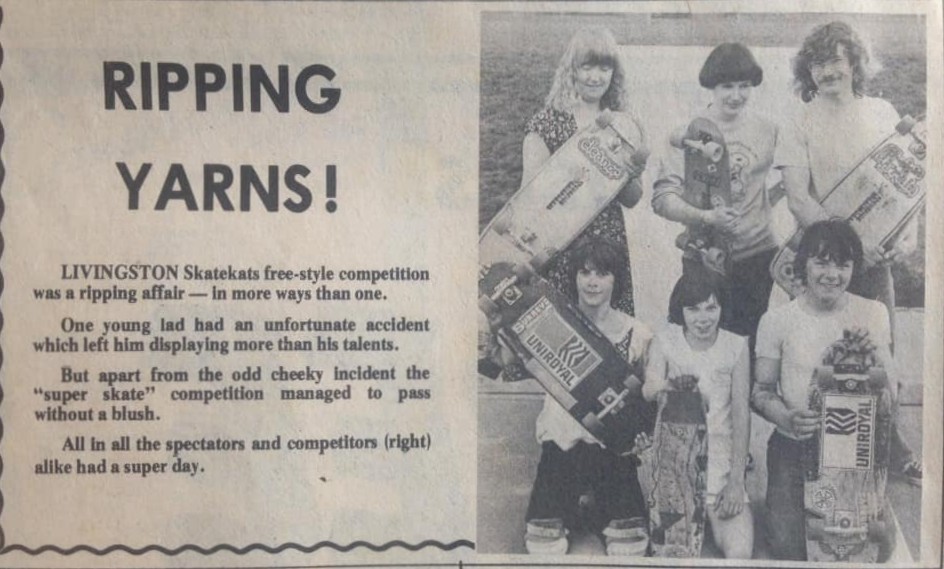
Photo: News-clipping that includes Eleanor Omond, Dee Urquhart and Kenny Omond in the top row.
Dee noted that, “Iain and I went to visit several rather rudimentary skateparks around the country in our own time. I remember when we went to London and visited Meanwhile Gardens which was functioning as a skatepark before being developed for housing. We visited the South Bank which with its concrete ramps and walkways was being used by skateboarders as an ad hoc skatepark.”


Photos: Dee making progress in transition skating
While Iain’s focus was on design, a seed was planted for Dee who decided that she would give skateboarding a go instead of just hanging around observing skateparks! “We met Tim Leyton Boyce at Alpine Sports and I bought my first cheap plastic skateboard to twiddle about on while Iain chatted to skaters at length. To my surprise I found I had reasonable balance, and it was a lot of fun! I was hooked!”
Back in Scotland, Dee said that they “met lots of young skaters and several adults who were also keen and the Scottish Skateboard Association [SSA] was born.” In a report from the UK Skateboard Special magazine (June 29-July 12, 1978) it was noted that the Association launched in December 1977 and that great progress was being made.

Tim Leyton Boyce was starting out as a skateboard journalist and photographer and was also the Secretary of the English Skateboard Association, so he provided them with guidance. Boyce would provide photos for Skateline, which eventually became the official newsletter / zine that Dee and Iain produced for the SSA (published around 3 times a year from 1980 – 1982). It sounds like the Scottish Sports Council was also supportive of skateboarding at the time, providing funding.
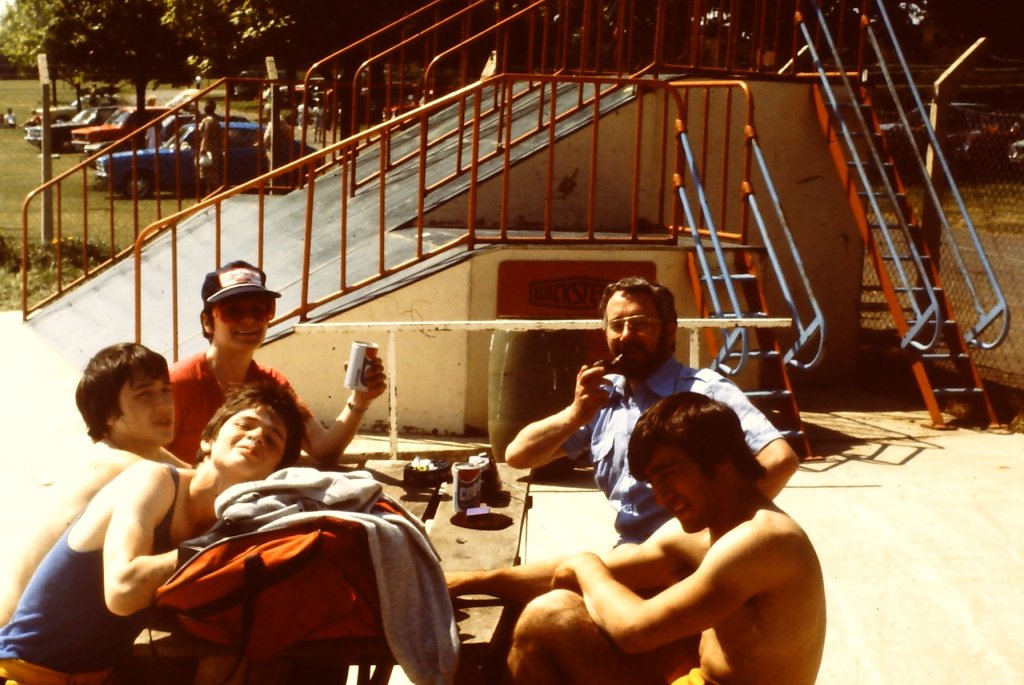
Photo: Dee and Iain in the back with skaters, Kenny Omond and Jamie Blair
After exploring skate parks in the UK, Iain and Dee went on a three-week trip to California to get a sense of what was possible. “Stacy Peralta was our main contact there and he met up with us and we went to mostly Big O, Marina del Rey and some other lesser skateparks with him.” There was an introduction to Jerry Madrid of Madrid skateboards, and of course, Tony Hawk “who was a small skinny boy who could do almost anything with a skateboard and his dad who was helping Tony progress his career.” Dee and Iain were even invited to stay at his house, which she described as “great fun… never to be forgotten times!” Other inspiring skateboarders were Steve Caballero and Mike McGill, whose performances at the Marina bowl were especially impressive for Dee.
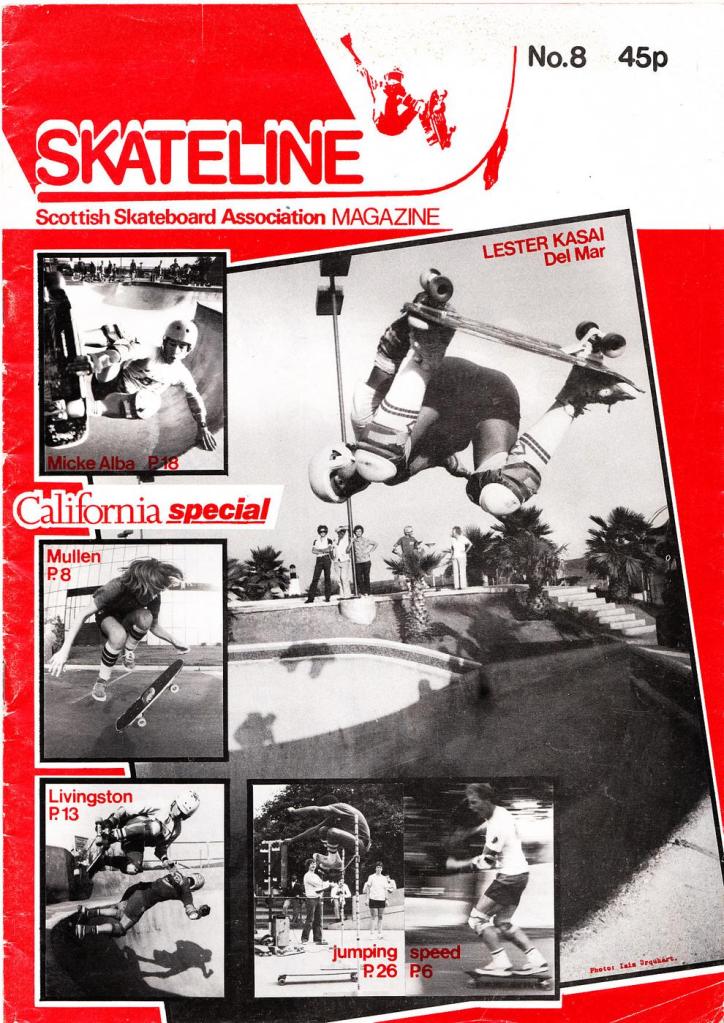
While traveling, Dee even took part in a slalom race and “managed to get to the bottom without falling off! Such a buzz.” She was inspired by the mass of competitors who took part in this big downhill and slalom event in the hills of California. The couple would write about their perspectives of American skate culture in an article called “A Look at America” for the Spring 1982 issue of Skateline (no. 8).
Ultimately, “We had such a good time and Iain especially came back full of ideas for the Livingston skatepark,” which now had funding secured. Iain was taking note of the importance of transition and how flat bottoms could improve a bowl or halfpipe, “which led to the invention of his famous transition machine which eliminated the kinks to the surfaces then epidemic in skateparks being built. When the Livi park was being built the men were just using a rough and ready approach and Iain ended up, up to his knees in concrete swinging the pendulum-like transition machine to get it right!”
Once the park was built, Dee credits Stacy Peralta for agreeing to pay the airfares for Steve Caballero and Mike McGill to come over to Scotland and perform demonstrations at the Livi skatepark. “They stayed with us, and we all had a great time. Press and TV came [to Livi] and the place was packed with amazed and enthralled spectators.” Apparently, a PA system was set-up so there was music blasting and a festive vibe, leaving everyone pumped to skate! “We then took them down to skate ramps at Crystal Palace in London and a few days later left them with Tim [Leighton Boyce] and others to do some more skating before leaving for home and sunny California. It was just a fabulous time, and I am still grateful to Stacy for all his help.”
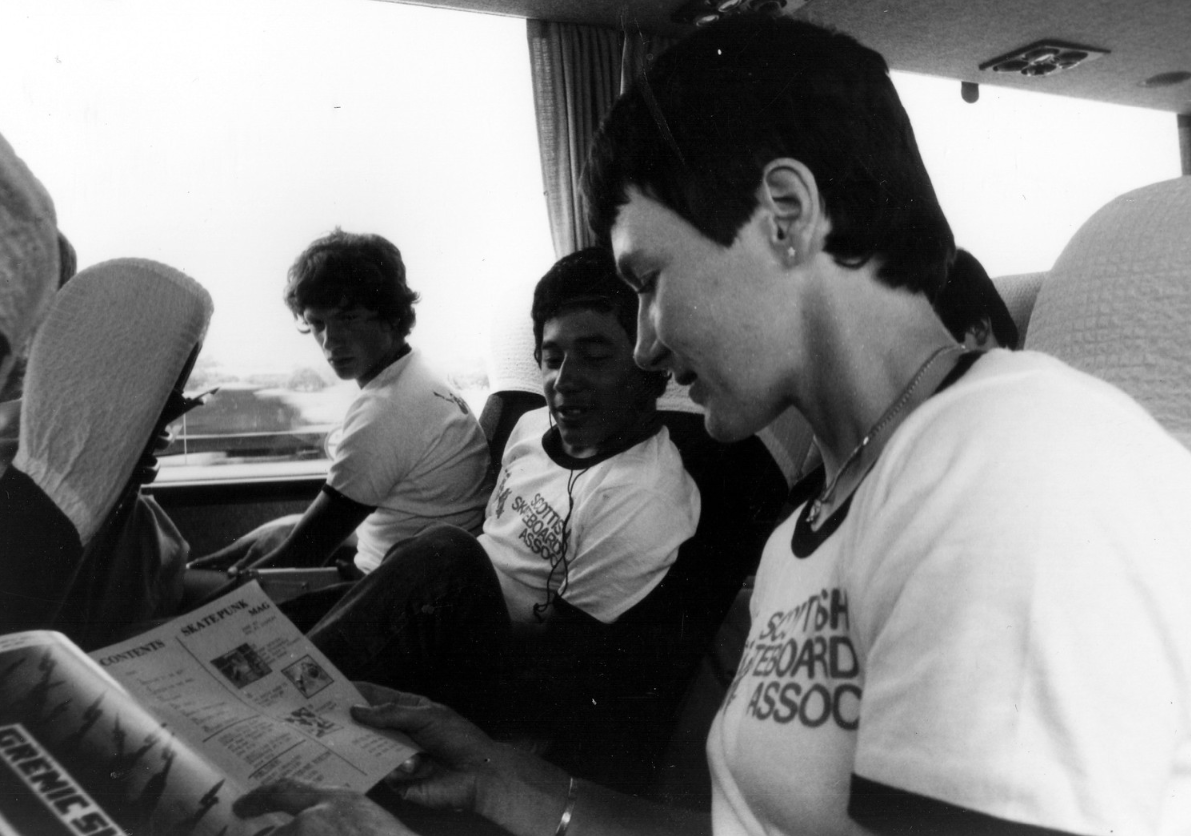


Here’s some fantastic photos of Dee acting as host with Steve and Mike, everyone rocking their Scottish Skateboard Association t-shirts, and then the demo!
Livi skatepark would become a mecca for skateboarders from around the world (myself included back in 2001 when I attended a Livi Fun Day!). Tony Hawk would make the trek in 1991 and reportedly described Livi as “a legendary place.” The special significance of the park resulted in a survey by the Historic Environment Scotland in 2023 which resulted in the park gaining “listed status” as an historic site, and Dee hopes that “some refurbishment will happen as the weather and time have taken their toll.”
As far as other female skaters, Dee met a handful of individuals when she was traveling in California but back in Scotland there were only a few, although there’s a couple of photos of Eleanor Omond taking an interest.


There were some UK legends like Sheenagh Burdell and Sue Hazel ripping it up in the 1970s and 1980s, and then Scotland’s own Michelle Ticktin would prove to be immensely talented in vert-skating by the late 1980s, but Dee and Michelle would not have crossed paths. Michelle wrote that, “I started skating in Glasgow and a little bit at Livingston Skatepark and that was all good teenage fun. But it wasn’t really until I went to Brighton to study that I started skating vert – at The Level, a halfpipe in the middle of the city.” In the late 1990s and early 2000s, local skater Kerry Ridge (Varma) of Edinburgh would make Livi her home park and became a respected street skater.
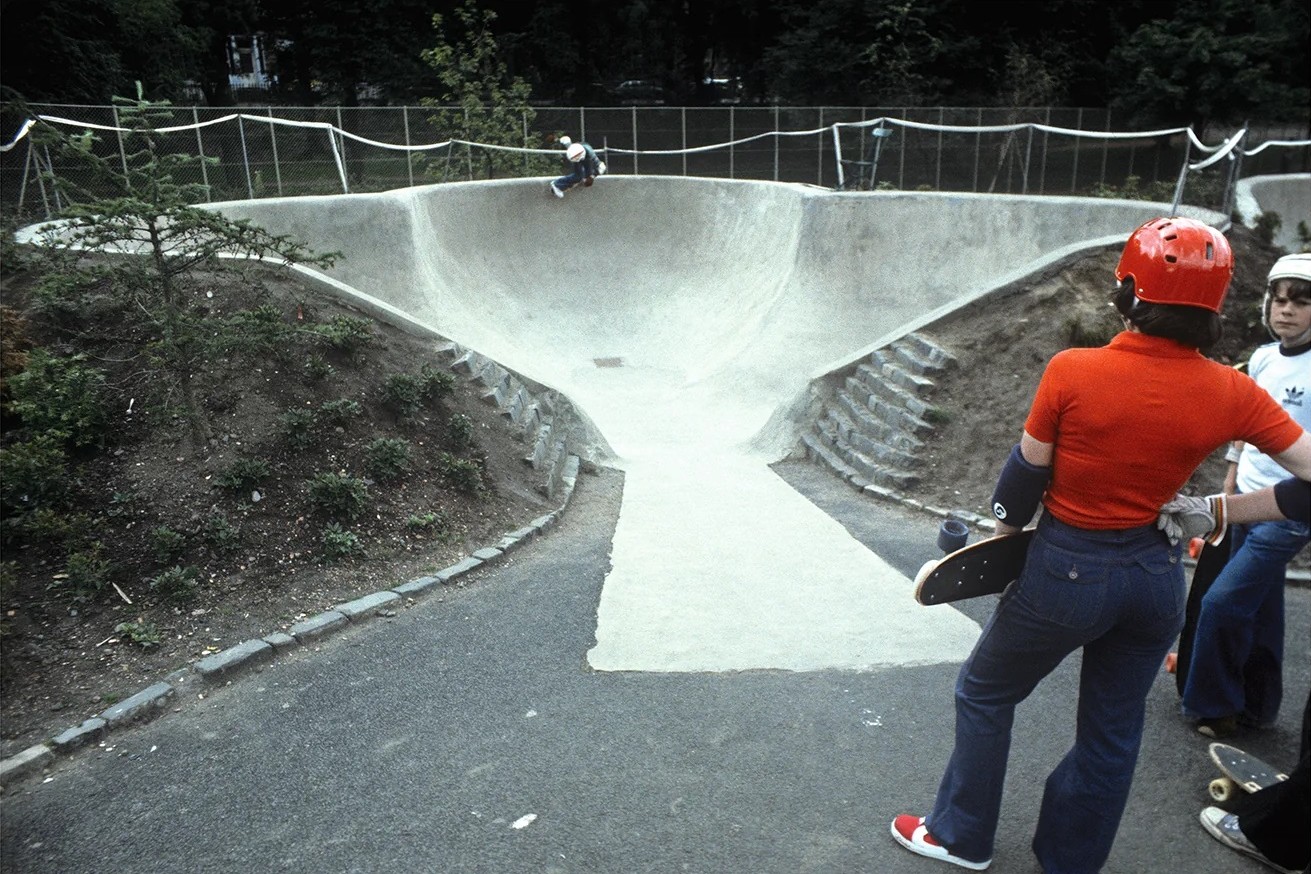

These photos that include Dee in the red shirt were taken at Kelvingrove skatepark by Iain, and posted by North Skate Mag. North Skate Mag also celebrated Livi’s 40th anniversary in an article written by Parisa Urquhart for the April 2021 issue.


Photos: 1981 Grangemouth Stadium event by Steve Wright with Dee in white and denim.
Meanwhile, in the early 1980s, Dee shared that she acquired some quality equipment and invested many hours of practise, stating that “I lived to skate.” Dee recalled renting buses for big groups of skaters to go on trips to English skateparks like Alsager and Crystal Palace, even organizing competitions “like the European Slalom Championships in the concourse of Meadowbank Sports Stadium in Edinburgh. Lots of work but happy times.” Kenny Omond noted that Dee and Iain also helped “set up a weekly training class at Meadowbank Sports Stadium” and acknowledged the epic contest in 1980. Omond also expressed his gratitude for the “amazing magazines which helped define skateboarding on a worldwide scale” that they produced (including a drawing that Dee had created of Iain, Kenny, and herself for one of the magazines).

As mentioned, Skateline was the official publication of the SSA but there was also Skatewaves. Dee explained how they produced the magazines by incorporating articles, contest news and results, and black & white photos, in pre-computer days, which took “a lot of time and effort.” There was typing and more typing, correcting, cut and paste, hand-done letter-setting and finally, photocopying. “A real labour of love.” Nowadays, these publications are coveted among collectors.


The American skate scene took notice of all the activity happening in Scotland, and TransWorld editor, Bryan Ridgeway published an interview with Dee for the July/August 1983 issue (28-29) called “The Scene in Scotland.” Dee noted how the challenging weather and lack of indoor facilities were an issue but celebrated “Livingston’s Rock ‘n Roll Park” and how their members were skate obsessed even if they were considered a “minority sport” in Scotland.


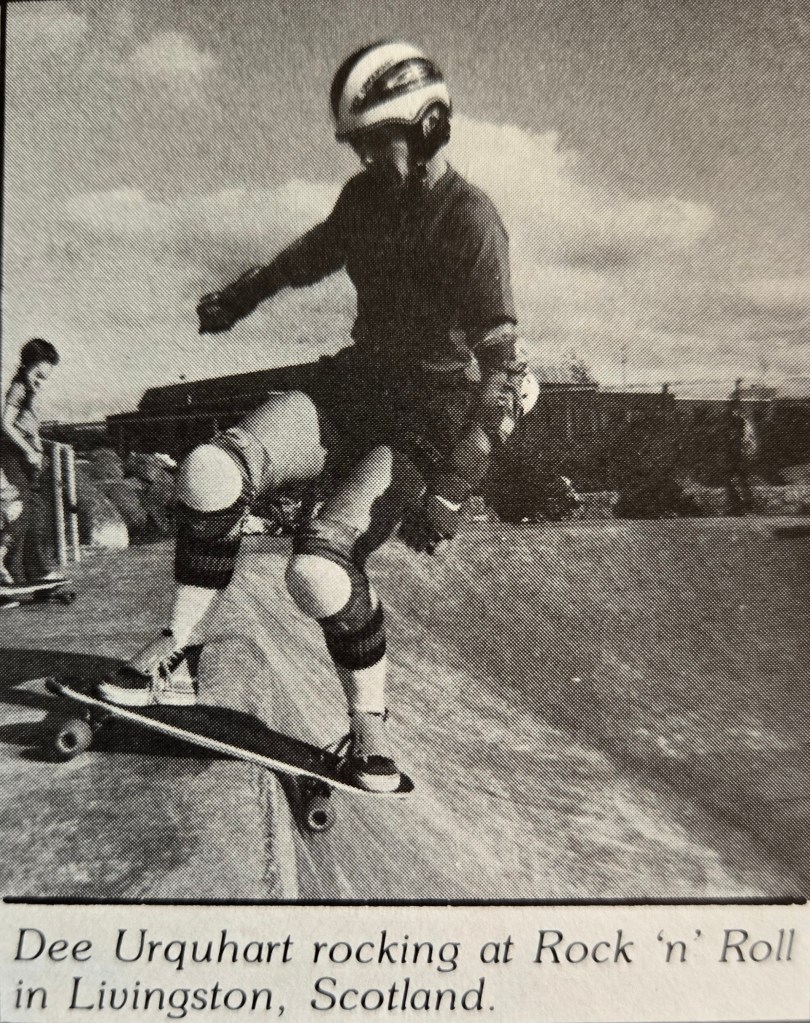
It was a magical time for Dee but sadly, “when I lost Iain far too young in August of 1983 after a short cruel illness, the stuffing fell out of me, and I couldn’t carry on. He had managed to get the park built which is a lasting legacy to him and so many of the skaters then still remember Iain with much affection.” In fact, Dee found it remarkable that some of those original skaters are still pursuing the grueling pursuit “to various degrees even though, unbelievably over 40 years have passed since Livi was built.” And in those 40 years there has been innumerable contests, events and visits from professional skaters on their European tour.

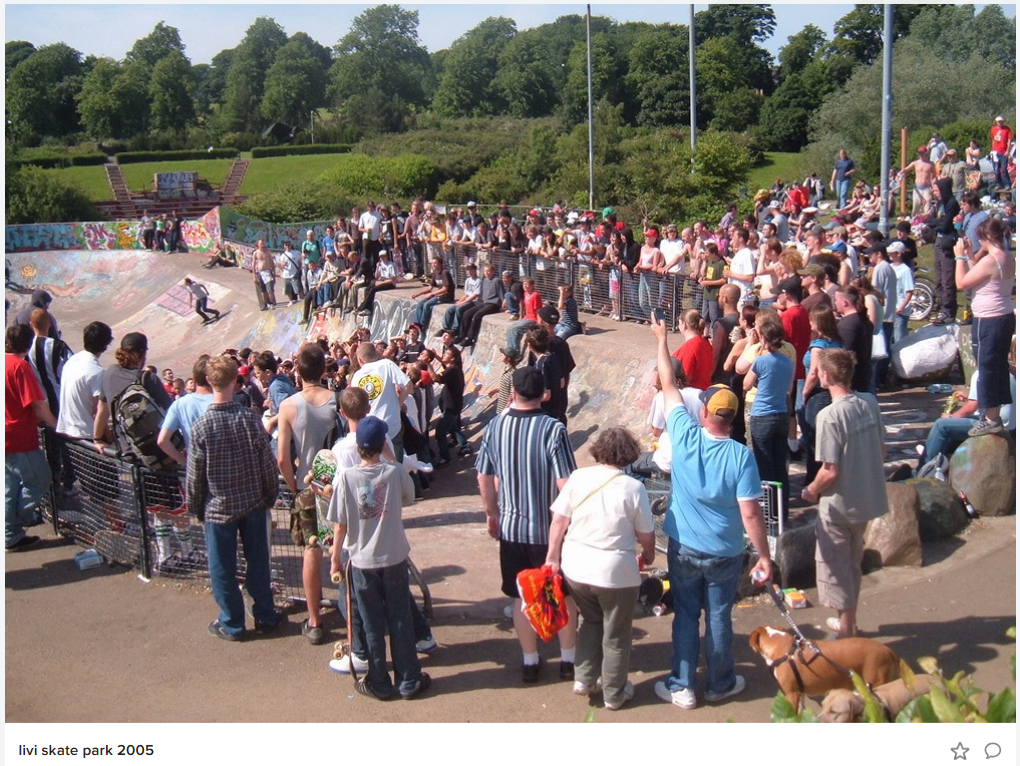
Photos: Livi skatepark in 1982 by Chris Eggers, and then 2005 possibly with Kerry Ridge (Varma) mid skate avoiding the product toss.
Thank you, Dee for sharing this history with me, and thanks to Parisa for her dedication. Check out the award-winning BBC Scotland documentary, Long Live Livi (2020) that Parisa co-directed with Ling Lee to celebrate the park and Iain’s legacy as an innovator. The film showcases some vintage 8mm footage, including scenes from their California travels since Iain also had a passion for photography and film, documenting the skateboard action that unfolded. The film can be watched on Amazon Prime or Garage Movies, and here’s the trailer:
Long live Livi!
[Update: according to the West Lothian News on April 17, 2025, the Livi skatepark is destined for a “facelift” to restore the surface.”]
References:
- Scott, Katy. “Livingston skatepark is first to be listed in Scotland” BBC News (Feb. 29, 2024).
- Urquhart, Dee. Personal email. March 15, 2025.
- Urquhart, Dee. “Have Your Say: Designating Livingston Skatepark.” Historic Environment Scotland (2023).
- Urquhart, Parisa. “Why I believe this graffiti-covered patch of old concrete is as culturally important as Edinburgh Castle,” The Scottish Mail (April 16, 2023).
 Womxn Skateboard History