
Skate Like a Girl has developed over the last twenty-plus years from a simple concept in 2000, providing workshops and events for girls, to an inclusive community, actively extending support to trans and gender non-conforming skaters by offering safe spaces and clinics. According to their About page, their vision is social equity, “promoting confidence, leadership, and social justice through skateboarding,” as well as racial justice and trans rights, and its model has been replicated worldwide.
Check out their 25 Year Anniversary celebration posts on Instagram, which include some fantastic historical coverage.
Skate Like a Girl began with Holly Sheehan who grew up in the North Bay region of San Francisco. She noticed a severe lack of representation of female skaters in the late 1980s. When Holly relocated to Olympia, Washington, to attend Evergreen College and met Fleur Larsen through the college snowboard team, something sparked between them, according to a brief history shared on their Facebook page.

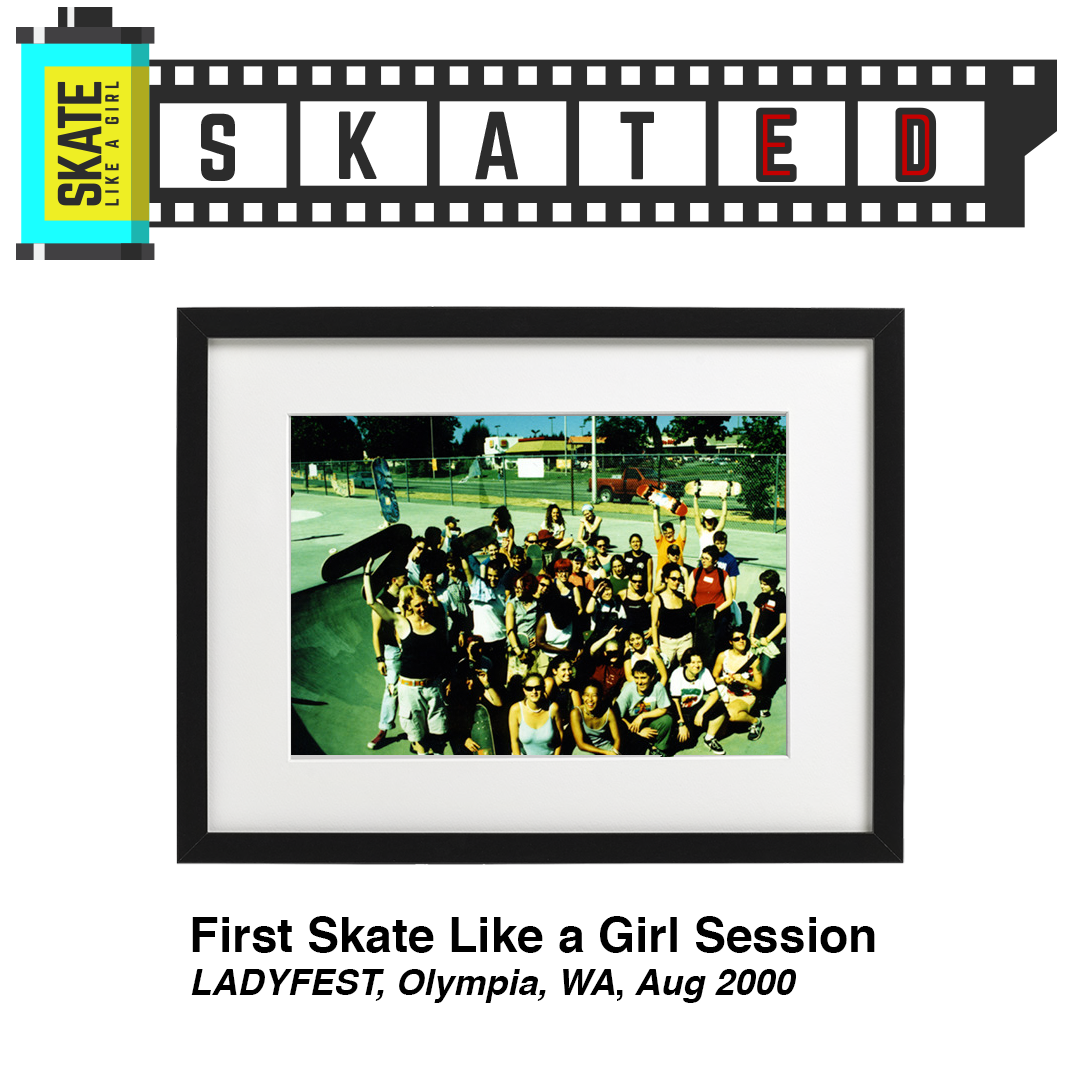
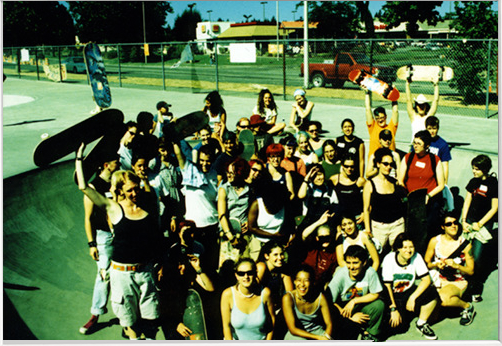
In August 2000, a six-day festival called Ladyfest was organized by former members of the Riot Grrrl movement to celebrate the talents of women in Olympia, and as a response to sexual assaults that happened at the 1999 Woodstock festival. “Holly and Fleur [were] committed to the coordination of a skateboard workshop and session to be held at Olympia’s Yauger Skatepark.”
The festival planning minutes record some trepidation — the organizers didn’t have insurance to cover injuries — “but we’re glad it is happening because it sounds cool.” Other events at Ladyfest included workshops for girls-only punk rock basics (guitar, drums, bass) as well as bike repair, printmaking, letterpress, followed by panels about sexual assault and welfare rights organizing, plus bands, art shows, dance parties, a drag show, and film screenings. In a historical note from NYU, it was stated that there were over 2000 attendees and bands included Bratmobile, Sleater Kinney, The Gossip and Cat Power. Even though it was called “Ladyfest” everyone was welcome, regardless of the gender they were assigned at birth.


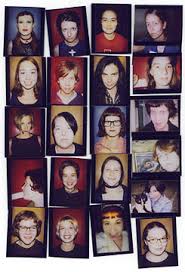
Images: found within a historical record of past LadyFests and there’s even a collection in NYU libraries with photos and ephemera. I also noticed that Zanna Gibbs, likely the author of the zine 50-50 Skateboarding and Gender hosted a panel on Trans issues.
The response to the skateboard event was profound, and it was estimated that fifty participants came out to their follow-up event. On Facebook, it was stated that “Fleur and Holly were inundated with requests, e-mails, and phone calls asking when another workshop and session would happen. The resulting thoughts, conversations, and organizing would lead to the official foundation of Skate Like a Girl.”
Nancy Chang, who began volunteering in 2006, teamed up with Larsen and Sheehan and helped turn the grassroots organization into a nonprofit back in 2009 as part of her graduate degree project at the University of Washington.
There’s a fantastic slideshow from 2006 of Chang, Larsen and Sheehan offering instruction, including some of these photos:
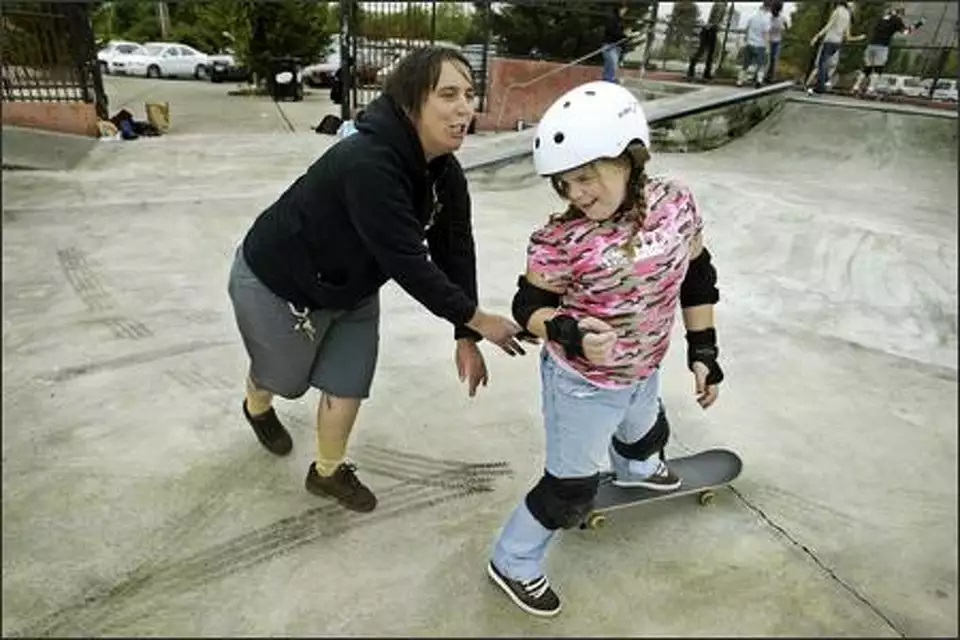
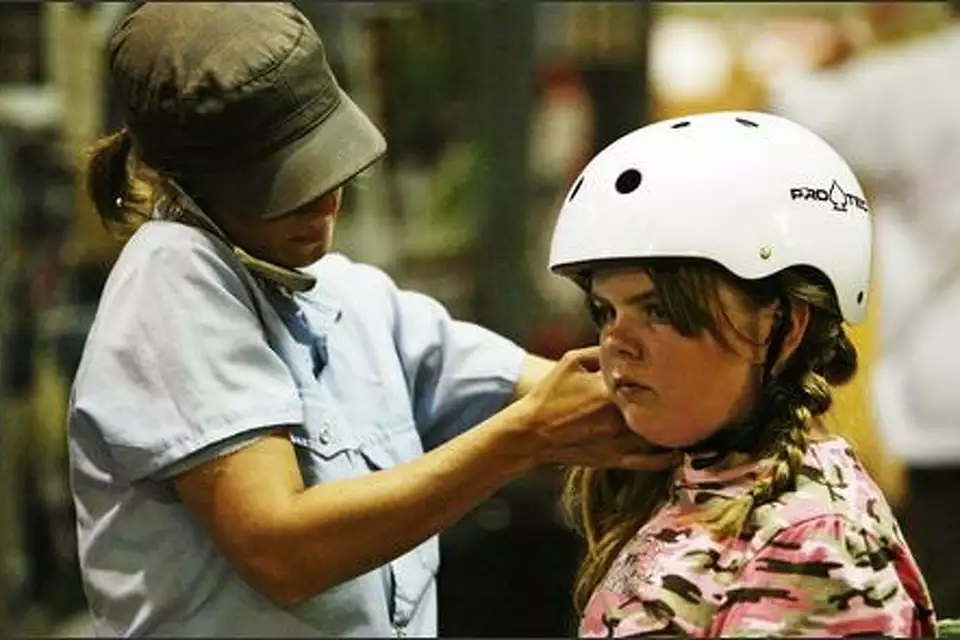
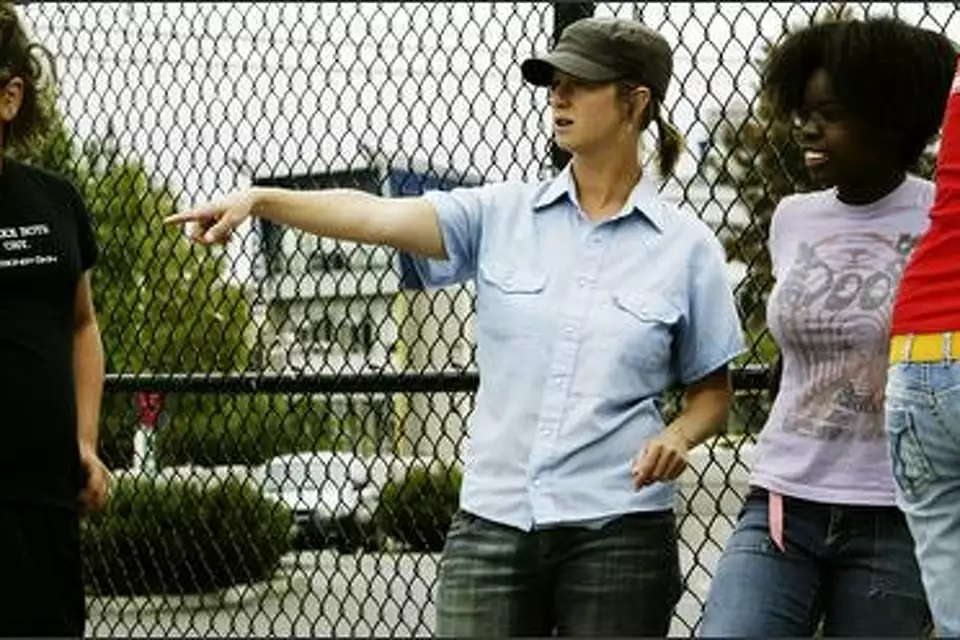
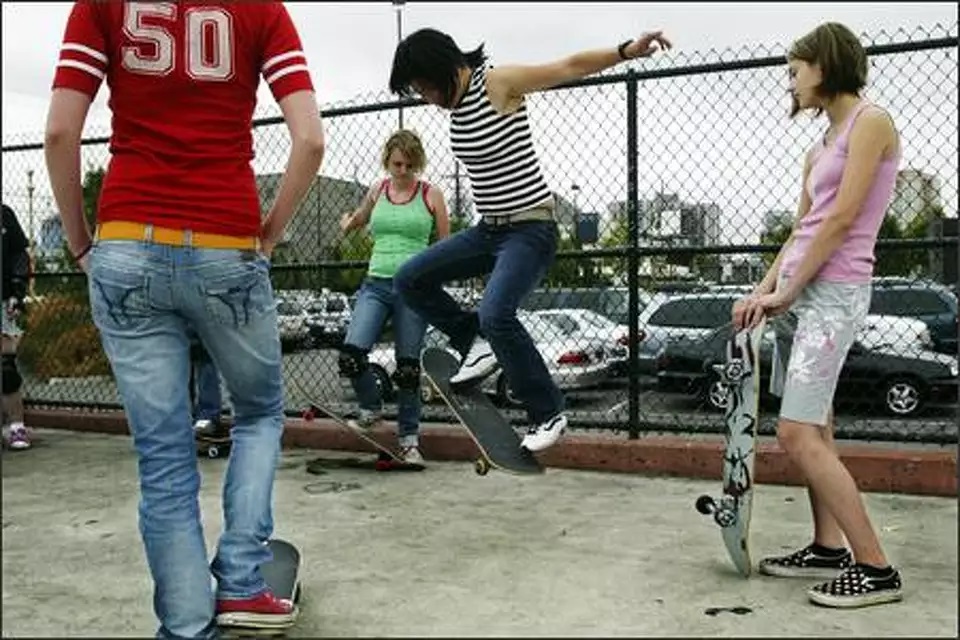
Nancy was even featured in an article from the Seattlite in 2011 when she was the Board Chair, acknowledging her 2008 “Women of Worth” award from L’Oreal Paris as a non-profit leader. And ever since those inaugural events, thousands of skateboarders have gained confidence and community because of Skate Like a Girl programs.


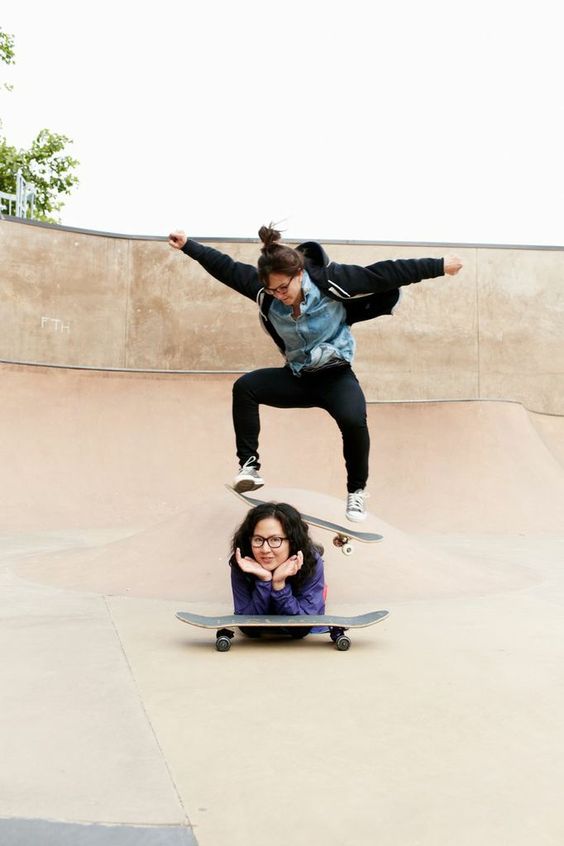
Photos: Nancy Chang (by Hollyanne Faber) from 2011, Kristin Ebeling & Nancy Chang from 2013, and Fleur Larsen in 2013.
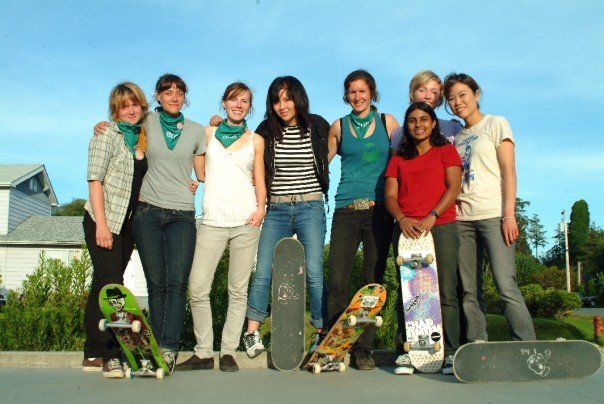
Photo: This one is from my own collection when my motorcycle girl gang (Majestic Unicorn Motorcycle Club – Marcy Monette, Erika Kinast, Rhianon Bader and myself in green) bumped into Nancy Chang and friends in 2007 at the Tofino, BC skatepark.
Hosting skate sessions exclusive to girls was not a new phenomenon. In the June 1978 issue of the National Skateboard Review, a feature called the “Special Women’s Section” included a report on a successful meet-up for girls. Di Dootson Rose wrote, “Girls’ Night at the Runway Skatepark in Carson, Calif, has the best turn out of girls yet. They draw about 150 girls on their special Wednesday night programs . . . It is this kind of “hanging out” where skaters get the pointers from others that helps them improve.”
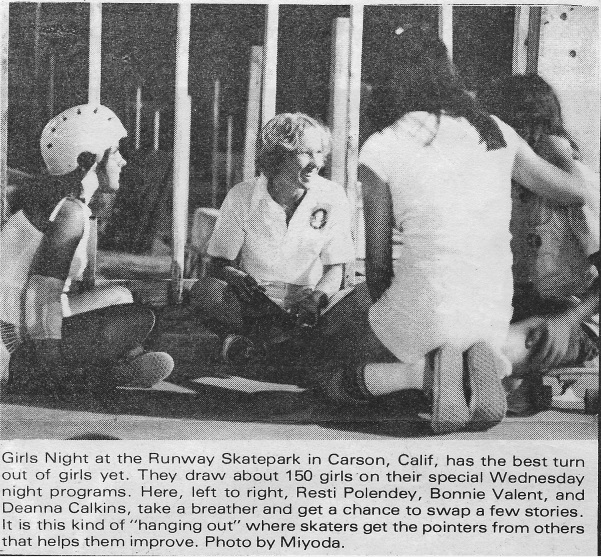
A photo accompanied the article: a group of girls at Runway huddling around professional skater Deanna Calkins, who represented Hobie skateboards and was providing some instruction.
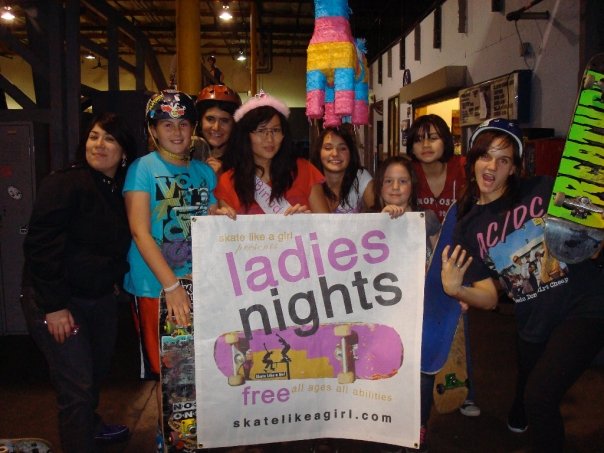
Photo: Skate Like a Girl event in 2009
The difference with Skate Like a Girl, compared to these early gatherings, is that it’s not only about learning new skate tricks; there’s also a focus social justice and leadership. Skate Like a Girl offers mentorship, and the Skateboarding Inclusivity Program provides a unique curriculum designed to develop leaders who value inclusion and accountability to help make skateboarding accessible and safe for all.
Skateboarding leaders who have emerged from these programs include Kim Woozy, the director of development, who produced the female-focused Mahfia.TV network and advocated for the “Equal Pay for Equal Play” state bill in California; Alex White, the current chair of Skate Like a Girl, renowned for her history as a pro skater and roles as Krux brand manager and contest announcer; and Kristin Ebeling, executive director, pro skater for Meow, Krux team manager, and past creator of the Skate Witches zine. It’s not uncommon for a Skate Like a Girl workshop participant to become a mentor and skateboard instructor, which helps maintain the vision and ensure the longevity of the program.
The core locations for Skate Like a Girl are Seattle, Portland, and the San Francisco Bay Area, with activities in twenty other cities. These chapters host a skate session every week to suit a range of abilities and backgrounds, along with youth camps, outreach, adult, and trans sessions.

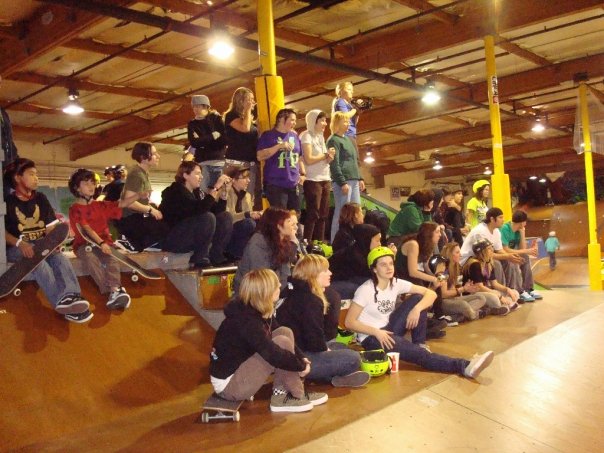
Photos: Wheels of Fortune 2008 prizes and gathering
Skate Like a Girl also organizes the highly anticipated Wheels of Fortune contest in Seattle, which began in 2008 as a weekend festival, including a hilarious scavenger hunt; it was highlighted in the documentary Skate Dreams (2022). The Witch Hunt is another nod to Danny Plotnick’s cult classic film Skate Witches (1986); skaters are encouraged to take over the city streets and document their assigned tasks as a team. While the contest draws leading female and non-binary pros from around the world, Wheels of Fortune is more about being an inclusive celebration of community centered on having fun. You might come home with a bizarre new haircut or random tattoo after the event, but you’ll also have a story to share and a ton of new friends.
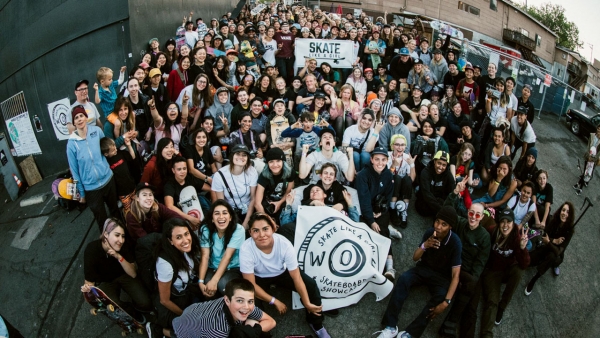
Photo: Thrasher article on WOF #10 in 2019 by Norma Ibarra
References:
- Moore, Taylor, “Dynamic Seattleties: Skate Savvy, Nancy Chang,” Seattleite, August 20, 2011.
- Rose, Di Dootson, “Special Women’s Section,” National Skateboard Review (June 1978), p. 13.
- Skate Like a Girl, “Folks Say You Have to Know Where You Come From…” Facebook post, April 2, 2020.
- Skate Like a Girl, “About,” Skate Like a Girl Website.
 Womxn Skateboard History