
Monica Polistchuk is a legendary Brazilian skater from São Bernardo do Campo, who began skating in the early 1980s. Her website Oopskate.com is a treasure trove of skateboard history, featuring the likes of Renata Paschini, Karen Jonz, Christie Aleixo, Melissa Brogni, Déborah Badel, Yndiara Asp, and Tati Marques. Monica was motivated to create the site during COVID, knowing that there was limited information about Brazilian women skateboarders and the Olympic Games in Japan was about to launch.


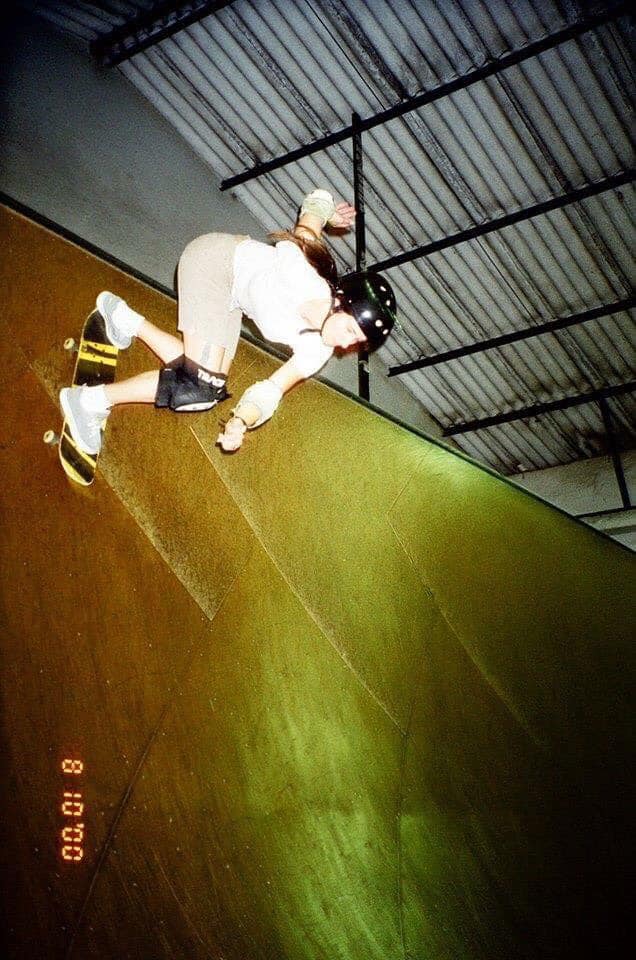
Photos: Monica in 1982 at SB Campo
I had the pleasure of interviewing Monica on October 3, 2024, who is now in her fifties, living in the UK, and continues to enjoy skateboarding!
As a kid, Monica was fortunate to live a few blocks away from the Wave Cat skatepark, which was among the largest in her region, where she began skating in 1981. Monica was also fortunate to have some female skater friends like Lígia Silva who had been actively skating since 1975 / 76. It was thanks to Lígia that Monica had access to American magazines which included photos of skaters like Ellen Oneal and Vicki Vickers, to name a few. Monica shared that with the difference in economy in Brazil, magazines like these would be widely shared and pored over by hundreds of kids eager for inspiration.
Wave Cat was a special place because Monica was introduced to punk music and was surrounded by big names in Brazil’s skate history like Sérgio Negão who encouraged her, which was all mesmerizing for a 12-year-old girl. When out-of-town skaters visited Wave Cat, Monica would inquire about other girls, and learned about Yltha Fernanda, Martins Prado and Denise Siqueira. Monica would end up meeting these skaters at SBCampo park since Wave Cat closed just six months after she had discovered it, and they formed a girl’s crew, along with Lígia.

The female skaters felt supported and they created their own contest division in 1983 at the 2nd Brazilian Championship in Guaratinguetá, a city in the countryside. The girls were excited to participate even if they were unfamiliar with the bowl and had to perform in front of a crowd, who were equally enthusiastic. Monica remembered how, in 1983 the four girls were doing a lot of repetitive kick turns in the bowl, so she got the idea to step things up and successfully dropped into the vert ramp for the first time and what a rush that gave her.
And, in 1984 and 1985 when the Championship was held in Itaguara, she pursued the Overall award, performing freestyle, and competing in banks and bowl! The contest was held every year, with the exception of 1986, and became a kind of reunion, with friends keeping in touch by writing each other letters.
Monica felt that the only noticeable difference in how female and male skaters were treated was in their documentation and the media. It seemed that photographers rarely took photos of the girls because the magazines were only purchasing photos of men, based on their perception of the market. Sadly, this was a vicious cycle. The girls weren’t seeing themselves in the magazines, so their progress was slower, and they likely felt isolated and less motivated. At a local level, the girls were encouraged but the industry itself wasn’t equitable. And when as a little girl surrounded by pros, Monica sometimes felt like she didn’t want to disturb their session. It seemed better to lay low and avoid trouble instead of taking up everyone’s time at a park to practise. This was the behaviour she adopted to feel comfortable as a kid.

Monica explained on Oopskate that there were two years during her skateboarding roadtrips throughout Brazil that she didn’t meet another female skater. But it was in Florianópolis that she finally met Lela and Rose, and together they had their own halfpipe contest. Monica also met a freestyle skater named Aninha (“little Ann”) from Rio de Janeiro. To show her support, Monica assembled her own freestyle board because it was nice to have a friend to share the experience with even if they lived in different towns.
Here’s a photo of the two friends practising freestyle, and Monica said she would sometimes go to Rio to visit Aninha:

Monica recalled how Renata Paschini, as a little girl started attending the SBCampo park. Renata was about five years younger, and unlike other girls who drifted away, she stuck to it alongside the boys. Monica was impressed with Renata’s determination, and I’ll bet the feeling was mutual! Monica was proud to have come from a community that had produced so many incredible skaters, including Renata and Karen, among others, and credits this progress to the sense of family in their skateboarding community.

Just like North America, skateboarding zines were popular in Brazil in the 1980s to celebrate the local scene and review punk bands, like Hardskate. Monica took the cover in issue Number 4 of Hardskate, which was created by a friend living in south Brazil. Monica displayed some solid street style, and her photo shoot was taken in Ibira in 1986 by Diorandi Nagao.

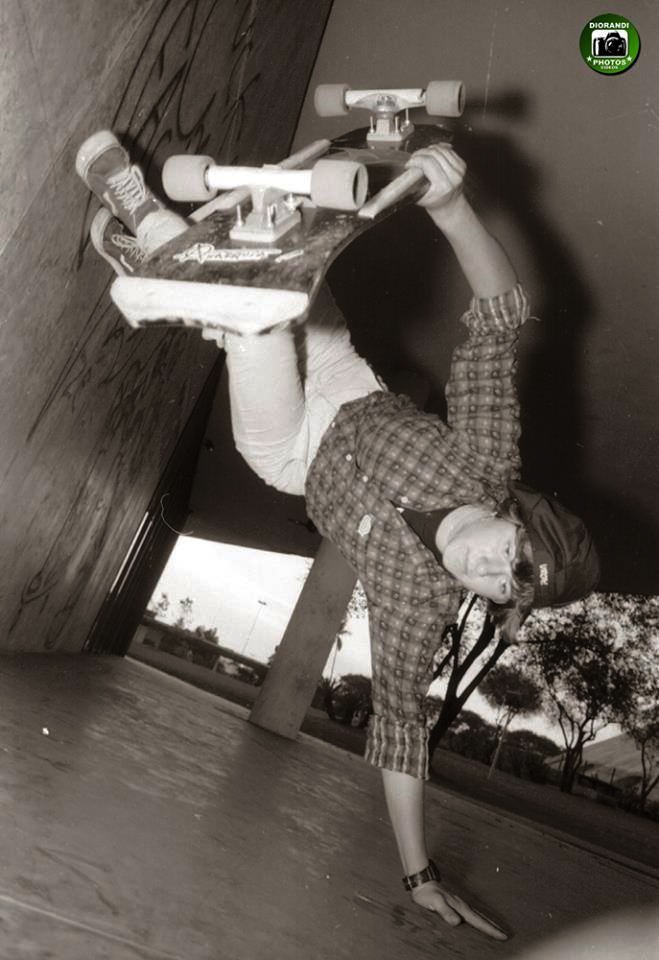

Based on the zine’s covers, punk and skateboarding was alive and well in Brazil. In 1986, a new magazine called Revista Yeah! was published, and it included a regular feature about female skaters. Monica wrote about how a woman named Cecilia Goncalves (nicknamed “mom” since she was always supporting people) did an interview with her on the topic of vert skating, and Aninha discussed freestyle. It was evident that Monica had deep respect for Cecilia and her writing endeavours in a male-dominated scene.

Photo: Monica competing at the Colegio Levi Skate Paradise
At age 17, Monica took first place in street skating, which was on the rise, at Skate Paradise in Venice for their 1986 contest, with three other girls competing (Meire Bioni, the first female rider of the all-girl Anarquia! team, Leni Cobra, and Giovana ?). This was the first ever female division of a street event in Brazil, and by 1987 the Brazilian Championship followed suit. Monica said it was even filmed for posterity! Monica is the 2nd to last skater in this video wearing the white V-neck shirt:
Watch the whole video here on YouTube.
The male pro skaters of this contest were offered airplane tickets to Los Angeles, USA, and while Monica was invited to join in as the winner of her division, she still had to save up and pay for things herself. For a few glorious months Monica was also sponsored by Nativas and OP (Ocean Pacific) and said that her gear and contest registrations were covered by Urgh, Mustabi, and Phillipines for clothing.

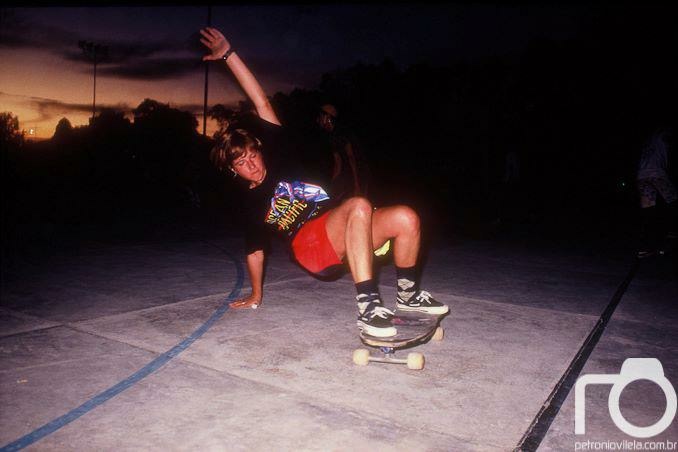
To raise money for her trip (there was a 25% tax on airfare!), she wrote that, “I bought a motorcycle and started working with skateboards, selling and delivering Urgh, then Lifestyle, Metal Crazy, Brand X,” and sold off many of her worldly possessions. At age 18, Monica was off to L.A. with nine other skaters. She had $400 in her pocket and made the trip count. When her friends were preparing to return to Brazil, Monica waved them off and ended up staying in Venice for a year!
Monica still had to work hard to pay the rent, but it sounded like a special time although she was disappointed that she met only a few female skaters in Venice, three in total including a Japanese street skater. And yet, I want to pause here because how cool is that? Today, female skateboarders from Brazil and Japan are dominating the contest circuit and I believe that Monica planted a seed in her country, just like this mystery street skater from Japan might have done the same… grateful for any leads as to who this might be!
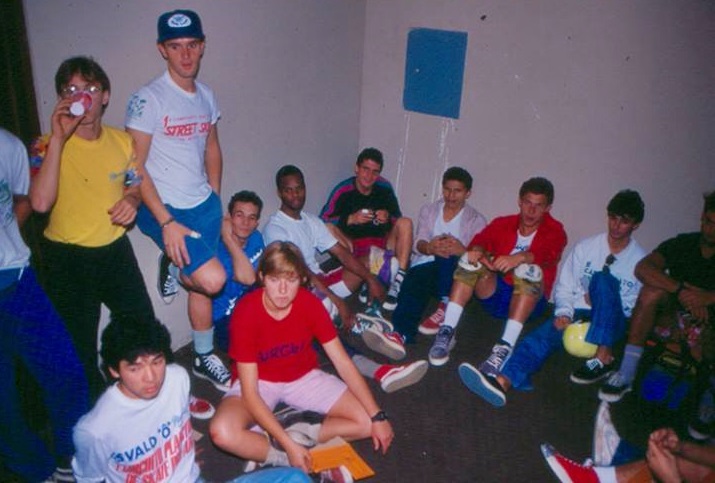

It sounded like the communal vibe in Brazil was way more welcoming to women at this time, compared to the U.S. because the moment she got home Monica competed against six girls at the Street Skate Grand Prix at Corinthians and won the division.
While Monica took a pause in her skateboarding career from age 22-29 when she got married and had three kids, it was always there waiting for her! Monica’s return to skateboarding was special because it coincided with her divorce, right when she needed a positive outlet. There was a day when she decided to take her new baby for a walk in the stroller past the skatepark. “And when I got there, I was like, ‘Wow’! There are girls skating. I was so happy! I used to work in a restaurant that I had to be there for lunch time and dinner, so we had these crazy breaks between 3:00-6:00.” So, after she picked up her kids from school, Monica found a window to skate!
In 1998, Monica met all the girls, including Tati Marques, “Liza Araújo and Ana Paula Negrão at the São Bernardo do Campo park and I thought the women’s skateboarding movement they were creating was amazing, with the Check It Out fanzine and organizing championships for girls. What an amazing women’s skateboarding movement! It was a wonderful surprise and today we can see the results of their efforts.”
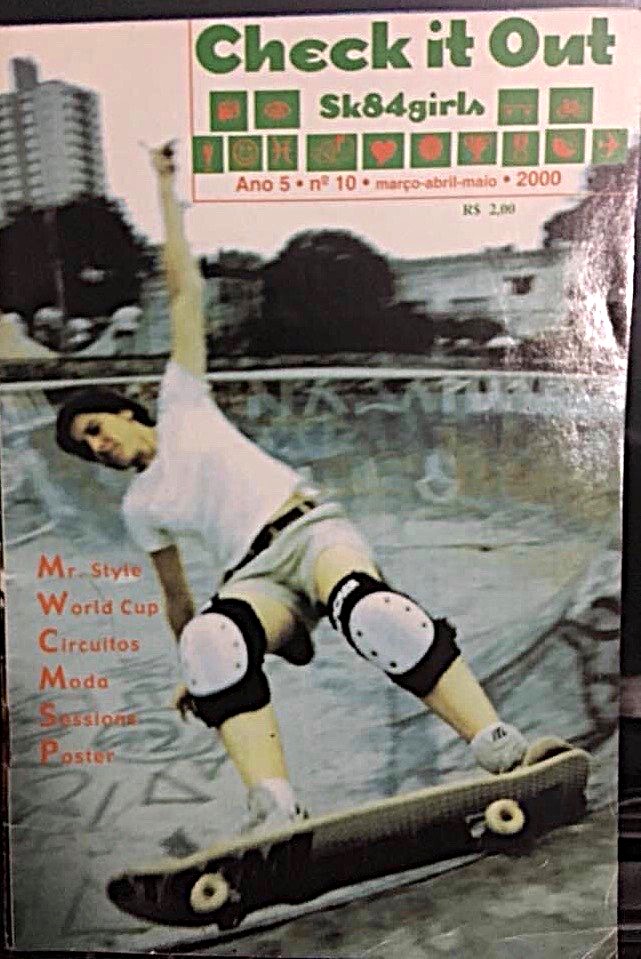
Check It Out: Sk84girls (CIO) was an incredible accomplishment and while it started as a local zine written in Portuguese, it expanded across North America and was translated to English, becoming a glossy magazine for 18 glorious issues! It’s so fabulous that Monica was part of this positive initiative, and she was even given the cover of Issue No. 5, from March / April / May 2000. Monica also attended the street contest in Santos organized by the CIO women. Monica recalled being blown away by Adelita Monteiro, in particular.

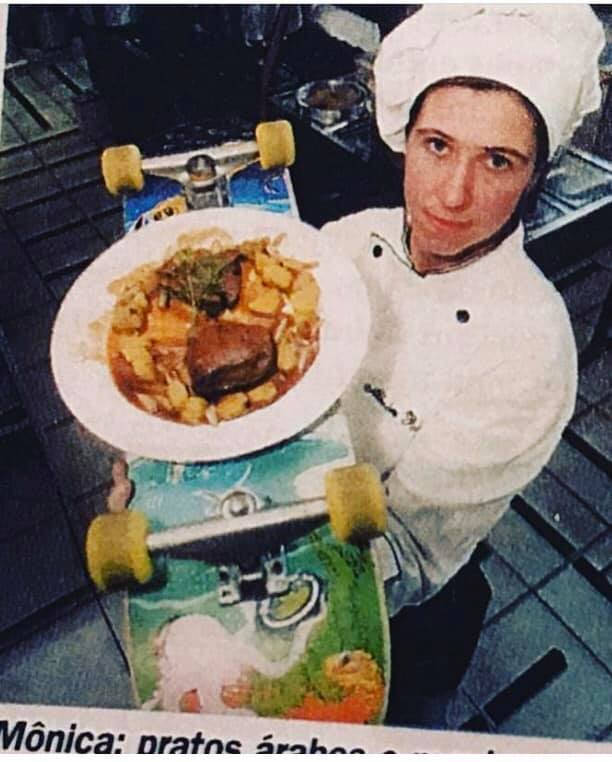
Street skating was still the most popular style, and because Monica was among few women who were actively pursuing vert, she often provided demonstrations in the halfpipe including the World Championships at São Paulo and Red Bull events from 2000 onwards. For Monica, it was surreal to be age 32 with three kids, dropping in to a vert ramp with leading male pros from around the world, juggling all these responsibilities and cramming in skate sessions during her lunch break as a chef! It sounded amazing, and again, Monica felt welcomed to enjoy the ramp.
Feature of Monica as a chef in Brazil:
Monica had come to prefer vert over street, which tends to be more jarring on the body, although she still ended up breaking her wrist twice. But being injured, even having bad knees as a result of skateboarding is just part of life, according to Monica. If your body is going to get worn down you might as well be doing something fun and create great memories!
When I asked Monica about advice for women who are managing all of these elements, like a job and family, she said, “Keep something that you love for yourself” because with skateboarding “it’s like an injection of happiness” to her day. “You’re gonna be a happier mom. You’re gonna be a happier wife. You’re going to be happier because of that little bit of time for yourself.” We concluded that it’s all about balancing life with some joy and fun, which skateboarding provides, especially that dose of adrenaline.
Because of Monica’s long history in skateboarding, she’s witnessed the rise of powerful female skaters in her community starting with a very young Karen Feitosa in street, and then around 2001, Monica met a teen named Karen Jonz skating half-pipe who would come to dominate vert skating. Monica said, “At that time, there was the Billabong half-pipe, another place I frequented a lot on the weekends and I often met Renata Paschini there, another girl who is now a woman and skating very well, and is the president of AFSk (Associação Feminina de Skate).”
Footage of Monica skating in 2001:
As mentioned, Monica now lives in London, where she’s been residing for well over a decade, but she always followed along with the progress of girls’ skateboarding back in Brazil and never hesitates to enter a “Grand Masters” division at a contest when offered, although emphasizes that it’s all for fun!
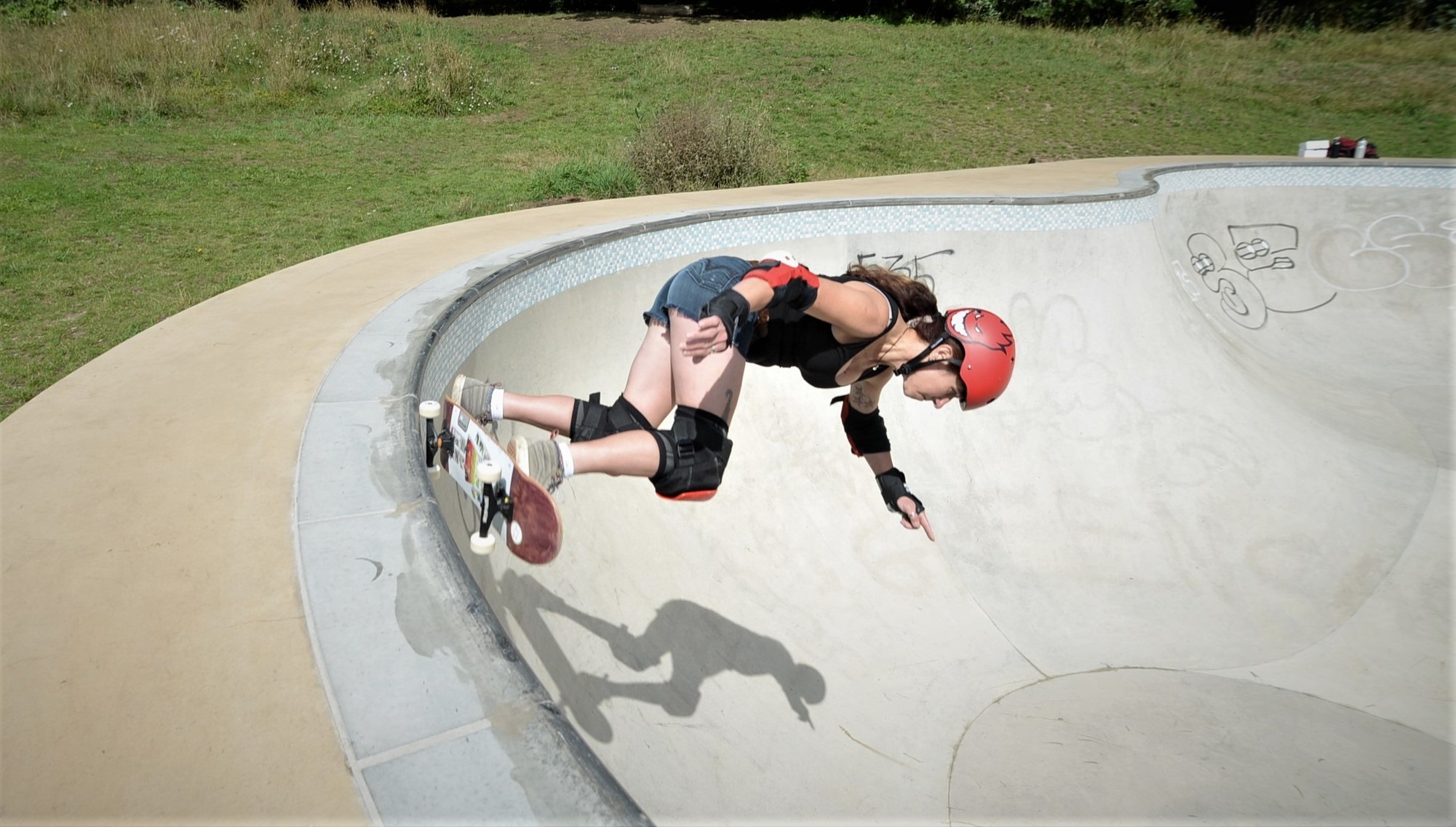
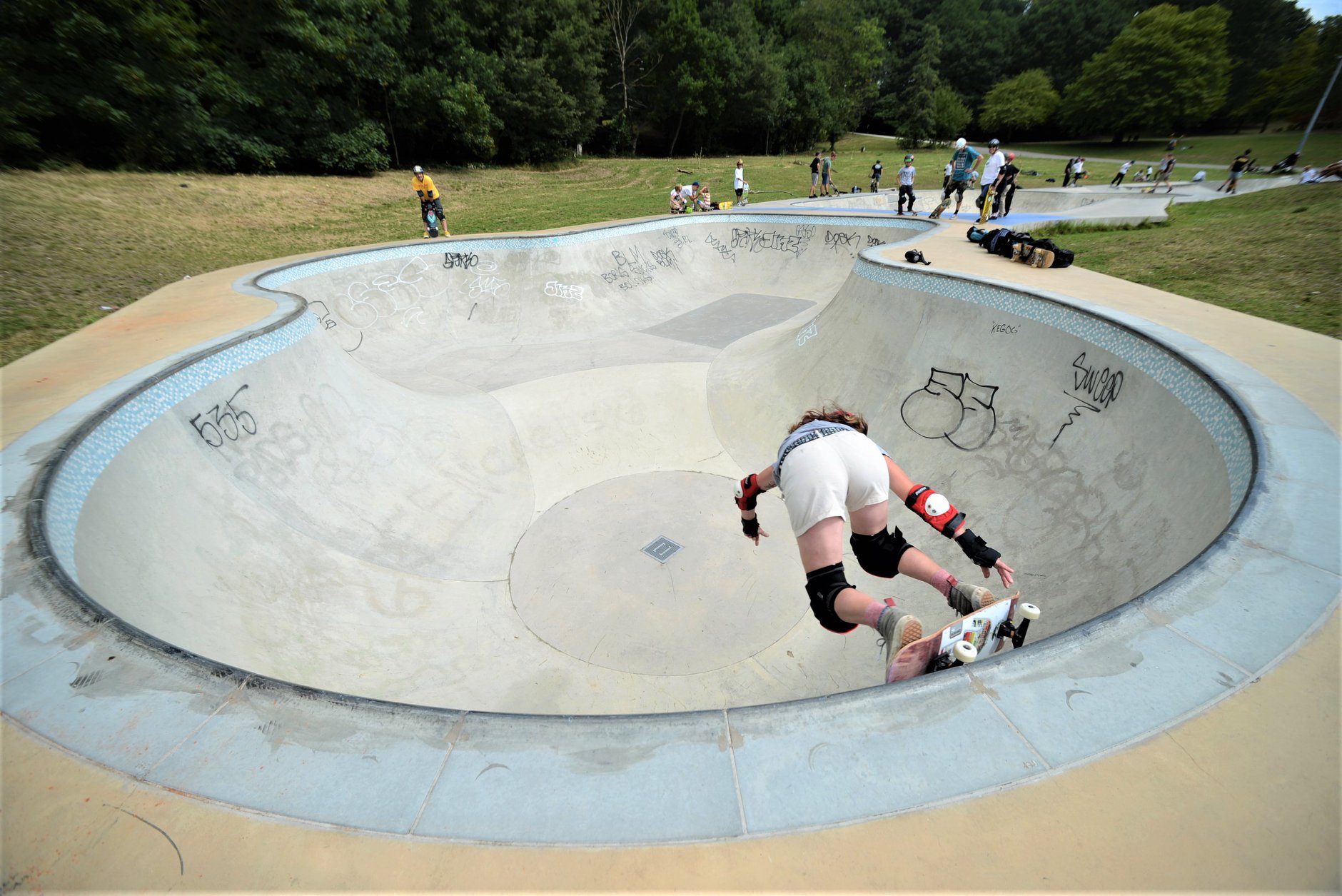
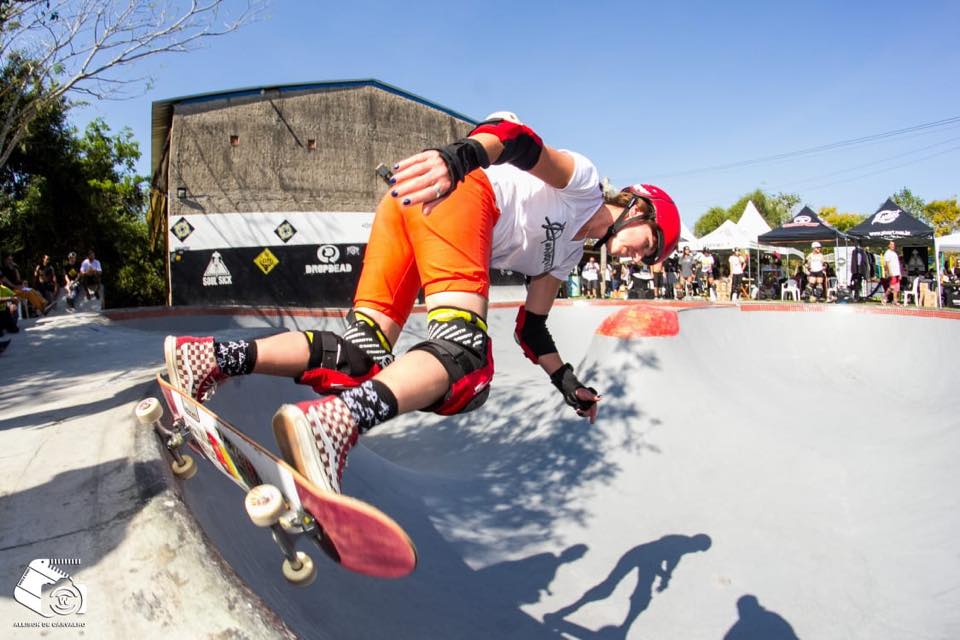

Photos: Monica skating from 2016-recent
Monica is delighted by the progress of girls skateboarding today, like how there’s a sense of togetherness around the world, and the accessibility to inspiration online that motivates us to continue to improve. Even today, Monica enjoys practising freestyle near her home and has access to a crew of older skaters who meet up on Sundays at a local skatepark, bringing music and hype to keep each other rolling.
Monica has also been receiving some media attention, including an interview for a documentary on the history of Brazilian women’s skateboarding called Into the Mirror: Fragmentos (released: March 26, 2022) produced by Emilie Souza (aka Pipa). And, there’s a video of Monica being interviewed by Cesinha Chaves from November 18, 2023 for Veteran Skater.

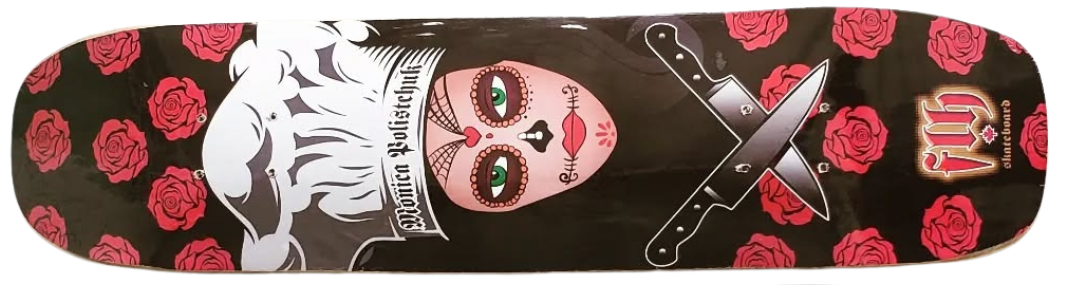
The interview and photo of Monica above (by Allison de Carvalho) was included in the Brazilian magazine DECCS for their February 2020 issue, and then the Brazilian skateboard company FLH, honoured her with a signature freestyle board in 2022.
Thanks again for taking the time to chat with me, Monica!
Photos: Ana Paula Negrão, Andre Sader, Andy Turner, Diorandi Nagao, Petrônio Vilela

Check out the profile of Maria Elaigne, for more Brazil skateboard history.
References:
- Costa, Paulo. “Interview: Monica Polistchuk.” Veteran Skater (Dec. 15, 2016).
- Polistchuk, Monica. “Historia.” Oopskate.com (2021).
- Polistchuk, Monica. Personal interview, October 3, 2024.
 Womxn Skateboard History