
Beyond the skatepark, skateboarders tend to look for visual cues when determining if someone is aligned. For example, scuffed-up shoes that indicate the wear and tear of ollying and flicking your board against the rough surface of grip-tape. If you were a female skateboarder in the mid-1990s and you saw someone rocking Rookie gear, that was like a surefire sign that the person was legit and someone to befriend!

Rookie was the New York company launched in 1996 owned and operated by women – Catharine Lyons and Elska von Hatzfeldt (Sandor), with early contributions by Jung Kwak. In an article from Salon.com by Tristan Patterson (August 2000), Catharine shared how originally she was a “‘pure betty,” driving her boyfriend to the skate ramp, watching him skate, and bringing him home. “Finally, after yet another breakup with the same skater boyfriend, Catharine got out the skateboard he’d given her for Christmas. ‘I just decided: I’m gonna get on this board and ride to work and back,’ she says. ‘And then it bit me. Nothing had made me feel that good.’”

Catharine had never seen another female skater until she met Elska from Australia at the launch of a vert ramp inside the Brooklyn Bridge Anchorage. She explained, “I was talking to the designer of the ramp, asking if there was some secret time that girls could come in and have access because it was so ridiculous! New York didn’t have any other skate parks, so it was just packed with these guys that had been skating since they were 10 and here I was at 22 being like, ‘Can I get on?’” (Patterson).
The designer of the ramp was artist, Maura Sheehan who created the ramp in 1995 as a temporary art installation, calling it “Culture Bridge: a Social Sculpture,” as described in the November 1995 issue of Thrasher. In The New York Times article, “To Catch a California Wave or a Brooklyn Bridge Ollie,” by Bob Morris (August 27, 1995 Section 1, pp. 42-43), it was reported that a girls’ night had been launched as a result of Catharine’s request and that twenty women were participating including Kitty Collins (19) and Penny Bowler (20) who were interviewed. In the zine, Mimi’s Revenge (No. 1, 1995-1996), the authors Mimi and Sushi Girl interviewed Maura and confirmed that the girls’ night was every Thursday from 9pm-1am. Maura gave a shout-out to vert roller-skater, Irene Ching in the interview.


In her essay for the Smithsonian Museum’s book, Four Wheels and a Board (2022) by Betsy Gordon and Jane Rogers, Catharine wrote, “The plywood ramp was overflowing with exuberant young men shuffling to claim and hold an inch at the coping and get a chance to drop in, slapping their boards in solidarity after someone landed a good trick. Only the most assertive could get a turn to skate, and not one female skater was on that ramp.”
After the ramp event, Catharine and Elska came together, as they were both working at skateboard shops (Elska was at Swish and Catharine was nearby at X-Large). They instantly connected over how profoundly the skateboarding industry ignored the existence of female skaters. “Our idea was just that there might be this huge market of women that either want to skateboard, or don’t know they want to skateboard because they haven’t even considered it” (Patterson). Catharine explained that “the most tangible female presence in the skateboarding industry was overtly sexualized: non-skating images found in graphics and advertising. We saw a glaring absence of female riders in any skate media, very little support for female skaters, and a conspicuous lack of product with female skaters in mind” (Gordon).
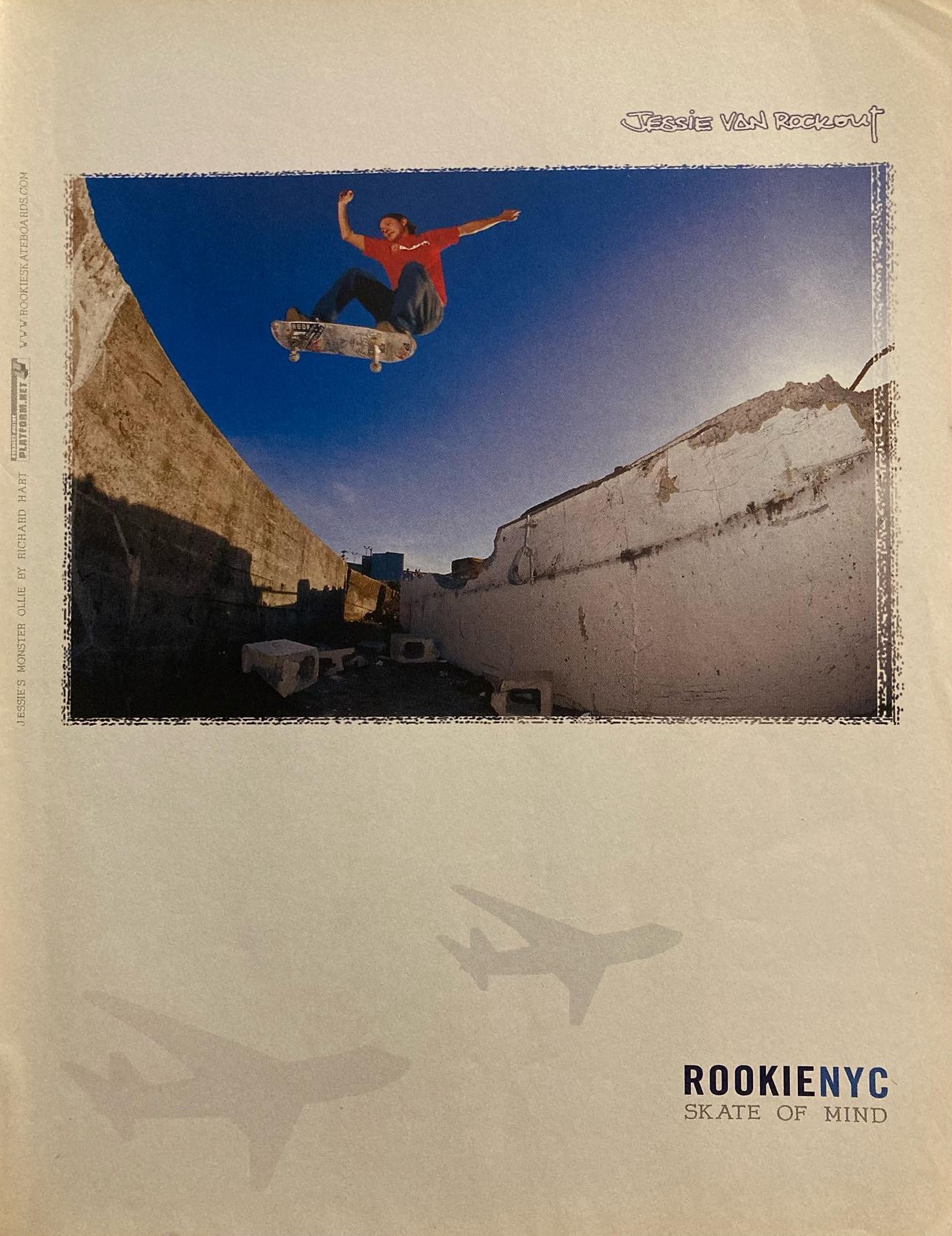

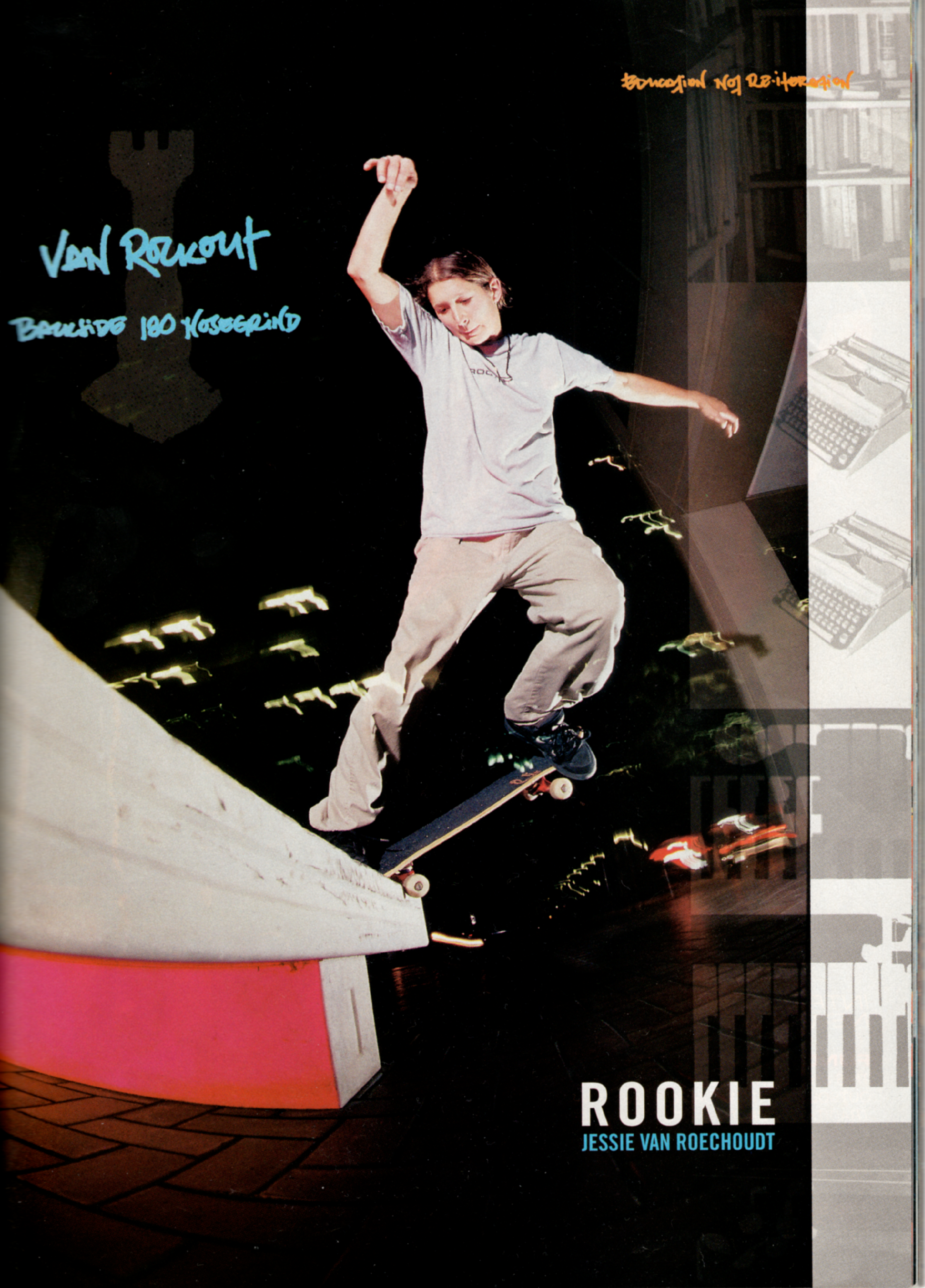
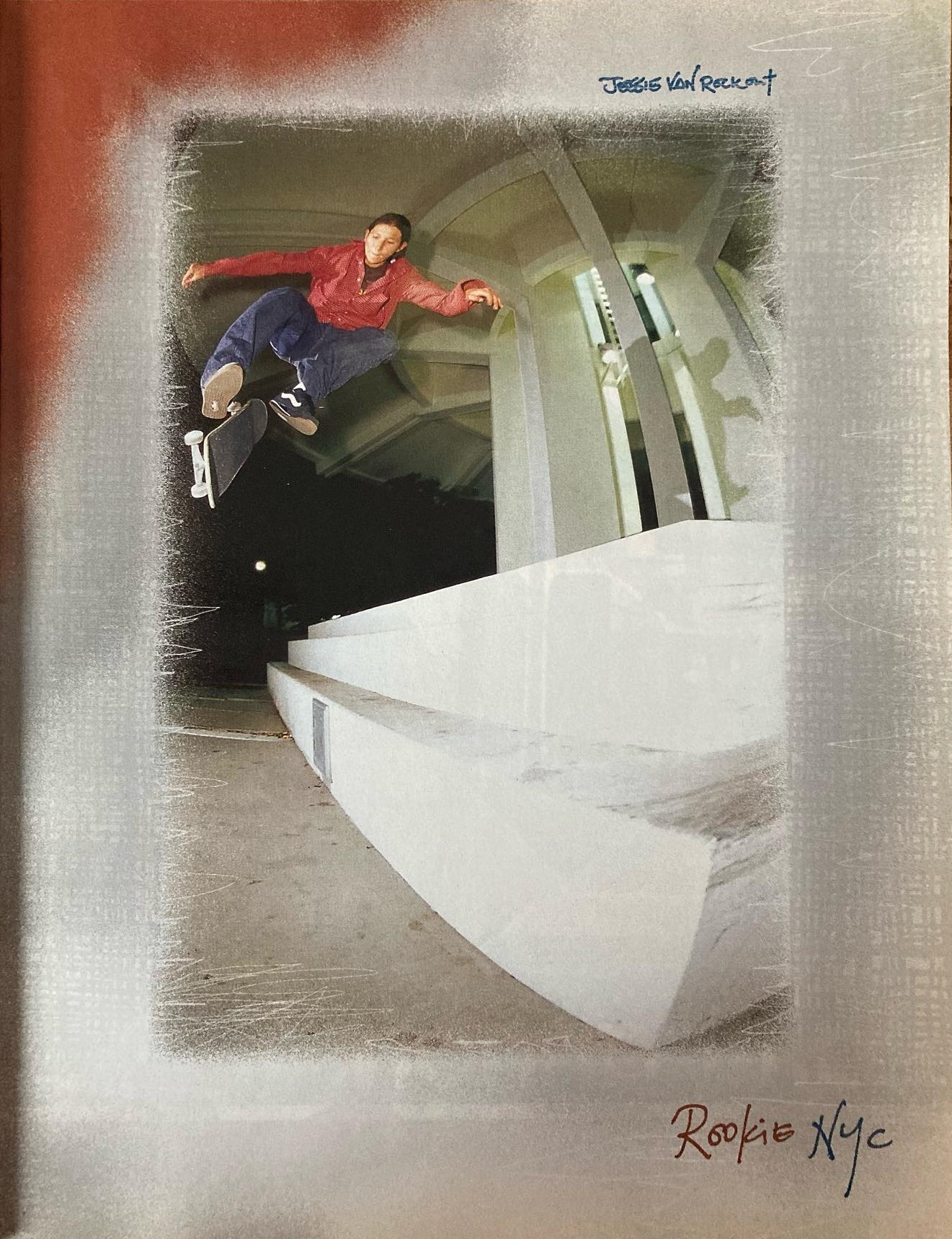

Photos: Joe Brook, Richard Hart, Giovanni Reda
Rookie sponsored skater, Jessie Van Roechoudt wrote an awesome feature article for Quell Skateboards (replicated online for Jenkem) in 2021 called “How Rookie Skateboards Shaped Women’s Skateboarding,” describing some of the company’s backstory. Her opening paragraph is killer, highlighting how “today people say Rookie Skateboards was ahead of its time – though it’s more appropriate to say that Rookie’s inclusive team roster, brand identity, and art direction were on point, and the rest of the skate industry just took 25 years to catch up.” Hell yes!
Within an interview for Punk Planet (May/June 1998 no. 25), Elska said, “By 1995, we really wanted to start a company. We’d started doing things like silkscreening our own T-shirts and that sort of thing. By about 1996, we had gotten sick of just talking about it. We pooled together absolutely a minimum amount of funds and opened a bank account, registered ourselves and just kind of went for it… We struggled a little bit but we were lucky because in the first year, people caught on to it.”


In 1996, Rookie was launched and based out of Kwan’s Chinatown loft on Canal Street in Manhattan – a vacated sweatshop. Jessie noted that, “The walls of the stairwell were lined with graffiti and art from artists who were on the cusp of breaking out in galleries and museum shows. The loft was part office, warehouse, design studio and home. It was also at the center of New York skate culture” which included Zoo York, Brooklyn Boards, 5Boro, and Supreme, who all embraced Rookie.

To make themselves known in the industry, Catharine and Elska headed over to the ASR (Action Sports Retailer) trade expo in San Diego and claimed a booth. In a New York Times article from 1997, they apparently sold close to $100,000 worth of gear at the trade show. “‘The whole thing has been so California-based for so long,’ Ms. Lyons said. ‘But New York is perfect for skateboarding. It’s flat and there’s all this cement’” (McKinley). Elska was also quoted in the NY Times explaining that “Women have the attitude that they can be professional athletes now… Not just cheerleaders” (McKinley). During their trip to San Diego in 1996, they were also distributing business cards to talented skaters like Jessie, who followed up an invitation to connect in NYC just five weeks later, as described in Quell.

1996 San Diego ASR Trade show: Booth #5549
According to Catharine, “All the bigger companies were just looking at us like, ‘What is this? What are you trying to do?’” regarding them as a threat to the establishment. Four years later, in 2000 when Salon.com printed their article, Lyons was pleased with their success. “Her biggest fear now is whether the bigger-market skate companies will co-opt the idea of marketing skate culture to girls – and bolt the door shut again” (Patterson).

1997 San Diego ASR Trade show: Booth #3015
Rookie sponsored skaters of all genders but with a strong representation of women including Jessie Van Roechoudt, Jaime Reyes, Lauren Mollica, Kyla Duffy, Lisa Whitaker, Stefanie Thomas, Amy Caron, and Monica Shaw. Slap magazine gave Rookie a positive review from the beginning and became a core outlet for their advertisements. When female skaters around the globe saw these ads in Slap featuring so many ripping female skaters, they painstakingly cut them out for display on their bedroom walls – not unlike the 1980s with Powell Peralta’s “Some Girls Play With Dolls” ad featuring Anita Tessensohn and Leaf Treinen, or the few Lori Rigsbee ads by her sponsors Airwalk and Independent.
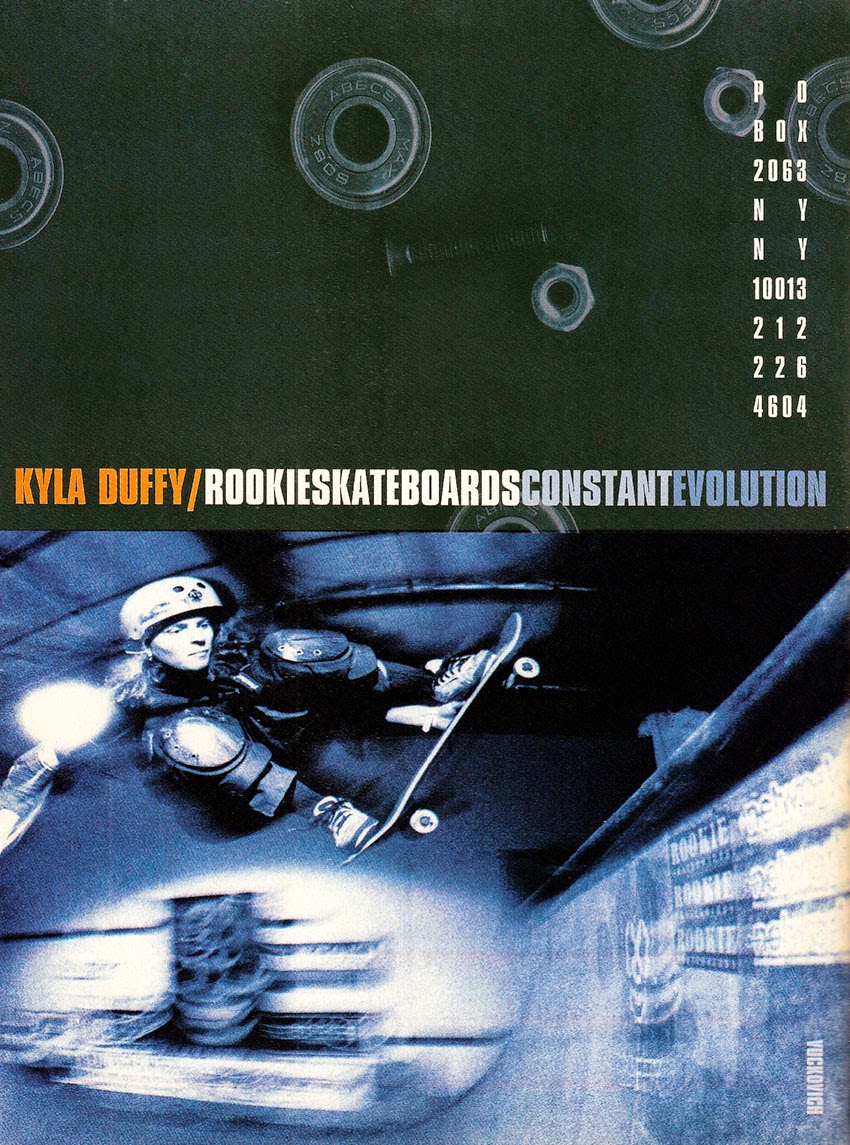

Photo: Miki Vuckovich, unknown
Elska shared in Punk Planet that she felt the skateboarding scene was hard on Rookie’s female team, “I think that they feel pressure, not because we’re asking them to do it but because they realize that being girls and having photos in magazines or having a video out, people are going to look at it differently. They don’t want to have something halfway… if you’re a girl in that photo, you catch a lot more flack… They don’t want to be faced with the attitude of ‘You’re good for a girl.’ They want to be looked at as just being good.”


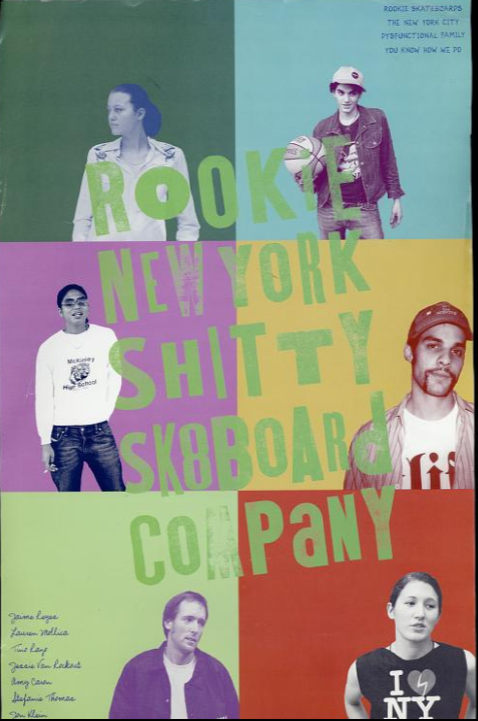


If you wore a Rookie t-shirt or hoodie, rode their skateboards, or even had a sticker placed strategically on your board, you were “in the know”! Other brands came along and tried to appeal to women skaters like Volcom and Roxy, which were okay, but you just knew that Rookie wasn’t trying to impose a vision of what an industry dude thought a female skater should look like. Rookie was skateboarding gear intentionally produced in smaller sizes without gimmick or frill – they knew exactly what we wanted because they were us.

Photo: Elska took this photo of Jessie Van Roechoudt, Lauren Mollica and Jaime Reyes on Canal Street in 1998. It appeared in the book, Full Bleed: New York City Skateboard Photography (2010)
In 1998, Elska shared her vision for change in Punk Planet saying, “A lot of people will see one of our skaters and say, ‘Oh, she’s kinda cute!’ That’s the first thing that’s said over ‘She skates really well.’… I’d like to say that in five years, that will have been chipped away, but it hasn’t gotten there yet.” In her conclusion, Elska said, “We definitely didn’t start Rookie for any of the reasons that someone might assume—it wasn’t this sort of ‘girl power’ ‘girls rule’ type of thing. If anything, we really want to be taken seriously as a skateboard company… We get a lot more press than a lot of companies because we are all girls and that’s definitely an angle, but I think in the long term we’d hope that it isn’t such an issue anymore… If we open the way for other people to go for what they want to do, that’s the best thing that could happen.”


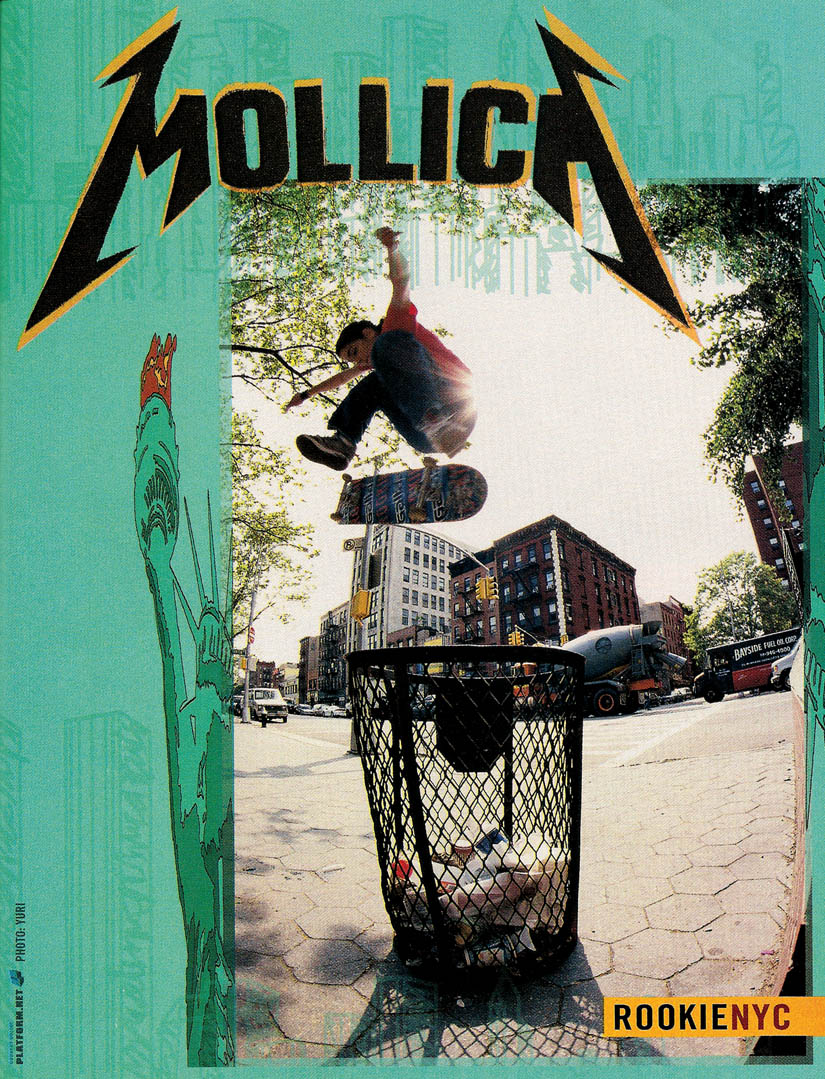
Photos: Yuri, Angela Liu, Giovanni Reda
In Quell, Catharine shared with Jessie that, “We wanted to create a diverse and inclusive skate company. Creating a way for women to be represented and included in the industry was a part of that. Rookie didn’t see themselves as a ‘girl’s company,’ even though that was kind of how it got interpreted by the majority of the skate industry in California.” Rookie is now celebrated as the catalyst for Meow Skateboards, considering that Lisa Whitaker had had such a positive experience being sponsored by Rookie before the industry went through another collapse (Van Roechoudt).


Photos: Elska Sandor, Giovanni Reda, unknown
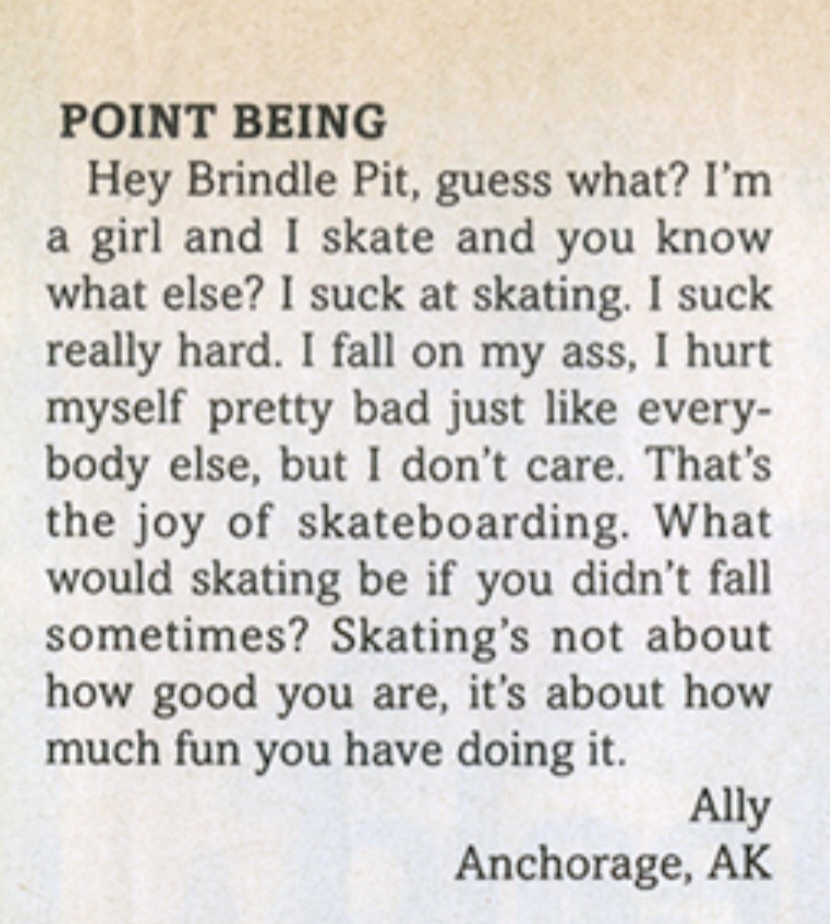
Not everyone was stoked on Rookie (see the Maildrop letter from “Brindle Pit” from the August 1999 issue of Thrasher), but female skaters didn’t care about the obvious insecurities of certain male skaters intent on preserving their domain (see the Maildrop letter in response to Brindle Pit by Ally of Anchorage, Alaska from the October 1999 issue of Thrasher) – we just wanted to skate, feel comfortable doing it, get stoked on our heroes, and have fun.

The Smithsonian Museum was wise to recognize their influence and have included a selection of photos, ads, stickers and gear by Rookie in their collection as celebrated in their book, Four Wheels and a Board. Jaime Reyes and her pro model are included, and there’s a great photo by Christina Mack of Rookie’s booth at the 1996 ASR event in San Diego. What an awesome legacy!
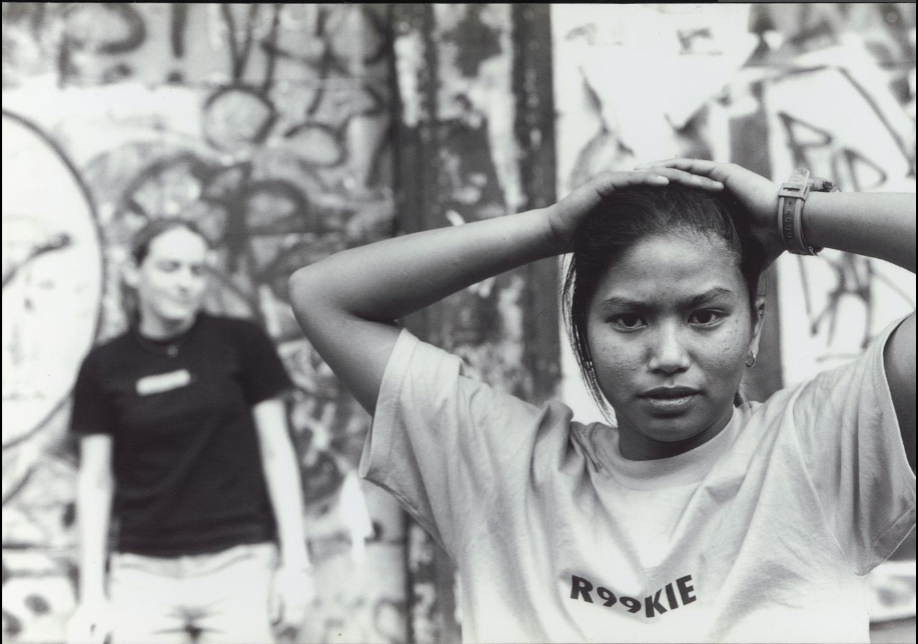

Special thanks to @oldslapmags for sharing the vintage magazines!
References:
- Gordon, Betsy and Jane Rogers. Four Wheels and a Board (2022). Smithsonian Museum.
- McKinley, Jesse. “Neighborhood report: Chinatown; skirting the skateboarders.” The New York Times (September 28, 1997).
- Patterson, Tristan. “Getting radical.” Salon.com (August 28, 2000).
- Sinker, Dan. “Not just boys’ fun anymore: the growing girls’ revolution in skateboarding.” Punk Planet 25 (May/June 1998): 85-87.
- Van Roechoudt, Jessie. “How Rookie skateboards shaped women’s skateboarding.” Jenkem Magazine & Quell Skateboarding (July 2, 2021).
 Womxn Skateboard History