
Kim Cespedes started surfing in sixth grade at Imperial Beach in San Diego and lived in Hawaii for a few years before re-locating to Northern California at the end of Junior High. In a 2018 article for Vogue magazine, she explained that “Surfing really is my first love. It’s what made me a great skateboarder”—and she truly was one of the most highly regarded and extreme skaters of her era.

Photo: John O’Malley
Surfing took a back seat when Kim’s family moved to Marin County. In her February 1977 “Who’s Hot,” Skateboarder interview with Brian Gillogly, she explained that in Marin, “The water’s cold and wetsuits are such a drag… I kind of lost touch with surfing” but her younger brother Travis was having fun on his skateboard, bombing hills, so she tried it out. To Larry Balma, she said her first skating attempt resulted in a bail, but things got competitive with her brother and she wanted to emulate her brother’s style. This was the summer of 1975. Kim would skate the local reservoir, even getting chased by cops and a resident with a shotgun.

In the documentary, Skate SD: Building Skateboarding’s Future (2021), Kim reflected on her time graduating from clay to urethane wheels, the evolution of skateboarding products, and the early scene in San Diego, including the legendary Rampage half-pipe in Encinitas, which was a bit of a boys’ club. Kim would show up and discover 20 to 30 boys – “it was hard to get going at first because it was really wide. It just took it to another level… and things just kept getting better and better and harder and harder, and more radical.”

When Carlsbad skatepark opened in 1976, Kim was stoked! “The first time I saw Carlsbad skatepark it was like ‘Oh my god, look at that! It really is a skate park. Let’s go!’ We spent all day skating for at least eight hours. It was so fun. It was another dimension of skateboarding in a skatepark. The sensation of dropping into the bowl and carving it – it was perfect because everything was smooth transition. It was like everybody was out there. It was the place to be” (2021).
“Going to the skatepark it was mostly guys skating. 75% of the time I was at skateparks I would be the only girl there… but then they built Del Mar skateboard ranch and I was the resident pro there when they first opened. I was there like five days a week” (2021). Kim even offered lessons there on Saturday mornings as the local pro, which ripping skateboarder Leigh Parkin remembered.


Photos: Jannelle Joslyn, Warren Bolster
Cespedes soon began competing and in September 1976 she won the 2nd Annual Hang Ten slalom event in Carlsbad, California – considered the world championships, recorded by ABC sports. It was heavy competition with Ellen Oneal, Laura Thornhill, Kathy Bomeisler, Robin Logan, Robin Alaway and Dodie Hackemack in pursuit.
Kim’s name appeared in the list of competitors at the California Free Former World Professional Skateboard Championship newsletter in 1976 at age 17. It was noted that Kim’s sponsor was Maharaja Skateboards.
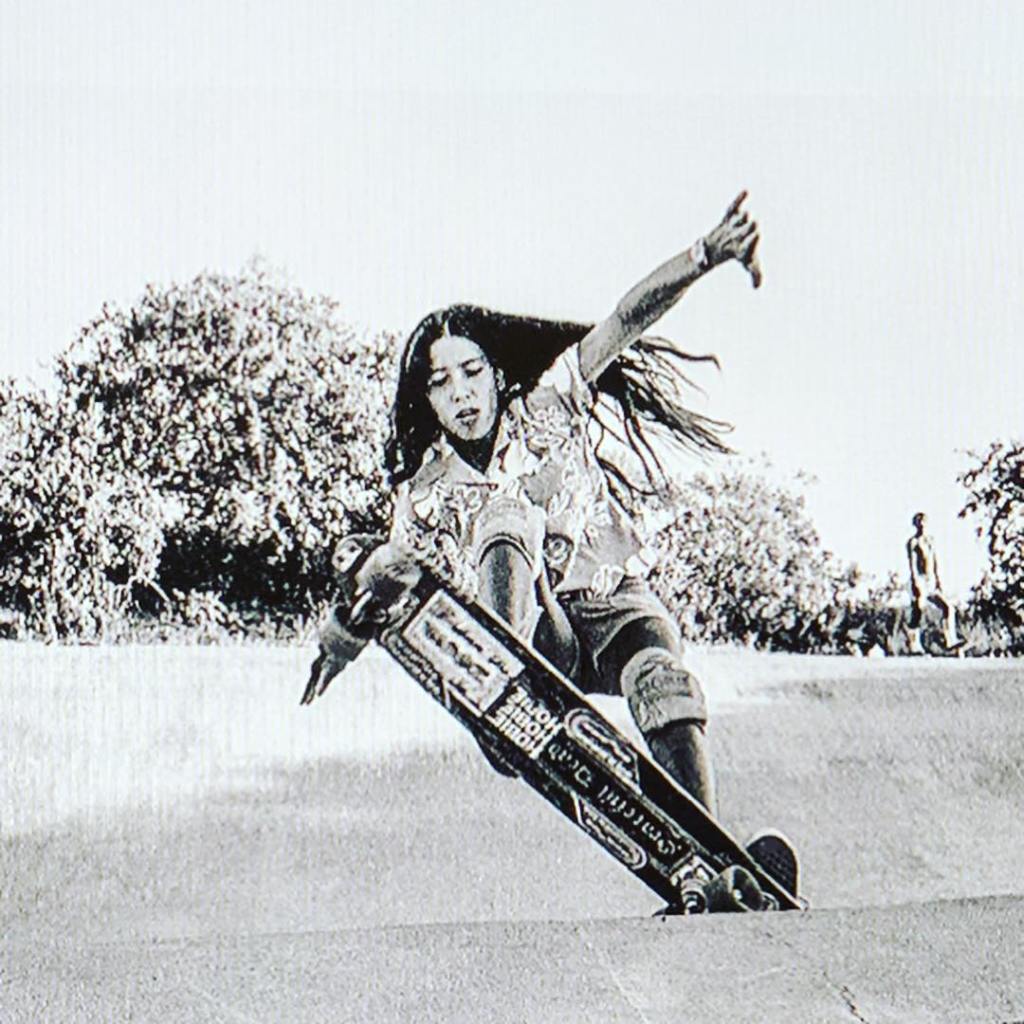
Photo: Kim skating the Valley Center bowl in 1976
Kim also didn’t hesitate to compete against the guys, and at the Pacific Skateboard Association’s Long Beach Arena contest in September 1976 the results in the National Skateboard Review note that she came 20th on the Saturday Speed Run, ahead of Tony Alva, and others.


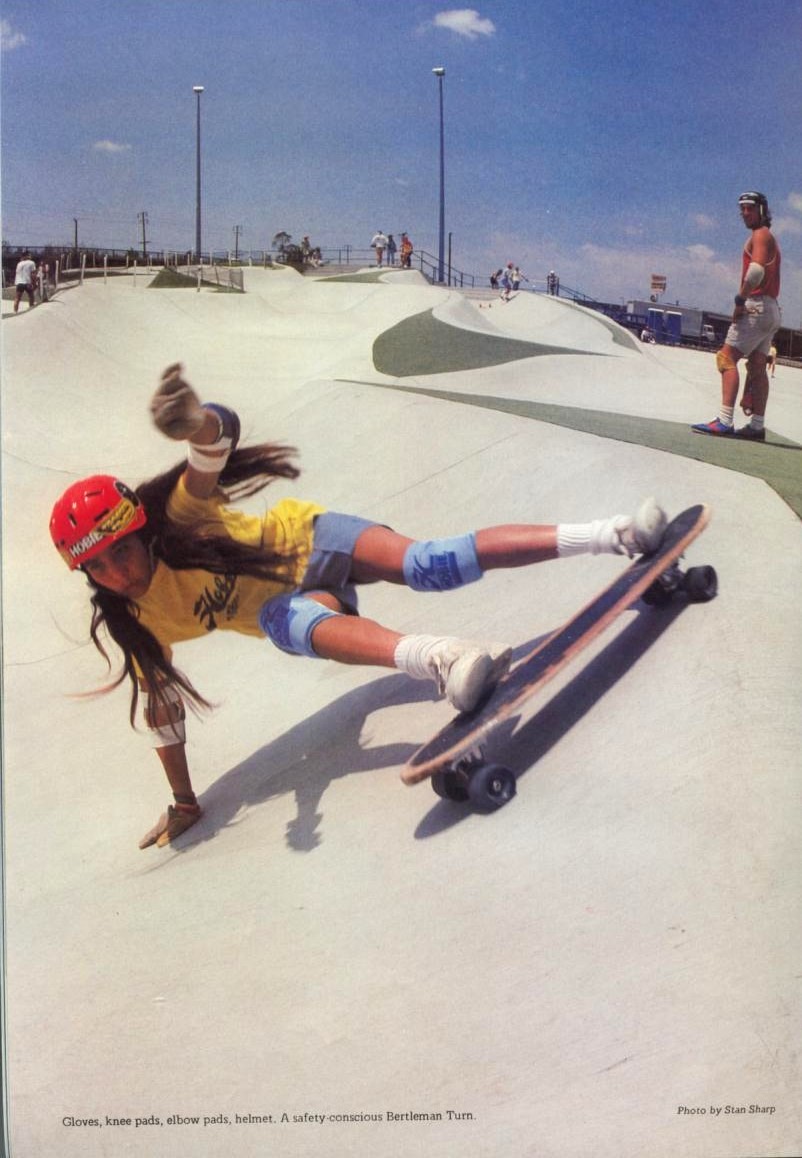
Photos: Lance Smith, Jim Goodrich, Stan Sharp
To Neftalie Williams, Kim commented on the scene, where classic California girls, blue-eyed and blond, received significant sponsorship even though they were less skilled, “but I would win, and that’s what mattered most, not what I look like, my background, or where I live.”
In Williams’ Ph.D. thesis, “Colour in the Lines: the racial politics and possibilities of US skateboarding culture,” we discover a complex racial history that influenced the trajectory of skateboarding, and Kim Cespedes was interviewed to discuss. Her family members from the island of Guam in Micronesia were offered American citizenship because of military reclamation.

Photo: John O’Malley
To fit in with US culture, Kim shared that her last name was shortened from it’s original Cespedes de Sanchez, but that, “My dad always said I could do anything I wanted, no matter the color of my skin, and no matter who thought otherwise. If your dream is in your heart, you go out and get it.” And that’s exactly what she did.

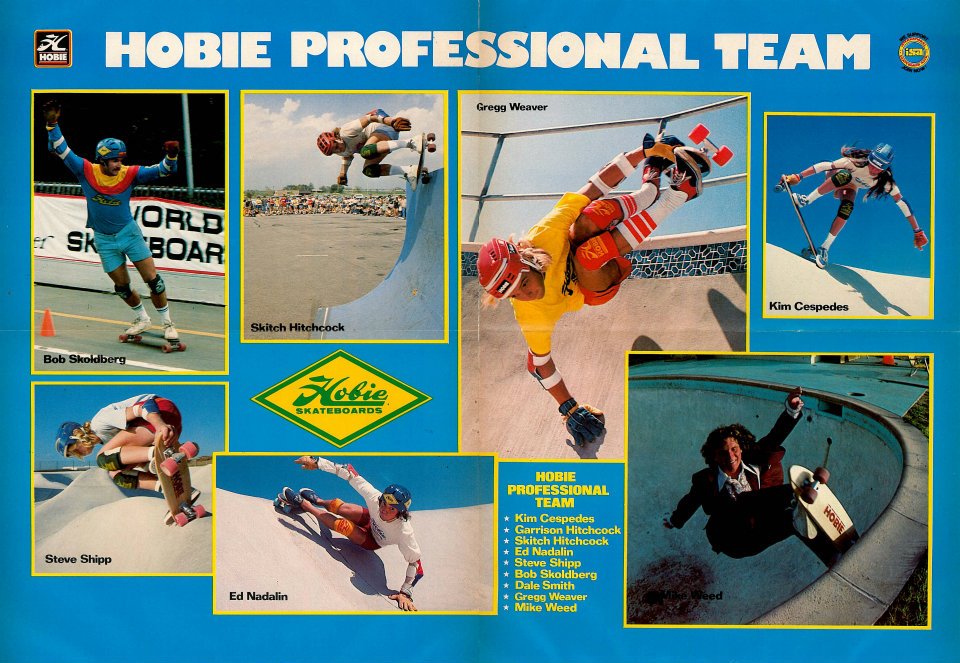
Above: Hobie “Designed by Pros” advertisement, and “Hobie Professional Team” fold-out poster from Skateboard World magazine December 1977, both including Kim.
Kim caught the attention of Steve McCann, President of Hobie skateboards and was stunned by the offer to be the first female on the team. Gregg Weaver rode for Hobie and happened to be her skateboarding idol. To Larry Balma, Kim explained that, “I was really fortunate to ride for Hobie, and skateboarding was really good to me. The most memorable trip was to Japan with Weaver and Rodney Jesse. We were sponsored by Nike and Coca-Cola. We ran the very first freestyle skateboard contest in Tokyo. The Japanese people treated us like kings and queens. It was phenomenal. We had a great time.”


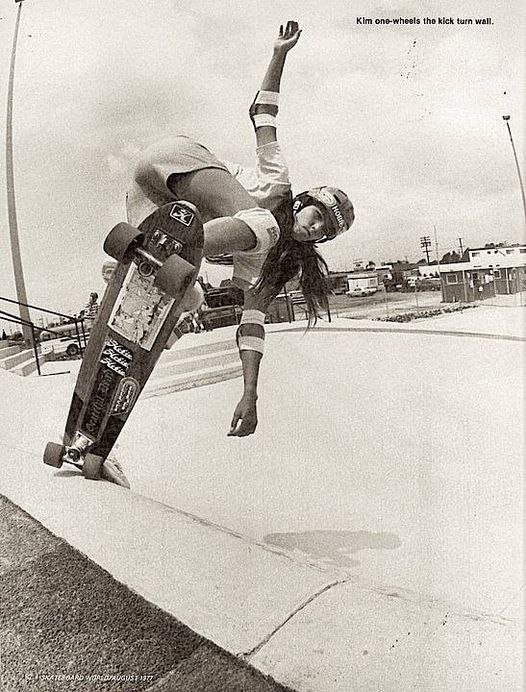
Photos: Jeff Ruiz and Stan Sharp.
While she competed in slalom and freestyle, Kim was most renowned for her innovative and fluid surf-style that was aligned with the Z-boys. In February 1977 of Skateboarder, there was speculation that she was the only female to power slide at speed – her “favourite maneuver.” To Larry Balma she said, “I saw Ellen Berryman do her gymnastics routine, and I went, ‘Nope, I don’t think I’m doing that on a skateboard. They can have that.’ They were very good at it—it just wasn’t my cup of tea.”


Photos: “Skate Rider” magazine, Battipaglia
Cespedes found herself in the spotlight with a “Who’s Hot” article in the February 1977 issue of Skateboarder. Brian Gillogly admired her smooth style, carving out bowls and banks, slashing pool coping, and power-sliding at top speed. He concluded that attitude was always relaxed, hardly caring that she was making money riding for Tracker Trucks and Hobie.
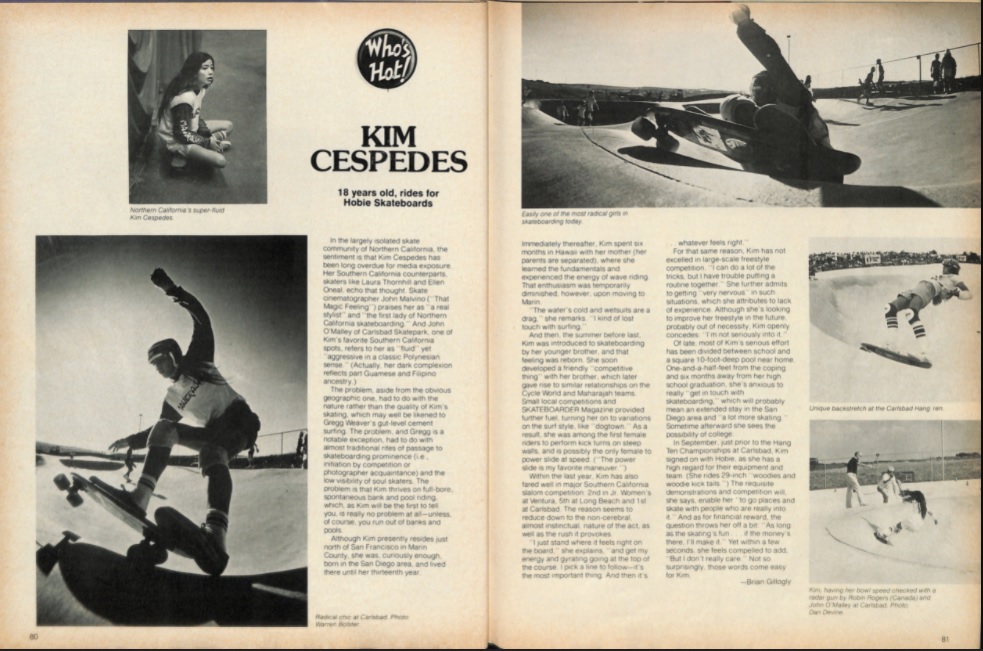
The article had some odd moments, as it included a quote by John O’Malley describing Kim’s aggression as “Classic Polynesian” and then commenting on the origins or her dark complexion. Jon Malvino ended up featuring her in his 1976 skateboarding film, “That Magic Feeling,” and considered her a “real stylist.” But then he called her “The First Lady of Northern California Skateboarding” even though she was raised in San Diego. Kim was certainly renowned for speed, style, and pool-riding.
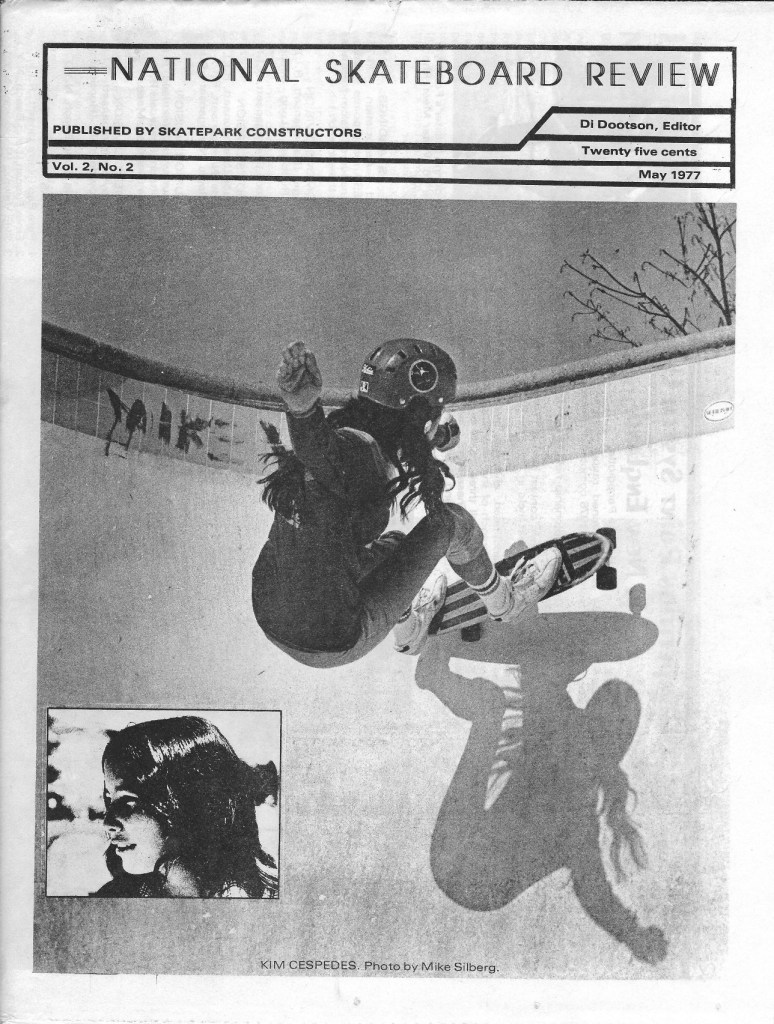
Kim stated that, “Once you’ve skated parks or pools… there’s no desire to skate anything but the best” – likely referring to the 10 ft Fruit Bowl in Anaheim. Her goal was “to push to the limits on my skateboard in pools, bowls, and banks.” This quote was from her interview with John O’Malley in the May 1977 issue of the National Skateboard Review (which she claimed the cover photo taken by Mike Silberg, and had photos by Jeff Ruiz included).

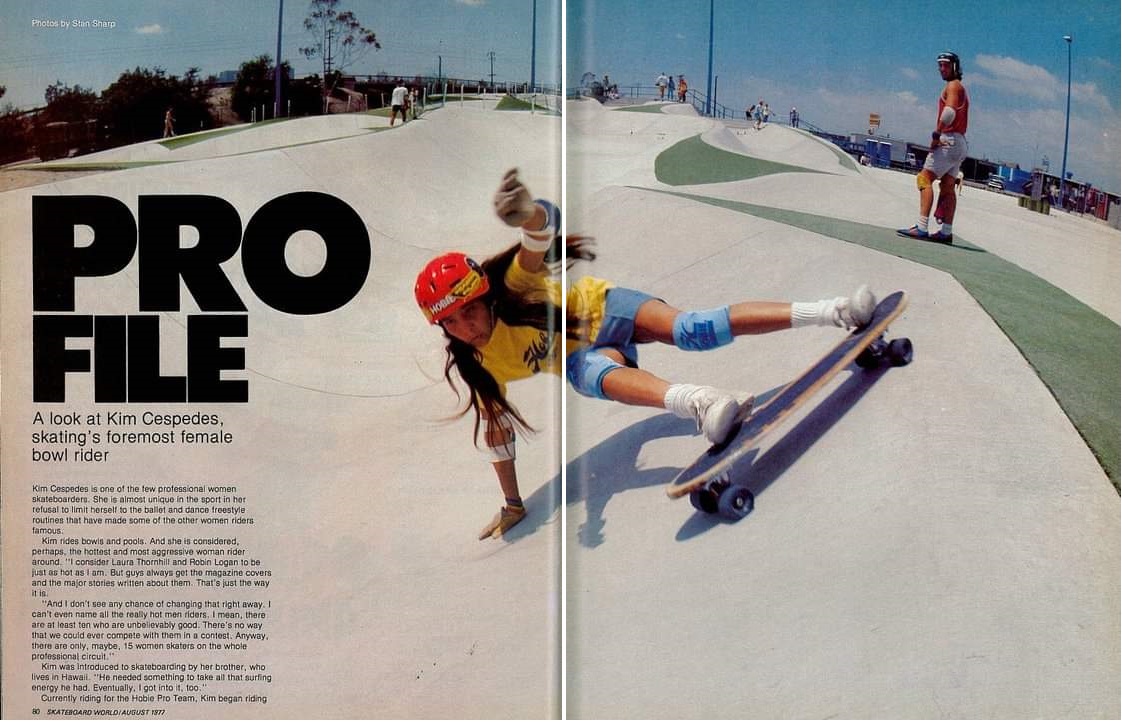
In August 1977, Kim was featured in a “Pro File” for Skateboard World magazine, with photos of her skating at the Concrete Wave by Stan Sharp.


The O’Malley interview included a quote from Laura Thornhill who said, “She’s one of my favorite skaters… outrageously radical… definitely up there with the Z-boys… no other girl rides with such style.” And then Ellen Oneal commented that, “Kim is by far the most radical and graceful woman skater.” For her own “Who’s Hot” feature (Skateboarder, June 1977), Robin Logan called herself one of Kim’s greatest admirers, describing her friend’s skating as “radical” and “fluid.” She expanded her praise within a UK magazine called Skateboard Scene (No. 6, 1978) saying, “Kim Cespedes who is a great buddy of mine and lives on my street – she’s what I call a really aggressive skateboarder… she puts the guys to shame, they’ll get out of the pool to let her ride.”

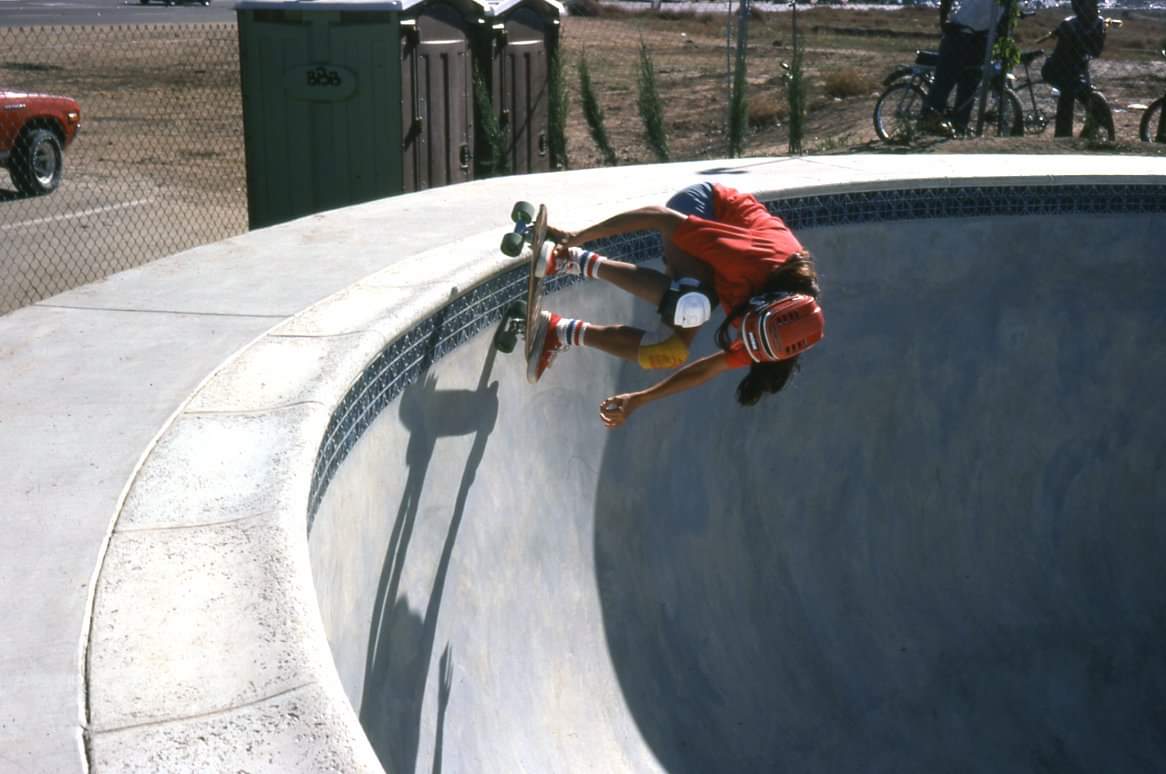
Kim was believed to be “one of the first women to do airs on vert, with photos of her pulling backside airs in pools in ’79, only a year after the boys had officially unveiled them” (SHOF), alongside another woman named Kim Adrian. And, these photos from Spring Valley at Skateboard Heaven in 1977 show how confident she was.


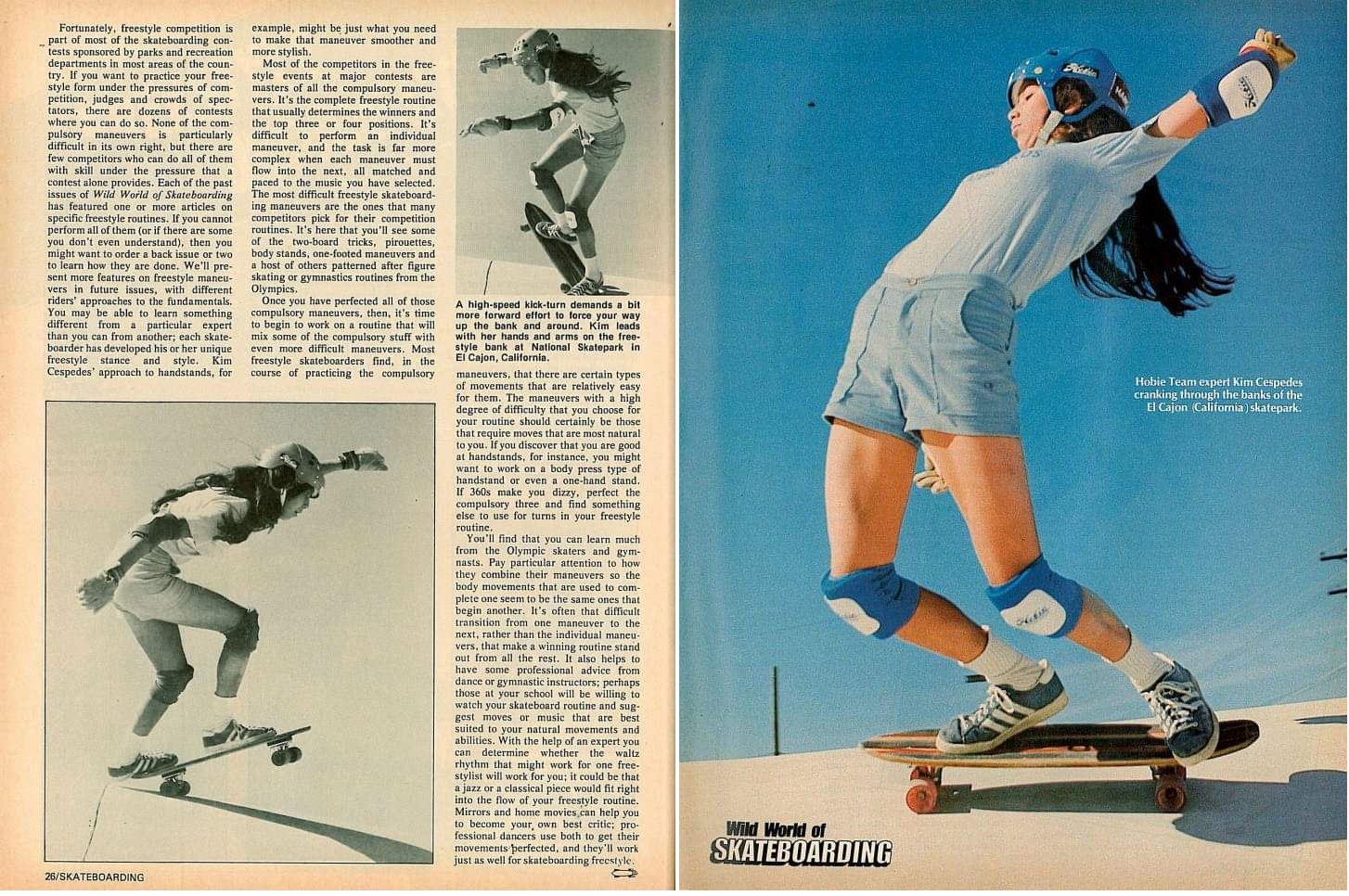
Kim was next highlighted in the December 1977 issue of Wild World of Skateboarding, in an article called “Freestyle Fundamentals,” which discussed the level of balance, skill and style needed to perform certain tricks.

On the back cover of the June 1978 issue of the National Skateboard Review, which included a special Women’s feature, Kim Cespedes had an ad for Tracker Trucks on their notorious glass Tracker Ramp. Larry Balma noted that The Tracker ramp had no roll-out deck, and Kim would ride it with the guys, even while moving during a parade down Highway 101.

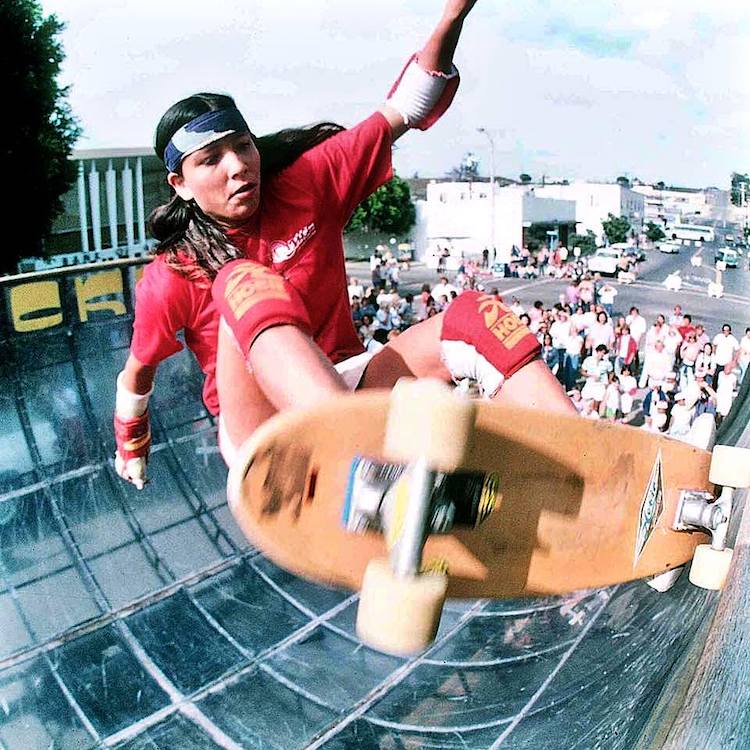

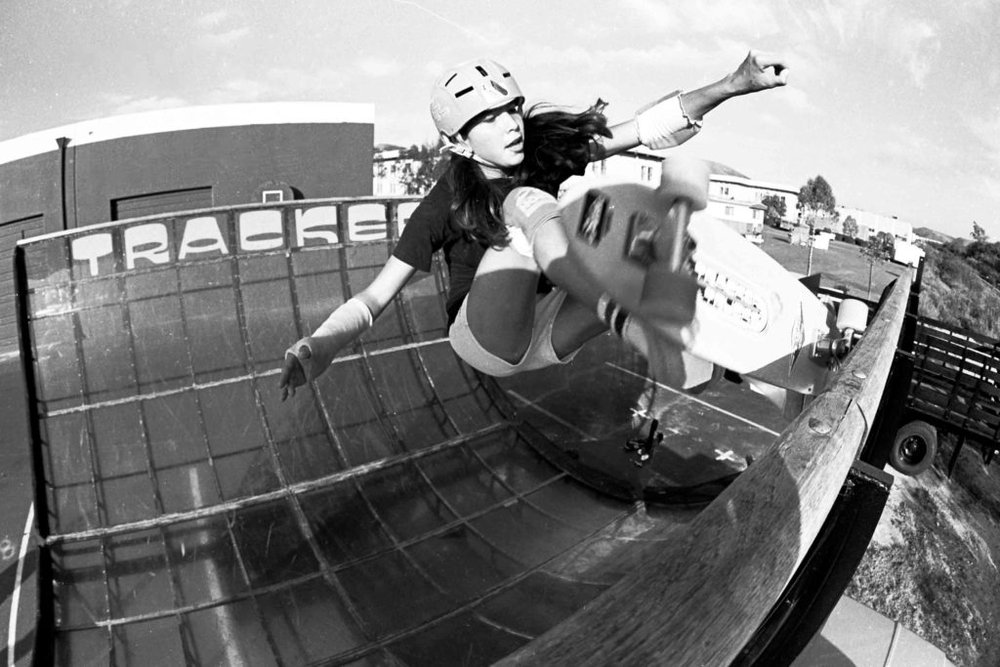
Photos: Lance Smith, Stan Sharp
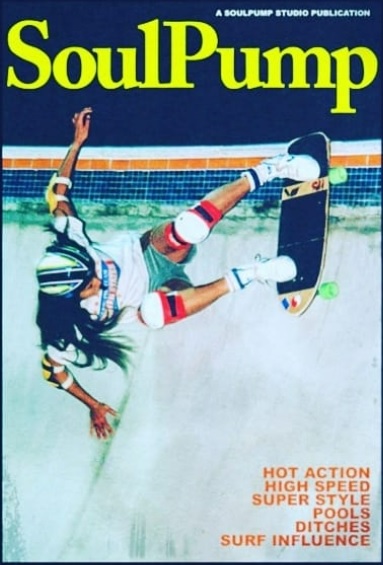
Kim was then recruited onto the Logan Earth Ski team with an ad appearing in the August 1978 issue of the National Skateboard Review. Kim was featured on the cover of SoulPump magazine destroying a concrete pool with her laidback style and on the cover of a French magazine called Skate for the March / April 1978 issue. Kim was also the skater for August in the International Skateboard Calendar 1978, which was published and printed by ABC Printers in Sussex, England.

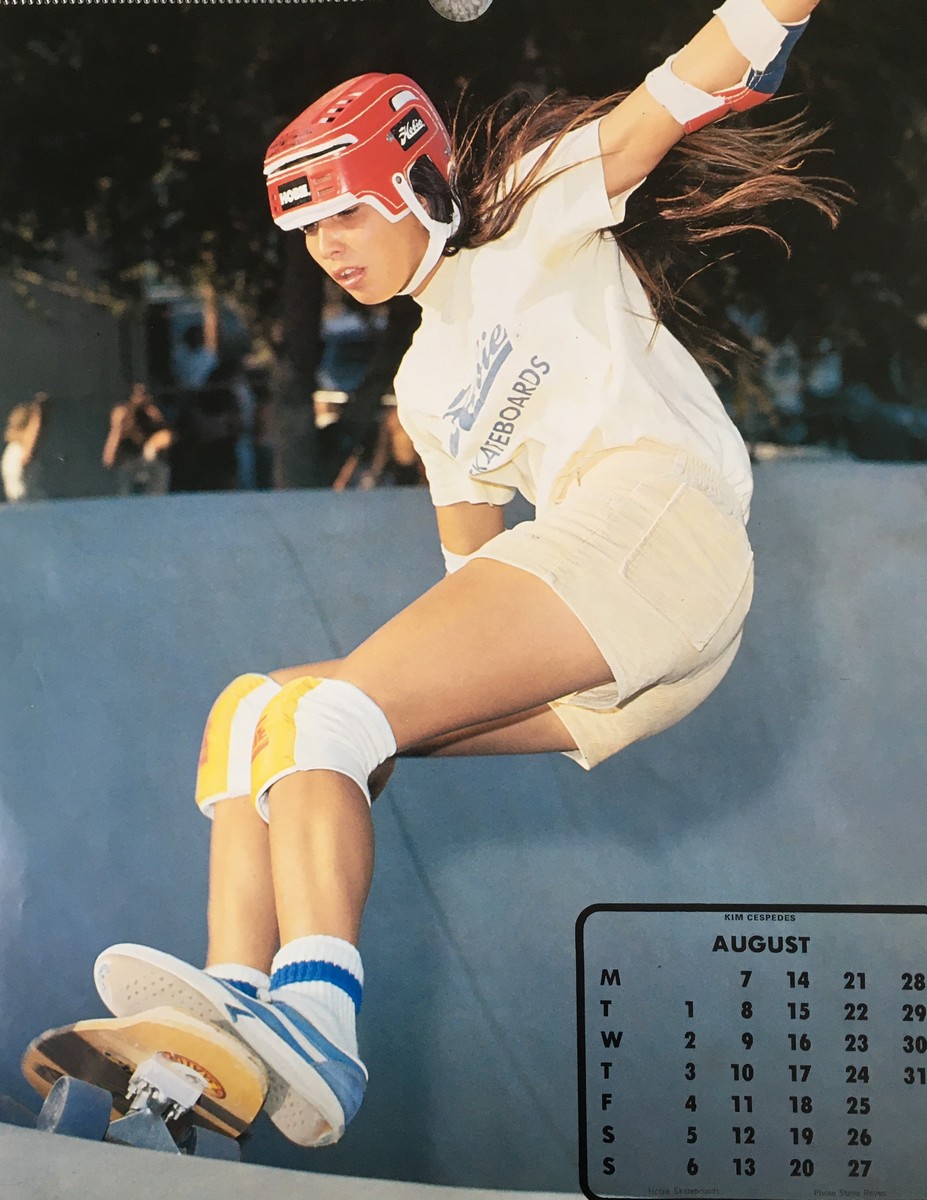
Kim competed in slalom to appease her sponsors (she definitely wasn’t about to coordinate a routine to music for freestyle), but she was always “more of a free spirit” (Balma) and preferred vertical terrain.
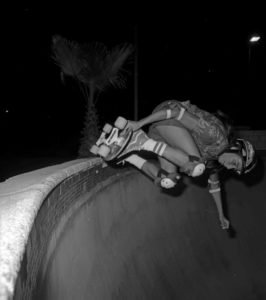
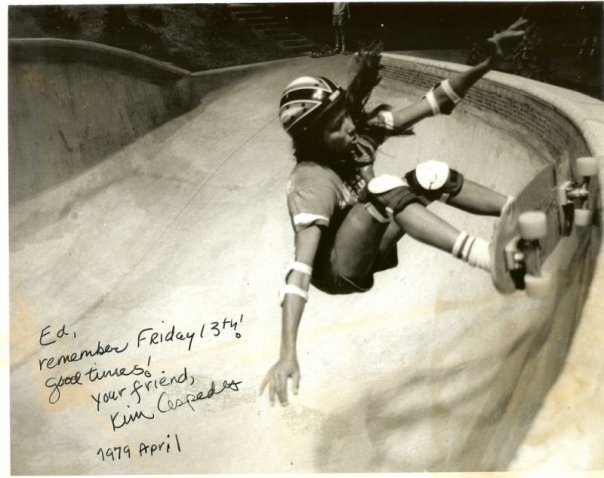


Photos: Chuck Edwall
In 2002, Concrete Wave magazine published a “catch-up” interview where Kim explained that despite a competitive rivalry between the women skaters of the 70s, they were a tight-knit crew. Cespedes believed that, to get more women to start skateboarding there needed to be more competitions and sponsorship incentives comparable to the surfing industry.


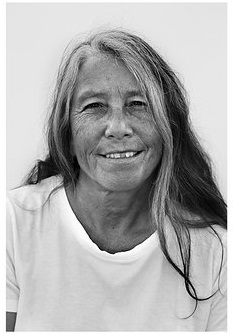
Besides Hobie and Tracker, Kim also got sponsored by Pepsi and Nike, traveled the world, and appeared in the Skateboard Mania show, according to her Skateboard Hall of Fame bio, where she was inducted in 2017. . Kim was believed to be “one of the first women to do airs on vert, with photos of her pulling backside airs in pools in ’79, only a year after the boys had officially unveiled them” (SHOF) alongside skaters like Kim Adrian and Vicki Vickers.


As many skateboarders from the 1970s have explained, when the industry tanked, skateparks shut down to insurance issues, and support for female skateboarders into the 1980s was non-existent, so there wasn’t much motivation to continue, but there are a few photos of Kim still part of the scene including one of her skating in TransWorld (Sept/Oct 1983) and hanging out with Robin Logan in TransWorld (October 1984). Grateful for Kim’s legacy and how she charged in pool and bowl with grit and determination.
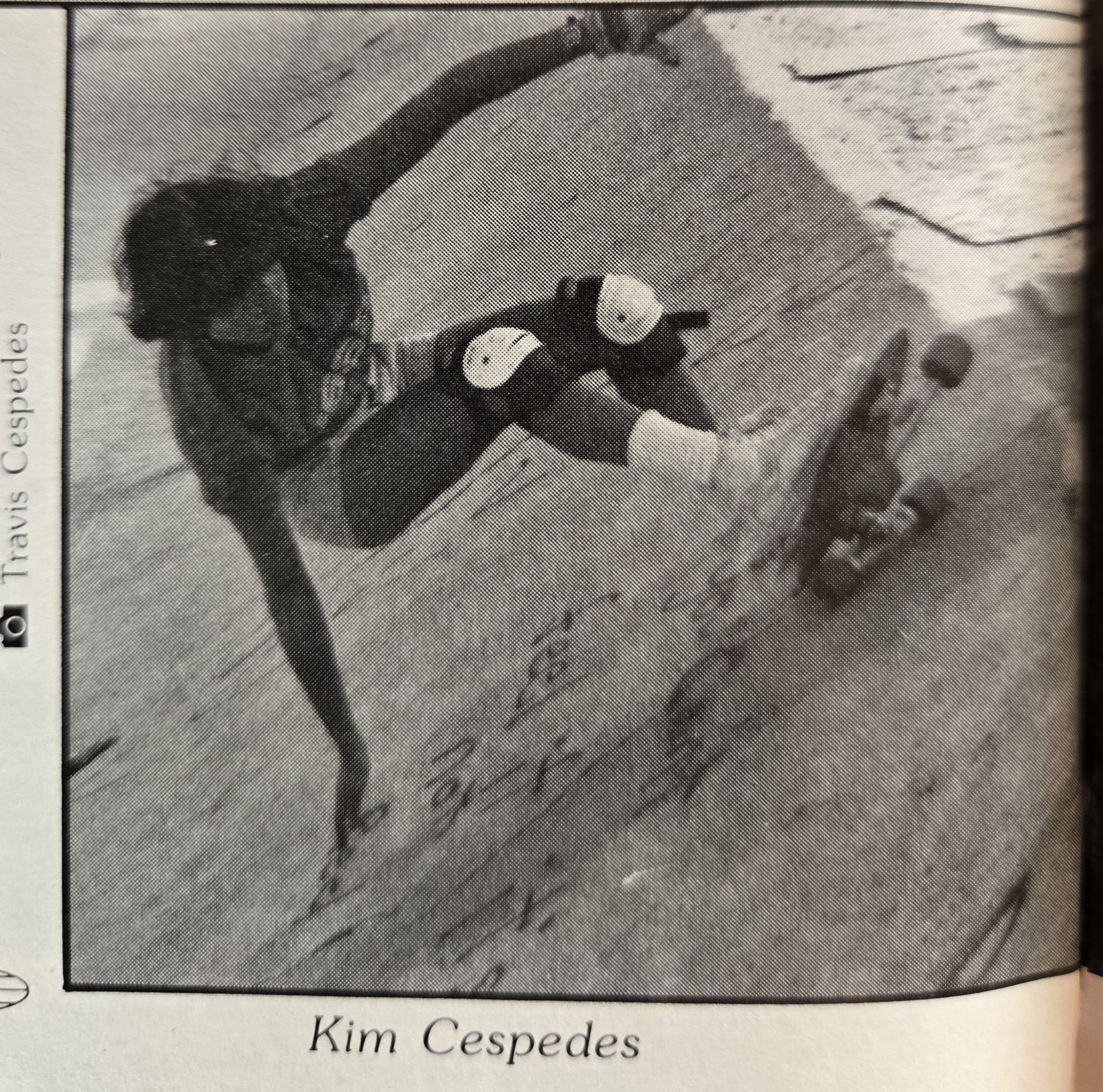
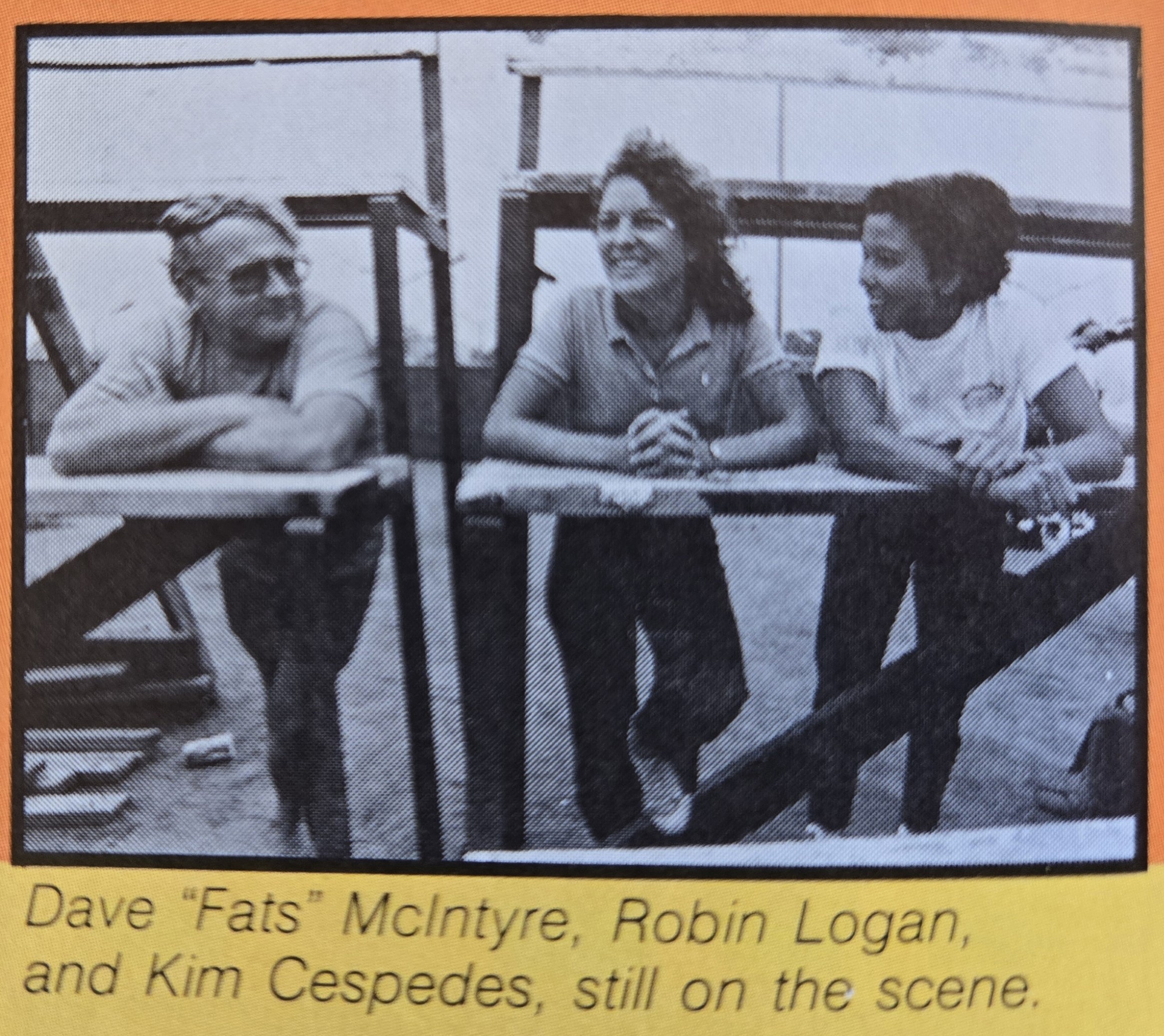
Photos: Arto Saari, Chuck Edwall, Dan Devine, Jannelle Joslyn, Jeff Ruiz, Jim Goodrich, John O’Malley, Lance Smith, Mike Silberg, Jim Cassimus, Stan Sharp, Travis Cespedes, Warren Bolster.
Contest results:
- 2nd place in Junior Women’s Slalom, February 1976 in the 2nd Ventura Skateboard contest, California.
- 1st place in both Women’s Freestyle & Slalom, June 1976 in the 2nd Annual Marin County open championships in Corte Madera.
- 2nd place in Women’s Giant Slalom, August 1st 1976, La Costa.
- 1st place in Women’s Slalom, September 1976, 2nd Annual Hang Ten Contest, Carlsbad Skatepark.
- 2nd place in Women’s Slalom, September 1977 in the California Free Former World Pro Championships, Long Beach Arena.
- 3rd place in Women’s Dual Slalom, October 1977 in the Catalina Classic, Southern California.
- 1st place in Pro Women’s Banked Slalom, March 1978. Kona Skatepark, Florida.
- 2nd place in Women’s Bowl, May 1978, at the Hester ISA Pro Bowl Series #3, Ride-On skatepark, Newark, California.
- 3rd place in Women’s Park, July 1978 in Orange, California at the Big O Skatepark.
References:
- Balma, Larry. “Kim Cespedes Interview.” Tracker. July 2016.
- Brooke, Michael. “Catching up with Kim Cespedes.” Concrete Wave. Winter 2002, pp. 54-57.
- Gillogly, Brian. “Kim Cespedes.” Skateboarder Magazine, Vol. 3, no. 3 (Feb. 1977): 80-81.
- O’Malley, John. “Kim Cespedes – just pure gold.” National Skateboard Review. May 1977, p. 10.
- Sanchez, Cameron (Director). Skate SD: Building Skateboarding’s Future (2021).
- Sharp, Stan. “Profile: a look at Kim Cespedes.” Skateboard World. August 1977, pp. 80-85.
- Skateboard Hall of Fame. Kim Cespedes. 2017.
- Wagoner, MacKenzie. “New Guard.” Vogue magazine. March 2018.
- Williams, Neftalie. “Colour in the Lines: the racial politics and possibilities of US Skateboarding Culture.” PhD thesis. The University of Waikato. 2020.
 Womxn Skateboard History